Enterprise IT infrastructure has grown significantly in complexity. Organizations today operate across hybrid environments that include on-premise data centers, cloud platforms, remote devices, and business-critical applications. Managing these systems efficiently is essential to ensure performance, security, and uninterrupted operations.
However, maintaining infrastructure manually or through traditional IT models can be challenging for internal teams. Constant monitoring, performance management, patching, and incident resolution require specialized expertise and round-the-clock attention.
This is where Remote Infrastructure Management (RIM) becomes a critical component of modern IT operations. By enabling organizations to monitor and manage infrastructure remotely through advanced tools and automation, RIM ensures that systems remain reliable, secure, and optimized for performance.
In today’s digital-first business environment, Remote Infrastructure Management is no longer optional, it is essential for maintaining operational efficiency and supporting business growth.
What is Remote Infrastructure Management?
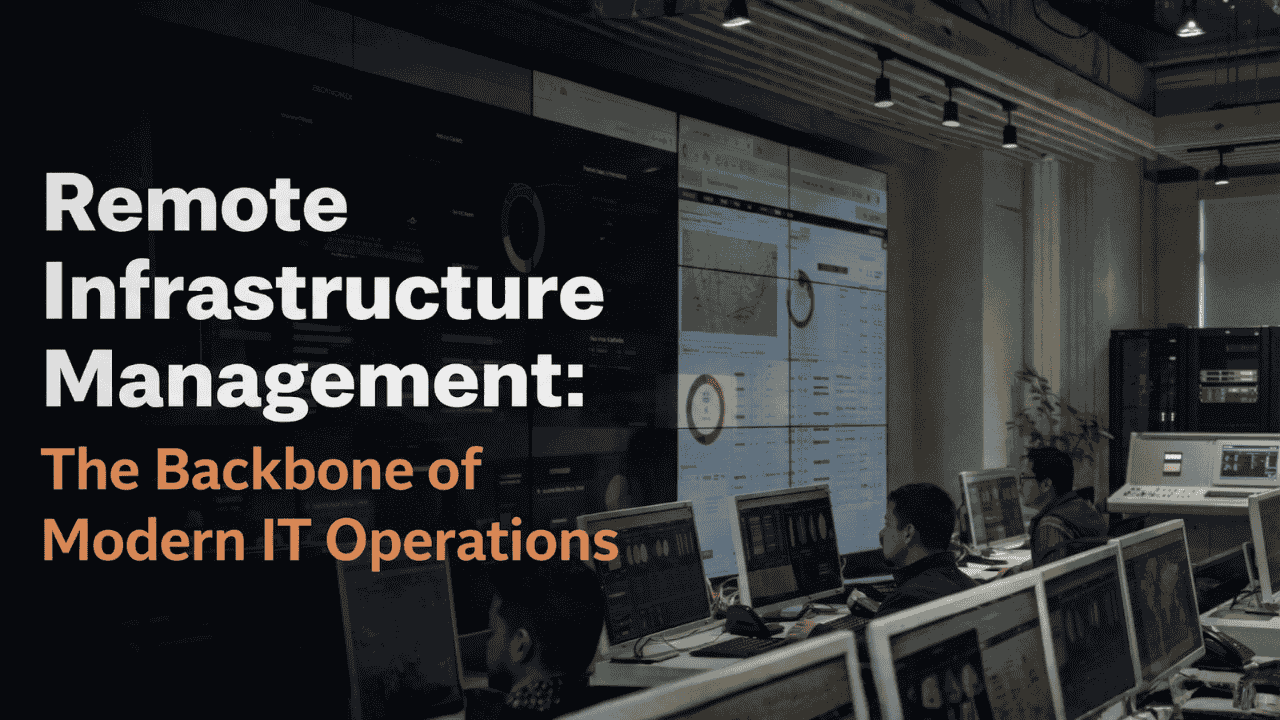
Remote Infrastructure Management refers to the remote monitoring, management, and maintenance of an organization’s IT infrastructure.
Instead of relying entirely on on-site IT teams, businesses partner with specialized managed services providers who oversee infrastructure operations from remote monitoring centers.
These services typically include management of:
- Servers and data center infrastructure
- Network devices and connectivity
- Cloud environments
- End-user systems and endpoints
- Storage and backup systems
- Security monitoring and patch management
By leveraging centralized monitoring platforms and automated tools, IT teams can detect and resolve issues quickly without requiring physical access to infrastructure.
Why Remote Infrastructure Management is Critical for Enterprises
As digital transformation accelerates across industries, enterprises must ensure that their IT infrastructure remains stable, scalable, and secure.
Several factors make Remote Infrastructure Management essential:
Increasing Infrastructure Complexity
Modern enterprises operate across multiple infrastructure environments, including cloud services, on-premise systems, and edge devices. Managing these environments requires specialized expertise and advanced monitoring tools.
Need for 24/7 Monitoring
IT infrastructure must operate continuously to support business operations. Remote Infrastructure Management enables round-the-clock monitoring and faster incident response.
Cost Optimization
Maintaining large in-house infrastructure management teams can be expensive. RIM allows organizations to reduce operational costs while gaining access to specialized expertise.
Faster Issue Resolution
With proactive monitoring systems in place, potential infrastructure issues can be identified and resolved before they impact business operations.
Key Components of Remote Infrastructure Management
A well-structured Remote Infrastructure Management strategy includes several important components that ensure smooth IT operations.
Infrastructure Monitoring
Continuous monitoring allows IT teams to track the health and performance of servers, networks, and applications in real time.
Patch and Update Management
Regular updates and security patches ensure that systems remain protected against vulnerabilities.
Network Management
Network performance is essential for business continuity. RIM services monitor network traffic, connectivity, and performance to prevent disruptions.
Incident and Problem Management
Automated alerts and incident management workflows allow IT teams to quickly respond to infrastructure issues and minimize downtime.
In modern managed services environments, intelligent automation platforms such as ZerofAI can further enhance infrastructure monitoring by detecting anomalies and predicting potential system failures before they occur.
Benefits of Remote Infrastructure Management
Organizations that adopt Remote Infrastructure Management experience significant improvements in IT efficiency and reliability.
Improved System Availability
Proactive monitoring ensures that infrastructure issues are detected and resolved before they affect business operations.
Reduced Operational Costs
Remote management eliminates the need for large on-site IT teams and reduces infrastructure maintenance costs.
Enhanced Security
Continuous monitoring helps identify potential vulnerabilities and security threats early.
Scalability and Flexibility
RIM services allow organizations to scale their infrastructure management capabilities as their business grows.
With intelligent automation tools and proactive monitoring, enterprises can maintain high-performing IT environments without increasing operational complexity.
The Future of Infrastructure Management
The future of infrastructure management will increasingly rely on automation, artificial intelligence, and predictive analytics.
As organizations adopt hybrid and multi-cloud architectures, traditional monitoring methods will not be sufficient to manage the growing complexity of IT systems.
Technologies like AIOps platforms,such as ZerofAI—are helping enterprises move toward intelligent infrastructure management by automating monitoring, identifying anomalies, and accelerating incident resolution.
This shift enables organizations to maintain reliable infrastructure while allowing IT teams to focus on innovation and strategic initiatives.
Conclusion
Modern enterprises rely heavily on technology infrastructure to support daily operations, digital services, and customer experiences.
Remote Infrastructure Management provides organizations with a proactive and scalable approach to managing complex IT environments.
Key takeaways include:
- Enterprise infrastructure is becoming increasingly complex
- Remote monitoring enables proactive infrastructure management
- RIM services improve system reliability and operational efficiency
- Automation platforms like ZerofAI help enhance monitoring and predictive maintenance
By adopting Remote Infrastructure Management, organizations can ensure stable, secure, and high-performing IT environments that support long-term business success.
Looking to simplify and optimize your IT infrastructure management?
Discover how Managed Services from Team Computers can help you implement efficient Remote Infrastructure Management, powered by intelligent monitoring and automation platforms like ZerofAI, to keep your IT operations running smoothly.