
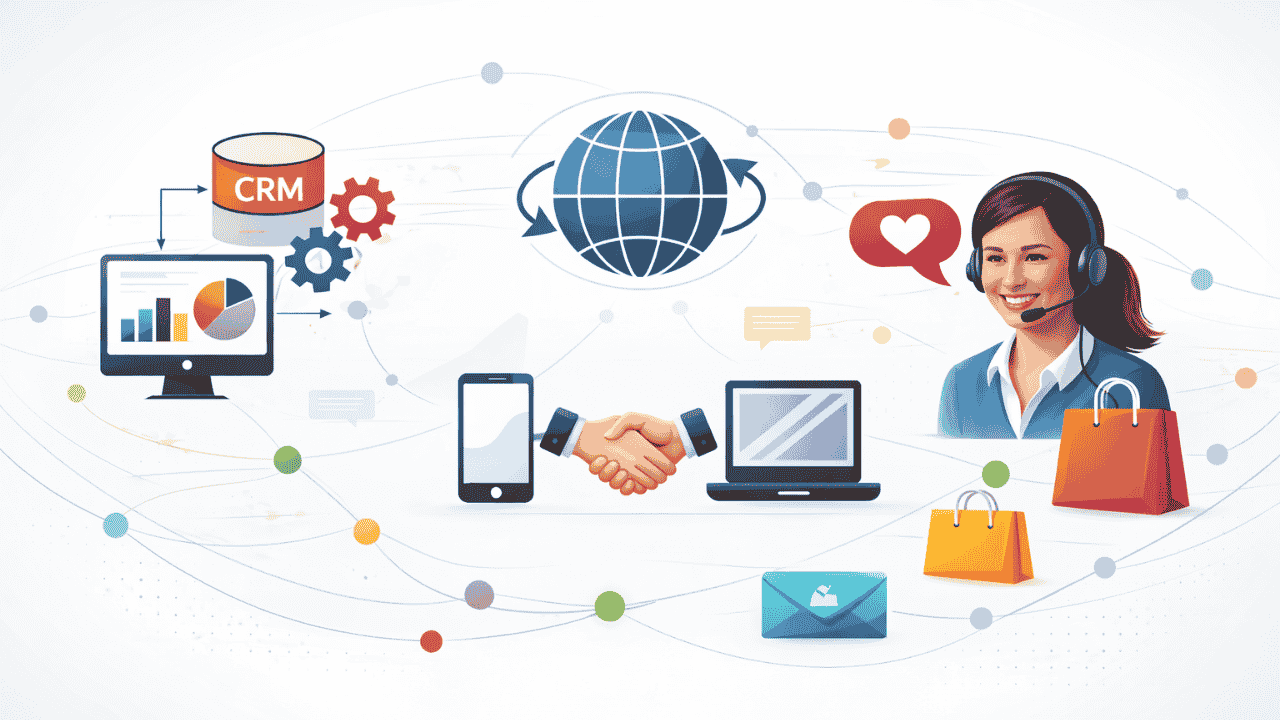
Customer expectations have evolved rapidly in the digital era. Today’s customers expect organizations to deliver fast, personalized, and consistent experiences across every interaction, whether it occurs through websites, mobile apps, support channels, or physical locations.
However, many enterprises operate multiple platforms for customer management, marketing automation, service operations, and analytics. When these systems operate independently, customer information becomes fragmented and difficult to access.
Team Computers helps organizations address this challenge through enterprise systems integration, enabling customer-facing platforms and backend systems to operate as part of a connected digital ecosystem.
Through effective systems integration, enterprises can streamline workflows, improve data visibility, and ensure that every customer interaction is supported by accurate and real-time information.
The Challenge of Disconnected Customer Systems
Most enterprises rely on a variety of applications to manage customer relationships. CRM platforms support sales teams, marketing automation tools manage campaigns, and customer service platforms handle support requests.
While each platform plays an important role, they often function independently. This lack of connectivity creates data silos, where customer information is stored in different systems without synchronization.
When systems remain disconnected, organizations struggle to maintain a consistent view of customer interactions. Sales teams may not see service history, support teams may lack visibility into previous marketing engagements, and marketing teams may operate without access to real-time customer insights.
Over time, these gaps create delays, inconsistent communication, and reduced customer satisfaction. Organizations therefore need integrated technology environments where applications share data and support seamless collaboration across teams.
Creating a Unified Customer View Through Systems Integration
One of the most important outcomes of enterprise systems integration is the creation of a unified customer view. When enterprise platforms are integrated, customer data flows seamlessly across systems, allowing organizations to build a comprehensive profile of each customer.
This integrated environment enables teams across departments to access the same accurate information. Customer service representatives can quickly review purchase history, previous support requests, and interaction records. Sales teams gain insights into customer engagement, while marketing teams can analyze behavior across channels.
With a connected technology ecosystem, organizations can respond to customer needs more effectively. A unified view of the customer enables faster problem resolution, improved personalization, and stronger customer relationships.
Systems integration therefore plays a crucial role in helping enterprises deliver consistent and reliable customer experiences.
Enhancing Customer Journeys Across Digital Channels
Customer journeys often involve multiple touchpoints across digital and physical channels. A customer may first interact with a brand through a website, continue engagement through email campaigns, and later contact support through a service portal.
Without systems integration, these interactions remain isolated within separate platforms. This makes it difficult for organizations to understand the full customer journey.
By integrating enterprise applications, organizations can connect these touchpoints and create seamless customer experiences. Automated workflows allow customer interactions to trigger responses across different systems.
For example, when a customer submits an inquiry, integrated systems can automatically generate support tickets, update CRM records, and notify relevant teams. Similarly, customer engagement data can be shared with marketing platforms to deliver personalized communication.
These capabilities ensure that customers receive consistent and efficient service throughout their journey.
Improving Customer Insights Through Integrated Data
Data plays a critical role in modern customer experience strategies. Organizations rely on customer data to understand behavior, measure satisfaction, and identify opportunities for improvement.
However, when data remains scattered across different systems, it becomes difficult to generate meaningful insights.
Through systems integration, enterprises can consolidate customer data into centralized analytics platforms. This enables organizations to analyze patterns, monitor engagement levels, and gain deeper insights into customer preferences.
Integrated data environments allow decision-makers to evaluate customer trends and refine strategies based on accurate information. These insights help organizations improve service delivery, optimize marketing initiatives, and enhance overall customer satisfaction.
As a result, integrated systems enable enterprises to build data-driven customer experience strategies that support long-term business growth.
How Team Computers Enables Integrated Customer Experience Platforms
Delivering seamless customer experiences requires more than implementing individual software platforms. Organizations need an integrated technology environment where applications, infrastructure, and data systems work together efficiently.
Team Computers supports enterprises in designing and implementing systems integration frameworks that connect customer-facing platforms with core business applications.
By integrating CRM systems, marketing platforms, analytics tools, and enterprise applications, Team Computers enables organizations to eliminate data silos and create connected digital ecosystems.
With extensive experience in enterprise IT environments, the company helps businesses build scalable integration architectures that support consistent customer engagement across channels.
Through structured integration strategies, organizations can improve operational efficiency while delivering exceptional customer experiences.
Conclusion
Delivering seamless customer experiences has become a critical priority for modern enterprises. Customers expect fast responses, personalized interactions, and consistent service across every touchpoint.
However, these expectations cannot be met when enterprise systems operate independently.
Systems integration enables organizations to connect customer platforms, unify data, and automate workflows across departments. Integrated environments improve collaboration, enhance data visibility, and support personalized customer engagement.
By partnering with experienced technology providers like Team Computers, enterprises can build connected IT ecosystems that support seamless customer experiences while driving long-term digital transformation.
Discover how Team Computers can help your organization build integrated IT environments that enable exceptional customer experiences and long-term digital growth.