
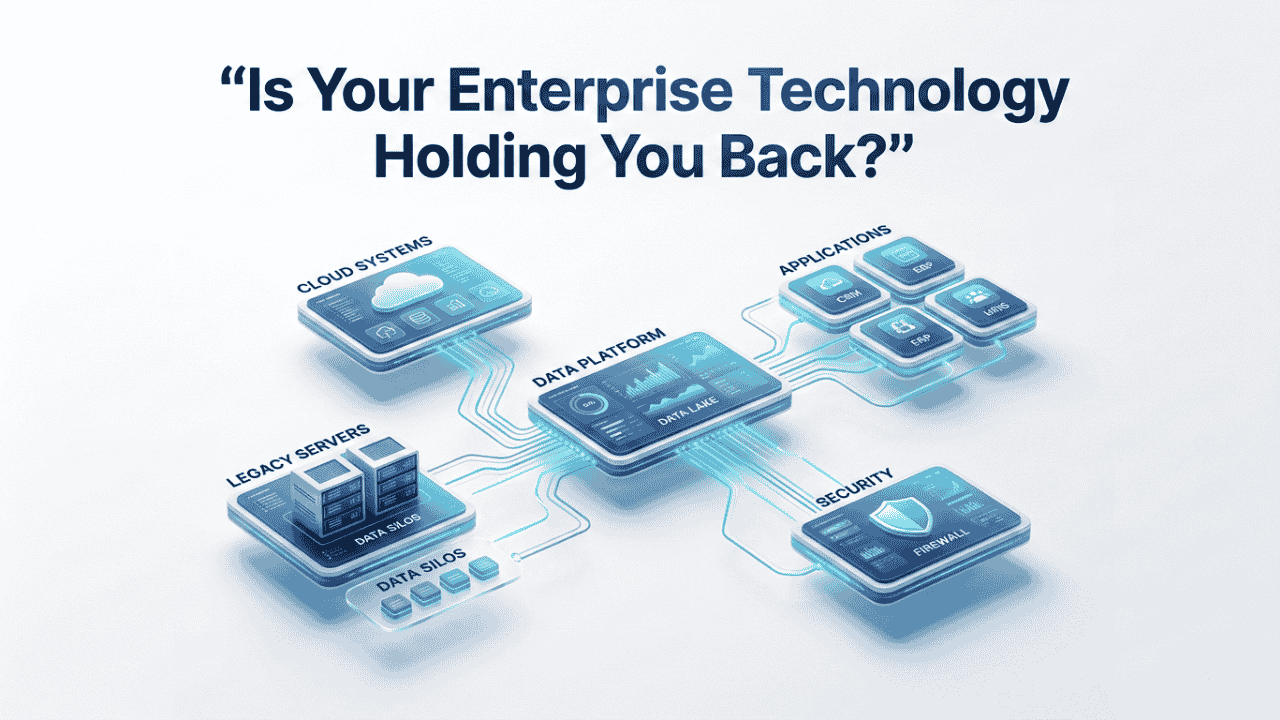
Many enterprises invest heavily in modern technologies to improve efficiency, enable digital transformation, and support long-term growth. Cloud platforms, enterprise applications, analytics tools, and cybersecurity systems promise to make organizations faster, smarter, and more competitive.
Yet despite these investments, many businesses still struggle with operational inefficiencies and slow decision-making. Teams spend time switching between disconnected systems, data remains scattered across multiple platforms, and IT teams face growing complexity as new technologies are added.
If this scenario sounds familiar, the problem may not be the technology itself. The real issue is often the lack of alignment between infrastructure, applications, and data systems.
This is where systems integration plays a crucial role. By connecting enterprise technologies into a unified ecosystem, organizations can eliminate silos, improve data visibility, and ensure that every technology investment contributes to real business outcomes.
In this article, we explore the warning signs that enterprise technology may be slowing your organization down, and how integrated technology environments can unlock greater efficiency, agility, and innovation.
Warning Signs Your Enterprise Technology Is Creating Bottlenecks
Enterprise technology environments usually evolve over time. As organizations grow, they introduce new applications, upgrade infrastructure platforms, and adopt data systems to address changing business needs. While each addition may solve a specific operational challenge, the overall environment often becomes fragmented.
Over time, teams may find themselves relying on manual processes to move information between systems because applications do not communicate directly. Data may be stored across multiple platforms without synchronization, making it difficult to gain a consistent view of business performance. Decision-making can also slow down when leadership teams must consolidate information from several systems before reaching conclusions.
These inefficiencies gradually increase operational complexity. IT teams spend more time maintaining compatibility between systems rather than focusing on innovation or strategic improvements. As the technology environment grows, these small inefficiencies compound and begin to affect enterprise productivity and agility.
Research from industry analysts indicates that organizations with fragmented technology ecosystems experience higher operational costs and slower innovation cycles.
How Fragmented Systems Impact Business Performance
Disconnected technology environments affect more than just IT teams; they influence the overall performance of the organization. When enterprise systems do not communicate effectively, business units operate with incomplete information, which makes collaboration more difficult.
For example, sales teams may lack visibility into service issues affecting customers, while support teams may not have access to a complete record of previous customer interactions. Marketing teams may operate with limited insights into customer engagement data stored within other systems. These information gaps create inefficiencies that slow down both operational workflows and strategic decision-making.
As the organization grows, fragmented systems can also make it difficult to scale operations efficiently. New platforms may need custom integrations or manual processes to function alongside existing systems, which increases complexity for IT teams.
Ultimately, technology environments that lack integration often prevent enterprises from responding quickly to market opportunities. Instead of enabling innovation, disconnected systems can become a barrier to business agility and growth.
Why Systems Integration Is the Missing Link
The most effective way to address these challenges is through systems integration, which focuses on connecting enterprise technologies into a cohesive architecture.
Instead of operating independently, integrated systems communicate through APIs, middleware frameworks, and data integration platforms. This connectivity ensures that information flows smoothly between infrastructure environments, enterprise applications, and data systems.
Key outcomes of systems integration include:
- Real-time data exchange across enterprise platforms
- Automated workflows that reduce manual intervention
- Unified monitoring across infrastructure and applications
- Improved collaboration between business units
When enterprise technologies operate as part of a connected ecosystem, organizations gain the ability to streamline operations and improve decision-making.
Building a Connected Enterprise Technology Ecosystem
Creating a connected technology ecosystem requires a thoughtful integration strategy. Organizations must evaluate how infrastructure platforms, enterprise applications, and data environments interact and determine where integration gaps exist.
A structured integration strategy begins with assessing the current technology landscape to identify inefficiencies and disconnected systems. Once these gaps are understood, organizations can design scalable integration architectures that allow systems to communicate effectively.
Integration frameworks typically involve technologies such as APIs, middleware platforms, and data integration tools that enable seamless communication between applications. These technologies allow enterprise data to move efficiently across systems while maintaining security and performance standards.
When integration strategies are implemented successfully, enterprises gain the ability to introduce new technologies without disrupting existing operations. This flexibility allows organizations to scale their technology environments while maintaining operational stability.
How Team Computers Helps Enterprises Overcome Technology Fragmentation
Addressing technology fragmentation requires deep expertise across infrastructure platforms, enterprise applications, and data environments. Organizations must ensure that integration frameworks support scalability, security, and operational efficiency.
Team Computers helps enterprises design and implement systems integration strategies that transform fragmented technology environments into unified digital ecosystems.
With decades of experience in enterprise IT environments, Team Computers supports organizations in:
- Connecting enterprise applications such as ERP, CRM, and analytics platforms
- Integrating hybrid cloud and on-premise infrastructure environments
- Enabling seamless data synchronization across enterprise systems
- Designing scalable integration architectures that support digital transformation
Through structured integration frameworks, Team Computers enables businesses to eliminate technology silos and unlock the full value of their IT investments.
Conclusion
Enterprise technology should empower organizations to move faster, innovate more effectively, and make smarter decisions. However, when systems operate independently, technology can become a source of inefficiency rather than a driver of growth.
Systems integration plays a vital role in aligning infrastructure, applications, and data systems so that enterprise technologies operate as part of a connected ecosystem.
Key takeaways include:
- Fragmented enterprise systems create operational bottlenecks
- Disconnected data environments limit visibility and collaboration
- Systems integration enables unified technology ecosystems
- Integrated environments improve efficiency, scalability, and innovation
Organizations that prioritize integration gain the flexibility and insight required to thrive in an increasingly digital business landscape.
If your enterprise technology environment feels complex, fragmented, or difficult to scale, it may be time to rethink your integration strategy.
Discover how Team Computers helps organizations connect infrastructure, applications, and data through enterprise systems integration – enabling more efficient operations and stronger digital growth.