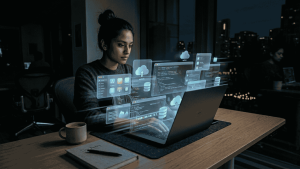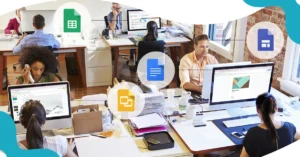
Workplaces today look very different from what they did a decade ago. Employees collaborate across locations, work on multiple devices, and rely on cloud applications to perform their daily tasks. While this flexibility improves productivity and employee satisfaction, it also introduces new challenges for IT teams.
Organizations must ensure that employees have seamless access to applications, secure connectivity, reliable devices, and uninterrupted IT support regardless of where they work. Managing this growing digital ecosystem requires more than traditional IT support.
This is where Digital Workplace Services play a critical role. By combining intelligent device management, proactive IT operations, and automation-driven monitoring, organizations can create a connected and efficient work environment that enhances both employee experience and operational performance.
The shift toward digital workplaces has been driven by several key trends that are redefining how organizations operate.
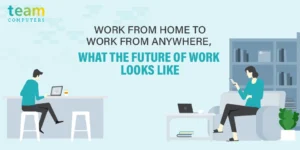
Employees today expect the flexibility to work from anywhere, home, office, or while traveling. This requires organizations to deliver consistent IT experiences across locations.
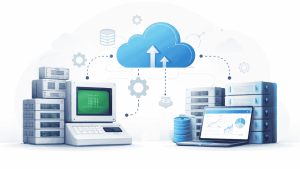
Enterprise applications are increasingly hosted on cloud platforms, enabling employees to access business tools and collaborate seamlessly from any device.
Employee productivity is closely tied to the performance of workplace technology. Slow devices, connectivity issues, or application failures can quickly impact business outcomes.
To support these evolving needs, organizations must adopt a structured digital workplace strategy that ensures reliability, security, and seamless user experiences.
Despite the benefits of modern workplace technologies, managing them at scale can be challenging for internal IT teams.
Common challenges include:
Traditional IT support models often rely on reactive troubleshooting, where issues are addressed only after employees report them. This approach can lead to delays and disruptions.
This is why organizations are increasingly adopting Digital Workplace Services supported by intelligent automation platforms like ZerofAI.
Digital Workplace Services focus on creating a seamless technology environment where employees can work efficiently without interruptions.
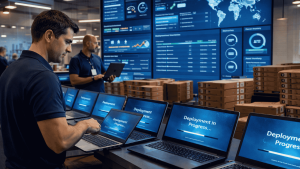
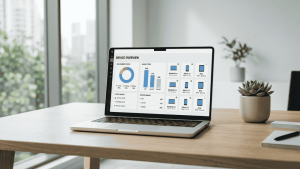
Organizations can manage laptops, desktops, and mobile devices from a centralized platform, ensuring consistent configurations and security policies.
Benefits include:
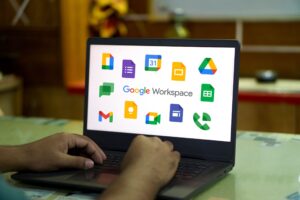
Digital workplace solutions integrate collaboration tools that allow employees to communicate and share information efficiently.
Teams can:
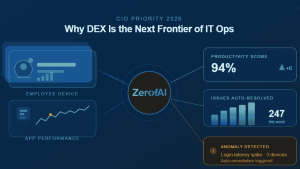
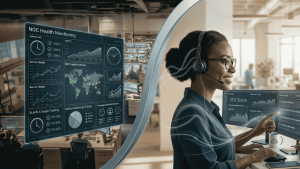
Modern digital workplace environments increasingly rely on AIOps-driven automation to improve IT operations.
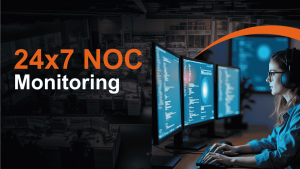
Platforms like ZerofAI use artificial intelligence and advanced analytics to continuously monitor IT systems, detect anomalies, and resolve potential issues before they impact employees.
This proactive approach allows organizations to:
Building an effective digital workplace requires organizations to focus on several key areas.
Employees must be able to securely access enterprise systems from multiple locations while maintaining strong security controls.
Every device connected to the enterprise network must be protected against cyber threats through advanced security policies and monitoring.
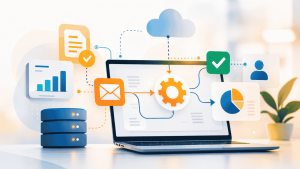
Automation platforms like ZerofAI help IT teams streamline operations by automating monitoring, incident detection, and resolution.
Digital workplace solutions must evolve alongside business growth, ensuring that infrastructure and support systems remain efficient as organizations expand.
The modern workplace is becoming increasingly digital, distributed, and technology-driven. Organizations must ensure that employees have reliable devices, secure access, and uninterrupted IT support to perform their best work.
Digital Workplace Services help businesses create an environment where employees can collaborate, innovate, and stay productive regardless of where they work.
Key takeaways include:
By combining modern workplace technologies with intelligent IT operations, organizations can build a resilient digital environment that supports both employee success and long-term business growth.
Looking to enhance your organization’s workplace experience?
Discover how Digital Workplace Services from Team Computers, powered by an intelligent platform like ZerofAI, can help you deliver a secure, automated, and high-performing digital workplace for your employees.