
Many enterprises invest heavily in modern technology: ERP platforms, CRM systems, cloud infrastructure, analytics tools, and cybersecurity solutions. These investments are intended to improve efficiency, automate processes, and enable better decision-making.
Yet despite deploying advanced systems, many organizations still struggle with slow workflows, fragmented data, and operational inefficiencies.
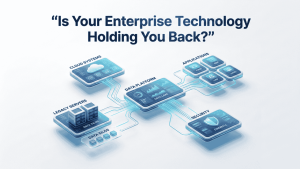
The problem often isn’t the technology itself. It’s the lack of connection between those technologies.
Disconnected systems have quietly become one of the biggest enterprise IT bottlenecks. When applications cannot communicate seamlessly, information gets trapped within individual platforms, forcing teams to rely on manual workarounds and fragmented data sources.
What makes this challenge particularly dangerous is that it often goes unnoticed. Organizations continue adopting new tools while the underlying integration problem grows more complex.
In this blog, we explore why disconnected systems create hidden enterprise IT bottlenecks, the operational risks they introduce, and how strategic systems integration helps organizations build a truly connected digital environment.
Enterprise technology environments rarely develop in a perfectly coordinated way. Most organizations adopt systems gradually over time as new business needs emerge.
A sales department may introduce a CRM platform to manage customer relationships. Finance teams rely on ERP software for financial operations. Marketing teams deploy automation platforms to run campaigns, while operations teams implement supply chain systems to manage logistics.
Each of these systems works effectively within its own domain. The problem arises when they operate in isolation.
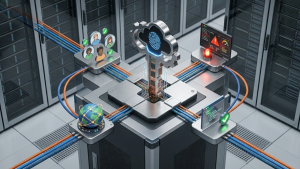
Without integration, enterprise applications become separate islands of data and functionality. Teams must manually transfer information between platforms, reports must be consolidated from multiple systems, and decision-makers struggle to obtain a unified view of the business. Over time, this fragmentation creates a silent operational bottleneck that slows down processes across the entire organization.
Disconnected systems rarely cause immediate disruption. Instead, they gradually introduce inefficiencies that compound across departments.
Employees begin relying on spreadsheets to move data between applications. Reports take longer to generate because information must be gathered from multiple sources. Teams often work with inconsistent data because systems are not synchronized.
These inefficiencies create several operational challenges:
As organizations grow, the impact becomes more severe. What once seemed like a manageable inconvenience evolves into a significant barrier to productivity and agility. Many enterprises only recognize the scale of this problem when operational performance begins to visibly suffer.
Beyond operational inefficiencies, fragmented systems also introduce substantial financial and strategic costs.
One of the most significant challenges is the loss of data visibility. When systems are not integrated, leadership teams cannot easily access reliable real-time insights. Critical decisions must be made using incomplete or outdated information.
Disconnected systems also increase the burden on IT teams. Maintaining multiple independent platforms requires additional effort for data management, security monitoring, and troubleshooting. Organizations may experience challenges such as:
Over time, these issues limit the organization’s ability to innovate and respond quickly to changing business demands.
One reason disconnected systems remain such a persistent challenge is that the problem rarely appears dramatic. Instead, it grows gradually as organizations continue adopting new technologies.
A new analytics platform might be introduced to improve reporting. A new cloud application might support remote collaboration. Another system might be implemented to manage supply chain operations. Each new tool adds value individually. However, without a structured integration strategy, every additional system increases complexity within the IT environment.
Eventually, the organization reaches a point where the number of disconnected applications creates a web of inefficient processes. This is when enterprise leaders begin to realize that the issue is not the technology itself, but the absence of a cohesive integration architecture connecting those technologies.
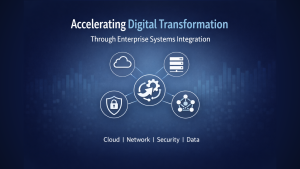
The most effective way to eliminate IT bottlenecks caused by disconnected systems is through a structured enterprise systems integration strategy.
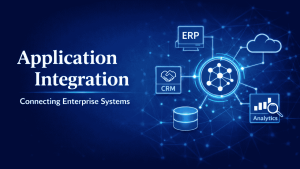
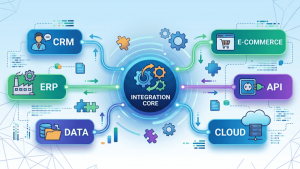
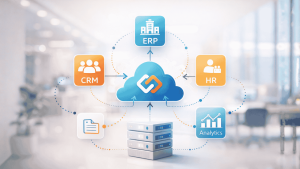
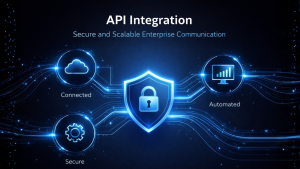
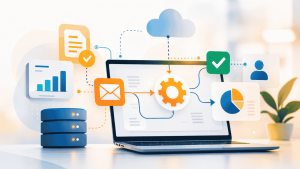
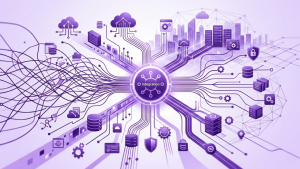
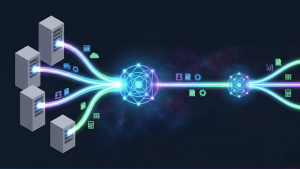
Integration enables enterprise applications to communicate with one another, allowing data to flow automatically across platforms. Instead of relying on manual workarounds, organizations can automate workflows and create unified data environments.
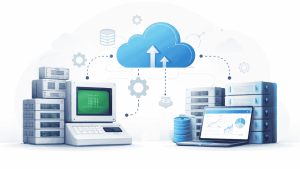
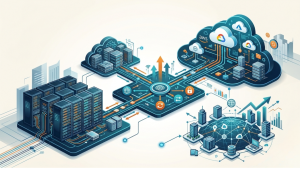
Modern integration strategies rely on technologies such as APIs, middleware platforms, and cloud integration frameworks. These allow organizations to connect legacy systems, modern applications, and data platforms into a single coordinated ecosystem.
When integration is implemented effectively, enterprises gain several advantages:
Integration transforms isolated systems into a connected digital infrastructure capable of supporting growth and innovation.
Addressing the challenge of disconnected systems requires more than simply connecting applications. It requires a strategic approach to enterprise architecture, data integration, and long-term scalability.
At Team Computers, enterprise systems integration begins with a comprehensive assessment of the organization’s existing IT landscape. This allows integration specialists to identify fragmented systems, data flow gaps, and operational inefficiencies. Based on this analysis, the team designs scalable integration frameworks that enable systems to communicate reliably across the enterprise environment.
Team Computers supports organizations by:
This structured approach helps organizations move from fragmented technology environments to connected digital ecosystems where systems operate efficiently together.
“Many organizations believe their biggest IT challenges come from outdated technology. In reality, the bigger challenge is often the lack of connectivity between existing systems. Integration transforms isolated applications into a coordinated enterprise platform.”
— Head of IT Services, Team Computers
Disconnected systems represent one of the most overlooked bottlenecks within enterprise IT environments. While individual applications may function effectively, the absence of integration creates operational friction that affects productivity, data visibility, and strategic decision-making. Over time, these inefficiencies accumulate and limit the organization’s ability to scale and innovate.
Enterprises that address this challenge through structured systems integration gain several key advantages:
Organizations that invest in integration strategies move beyond fragmented technology environments and build connected digital infrastructures that unlock the full value of their technology investments.
Discover how Team Computers helps enterprises connect applications, infrastructure, and data platforms to build scalable, high-performing IT ecosystems.