
Enterprises are increasingly adopting multi-cloud strategies to improve flexibility, scalability, and resilience. Instead of relying on a single cloud provider, organizations now distribute workloads across multiple cloud platforms such as private clouds, public clouds, and hybrid infrastructure environments. While this approach offers significant operational advantages, it also introduces a new layer of complexity.
Without proper coordination between cloud platforms, organizations often struggle with fragmented infrastructure, inconsistent security policies, and limited visibility across environments. Applications deployed across different cloud providers may operate independently rather than as part of a unified technology ecosystem.
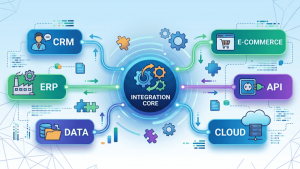
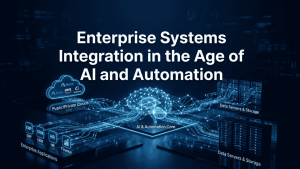
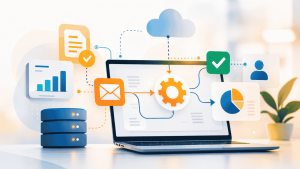
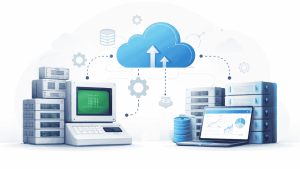
This is where multi-cloud systems integration becomes essential. By connecting cloud platforms, enterprise applications, networking frameworks, and security systems into a cohesive architecture, organizations can ensure that their multi-cloud environments operate seamlessly.
As a trusted enterprise IT partner, Team Computers helps organizations design integrated multi-cloud architectures that eliminate operational silos while maintaining security, performance, and scalability.
Multi-cloud adoption has accelerated as enterprises seek to avoid vendor lock-in and take advantage of specialized services offered by different cloud providers. For example, an organization may use one cloud platform for data analytics, another for application hosting, and a third for disaster recovery.
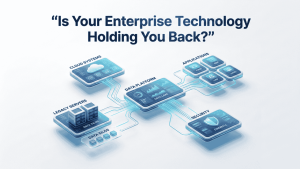
While this distributed approach improves flexibility, it also creates complex IT ecosystems where infrastructure, applications, and data operate across multiple environments simultaneously. Each platform introduces its own management tools, networking configurations, and security frameworks.
When these environments are not properly integrated, IT teams often struggle to maintain consistent governance across platforms. Monitoring tools may only provide partial visibility, making it difficult to identify performance issues or security risks.
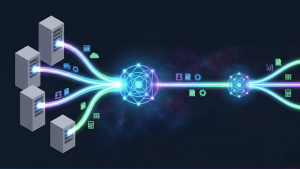
Multi-cloud systems integration addresses this complexity by creating a unified framework that connects different cloud environments. Instead of managing separate platforms independently, organizations gain centralized visibility and coordinated operations across the entire infrastructure.
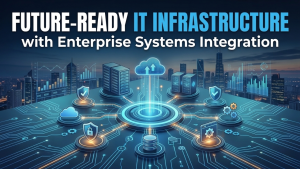
Also Read: Future-Ready IT Infrastructure with Enterprise Systems Integration
Enterprises that adopt multi-cloud environments without a structured integration strategy often encounter operational inefficiencies that impact performance and security. Disconnected systems can create communication gaps between applications and data sources, leading to delays in processing and decision-making.
Security is another critical concern. When cloud platforms operate independently, enforcing consistent security policies across environments becomes difficult. Identity management systems, endpoint protection tools, and monitoring frameworks may not share information effectively, creating potential security blind spots.
Data management also becomes increasingly challenging. Enterprises frequently store information across multiple cloud platforms, but without integration, synchronizing this data becomes complicated. This fragmentation can lead to inconsistent reporting and limited analytical insights.
Over time, these challenges increase operational overhead for IT teams. Instead of focusing on innovation and digital transformation initiatives, teams spend significant time managing connectivity issues between platforms.
Multi-cloud systems integration resolves these issues by enabling cloud platforms to communicate seamlessly, ensuring consistent operations across environments.
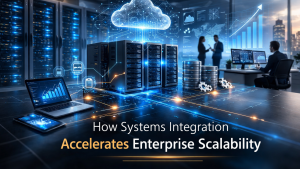
A well-designed multi-cloud systems integration strategy ensures that different cloud environments operate within a coordinated infrastructure framework. Instead of isolated cloud platforms, enterprises create connected ecosystems where applications, networks, and data flows are synchronized.
Integration frameworks typically include several key architectural components that support unified operations.
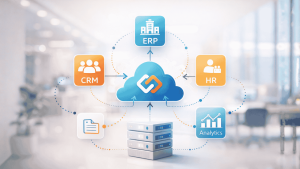
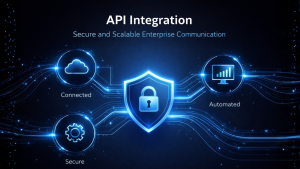
One of the most important elements is application integration, which allows enterprise applications deployed across different cloud providers to communicate through APIs or middleware layers. This ensures that business applications can exchange information without disruption.
Another critical component is data integration. Enterprises must ensure that data stored across different cloud environments remains consistent and accessible. Integration platforms enable real-time data synchronization and centralized analytics capabilities.
Network integration also plays a crucial role. By establishing secure connectivity between cloud environments, organizations can maintain consistent performance and reliable communication across platforms.
When these components operate together, enterprises gain a unified technology environment where cloud platforms function as part of a cohesive system rather than isolated infrastructures.
Scalability is one of the primary motivations behind multi-cloud adoption. Enterprises want the flexibility to expand workloads, deploy new applications, and support global operations without being constrained by a single cloud provider.
However, scalability is only possible when the underlying infrastructure is properly integrated. Without integration, expanding cloud environments often introduces additional complexity instead of improving operational agility.
Multi-cloud systems integration enables scalability by establishing standardized architecture frameworks across platforms. These frameworks define how applications are deployed, how data flows between environments, and how security policies are enforced.
Integrated environments also support automation, allowing IT teams to manage infrastructure more efficiently. Automated workflows can handle tasks such as workload distribution, resource allocation, and performance monitoring across multiple platforms.
As organizations continue to expand their digital capabilities, this integrated architecture becomes essential for supporting long-term business growth.
Implementing multi-cloud systems integration requires deep expertise across cloud platforms, enterprise networking, and cybersecurity frameworks. Many organizations lack the internal resources required to design and manage these complex environments.
Team Computers brings extensive experience in building enterprise IT architectures that connect hybrid and multi-cloud environments into unified operational ecosystems. Rather than deploying cloud technologies in isolation, the focus is on creating structured integration frameworks that align infrastructure, applications, and security systems.
This approach enables organizations to gain greater visibility across cloud platforms while maintaining consistent governance and operational efficiency.
Through its enterprise systems integration services, Team Computers supports organizations with multi-cloud architecture design, secure connectivity between cloud platforms, integration of enterprise applications, and centralized monitoring solutions.
“Multi-cloud environments deliver flexibility, but without integration they can quickly become difficult to manage. Successful enterprises treat integration as the foundation that allows multiple cloud platforms to operate as a single coordinated ecosystem.”
Multi-cloud strategies offer significant advantages for enterprises seeking scalability, resilience, and flexibility. However, without proper integration, these environments can introduce operational complexity and security risks.
Multi-cloud systems integration ensures that cloud platforms operate within a unified architecture that supports seamless communication, centralized governance, and efficient data flow.
Key takeaways include:
As enterprises continue expanding their cloud ecosystems, integration will remain a critical foundation for managing complex IT environments.
Discover how Team Computers can help your organization build a fully integrated multi-cloud environment that supports scalability, security, and operational efficiency.
Connect with our experts to explore how multi-cloud systems integration can transform your enterprise IT infrastructure into a unified and future-ready technology ecosystem.