Enterprise IT environments have grown significantly more complex over the past decade. Organizations now operate across hybrid cloud platforms, on-premise infrastructure, enterprise applications, and distributed networks. While these technologies enable innovation and digital transformation, they also introduce operational challenges when systems are deployed without coordination.
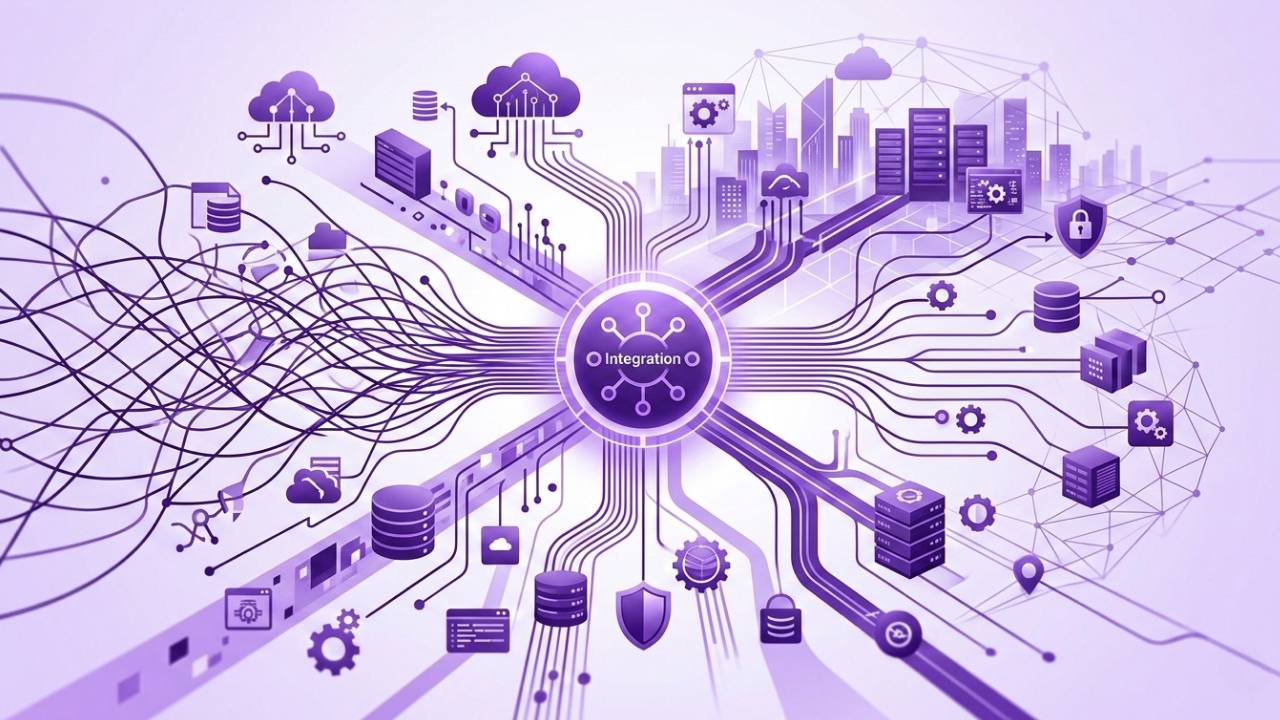
Many enterprises find themselves managing fragmented technology ecosystems where applications, infrastructure, and security tools operate independently. This lack of connectivity creates inefficiencies, limits visibility across operations, and increases the burden on IT teams.
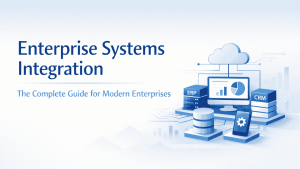
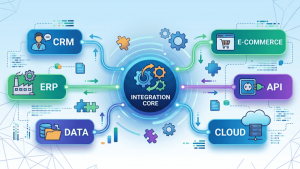
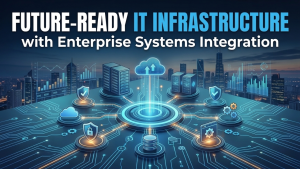
Enterprise systems integration addresses this challenge by connecting technologies into a unified operational framework. Instead of managing isolated systems, organizations gain a cohesive architecture where platforms communicate seamlessly and data flows efficiently across the enterprise.
For companies pursuing digital growth, reducing IT complexity is not simply about simplifying infrastructure. It is about creating an integrated environment that supports scalability, operational efficiency, and long-term innovation. In this article, we explore how enterprise systems integration helps organizations streamline IT operations and build more resilient digital ecosystems.
Modern enterprises rely on a wide range of technologies to support daily operations and digital initiatives. Over time, these technologies accumulate across different departments, business units, and locations.
An enterprise environment today may include cloud platforms, on-premise data centers, SaaS applications, cybersecurity tools, and distributed user networks. While each system serves a specific purpose, they often evolve independently, resulting in fragmented IT infrastructures.
When systems operate without proper integration, IT teams must manage multiple monitoring tools, separate data environments, and disconnected workflows. This fragmentation makes troubleshooting slower and increases operational overhead.
Disconnected systems also make it difficult for leadership teams to gain a unified view of technology performance. When information is spread across different platforms, decision-makers struggle to access accurate insights about infrastructure health, application performance, and security posture.
Enterprise systems integration reduces this complexity by connecting platforms and aligning them within a structured architecture where every component operates as part of a coordinated ecosystem.
Enterprise systems integration focuses on connecting applications, infrastructure, and security frameworks so they function as a unified system rather than independent components. When systems are integrated properly, information flows automatically between platforms, reducing manual processes and operational inefficiencies.
A well-designed integration strategy enables enterprises to standardize technology environments while improving collaboration between systems. Instead of managing isolated tools, IT teams gain centralized control over the entire infrastructure.
Integrated environments typically enable:
These capabilities significantly reduce operational complexity. IT teams can identify issues faster, automate routine tasks, and manage infrastructure more efficiently.
More importantly, integration ensures that new technologies strengthen the ecosystem rather than adding another disconnected layer.
As organizations grow, their IT environments must support more users, applications, and workloads. Without structured integration, scaling infrastructure often introduces additional complexity instead of improving efficiency.
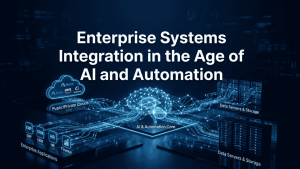
Enterprise systems integration provides the foundation for scalable IT architecture. By aligning infrastructure, cloud platforms, networking systems, and applications within a unified framework, organizations create environments that can expand without disrupting operations.
Integrated infrastructure allows enterprises to standardize deployment processes, automate system provisioning, and monitor performance from centralized platforms. This reduces the effort required to introduce new technologies or expand into new locations.
Scalable integration frameworks also enable enterprises to adopt emerging technologies such as artificial intelligence, automation, and advanced analytics. When systems are already connected through integration layers, these innovations can be implemented more easily.
For organizations pursuing digital transformation, integration ensures that technology growth remains structured rather than chaotic.
Also read: How Systems Integration Accelerates Enterprise Scalability
Implementing enterprise systems integration requires more than connecting technologies. It involves architectural planning, deep technical expertise, and an understanding of how enterprise IT ecosystems evolve over time.
Integration partners play a critical role in helping organizations evaluate their existing infrastructure, identify inefficiencies, and design integration strategies that support both current operations and future innovation.
At Team Computers, systems integration initiatives focus on building connected enterprise environments where infrastructure, cloud platforms, applications, and security systems operate seamlessly together. By aligning these technologies within a unified architecture, organizations gain improved visibility, stronger security posture, and more efficient IT operations.
The integration approach typically includes infrastructure alignment, hybrid cloud connectivity, application interoperability, and centralized monitoring frameworks. These elements work together to reduce operational complexity while supporting enterprise scalability.
Organizations that partner with experienced integration providers can transform fragmented technology ecosystems into cohesive digital platforms that enable long-term business growth.
As enterprise technology environments continue to expand, managing complexity becomes a major challenge for IT leaders. Fragmented systems, disconnected applications, and siloed infrastructure can slow innovation and increase operational costs.
Enterprise systems integration provides a structured approach to simplifying IT ecosystems by connecting technologies into unified, scalable environments.
Key takeaways include:
By adopting a strategic integration approach, organizations can reduce operational friction and create IT environments that support innovation rather than hinder it.
If your organization is struggling with fragmented IT systems or operational complexity, enterprise systems integration can provide the clarity and control needed to move forward.
Discover how Team Computers helps enterprises design integrated technology ecosystems that reduce complexity, improve visibility, and support scalable digital growth. Connect with our experts to explore how integration can transform your IT environment.