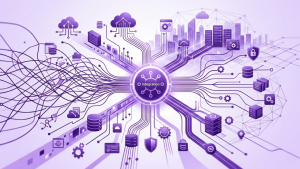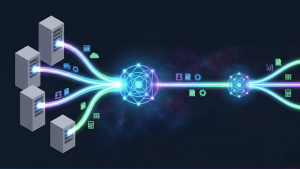
Growth is exciting. It brings new markets, new teams, new customers, and new ambitions. But growth also brings complexity. As enterprises expand, their IT environments rarely grow in a straight line. Branches open at different times. Applications are deployed based on immediate needs. Security tools are added after incidents. Cloud subscriptions multiply independently. Over time, what begins as innovation can turn into fragmentation.
This is where Team Computers steps in, not just as a technology partner, but as a Systems Integrator that restores structure to expanding ecosystems.
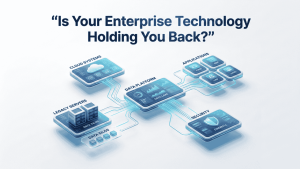
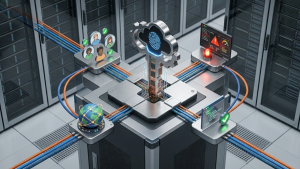
In distributed enterprises, common patterns emerge. Different branch configurations, multiple firewall standards, isolated Cloud environments, inconsistent backup policies, varying endpoint security controls, and limited centralized monitoring may seem minor individually, but collectively they create operational risk. Standardization is not about restriction, it is about stability. And stability begins with Systems Integration.
Standardization does not mean identical hardware everywhere. It involves:
As a Systems Integrator, Team Computers designs environments where expansion does not introduce unpredictability. Every new location, workload, or application fits into a defined architectural blueprint.
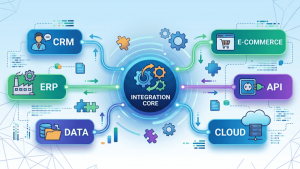
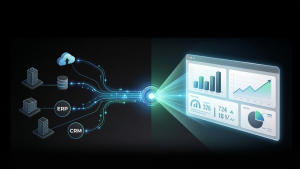
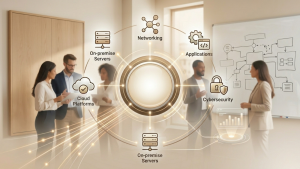
Many organizations operate across ecosystems powered by global technology platforms such as Cisco Systems, Hewlett Packard Enterprise, and Microsoft Azure. Each platform delivers excellence within its domain, but excellence in isolation does not guarantee cohesion. Team Computers ensures:
The objective is orchestration, not accumulation.
For enterprises operating across cities or regions, repeatability becomes critical. Team Computers builds integration frameworks that allow rapid branch rollout without architectural redesign, consistent security posture across locations, predictable network performance, centralized compliance enforcement, and standardized AMC governance. Every deployment strengthens the ecosystem instead of complicating it.
Standardization fails when integration ends at implementation. Technology evolves, threat landscapes shift, and business priorities expand. As a Systems Integrator, Team Computers supports enterprises across the full lifecycle, including consultative architecture design, structured implementation, proactive monitoring, managed services, performance optimization, and governance reviews. Integration becomes a sustained discipline, not a one-time project.
When IT environments are standardized through Systems Integration, downtime reduces, escalation cycles shorten, Cloud costs stabilize, security visibility improves, and decision-making accelerates. Executives gain confidence because IT performance becomes predictable, and predictability enables strategic planning.
With nearly four decades of enterprise IT experience, multi-domain expertise across infrastructure, Cloud, cybersecurity, and networking, vendor-neutral architectural consulting, nationwide service capability, and single-window accountability, Team Computers operates as an extension of enterprise IT leadership, ensuring that every technology decision strengthens long-term architectural integrity.
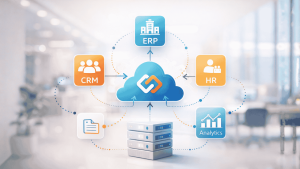
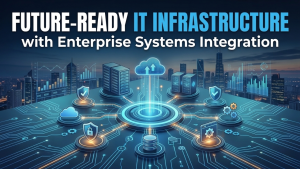
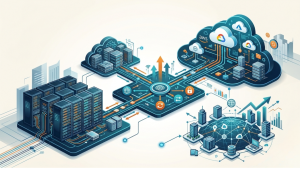
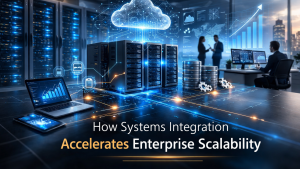
Enterprises do not fail because they adopt new technology – they struggle when new technology is not integrated into an existing structure. Systems Integration provides that structure. It transforms expansion into controlled scalability, converts complexity into coordinated performance, and turns fragmented tools into cohesive ecosystems. And that is how Team Computers engineers enterprise IT with intention.