Technology has become the backbone of modern businesses. From cloud infrastructure and enterprise applications to cybersecurity and digital workplaces, organizations rely heavily on IT systems to support daily operations and long-term growth.
Traditionally, companies managed their technology infrastructure through internal IT teams. While this approach provides direct control, it can also introduce challenges related to resource limitations, infrastructure complexity, and rising operational costs.
As digital transformation accelerates, many enterprises are now evaluating Outsourcing IT Managed Services as an alternative to traditional in-house IT operations. Managed services allow organizations to partner with specialized IT providers who remotely monitor, manage, and optimize their technology environments.
But which approach is better?
Understanding the differences between in-house IT operations and outsourced managed services can help organizations make informed decisions about how to manage their technology infrastructure effectively.
Understanding In-House IT Operations
In-house IT operations refer to managing an organization’s IT infrastructure using internal teams and resources. Companies build their own IT departments responsible for maintaining systems, managing networks, troubleshooting issues, and ensuring technology availability.
Typical responsibilities of an in-house IT team include:
- Infrastructure management
- Network monitoring
- Application support
- Security management
- User support and troubleshooting
- System updates and patch management
For some organizations, maintaining an internal IT team provides greater visibility and direct control over technology operations.
However, as IT environments grow more complex, internal teams may struggle to keep up with increasing demands and evolving technologies.
What Is Outsourcing IT Managed Services?
Outsourcing IT Managed Services involves partnering with a specialized service provider that manages an organization’s IT infrastructure remotely.
Managed services providers deliver proactive monitoring, infrastructure management, and technical support using advanced tools, automation, and dedicated expertise.
These services often include:
- Remote infrastructure monitoring
- Cloud management
- Network management
- Endpoint management
- IT service desk support
- Security monitoring and compliance management
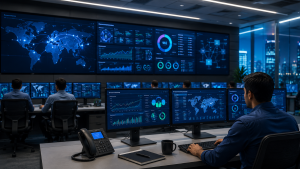
Managed services providers operate centralized monitoring centers that continuously track system performance and resolve issues before they impact business operations.
Modern managed services models also integrate intelligent platforms such as ZerofAI, which enable predictive monitoring and automated incident resolution.
Key Differences Between Outsourced IT and In-House IT
Organizations evaluating IT management models must consider several important factors.
Cost Efficiency
In-house IT teams require investments in hiring, training, infrastructure tools, and operational resources.
Outsourcing IT managed services typically offers predictable service costs while reducing the need for large internal teams.
Access to Specialized Expertise
Technology evolves rapidly, and maintaining expertise across multiple domains—cloud, cybersecurity, networking, and automation—can be challenging.
Managed services providers bring access to specialists with deep expertise across diverse technology environments.
Scalability
Internal IT teams may struggle to scale resources quickly as business demands grow.
Managed services provide flexible service models that can easily scale alongside business requirements.
Proactive Monitoring
Many internal IT teams rely on reactive troubleshooting.
Managed services providers implement proactive monitoring systems that detect issues early and prevent disruptions.
Platforms like ZerofAI enhance this capability by analyzing infrastructure data and identifying anomalies before failures occur.
When In-House IT May Be the Right Choice
While managed services provide several advantages, there are scenarios where maintaining internal IT teams may still be beneficial.
Organizations may prefer in-house IT when:
- They operate highly specialized internal systems
- Regulatory requirements demand internal control
- Their IT environment is relatively simple
- They require constant on-site technical presence
However, even in these cases, many organizations adopt hybrid models where internal teams collaborate with managed services providers.
Why Many Enterprises Are Choosing Managed Services
As IT environments grow more complex, enterprises increasingly rely on managed services to support digital transformation and operational efficiency.
Key benefits of outsourcing IT managed services include:
24/7 Infrastructure Monitoring
Managed services providers monitor systems around the clock to ensure infrastructure reliability.
Faster Incident Resolution
Proactive monitoring and automated workflows help identify and resolve issues quickly.
Improved Security and Compliance
Managed services providers implement advanced security monitoring and compliance frameworks to protect enterprise systems.
Access to Automation and AIOps
Intelligent platforms like ZerofAI allow organizations to automate infrastructure monitoring, detect anomalies, and reduce operational risks.
These capabilities enable IT teams to move from reactive support models to predictive IT operations.
Finding the Right Balance: Hybrid IT Models
Many modern enterprises are adopting a hybrid IT model that combines internal IT teams with managed services providers.
In this approach:
- Internal teams focus on strategic initiatives and business innovation
- Managed services providers handle infrastructure monitoring and operational management
This model allows organizations to maintain control while benefiting from the scalability and expertise of managed services providers.
Conclusion
Choosing between in-house IT operations and outsourcing IT managed services depends on an organization’s technology complexity, resource availability, and long-term business strategy.
Key takeaways include:
- In-house IT provides direct control but can face scalability challenges
- Outsourcing IT managed services offers access to specialized expertise and advanced monitoring capabilities
- Proactive monitoring and automation improve infrastructure reliability
- Intelligent platforms like ZerofAI enable predictive IT operations
As enterprises continue their digital transformation journeys, managed services are becoming a strategic approach to managing complex IT environments.
Looking to improve the efficiency and reliability of your IT operations?
Discover how Managed Services from Team Computers, powered by intelligent automation platforms like ZerofAI, can help your organization achieve proactive monitoring, scalable infrastructure management, and smarter IT operations.