
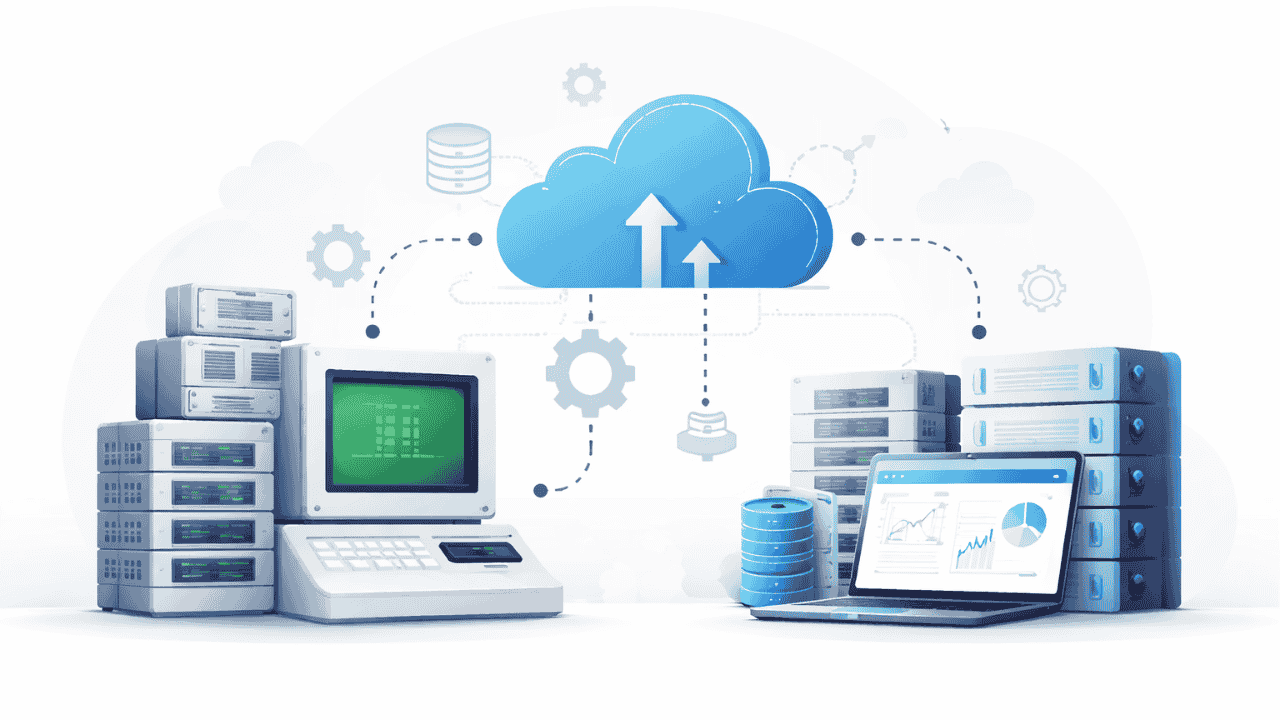
Many large enterprises still rely on legacy systems that power critical business operations. These platforms often manage finance, supply chain processes, or customer data that organizations cannot easily replace.
However, legacy systems frequently struggle to integrate with modern technologies such as cloud platforms, analytics tools, and digital applications.
This creates a major challenge for IT leaders: how to innovate without disrupting systems that businesses still depend on.
Legacy system integration offers a practical path forward. Instead of replacing legacy platforms entirely, integration allows enterprises to connect them with modern applications and infrastructure.
In this blog, we explore how legacy system integration enables organizations to modernize their IT environments while preserving critical operational systems.
Why Legacy Systems Still Matter in Enterprises
Despite rapid technological innovation, legacy platforms remain essential for many enterprises because they continue to support critical business operations. These systems often handle key functions such as financial processing, supply chain operations, regulatory compliance systems, and mission-critical databases that organizations rely on daily.
Replacing these platforms entirely can be both risky and expensive, as it may disrupt core processes and require significant time and investment. However, legacy systems also present several challenges.
They often have limited compatibility with modern applications, outdated interfaces, and a lack of real-time data capabilities, which makes it difficult for organizations to integrate them with newer technologies. As a result, these limitations can slow down digital transformation initiatives and prevent enterprises from fully leveraging modern IT innovations.
How Legacy System Integration Enables IT Modernization
Legacy system integration bridges the gap between older infrastructure and modern technologies, allowing organizations to modernize their IT environments without replacing critical systems. Through effective integration, enterprises can connect legacy databases with modern analytics platforms, expose legacy system data through APIs, and automate workflows between legacy and cloud systems.
This approach enables businesses to leverage the capabilities of existing platforms while extending their functionality within modern digital ecosystems. As a result, organizations benefit from faster innovation without the need for full system replacement, improved access to enterprise data, and significantly lower modernization costs.
By integrating legacy systems into broader IT architectures, enterprises can continue using reliable platforms while supporting digital transformation initiatives. For more insights, read Future-Ready IT Infrastructure with Enterprise Systems Integration,
Integration Approaches for Legacy Systems
Organizations can modernize legacy environments through several effective legacy system integration strategies that connect older platforms with modern technologies. One common approach is API wrapping, where legacy system capabilities are exposed through APIs, allowing modern applications to access their data and functions easily.
This method enables faster application connectivity and improved system interoperability without altering the core legacy system. Another approach is middleware integration, where middleware platforms act as translators between legacy and modern systems, enabling seamless data transformation, communication, and workflow automation across different applications. Additionally, data synchronization tools allow legacy databases to sync with modern data platforms, ensuring that information remains consistent and accessible.
This integration enables enterprises to leverage real-time analytics and insights across enterprise systems, helping organizations modernize their IT environments while preserving the value of existing legacy infrastructure.
How Team Computers Supports Legacy System Integration
Team Computers helps enterprises integrate legacy systems into modern IT environments without disrupting business operations.
Our approach focuses on:
- assessing legacy infrastructure
- designing integration architectures
- implementing scalable connectivity frameworks
With decades of experience in enterprise IT environments, we ensure legacy systems continue delivering value while supporting modern digital initiatives.
“Legacy systems still power many enterprise operations. Integration allows organizations to unlock their data and capabilities while adopting modern technologies.”
– Head of IT, Team Computers
Legacy systems remain deeply embedded in enterprise environments.
However, organizations do not need to replace them to achieve modernization.
Legacy system integration enables enterprises to connect existing platforms with modern applications and infrastructure.
Key takeaways:
- Legacy systems still support critical business processes
- Integration bridges the gap between old and new technologies
- Modern APIs and middleware enable seamless connectivity
- Integration supports digital transformation without disruption
Explore how Team Computers can help modernize your IT ecosystem through secure and scalable legacy system integration – allowing you to innovate without compromising critical business systems.