
For years, employee experience was viewed as an HR responsibility: Culture, Benefits, Engagement, Workplace policies. Technology rarely entered the conversation.
Today, that’s changing. An employee may never interact directly with the data center team, network operations team, endpoint management team, or infrastructure engineers. Yet those teams influence the employee experience every single day.
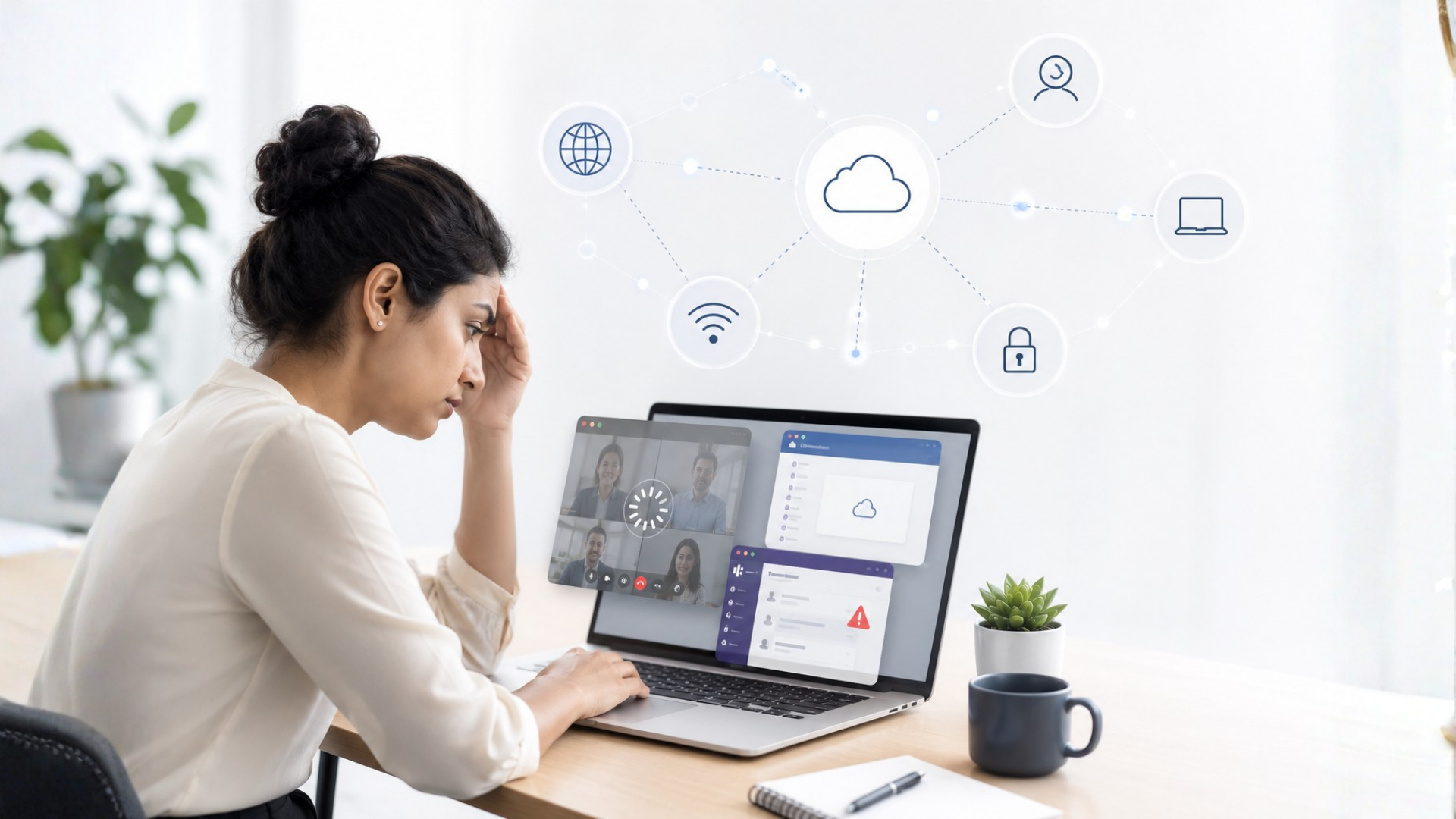
A slow laptop before a customer presentation, repeated VPN disconnections during a critical meeting, application latency that turns a five-minute task into a twenty-minute frustration. Employees don’t see infrastructure. They experience its impact.
That’s why a growing number of CIOs are beginning to view employee experience through a different lens, not as a workplace initiative but as an infrastructure outcome and for organizations navigating hybrid work, distributed operations, and cloud-first environments, that shift is becoming impossible to ignore.
The employee experience conversation has changed
Ten years ago, employee experience discussions focused largely on workplace culture. Today, digital experience plays an equally important role.
Research from Gartner has highlighted Digital Employee Experience (DEX) as an increasingly important factor influencing productivity, engagement, and technology adoption.
The reason is simple. Work itself has changed.
Employees now rely on:
- Collaboration platforms
- Cloud applications
- Virtual desktops
- SaaS environments
- Enterprise mobility
- Digital workflows
Technology is no longer supporting work, technology is work.
When digital experiences break down, employee productivity follows.
Which means infrastructure teams are now influencing outcomes traditionally associated with HR and business leadership.
Employees don’t care about infrastructure metrics
Infrastructure teams often measure success using metrics such as:
- Network availability
- CPU utilization
- Server uptime
- Storage performance
- Incident closure rates
These measurements remain important but employees rarely think in those terms.
Employees care about different questions:
- Can I access my applications?
- Is my laptop performing properly?
- Can I join meetings without disruption?
- Are systems responding quickly?
- Can I complete my work without technology friction?
This creates a disconnect. An infrastructure dashboard may indicate everything is healthy. Meanwhile, employees may be experiencing significant challenges.
What appears as a technical success can still feel like a poor workplace experience and that’s becoming a serious operational concern.
The rise of invisible productivity loss
One of the biggest challenges facing enterprise IT today is that productivity loss is often difficult to see. A complete outage attracts immediate attention.Minor friction usually doesn’t, yet friction accumulates.
Consider a simple example.
An employee loses:
- Three minutes waiting for applications to load
- Five minutes reconnecting to a VPN
- Four minutes resolving login issues
None of these incidents trigger a major escalation but across hundreds or thousands of employees, the impact becomes substantial.
What makes this particularly challenging is that traditional monitoring tools rarely measure it. The infrastructure appears available. The experience remains poor. This is why leading organizations are beginning to focus on experience-centric visibility rather than infrastructure visibility alone.
Hybrid work made infrastructure personal
Before hybrid work became mainstream, most employees operated within a controlled environment. The office network, standardized devices, predictable connectivity.
Today’s workplace looks very different.
Employees connect from:
- Homes
- Branch offices
- Client locations
- Airports
- Co-working spaces
The infrastructure supporting those experiences has become significantly more complex.
A collaboration issue may involve:
- Endpoint performance
- Internet connectivity
- SaaS application behavior
- Identity services
- Network routing
The employee sees one problem, the infrastructure team may be dealing with five different systems. As a result, employee experience has become one of the most visible indicators of infrastructure health.
Why infrastructure leaders are paying attention to DEX
Forward-thinking CIOs are increasingly asking a new question: “How do employees experience our technology?”
Not: “Are our systems available?”
That distinction matters because availability does not automatically equal productivity. This shift has contributed to growing investment in:
Digital Experience Monitoring
Understanding how users interact with technology environments.
Endpoint Analytics
Identifying device performance issues before they affect users.
Experience-Level Visibility
Monitoring employee-facing technology rather than infrastructure components alone.
Automation
Resolving common issues before employees raise tickets.
These capabilities help infrastructure teams move from reactive support toward proactive experience management.
A real-world example: When uptime wasn’t enough
A large professional services organization maintained infrastructure availability above 99.9%.
From an operational perspective, performance appeared strong, yet employee satisfaction with workplace technology continued to decline.
The root cause wasn’t outages, tt was cumulative friction.
Users experienced:
- Slow login times
- Collaboration tool instability
- Delayed application response
Each issue appeared minor when viewed independently. Collectively, they created significant productivity challenges. Once the organization began measuring digital employee experience alongside infrastructure metrics, the visibility gap became obvious.
The lesson was clear.
High uptime does not guarantee a positive employee experience.
The next evolution of Managed Services
Historically, Managed Services focused on maintaining infrastructure.
- Servers
- Networks
- Devices
- Applications
Those responsibilities remain important but the market is evolving. Organizations increasingly expect Managed Services providers to improve employee outcomes not just technical performance.
This is driving greater adoption of:
- Digital Workplace Management
- Experience Monitoring
- Automation-Led Operations
- AI-Assisted Service Management
- Predictive Support Models
Platforms such as ZerofAI are helping organizations identify issues earlier, automate remediation, and improve user experience before productivity is affected.
The conversation is moving beyond uptime toward outcomes.
What this means for Indian enterprises
This trend is particularly relevant across India.
Organizations are managing:
- Rapid GCC expansion
- Distributed workforces
- Multi-location operations
- Cloud-first application environments
- Increasing expectations around employee productivity
As competition for skilled talent intensifies, employee experience becomes more than a workplace initiative, it becomes a business advantage.
The organizations that provide seamless digital experiences often gain advantages in:
- Productivity
- Retention
- Collaboration
- Operational efficiency
And increasingly, infrastructure plays a central role in all four.
Conclusion
Employee experience is no longer separate from IT operations. It is becoming one of the clearest indicators of infrastructure effectiveness.
As work becomes increasingly digital, employees judge technology environments based on outcomes not infrastructure metrics.
To improve digital employee experience:
- Measure employee-facing performance, not just system availability
- Identify friction before users report issues
- Connect infrastructure health with productivity outcomes
- Use automation to reduce recurring disruptions
Because employees don’t care whether a server is healthy, they care whether they can do their jobs without interruption and increasingly, that’s becoming an infrastructure responsibility.
Build a Better Digital Workplace Experience
Discover how modern Managed Services, Digital Workplace Management, and automation-led operations can help improve employee productivity and technology experience.
Organizations that improve employee experience often improve operational performance at the same time.
Improve My Digital Employee Experience