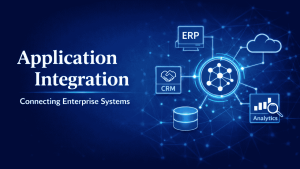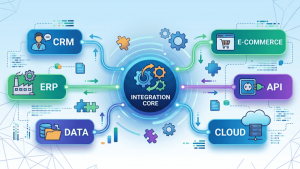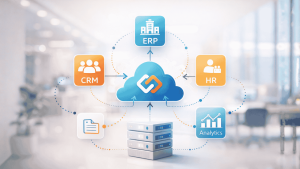
Modern enterprises rely on a wide range of software platforms to support their operations. Customer data is managed through CRM systems, financial transactions are processed within ERP platforms, analytics tools generate business insights, and cloud applications enable collaboration across teams.
Each of these systems plays an important role within the enterprise technology ecosystem. However, their true value emerges only when they can communicate and exchange information seamlessly.
This is where API integration becomes essential.
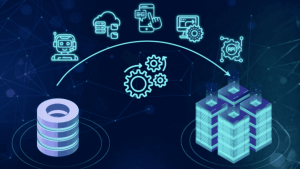
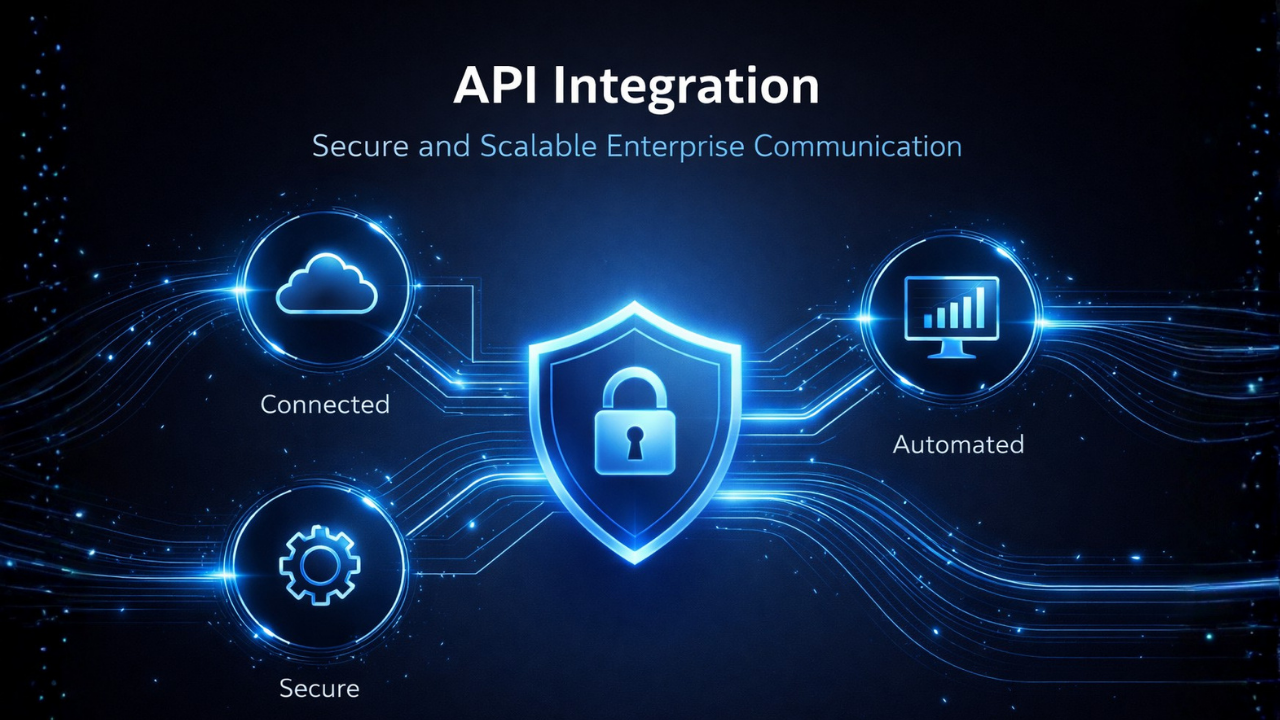
Application Programming Interfaces (APIs) act as communication bridges between systems, allowing applications to exchange data securely and efficiently. Through APIs, enterprise platforms can interact with one another without requiring complex manual processes or tightly coupled connections.
API integration has become a foundational component of modern systems integration strategies, enabling organizations to connect applications, automate workflows, and build scalable digital ecosystems.
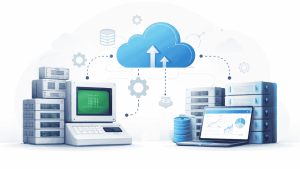
As organizations adopt more digital platforms, the number of applications within enterprise IT environments continues to grow. These systems often originate from different vendors and operate within different infrastructures, including cloud environments and on-premise data centers.
Without integration, these applications function independently, creating operational challenges such as fragmented data, manual processes, and limited visibility across systems.
API integration addresses these challenges by enabling applications to exchange information in real time. This allows organizations to create connected technology environments where systems interact seamlessly and workflows operate efficiently.
For enterprises undergoing digital transformation, API integration plays a crucial role in ensuring that new technologies can integrate with existing platforms without disrupting operations.
An API acts as an interface that allows one application to request data or services from another application. Instead of accessing a system’s internal architecture directly, applications interact through predefined API endpoints.
This approach provides several key advantages:
API integration supports a wide range of enterprise processes. Here are some of the most common examples:
These use cases demonstrate how API integration helps organizations automate workflows and eliminate manual data transfer between systems.
Organizations that adopt API-driven integration strategies gain several important competitive advantages:
APIs enable applications to exchange information instantly, improving data accuracy and operational responsiveness across the enterprise.
API-based architectures allow enterprises to integrate new applications without significantly modifying existing systems, reducing cost and disruption.
Automated data exchange reduces the need for manual processes, enabling teams to focus on higher-value activities and strategic goals.
As organizations grow and adopt additional technologies, APIs provide a scalable method for connecting systems and expanding digital capabilities without rebuilding infrastructure.
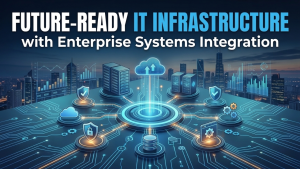
Today’s enterprise technology environments are increasingly built around API-driven architectures. Organizations use APIs to connect cloud platforms, enterprise applications, mobile services, and data systems into unified digital ecosystems.
In many cases, APIs form the foundation of microservices architectures, where applications are composed of smaller, independently functioning services that communicate through APIs. This approach improves system flexibility and allows enterprises to innovate more rapidly by introducing new services without disrupting existing platforms.
As digital transformation initiatives accelerate, API integration continues to play a central role in enabling agile and scalable enterprise IT environments.
Successfully implementing API integration requires both technical expertise and a deep understanding of enterprise IT architectures. At Team Computers, integration specialists work closely with organizations to analyze their existing application environments and identify opportunities for API-driven connectivity.
The process typically begins with assessing current systems, data flows, and integration requirements. Based on this assessment, scalable API integration frameworks are designed to enable secure communication between enterprise platforms.
Team Computers supports organizations with:
By enabling seamless communication between systems, Team Computers helps organizations build agile and scalable digital ecosystems.
“APIs have become the backbone of modern enterprise connectivity. They allow organizations to integrate applications quickly and efficiently while maintaining the flexibility needed to adapt to evolving business requirements.”
— Head of IT Services, Team Computers
As enterprises continue to adopt new technologies, the need for seamless communication between applications becomes increasingly important. API integration provides the foundation for connecting enterprise systems, enabling secure data exchange and automated workflows across platforms.
Key advantages of API integration include:
Organizations that embrace API-driven integration strategies can build connected digital ecosystems that support innovation, agility, and long-term growth.
If your organization is looking to improve application connectivity and streamline workflows, the right API integration strategy can transform fragmented systems into a coordinated enterprise platform.
Discover how Team Computers helps enterprises implement secure and scalable API integration solutions that connect applications, infrastructure, and data platforms seamlessly.