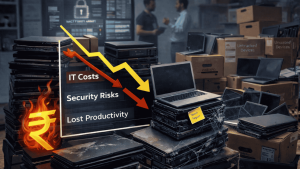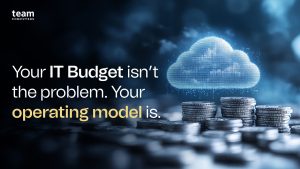

What if the real cost of technology isn’t what you spend upfront — but what it slows down over time?
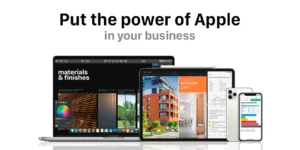
For years, Apple at work was viewed through a narrow lens. The conversation often focused on the initial decision, and for many organizations, that was where it paused. Despite clear advantages in performance and experience, adoption was often limited — not because of capability, but because of how value was being measured.
Today, that measurement is evolving.
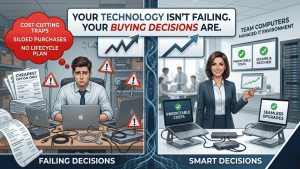
Organizations are beginning to look beyond the immediate and evaluate technology in terms of long-term impact. It’s no longer just about what a device costs on day one, but how it performs over months and years — how it supports teams, how it reduces friction, and how it contributes to overall productivity.
This shift in thinking is redefining how Apple is viewed in the enterprise.
Mac is designed to deliver performance that doesn’t fade with time. It handles complex workflows with consistency, maintains stability across updates, and avoids the gradual decline that often disrupts productivity in other systems. For teams, this means fewer interruptions and a more reliable work experience that continues well beyond deployment.
Over time, this consistency becomes a measurable advantage.
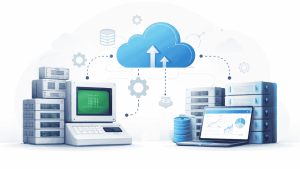
There’s also the aspect of durability — often overlooked, but deeply impactful. Devices that last longer reduce the need for frequent replacements, minimizing disruption across teams. When organizations aren’t constantly cycling through hardware upgrades or dealing with performance-related inefficiencies, the operational flow becomes smoother and more predictable.
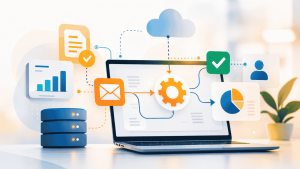
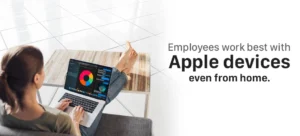
Mac simplifies everyday interactions. Its intuitive interface and seamless ecosystem reduce the time employees spend navigating systems or resolving minor issues. Instead, they can focus on their work with fewer interruptions. These small, consistent efficiencies build into meaningful productivity gains across teams.
For IT teams, the benefits are equally significant. A stable and secure ecosystem translates into fewer support requests, reduced maintenance overhead, and more time to focus on strategic priorities. Instead of reacting to issues, IT teams can proactively support growth and innovation.
All of this leads to a broader realization: value is not always immediate, but it becomes undeniable over time. Organizations are moving from questioning the cost of Apple at work to recognizing its long-term return. It’s no longer seen as a premium choice reserved for a few, but as a strategic investment that supports performance, reliability, and employee experience at scale.
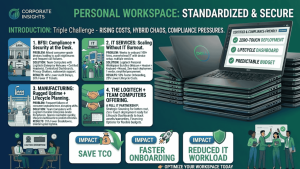
Translating this mindset into action requires the right approach — and this is where Team Computers plays a key role. By enabling organizations to adopt Apple in a structured and scalable way, Team Computers helps businesses move forward with clarity. From simplifying procurement to ensuring seamless deployment and ongoing support, they remove the friction that often holds organizations back from making the shift.
With solutions like Smart EPP, the transition becomes even more practical — allowing companies to extend Apple across teams while staying aligned with operational goals. It creates a framework where long-term value and accessibility go hand in hand.
As the hesitation that once defined Apple adoption begins to fade, a more informed and forward-looking approach takes its place — one that prioritizes outcomes over assumptions.
The conversation has evolved. Apple at work is no longer about cost. It’s about what that investment unlocks over time.
Ready to rethink Apple at work for your organization? Discover how Team Computers helps enterprises adopt, deploy, and scale Apple — with the structure, support, and long-term strategy your business needs.