Modern enterprises depend on a wide range of business applications to manage operations, serve customers, and drive growth. Customer relationship management platforms, enterprise resource planning systems, HR management tools, and analytics platforms all play critical roles in day-to-day operations. However, when these applications operate independently, organizations face fragmented workflows, inconsistent data, and reduced operational efficiency.
This is where Enterprise Application Integration becomes essential. Instead of functioning as isolated systems, integrated applications communicate seamlessly with one another, enabling data to flow across departments and processes without disruption.
Many organizations struggle with disconnected applications that require manual updates and data transfers. These inefficiencies slow down business processes and limit an organization’s ability to respond quickly to market changes.
By implementing a strong Enterprise Application Integration strategy, enterprises can connect their core systems, automate workflows, and gain a unified view of operations. In this blog, we explore how enterprise application integration improves operational efficiency, supports digital transformation, and helps organizations build a connected technology ecosystem.
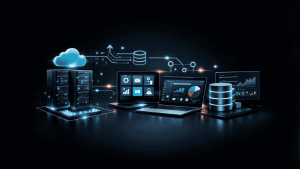
Most enterprises adopt business applications gradually as their operational needs evolve. Organizations often implement tools such as CRM systems for customer relationship management, ERP platforms for financial and operational processes, and analytics solutions to track business performance.
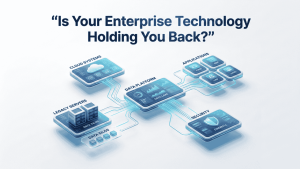
While each application serves a specific purpose, this incremental adoption frequently leads to a fragmented enterprise IT environment where systems operate independently rather than as a connected ecosystem. As a result, businesses face several challenges:
For example, when a sales team updates customer information in a CRM platform but that data is not synchronized with finance or customer support systems, other teams may continue working with outdated information. Over time, these disconnected systems reduce operational efficiency and limit leadership’s ability to access accurate, real-time insights for informed decision-making.
Implementing enterprise application integration helps eliminate these silos by ensuring seamless data flow across business systems. For deeper insights, explore our guide on Eliminating IT Silos with Enterprise Systems Integration.
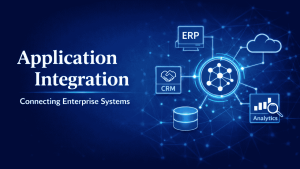
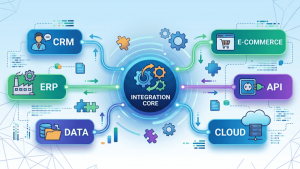
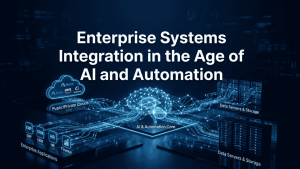
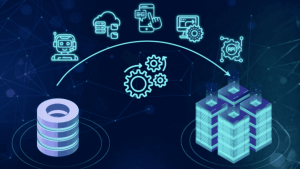
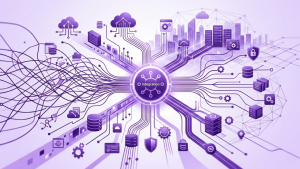
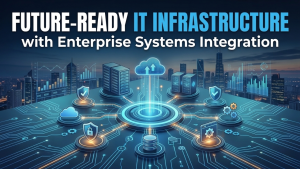
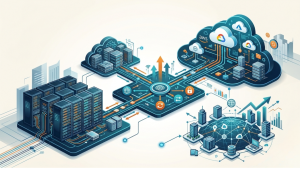
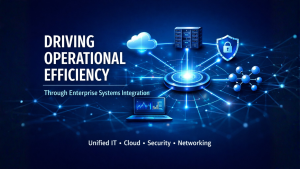
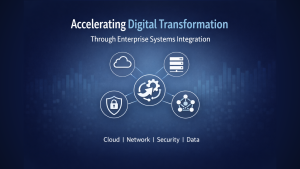
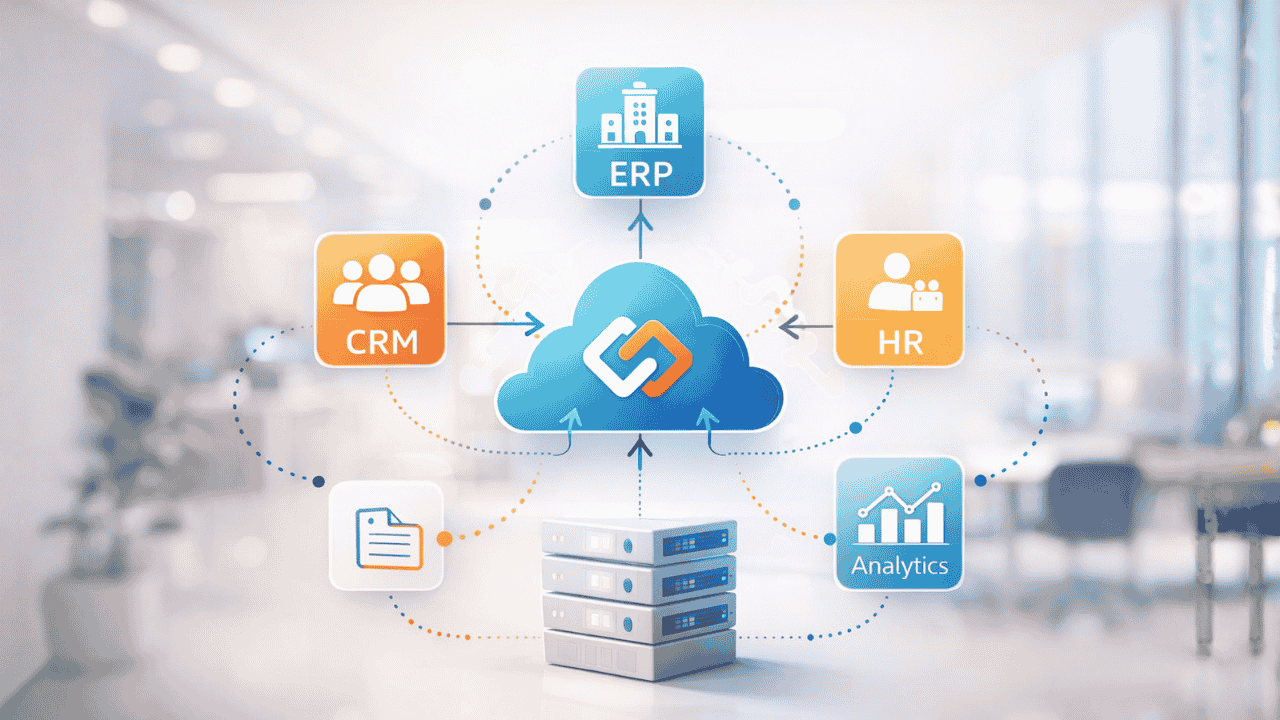
Enterprise Application Integration (EAI) is a critical component of modern enterprise systems integration, enabling different business applications to communicate, share data, and operate as a unified digital ecosystem.
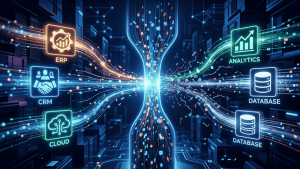
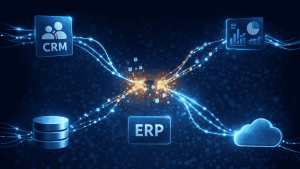
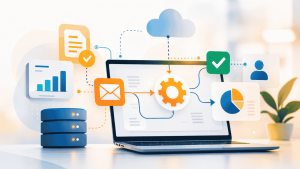
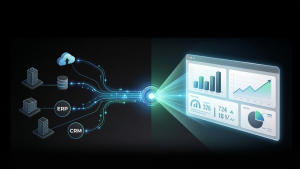
As organizations adopt multiple platforms such as CRM, ERP, and analytics tools, enterprise application integration ensures these systems work together seamlessly rather than functioning in isolated silos. Instead of relying on manual data transfers or complex custom scripts, EAI uses standardized interfaces and integration frameworks to enable:
This integration improves operational efficiency, data accuracy, and enterprise-wide visibility, allowing departments to access consistent information across systems.
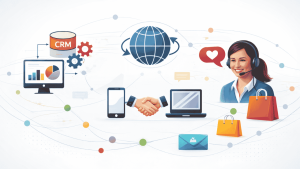
For instance, when a customer places an order online, an integrated enterprise environment can automatically update the CRM system, generate an invoice within the ERP platform, and adjust inventory levels in the supply chain management system — all without manual input.
By implementing enterprise application integration, businesses can streamline operations, reduce errors, and build a scalable digital infrastructure that supports long-term growth.
Organizations that implement Enterprise Application Integration experience significant improvements in efficiency, accuracy, and decision-making across all levels of the business.
Integrated applications eliminate repetitive manual tasks such as copying data between systems. Automated workflows allow processes to move smoothly between departments without delays or bottlenecks.
When enterprise systems share information automatically, organizations reduce the risk of data inconsistencies and human error, ensuring all teams work from a single source of truth.
Integrated systems provide leadership teams with access to consistent, real-time information across departments, enabling faster and more confident strategic decisions.
When customer data flows seamlessly across systems, organizations can provide more personalized, accurate, and responsive services at every touchpoint.
These benefits allow enterprises to transform fragmented operations into connected, high-performing business ecosystems.
Modern Enterprise Application Integration strategies rely on advanced technologies that enable seamless communication between enterprise systems and applications.
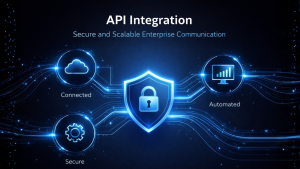
Application Programming Interfaces (APIs) allow business applications to exchange data securely, efficiently, and in real time. API-driven architectures help organizations integrate new digital platforms without disrupting existing systems, making them highly scalable and adaptable.
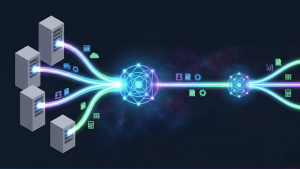
Middleware acts as a bridge between different applications by enabling data transformation, routing, and communication between systems built on different technologies. It removes the need for point-to-point connections that are difficult to maintain at scale.
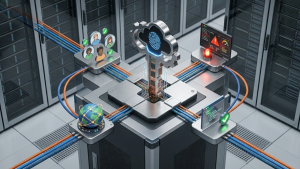
Modern integration platforms provide centralized environments for managing, monitoring, and optimizing connections across enterprise applications. These platforms simplify integration processes, improve operational visibility, and ensure data consistency across departments.
By leveraging APIs, middleware, and integration platforms, businesses can build flexible and scalable enterprise integration architectures that support digital transformation, improve system interoperability, and allow technology ecosystems to evolve alongside growing business needs.
Implementing effective Enterprise Application Integration requires deep expertise in enterprise architecture, IT infrastructure, and system connectivity to ensure seamless communication between critical business applications.
Team Computers helps organizations design and implement robust enterprise integration frameworks that connect platforms such as ERP, CRM, HR, and analytics systems, enabling streamlined workflows and improved operational efficiency.
Team Computers supports enterprises with:
With more than 38 years of experience in enterprise IT services, Team Computers enables organizations to build scalable and future-ready integration architectures that support long-term digital transformation. By connecting enterprise applications into a unified ecosystem, businesses can enhance data visibility, operational agility, and innovation — creating a strong foundation for sustainable growth.
As enterprises continue adopting new technologies, disconnected applications can quickly create operational inefficiencies and data fragmentation. Enterprise Application Integration provides the foundation for connecting business systems into a unified digital ecosystem.
Key takeaways:
Organizations that prioritize Enterprise Application Integration gain greater control over their IT environments while unlocking new opportunities for innovation and growth.
Discover how Team Computers can help your organization implement scalable Enterprise Application Integration solutions that connect critical systems, streamline operations, and enable smarter business decisions.