
Enterprise technology environments are rarely simple. Most organizations operate a combination of infrastructure platforms, enterprise applications, and data systems that support daily operations. Servers, cloud platforms, ERP systems, CRM tools, analytics platforms, and security frameworks all play critical roles in enabling modern business processes.
However, when these components operate independently, organizations struggle to maintain operational efficiency. Infrastructure may function well, applications may deliver strong capabilities, and data platforms may generate insights—but without proper alignment between these elements, enterprises often face fragmented workflows and limited visibility.
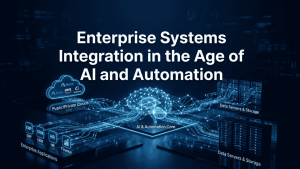
This is where systems integration becomes essential. By connecting infrastructure, applications, and data environments, systems integration enables organizations to create unified technology ecosystems where information flows seamlessly and processes operate efficiently.
In this blog, we explore how systems integration aligns infrastructure, applications, and data, why this alignment matters for enterprise operations, and how organizations can build integrated technology environments that support scalability, innovation, and long-term digital transformation.
Most enterprises adopt technology in phases. Over time, organizations deploy new infrastructure platforms, enterprise applications, and data solutions to support evolving business requirements. While each of these technologies delivers value independently, the overall IT environment often becomes fragmented.
Disconnected systems create operational inefficiencies that affect both IT teams and business functions. Infrastructure platforms may operate separately from application environments, while critical business data remains stored across multiple systems without synchronization. As a result, organizations often struggle to gain a unified view of enterprise operations.
When infrastructure, applications, and data environments are not aligned, teams frequently rely on manual processes to move information between systems. This slows workflows, increases the likelihood of errors, and limits the organization’s ability to make timely decisions. Over time, the complexity of managing disconnected systems places additional pressure on IT teams while reducing overall operational efficiency.
These challenges highlight the growing importance of enterprise systems integration, which enables organizations to connect technologies and ensure that enterprise platforms operate as part of a cohesive ecosystem.
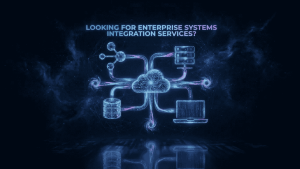
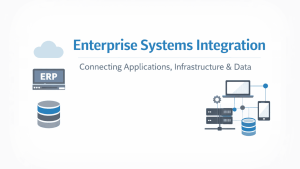
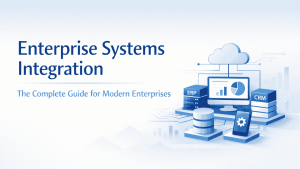
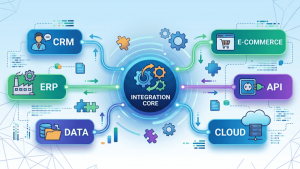
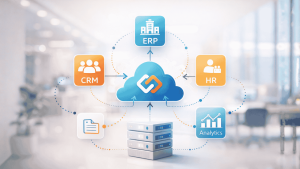
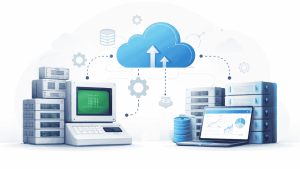
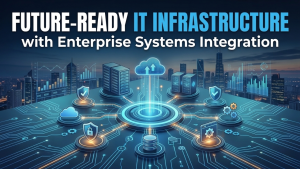
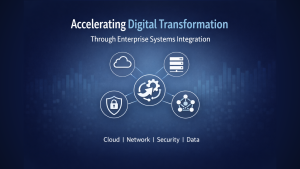
Systems integration focuses on creating a connected technology environment where infrastructure platforms, enterprise applications, and data systems operate together within a unified architecture.
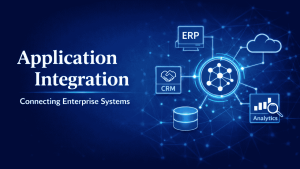
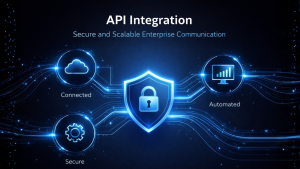
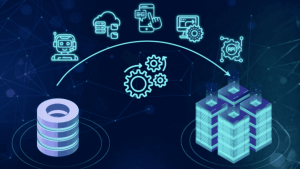
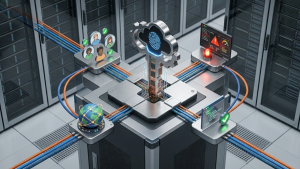
Instead of functioning as isolated components, integrated systems communicate through structured frameworks such as APIs, middleware platforms, and data integration technologies. This connectivity allows enterprise platforms to exchange information seamlessly while maintaining operational stability.
Through systems integration, organizations can enable real-time communication between applications, centralized monitoring across infrastructure environments, and automated workflows that connect multiple business systems. Data generated by enterprise applications can flow directly into analytics platforms, providing leadership teams with timely insights that support faster decision-making.
By aligning infrastructure, applications, and data environments, enterprises can ensure that technology investments contribute to a unified operational strategy rather than creating additional complexity.
When organizations successfully align infrastructure, applications, and data through systems integration, they unlock significant operational and strategic advantages.
Integrated environments improve operational efficiency by enabling automated workflows across business systems. Instead of relying on manual data transfers, applications communicate directly with each other, allowing processes to run more smoothly and reducing the potential for human error.
Another major benefit is improved data visibility. When enterprise data flows seamlessly across systems, decision-makers gain a more comprehensive view of business performance. This real-time visibility supports faster responses to operational challenges and helps organizations identify opportunities for improvement.
Integrated technology ecosystems also enable enterprises to scale more effectively. New platforms, applications, or digital services can be introduced into an existing integrated environment without disrupting operations. This flexibility is particularly valuable for organizations undergoing digital transformation initiatives, where technology environments must continuously evolve.
Achieving alignment across infrastructure, applications, and data requires a carefully designed integration architecture. Enterprises must establish a framework that determines how systems communicate, how data flows between platforms, and how performance is monitored across the environment.
A successful enterprise integration architecture typically combines several essential elements that support connectivity and operational visibility:
Together, these components form the integration layer that allows enterprise technologies to operate as a unified ecosystem. Organizations that invest in structured integration architectures gain the ability to expand their technology environments while maintaining stability and security.
Implementing enterprise-wide systems integration requires expertise across infrastructure platforms, enterprise applications, and data environments. Integration initiatives must ensure seamless connectivity while maintaining security, scalability, and performance.
Team Computers helps organizations design and implement enterprise systems integration frameworks that align infrastructure, applications, and data systems.
With decades of experience in enterprise IT environments, Team Computers supports organizations in:
By aligning technology infrastructure with business objectives, Team Computers helps enterprises eliminate data silos, improve operational visibility, and create connected technology ecosystems.
Modern enterprises depend on complex technology ecosystems that include infrastructure platforms, enterprise applications, and data environments. When these components operate independently, organizations face inefficiencies, limited visibility, and increased operational complexity.
Systems integration addresses these challenges by aligning infrastructure, applications, and data into a connected architecture that supports enterprise operations.
Key takeaways include:
Organizations that invest in systems integration gain the flexibility and insight required to adapt to evolving technology demands.
Aligning infrastructure, applications, and data is essential for building scalable enterprise technology environments. Discover how Team Computers helps organizations implement systems integration strategies that connect platforms, streamline operations, and support long-term digital transformation.
Explore how integrated enterprise environments can strengthen your organization’s technology foundation.