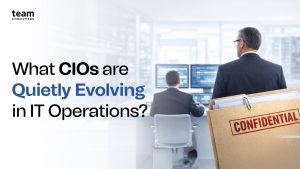

The role of the Chief Information Officer has reached a turning point.
In 2026, CIOs are no longer judged by uptime percentages or system availability, those are now considered baseline expectations. Instead, technology leaders are evaluated on their ability to accelerate innovation, support digital business models, and deliver measurable outcomes from IT investments.
But there is a fundamental challenge.
You cannot build the future if your best engineers are still occupied with maintaining the present.
Forward looking CIOs are recognizing this reality. Rather than managing infrastructure directly, they are evolving into orchestrators of complex digital ecosystems, combining internal teams, managed service partners, and intelligent automation platforms to drive business outcomes.
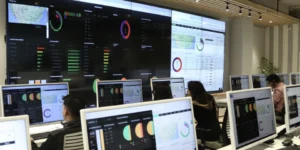
For years, a large portion of IT resources has been spent on keeping the lights on (KLO) routine operational activities such as server patching, monitoring infrastructure, and managing NOC operations.
These tasks are essential, but they rarely create competitive advantage.
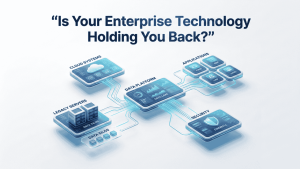
In today’s enterprise environment, the challenge has intensified:
When highly skilled engineers spend most of their time maintaining infrastructure, innovation slows down. Operational overhead becomes the silent barrier preventing organizations from moving forward.
To overcome this challenge, many CIOs are shifting from an operations mindset to an orchestration mindset.
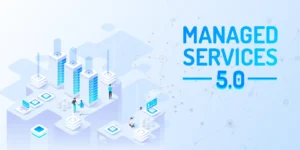
Instead of running every infrastructure component internally, they are partnering with managed services providers who handle continuous operations.
This shift allows CIOs to:
Redirect capital to innovation
Moving from infrastructure-heavy investments to flexible operational models that fund transformation initiatives.
Unlock proactive intelligence
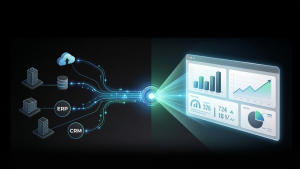
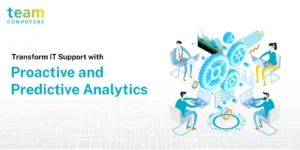
Modern managed services combine monitoring with automation engines that detect and resolve issues before they escalate.
Focus on business outcomes
Instead of discussing server performance, CIOs can focus on metrics that matter to the board, customer experience, speed of innovation, and operational agility.
This shift is also transforming how organizations view service providers.
The traditional vendor relationship where providers simply delivered infrastructure support is evolving into strategic partnerships.
Modern managed services now provide:
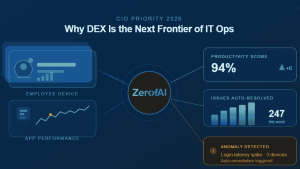
Providers like Team Computers are helping enterprises adopt this model by combining infrastructure management with intelligent monitoring platforms such as ZerofAI, enabling more proactive and resilient IT operations.
The CIOs who will lead successful enterprises in the coming years are not those who attempt to manage every system internally.
They are the leaders who understand how to orchestrate technology, partners, and automation into a unified digital ecosystem.
By delegating operational complexity to trusted managed service partners, CIOs gain the one resource they need most focus.
The future of enterprise IT will not be defined by who owns the largest infrastructure. It will be defined by who can orchestrate the most agile, intelligent, and outcome-driven technology environment.
Is your IT team spending more time managing infrastructure than driving innovation?
Discover how Managed Services from Team Computers can help your organization move from operational management to strategic IT orchestration allowing your teams to focus on what truly drives business growth.