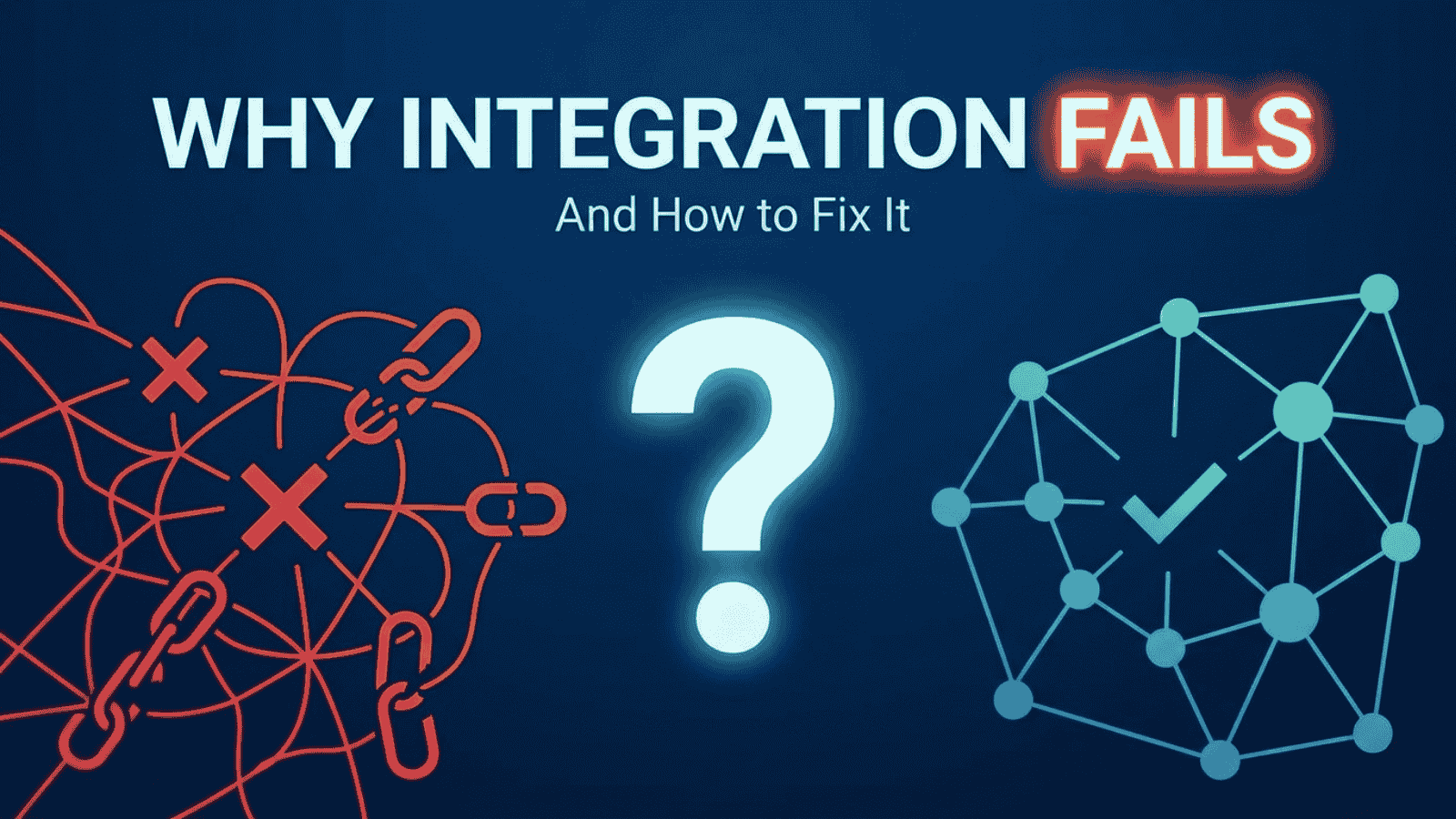
Enterprise integration projects rarely fail because of technology limitations. More often, they fail because organizations underestimate what it actually takes to connect systems, align data, and ensure seamless execution across complex IT environments.
Despite significant investments in platforms and tools, many enterprises continue to face delays, cost overruns, and performance issues in their integration initiatives. The consequences are not just technical, they directly impact business agility, operational efficiency, and customer experience. Understanding why enterprise integration projects fail is therefore critical for any organization aiming to scale effectively.
This blog explores the most common reasons behind integration failures and outlines practical ways to avoid them. More importantly, it provides a strategic lens to help you approach integration not as a one-time project, but as a long-term capability.
A recurring issue across failed integration initiatives is the absence of a clearly defined strategy. Many organizations begin integration efforts with a focus on tools or platforms rather than outcomes. This leads to fragmented execution, where different teams work toward isolated goals without a unified direction.
When there is no alignment between business objectives and integration efforts, projects quickly lose momentum. Systems may get connected, but they fail to deliver meaningful business value. Over time, this creates technical debt rather than solving operational challenges.
To avoid this, enterprises must start with clarity. Integration initiatives should be guided by clearly defined business outcomes, supported by a structured roadmap, and aligned across stakeholders. Without this foundation, even the most advanced technologies will struggle to deliver results.
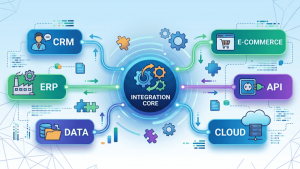
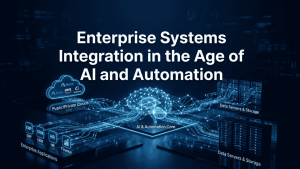
Integration is often perceived as a straightforward technical exercise, until execution begins. In reality, modern enterprise environments are highly complex, involving legacy systems, cloud platforms, APIs, and third-party applications, all operating with different standards and data formats.
This complexity introduces challenges that are not always visible at the outset. Data inconsistencies, compatibility issues, and synchronization problems can significantly slow down progress. What initially appears to be a simple connection between systems often evolves into a multi-layered problem requiring architectural expertise.
Enterprises that fail to account for this complexity typically encounter delays and cost escalations. The key to avoiding this lies in conducting a thorough system assessment upfront and designing integration architectures that are scalable and future-ready, rather than reactive and short-term.
Even with the right strategy and tools in place, integration success ultimately depends on execution, and execution depends on people. One of the most common reasons enterprise integration projects fail is the lack of specialized skills within internal teams.
Integration today is not limited to connecting systems; it involves API management, cloud orchestration, real-time data processing, and more. Expecting general IT teams to handle these specialized tasks often leads to inefficiencies and errors. Additionally, internal teams are usually already stretched across multiple priorities, making it difficult to dedicate focused effort to integration initiatives.
This results in slower progress, increased rework, and inconsistent outcomes. Enterprises can mitigate this risk by either investing in specialized skill development or augmenting their teams with experienced integration professionals who bring proven expertise and execution discipline.
Data is at the core of every integration initiative, yet it is often one of the most overlooked aspects. When data across systems is inconsistent, outdated, or poorly structured, integration efforts fail to deliver accurate and reliable outcomes.
The impact of poor data quality goes beyond technical inefficiencies. It affects decision-making, reporting accuracy, and overall trust in enterprise systems. Without proper governance, integration can amplify existing data issues rather than resolve them.
To prevent this, organizations must establish strong data governance frameworks before initiating integration projects. Standardizing data formats, implementing validation mechanisms, and ensuring data consistency across systems are essential steps in building a reliable integration foundation.
Testing is often treated as a final step in integration projects, rather than an ongoing process. This approach leaves significant gaps, as issues may only surface after deployment, when they are more difficult and costly to resolve.
Similarly, the absence of continuous monitoring means that performance issues and failures can go undetected until they begin to impact business operations. This lack of visibility creates unnecessary risk and reduces the reliability of integrated systems.
A more effective approach involves embedding testing throughout the integration lifecycle and implementing real-time monitoring mechanisms. This ensures that issues are identified early, performance is optimized continuously, and systems remain stable as they scale.
One of the most critical factors influencing integration success is the choice of approach and execution model. Many enterprises select tools or vendors based on short-term considerations without fully evaluating long-term implications.
An inadequate approach can limit scalability, increase costs, and create dependencies that hinder future growth. Similarly, choosing a partner without proven expertise or a structured methodology can lead to inconsistent execution and unmet expectations.
Successful enterprises take a more strategic view. They evaluate partners based on experience, delivery capabilities, and alignment with business goals. They look for providers who can offer end-to-end support, from strategy to execution, rather than isolated services.
Avoiding integration failure requires more than identifying challenges, it demands a structured, experience-driven approach that addresses both technical complexity and business alignment. This is where Team Computers brings measurable value as a systems integration partner.
Rather than treating integration as a standalone IT activity, the focus is on aligning every initiative with clearly defined business outcomes. This begins with a consultative engagement model, where existing systems, data flows, and operational dependencies are carefully assessed.
Execution is supported by proven frameworks and reusable components developed across multiple enterprise implementations. This reduces uncertainty, shortens timelines, and ensures consistent delivery.
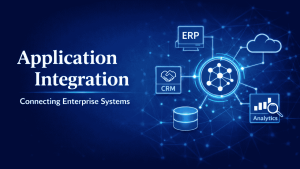
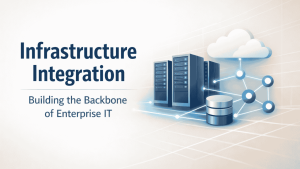
Modern integration spans applications, data, cloud, and infrastructure layers. Access to specialized expertise across these domains ensures seamless coordination and minimizes execution gaps.
Integration projects are managed with defined milestones, continuous testing, and real-time monitoring. This ensures issues are identified early and resolved before they impact operations.
Integration is treated as an evolving capability, not a one-time project. Scalable architectures and governance frameworks ensure systems remain aligned as business needs grow.
Understanding why enterprise integration projects fail provides valuable insight into how they can succeed. The challenges, ranging from lack of strategy and skills to data issues and poor execution are common, but they are also preventable.
Enterprises that approach integration with a clear strategy, realistic expectations, and the right expertise are better positioned to avoid these pitfalls. More importantly, they are able to transform integration from a risk into a strategic advantage.
Key takeaways:
Planning an enterprise integration project? Discover how Team Computers can help you avoid common pitfalls, reduce execution risk, and deliver integration outcomes that align with your business goals.