
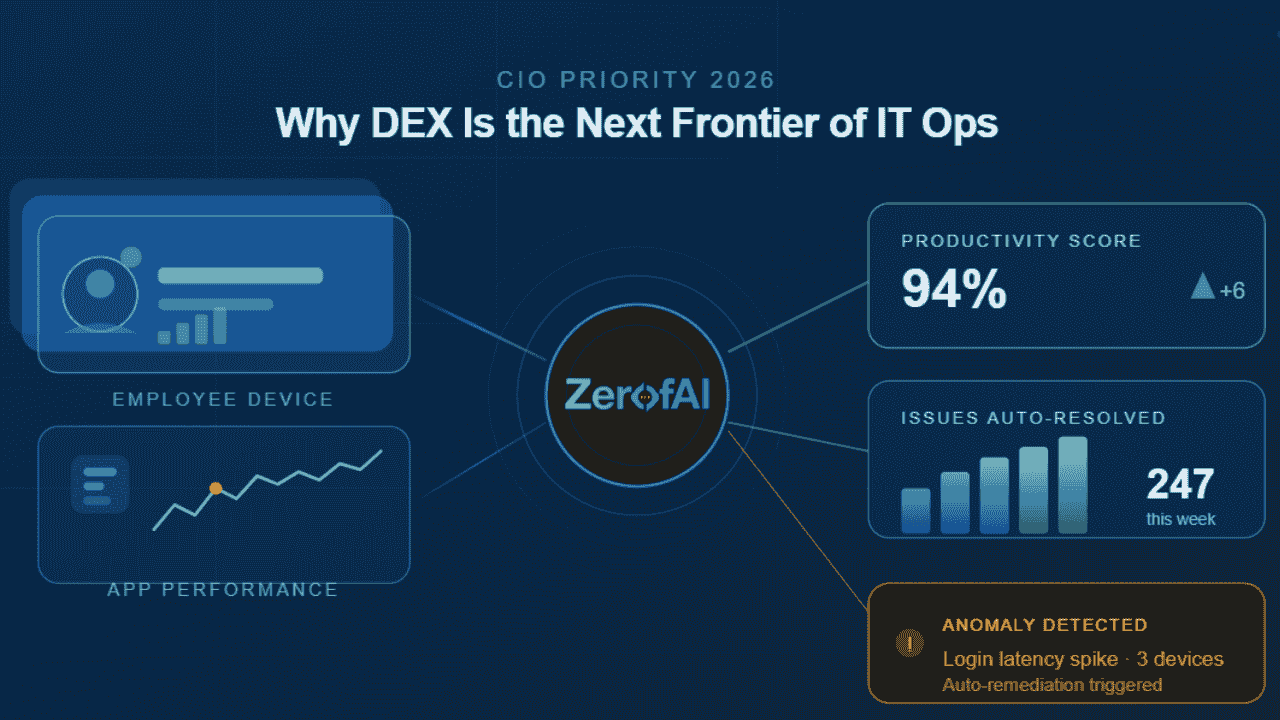
For years, IT performance was measured using infrastructure metrics such as uptime, network latency, and ticket resolution time. While these indicators remain important, they no longer reflect the full reality of the modern workplace.
An application can meet its uptime target, yet employees may still struggle with slow logins, lagging collaboration tools, or unstable devices. In hybrid and digital-first environments, these small disruptions accumulate and quietly impact productivity.
This shift has pushed many enterprises to focus on Digital Employee Experience (DEX).
DEX moves IT operations beyond infrastructure monitoring and toward understanding how employees actually experience technology across devices, applications, and networks. For CIOs, this represents a critical shift: from managing systems to optimizing the digital environment that supports workforce productivity.
The Hidden Productivity Gap in the Digital Workplace
Organizations have invested heavily in digital workplace tools from collaboration platforms to cloud-based productivity applications. However, IT teams often lack clear visibility into how these tools perform from the employee’s perspective.
Common issues frequently remain unnoticed:
- Applications that take longer than expected to launch
- Gradual device performance degradation
- Network instability affecting remote employees
- Authentication delays across enterprise systems
These issues rarely trigger traditional infrastructure alerts, yet they directly affect employee efficiency.
DEX platforms address this blind spot by monitoring digital experience signals, allowing IT teams to understand and improve how technology performs for employees in real time.
What Defines a Modern DEX Platform
A Digital Employee Experience platform goes beyond endpoint monitoring. It combines telemetry, analytics, and automation to provide a holistic view of workplace technology performance.
Key capabilities typically include:
End-user experience visibility
Monitoring device health, application responsiveness, and system performance from the user’s perspective.
Real-time issue detection
Identifying experience degradation before it becomes a widespread problem.
Digital workplace analytics
Providing insights into device usage patterns, application performance, and potential productivity bottlenecks.
Automated remediation
Resolving recurring issues automatically, reducing service desk workload.
Together, these capabilities allow IT teams to shift from reactive troubleshooting toward proactive experience management.
Why CIOs Are Prioritizing Digital Employee Experience
As hybrid work becomes the norm, employee productivity increasingly depends on reliable digital tools.
CIOs are recognizing that even small technology disruptions can affect business performance when multiplied across thousands of employees.
Key drivers behind DEX adoption include:
Hybrid workforce enablement
Employees now work across multiple locations, networks, and devices.
Productivity optimization
Reducing technology friction helps employees maintain focus and efficiency.
Lower support volumes
Early detection of issues prevents them from reaching the service desk.
Improved employee satisfaction
Consistent digital experiences contribute to workforce engagement and retention.
DEX therefore becomes not only an IT capability but a strategic tool for improving organizational productivity.
The Role of AI and Automation in Digital Experience Management
Monitoring digital experience across thousands of endpoints generates vast amounts of operational data. Identifying meaningful patterns within that data requires intelligent analytics.
Platforms such as ZerofAI apply AI/ML-driven analysis to infrastructure and endpoint telemetry, enabling IT teams to:
- detect anomalies affecting application or device performance
- identify the root causes of recurring issues
- anticipate potential disruptions before employees experience them
- automate remediation workflows
By combining DEX insights with AIOps intelligence, organizations gain a more proactive and scalable approach to managing the digital workplace.
From IT Support to Experience-Driven Operations
Digital Employee Experience is changing the way IT teams operate.
Traditional support models rely on employees reporting issues after productivity has already been affected. DEX enables IT teams to identify and address problems much earlier.
Within managed services environments, this approach allows providers like Team Computers to move beyond infrastructure monitoring and deliver experience-driven IT operations.
By integrating digital workplace monitoring with platforms such as ZerofAI, organizations can maintain visibility into employee technology performance and resolve issues proactively.
The Future of IT Is Experience-Driven
The modern workplace is defined not just by infrastructure reliability but by how effectively technology supports employees in their daily work.
Digital Employee Experience platforms provide the insights required to manage that environment effectively.
Key takeaways include:
- Traditional monitoring focuses primarily on infrastructure performance
- DEX focuses on employee productivity and digital experience
- AI and automation enable proactive management of workplace technology
- Platforms like ZerofAI help organizations maintain consistent digital experiences at scale
As enterprises continue to adopt hybrid and digital-first work models, experience-driven IT operations will become a defining capability of successful organizations.
Do you have visibility into how employees actually experience your workplace technology?
Discover how Team Computers combines Managed Services expertise with intelligent platforms like ZerofAI to help enterprises monitor, optimize, and continuously improve Digital Employee Experience across the organization.