
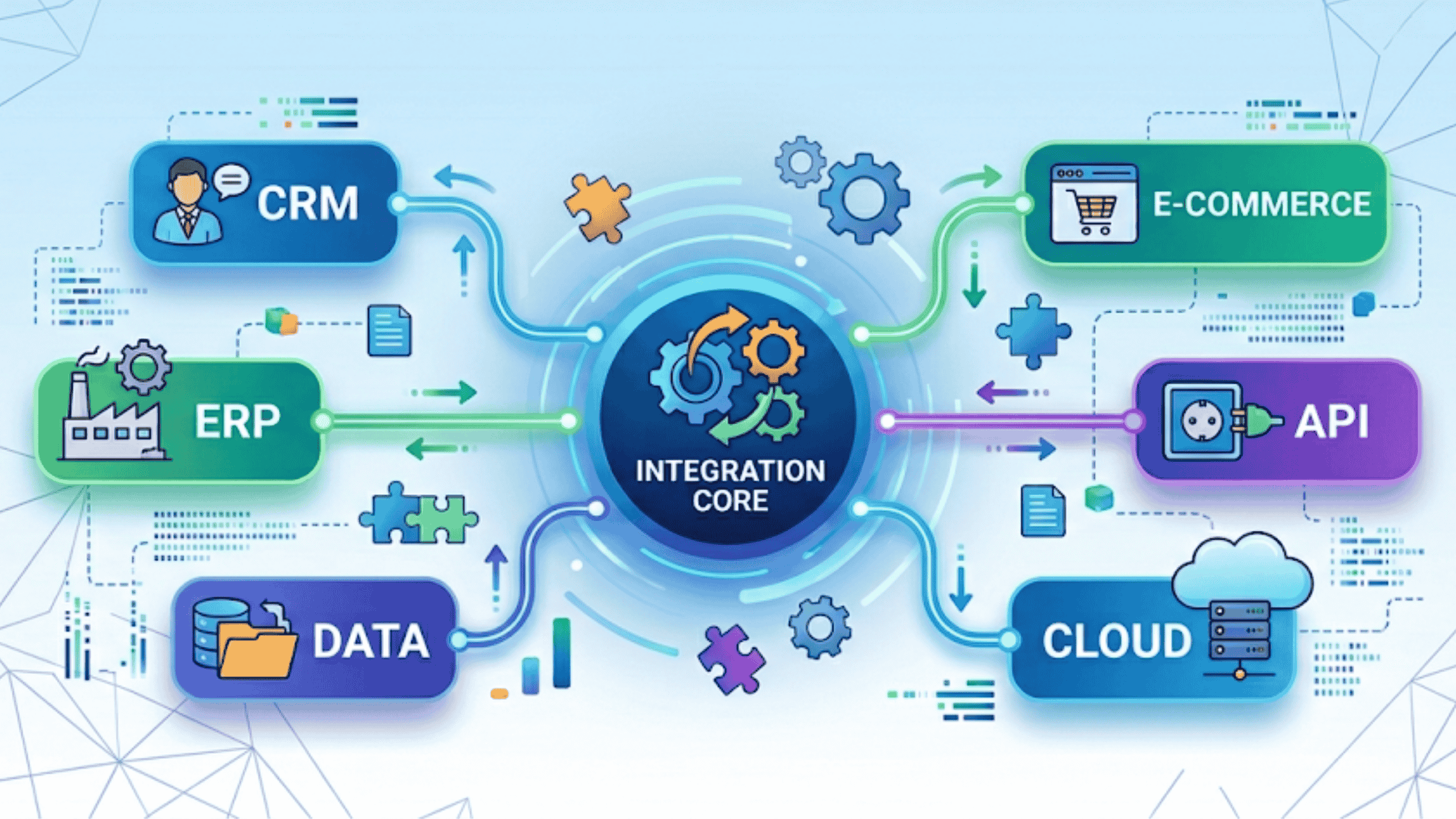
Most enterprises are aware of technical debt. Very few realize they are accumulating something equally dangerous, integration debt.
It doesn’t show up in budget discussions. It rarely gets flagged in architecture reviews. Yet over time, it quietly becomes one of the biggest barriers to scalability, agility, and operational efficiency.
Integration debt builds when systems are connected quickly to meet immediate needs, without a long-term architectural approach. A new application is added, a point-to-point connection is created, a workaround is implemented to meet a deadline, and the system continues to function. On the surface, everything works.
But beneath that surface, complexity begins to grow. Dependencies become harder to track. Changes take longer to implement. Failures become more difficult to diagnose.
This is the cost of ignoring integration debt. In this blog, we break down what integration debt really is, how it builds up in enterprise environments, and what you can do to control it before it starts slowing your business down.
What Is Integration Debt, And Why It’s Different from Technical Debt
Integration debt is often misunderstood because it doesn’t behave like traditional technical debt. It does not reside within a single application or codebase. Instead, it exists between systems, in the connections, dependencies, and data flows that tie your IT landscape together.
While technical debt affects how a system performs internally, integration debt affects how systems interact externally. This makes it significantly harder to identify and even harder to manage.
In most enterprises, integration layers evolve organically. New systems are added over time, each requiring connectivity with existing applications. In the absence of a unified strategy, these connections are built incrementally, often using different methods, tools, and standards.
Over time, this results in:
- A growing number of tightly coupled integrations
- Inconsistent communication patterns across systems
- Limited visibility into how systems depend on each other
Unlike technical debt, which can often be isolated and addressed within a system, integration debt spreads across the entire ecosystem. This makes its impact broader, and its resolution more complex.
How Integration Debt Builds Up in Enterprise Environments
Integration debt is rarely the result of poor decision-making. In fact, it often builds from decisions that make perfect sense in the moment.
A new business requirement emerges, and speed becomes the priority. A direct integration is implemented to meet a deadline. Another system is added, and a similar approach is taken. Over time, these decisions accumulate, creating a web of connections that were never designed to scale.
This buildup is typically driven by:
- Short-term delivery pressures overriding long-term design
- Lack of standardized integration frameworks
- Independent teams building integrations in silos
- Limited governance over integration practices
Each individual decision feels justified. The problem is cumulative.
As the number of integrations increases, so does the complexity of managing them. What started as a fast and efficient approach gradually becomes a constraint, making every new integration slower, riskier, and more expensive.
The Hidden Cost of Integration Debt
The most dangerous aspect of integration debt is that its impact is not immediate. Systems continue to function, which creates the illusion that everything is under control.
The real cost becomes visible over time, and it manifests in ways that directly affect business performance.
One of the first signs is reduced agility. Simple changes begin to take longer because teams need to assess multiple dependencies before making updates. What should be a straightforward modification turns into a complex coordination effort.
Operational instability is another consequence. Failures in one system start to cascade into others, and diagnosing the root cause becomes increasingly difficult due to the lack of visibility across integrations.
There is also a direct financial impact. Maintenance efforts increase, rework becomes more frequent, and the cost of implementing new integrations rises significantly.
Most importantly, integration debt limits scalability. As the business grows and new systems are introduced, the existing integration landscape struggles to keep up. Instead of enabling growth, it begins to slow it down.
Why Integration Debt Becomes a Barrier to Transformation
Digital transformation initiatives rely heavily on the ability to connect systems, enable real-time data flow, and support dynamic business processes. Integration debt directly undermines these capabilities.
When integration layers are fragmented and tightly coupled, introducing new technologies becomes difficult. Cloud adoption slows down because legacy integrations cannot adapt easily. Real-time capabilities are limited because existing architectures are not designed for them.
This creates a disconnect between business ambition and IT capability. While the organization aims to move faster and become more agile, the underlying integration landscape resists change.
In many cases, transformation initiatives fail not because the vision is flawed, but because the integration foundation is not ready to support it.
Also read: Enterprise Systems Integration Readiness Framework
Addressing integration debt is therefore not just a technical necessity – it is a strategic requirement for enabling transformation.
Identifying Integration Debt Before It Becomes Critical
Integration debt often goes unnoticed until it reaches a critical point. However, there are clear indicators that can help identify it early.
A common sign is the increasing time required to implement new integrations. If every new connection feels more complex than the last, it is likely that underlying dependencies are becoming harder to manage.
Frequent integration failures or performance issues are another indicator. These often point to tightly coupled systems where changes in one area have unintended consequences elsewhere.
Limited visibility into system interactions is also a red flag. If teams cannot clearly map how systems are connected or how data flows between them, managing integration effectively becomes nearly impossible.
Recognizing these signs early allows organizations to take corrective action before integration debt begins to significantly impact operations.
How Team Computers Helps Reduce Integration Debt
Reducing integration debt requires more than incremental fixes. It requires a structured approach that addresses the root causes of complexity.
Team Computers works with enterprises to analyze their existing integration landscape, identify areas of hidden complexity, and define a path toward a more scalable architecture. This includes evaluating current integration patterns, mapping dependencies, and assessing how these factors impact performance and agility.
The focus is on simplification and standardization. By moving away from fragmented, point-to-point integrations and toward more structured integration models, organizations can reduce complexity and improve control.
This approach not only addresses existing integration debt but also prevents new debt from accumulating. Integration becomes more predictable, scalable, and aligned with long-term business objectives.
“Integration debt is not created by bad decisions, it’s created by necessary decisions made without a long-term view. The key is not to avoid it completely, but to manage it before it starts limiting your ability to scale.”
– Head of IT Services, Team Computers
Conclusion
Integration debt is one of the most overlooked challenges in enterprise IT, yet its impact is significant and far-reaching. It builds quietly, driven by short-term decisions, and only becomes visible when it starts slowing down execution and increasing complexity.
Organizations that recognize and address integration debt early are better positioned to maintain agility, control costs, and support long-term growth. Those that ignore it often find themselves constrained by their own systems.
Key takeaways:
- Integration debt exists in the connections between systems, not within them
- It builds gradually through short-term integration decisions
- Its impact includes reduced agility, higher costs, and limited scalability
- Early identification is critical to preventing long-term disruption
- A structured approach is required to reduce and control it
If integration is expected to support business growth, it must be managed with the same discipline as any other critical asset. Ignoring integration debt does not make it disappear—it makes it harder to fix later.
Concerned about hidden complexity in your integration landscape?
Discover how Team Computers can help you identify integration debt, simplify your architecture, and build a scalable integration foundation that supports your business—today and as it grows.