Why Smart CFOs Are Looking Beyond Purchase Price
A procurement meeting begins with a familiar question.
“What’s the cheapest laptop we can buy?”
It’s a logical question. After all, hardware purchases often involve hundreds or even thousands of devices, and even a small difference in price can seem significant.
But here’s what many organizations discover a few years later.
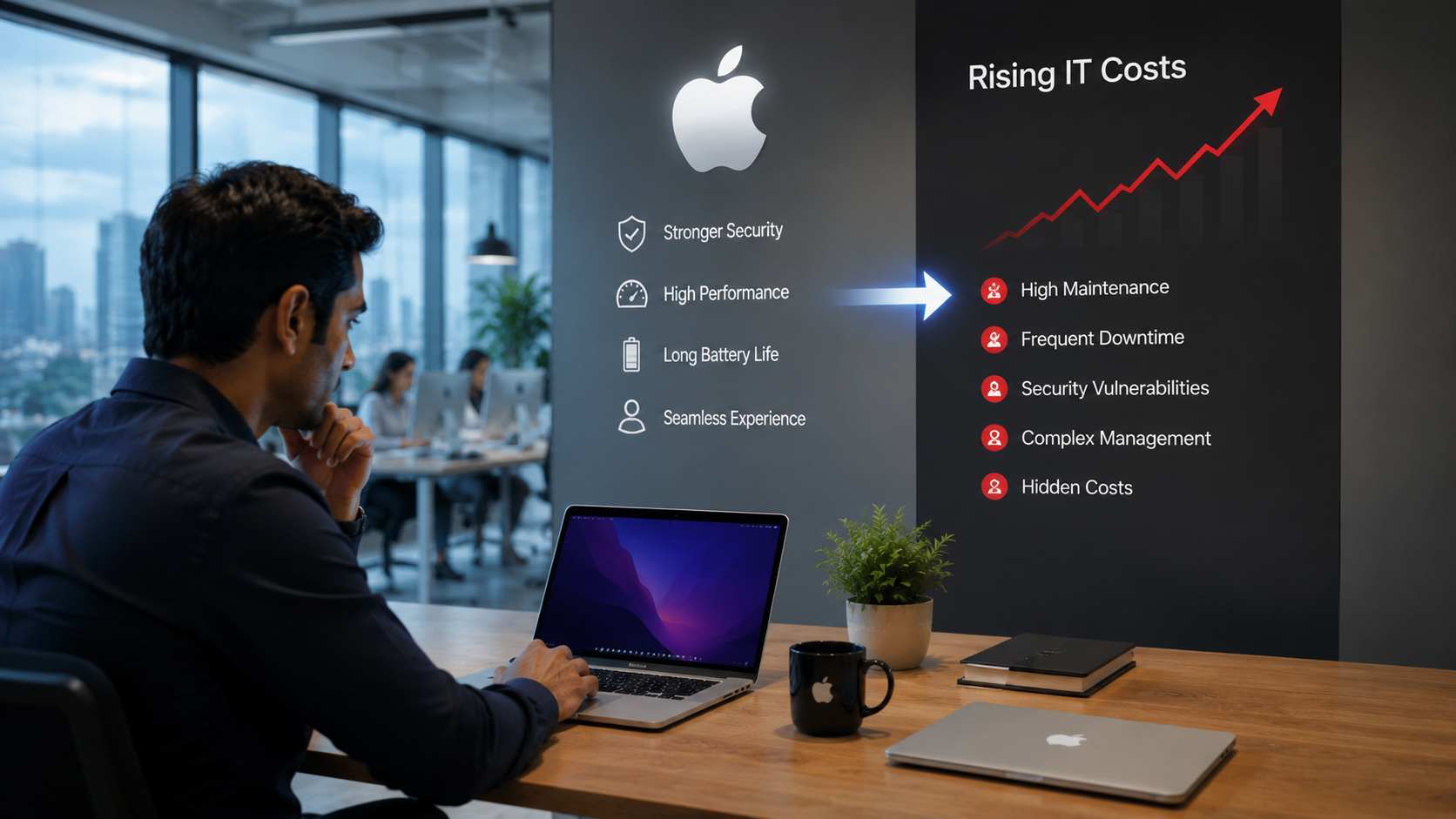
The cheapest device often becomes the most expensive one to own.
Frequent repairs. Shorter refresh cycles. Higher support costs. Reduced employee productivity. More downtime.
For today’s CFO, the conversation is no longer about what a device costs to buy—it’s about what it costs to own.
That’s where Total Cost of Ownership (TCO) changes the equation.
Purchase Price Is Only One Line Item
When organizations evaluate enterprise devices, they often compare invoice values.
Unfortunately, that’s only a fraction of the story.
The real cost of a device includes:
- IT support hours
- Device repairs
- Employee downtime
- Security incidents
- Deployment costs
- Device lifespan
- Residual value
- Refresh frequency
A laptop purchased at a lower price may require significantly more investment over four or five years than one that costs slightly more upfront.
That’s why forward-thinking finance leaders have shifted their focus from procurement costs to lifecycle economics.
Why CFOs Are Rethinking Technology Investments
Technology has become a strategic business investment—not just an IT expense.
Across India, enterprises are expanding GCCs, enabling hybrid work, and preparing for AI-powered workflows.
That means devices remain in service longer and play a much larger role in employee productivity.
Every hour an employee spends waiting for a replacement device or dealing with system issues has a financial impact.
Likewise, every unnecessary support ticket increases IT operating costs.
The question has changed.
It’s no longer:
“How much does this laptop cost?”
It’s now:
“How much value will this device generate throughout its lifecycle?”
The Real ROI Comes From Lifecycle Management
Imagine two organizations purchasing 1,000 laptops.
The first selects devices based solely on purchase price.
The second evaluates the entire lifecycle.
Over the next four years, the second organization experiences:
- Fewer hardware failures
- Lower support effort
- Longer refresh cycles
- Higher employee productivity
- Better resale value
- Reduced downtime
Although the initial investment was higher, the long-term operational costs were considerably lower.
That’s why lifecycle planning has become an essential part of enterprise financial strategy.
Where Team Computers Helps
Reducing technology costs isn’t about negotiating a lower purchase price.
It’s about making smarter investment decisions from day one.
Team Computers helps organizations optimize the financial value of Apple devices through:
- TCO Assessment to understand the complete lifecycle cost
- TCO Calculator for business case evaluation
- Apple Financial Services & Affordability Solutions to reduce upfront capital expenditure
- Refresh Programs to maximize device value
- Trade-In & Switcher Programs for seamless technology upgrades
- TCPL CarePack to reduce support costs and extend device life
Instead of looking at procurement alone, we help finance leaders evaluate technology as a long-term business asset.
Why This Matters for Indian Enterprises
Indian enterprises are under increasing pressure to do more with existing budgets.
Technology investments now compete with AI initiatives, cybersecurity, cloud modernization, and business expansion.
That makes capital allocation more important than ever.
Organizations that understand Total Cost of Ownership make better investment decisions because they’re measuring business outcomes—not simply purchase costs.
Finance Leaders Should Measure Value, Not Just Cost
The best CFOs don’t approve technology because it’s cheaper.
They approve it because it delivers measurable business value.
That means asking questions like:
- Will this reduce IT operating costs?
- Will this improve employee productivity?
- Will this last longer?
- Will it reduce support expenses?
- Can it improve cash flow through financing?
Technology isn’t a cost center anymore.
It’s a business enabler.
Conclusion
The next time your organization evaluates enterprise devices, don’t stop at the purchase price.
Look deeper.
Ask how much the device will cost over its entire lifecycle, how much productivity it enables, and how much operational effort it removes.
Before making your next technology investment:
- Calculate the complete lifecycle cost—not just the purchase price.
- Review support, repair, and refresh expenses over the next four years.
- Explore financing options that align with your cash flow.
- Compare business value alongside procurement cost.
The organizations that make smarter technology investments today will be the ones that control IT costs tomorrow.