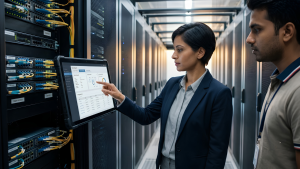
A major application slowdown impacts users across the organization.
The NOC dashboard looks healthy, infrastructure metrics remain within thresholds, cloud resources appear stable, network utilization seems normal, yet employees continue reporting issues. Hours later, the root cause is finally identified.
For many IT leaders this scenario feels familiar and it exposes an uncomfortable reality:
Having visibility isn’t the same as having insight.
Over the last decade, enterprises have invested heavily in monitoring tools and dashboards. Every layer of technology now generates data. Infrastructure teams monitor servers. Network teams monitor traffic. Security teams monitor threats. Cloud teams monitor workloads.
The result should be better decision-making.
Instead, many organizations find themselves drowning in information while struggling to identify the real problem.
The issue isn’t a lack of dashboards, it’s that most dashboards were never designed to explain business impact.
The dashboard explosion nobody talks about
Modern enterprises have never had more visibility tools.
A typical IT environment may include:
- Infrastructure monitoring platforms
- Cloud observability tools
- Network monitoring solutions
- Endpoint management dashboards
- Security operation consoles
- Application performance monitoring tools
Each system serves a purpose. Each provides valuable information.
Yet something important happens when every team operates from a different dashboard.
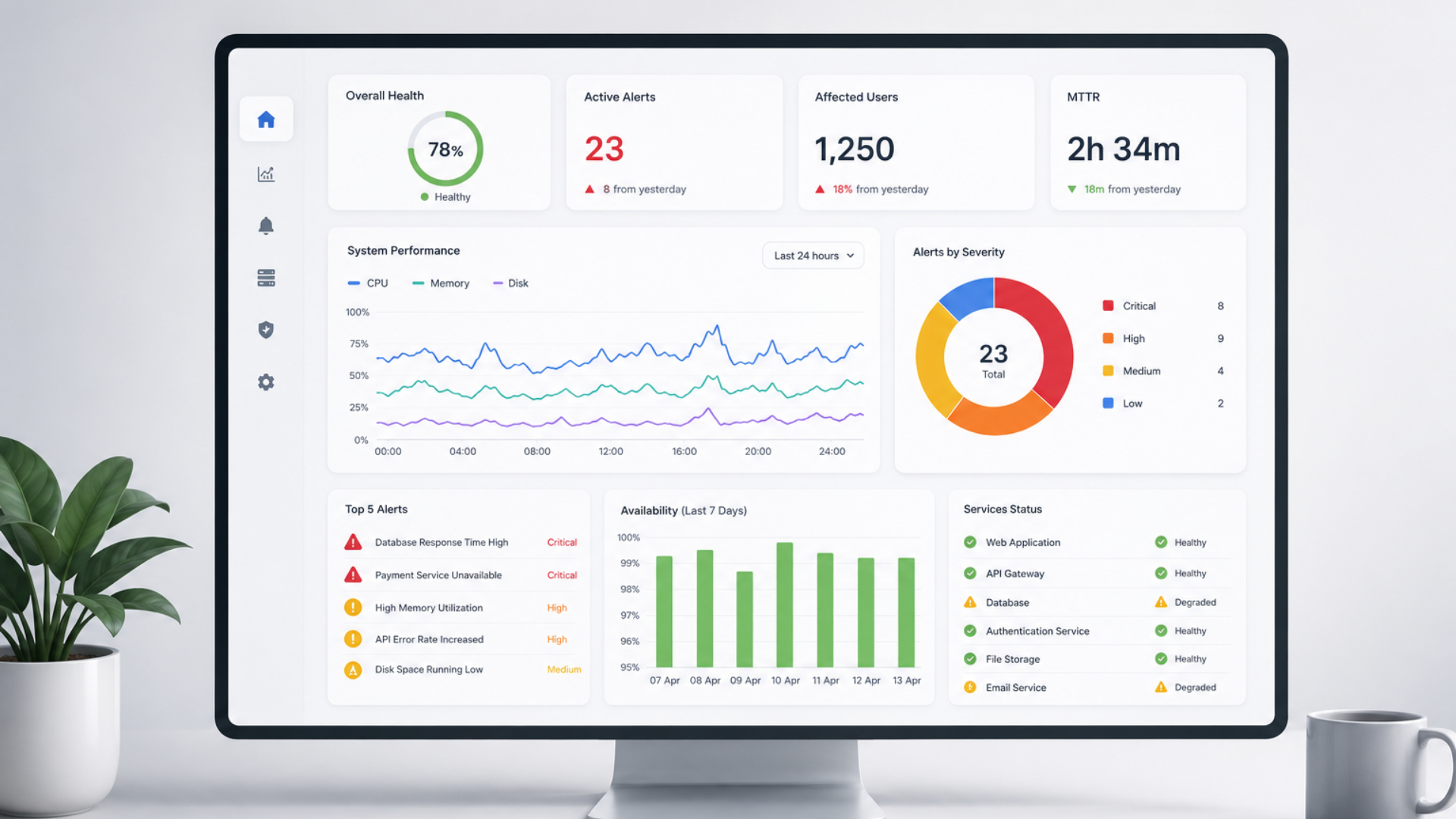
Visibility becomes fragmented, an infrastructure team may see healthy servers, a network team may see normal traffic, a security team may see no active threats. At the same time, employees may be struggling to complete basic tasks.
The problem isn’t missing data. The problem is disconnected context.
Dashboards show symptoms. Leaders need causes.
Most dashboards excel at reporting events.
They can tell you:
- CPU utilization increased
- Network latency spiked
- Application response time slowed
- Storage thresholds were exceeded
Useful information. But rarely enough information.
When a business-critical service is impacted, leaders need answers to different questions:
- What is causing the issue?
- How many users are affected?
- What business processes are impacted?
- How urgent is the situation?
- What should happen next?
Traditional dashboards often stop at observation. Modern IT operations require correlation.
The difference matters, because organizations don’t solve incidents by collecting more alerts.
They solve incidents by understanding relationships between events.
The biggest blind spot: Employee experience
One of the most common dashboard failures occurs when infrastructure appears healthy while users experience disruption.
Consider a simple example.
A collaboration platform remains technically available, servers are operational, network connectivity exists, no major alerts are triggered.
Yet employees complain about:
- Slow performance
- Intermittent access issues
- Poor meeting quality
- Delayed file synchronization
From a dashboard perspective, everything looks fine. From a business perspective, productivity is declining.
This gap is becoming increasingly important as enterprises adopt hybrid work models and distributed operations.
Many IT dashboards measure technology health, far fewer measure human experience. That’s why Digital Employee Experience (DEX) is becoming an increasingly valuable operational metric.
Because employees experience technology differently than dashboards do.
More alerts don’t create more visibility
A common reaction to operational blind spots is simple:
Add more monitoring. Add more dashboards. Add more alerts.
Unfortunately, this often makes the problem worse.
Research from multiple industry analysts continues to highlight alert fatigue as one of the biggest challenges facing modern operations teams.
When teams receive thousands of alerts every day, two things happen: First, response quality declines. Second, truly important issues become harder to identify. This is why leading organizations are shifting toward intelligent operations.
Instead of monitoring everything equally, they focus on:
- Event correlation
- Root-cause identification
- Business impact analysis
- Predictive insights
The goal isn’t more data. The goal is better decisions.
What forward-thinking IT leaders are doing differently
The strongest IT organizations are changing how they think about visibility.
Rather than asking: “Do we have enough dashboards?”
They’re asking: “Can we understand business impact quickly?”
This shift is influencing investment priorities across enterprise IT.
Modern leaders increasingly prioritize:
Unified visibility
Connecting infrastructure, applications, networks, and user experience.
Operational context
Understanding how technical events affect business outcomes.
Automation
Reducing manual analysis during incidents.
Predictive intelligence
Identifying risks before users are affected.
The objective is not to build a larger monitoring environment. It’s to build a smarter one.
What this means for Indian enterprises
This challenge is becoming increasingly relevant across India.
Organizations are managing:
- Multi-location operations
- Growing GCC environments
- Hybrid workforces
- Cloud-first applications
- Distributed infrastructure
As complexity increases, traditional monitoring approaches become harder to sustain.
A dashboard designed for a single data center may not provide meaningful visibility across a hybrid enterprise environment. Similarly, separate monitoring systems rarely provide the operational context required by CIOs and infrastructure leaders.
The future belongs to organizations that can connect technology insights with business outcomes because executives don’t make decisions based on CPU utilization. They make decisions based on business impact.
The future of IT visibility isn’t dashboards
This may sound counterintuitive, but the future of IT visibility may involve fewer dashboards not more.
Instead, organizations are moving toward:
- Intelligent observability
- AI-assisted operations
- Experience monitoring
- Automated root-cause analysis
- Business-centric visibility
The focus shifts from displaying information to delivering insight and that’s a significant difference because the most effective IT teams don’t need more screens filled with data. They need faster answers.
Conclusion
Dashboards remain valuable but visibility alone does not solve operational challenges.
The most common mistake organizations make is assuming that more monitoring automatically leads to better understanding. In reality, the real problem often hides between dashboards.
To improve operational visibility:
- Focus on context, not just metrics
- Measure employee experience alongside infrastructure health
- Reduce alert noise through intelligent correlation
- Connect technical events to business impact
Because the goal isn’t to collect more data. The goal is to understand what matters before the business feels the impact.
Move Beyond Monitoring Toward Insight
Discover how modern IT operations can connect infrastructure visibility, user experience, and business outcomes into a single operational view.
Organizations that solve issues fastest are usually the ones that understand them first.