
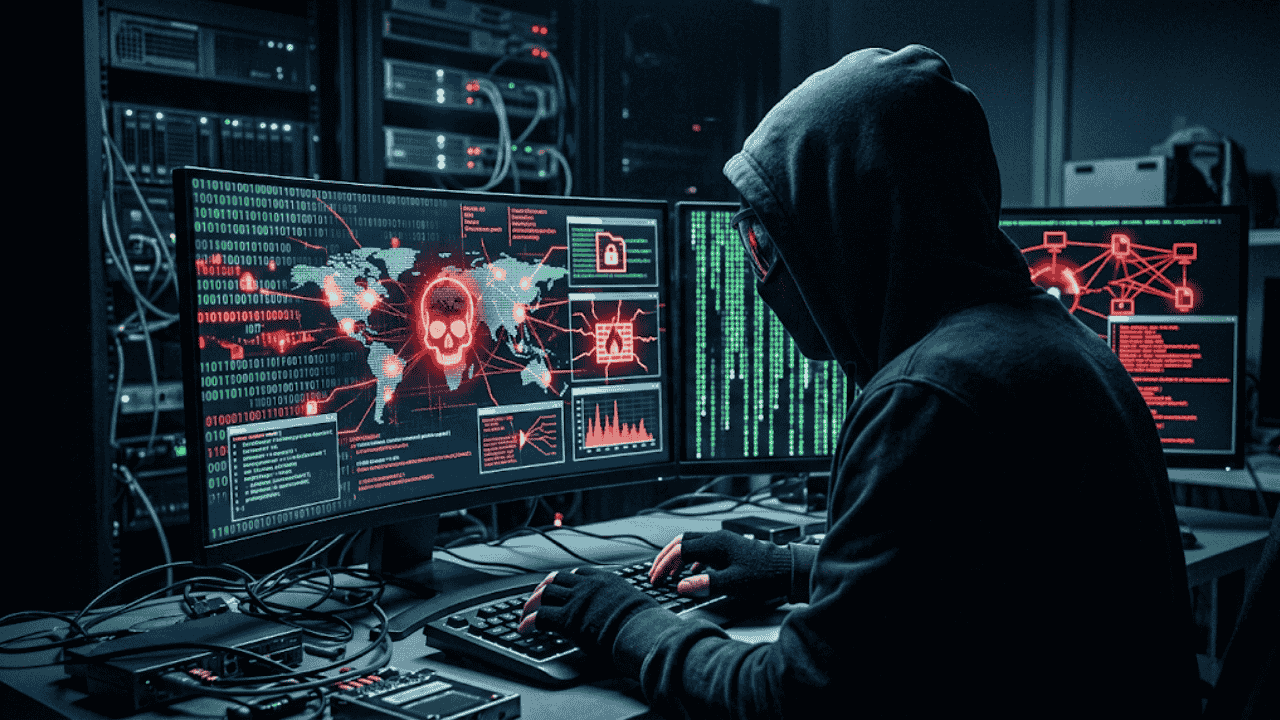
Most enterprise leaders have never seen a cyber attack in motion.
They’ve seen dashboards.
They’ve seen alerts.
They’ve seen post-incident reports.
But very few have walked through what actually happens between the moment a malicious email is opened and the moment data leaves the building.
Let’s simulate 3:07 AM.
No drama. No exaggeration. Just reality.
3:07 AM — The Entry
An employee credential was harvested two days ago through a convincingly written AI-generated email. No malware. No suspicious attachments. Just authentication reuse.
The attacker logs in using valid credentials.
There is no firewall breach.
There is no loud alarm.
From a system perspective, it looks like a user signing in from a slightly unusual location.
That anomaly is small enough to be ignored.
3:12 AM — Privilege Escalation
The attacker runs automated scripts to identify:
- Admin accounts
- Shared drives
- Cloud storage repositories
- Backup configurations
AI tools help map the environment in minutes.
This used to take hours.
Now it takes less than ten minutes.
3:19 AM — Lateral Movement
The system does not recognize it as malicious activity because:
- The login credentials are valid
- The behavior mimics human interaction
- The movement pattern stays below detection thresholds
No ransomware yet.
Just quiet observation.
3:32 AM — Data Packaging
Sensitive files are compressed.
Financial records.
Intellectual property.
Customer databases.
Data exfiltration begins in small encrypted packets to avoid traffic spikes.
Most monitoring systems flag volume, not subtle patterns.
4:10 AM — The Decision
Now the attacker has options:
- Sell data silently
- Launch ransomware
- Deploy double extortion
By the time employees log in at 9 AM, the breach has already matured.
Why This Scenario Matters
The majority of modern attacks do not “break in.”
They log in.
AI has removed friction from reconnaissance and automation from exploitation.
The uncomfortable truth:
Security designed around perimeter defense and signature detection cannot always identify identity-based threats early enough.
This is not about panic.
It is about clarity.
The Real Question
If an attack began tonight at 3:07 AM:
- How quickly would you know?
- Would detection happen before data exfiltration?
- Would response be automated or manual?
- Would leadership find out from internal alerts or public disclosure?
Cyber resilience is not about tools.
It is about time.
Detection time.
Response time.
Containment time.
The 3 AM question is simple:
Do you know what would happen?