How Systems Integration Improves Enterprise Data Visibility

Enterprise leaders rely on data to guide strategic decisions, monitor operations, and identify growth opportunities. Yet in many organizations, critical data remains scattered across multiple applications, cloud platforms, and legacy systems. When information is stored in disconnected environments, obtaining a clear and accurate view of business performance becomes extremely difficult.

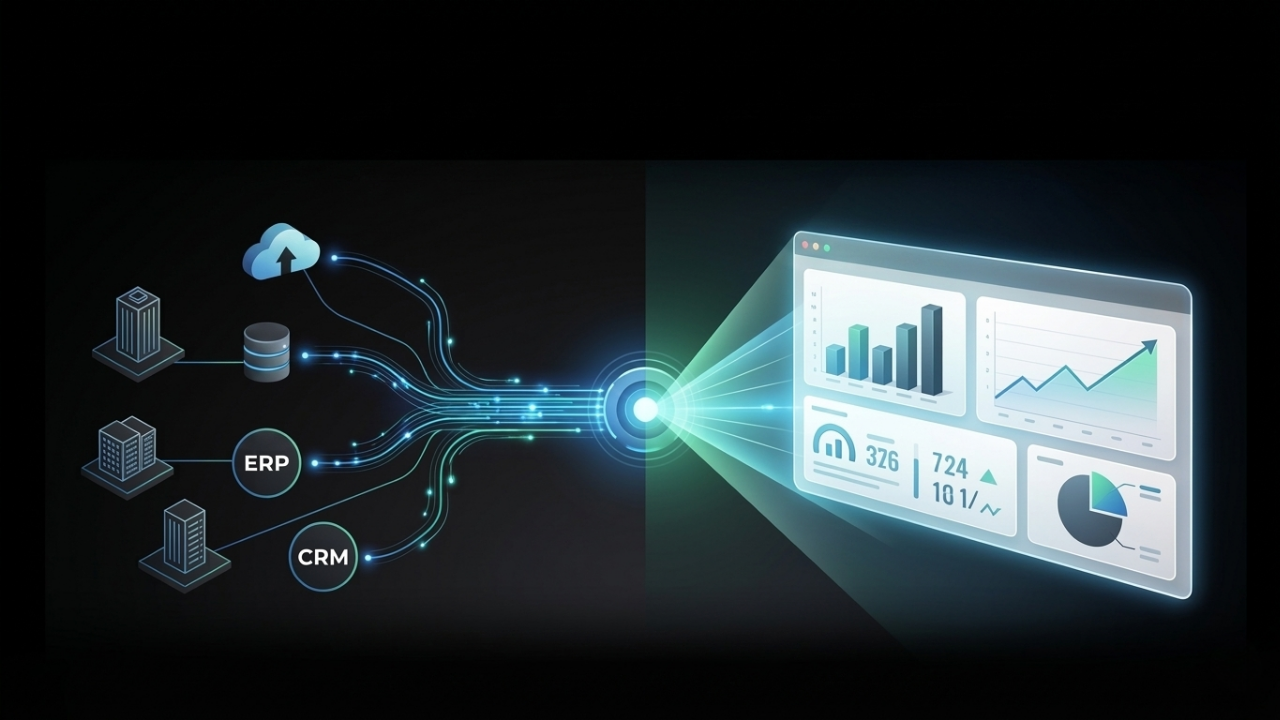
This is where systems integration for enterprise data visibility plays a crucial role. By connecting applications, infrastructure, and data platforms, integration enables organizations to consolidate information and create a unified operational view. Instead of relying on fragmented reports from isolated systems, enterprises gain access to consistent and real-time insights across departments.

For growing organizations, data visibility is more than a technical advantage. It becomes a strategic capability that improves decision-making, operational efficiency, and long-term scalability. In this article, we explore how systems integration improves enterprise data visibility and why it has become essential for modern digital enterprises.

The Data Visibility Challenge in Modern Enterprises

Most enterprises adopt new technologies over time to address evolving business needs. Finance teams deploy specialized accounting systems, marketing teams rely on CRM platforms, and operations teams manage supply chain tools. While each platform serves a specific function, they often operate independently from one another.

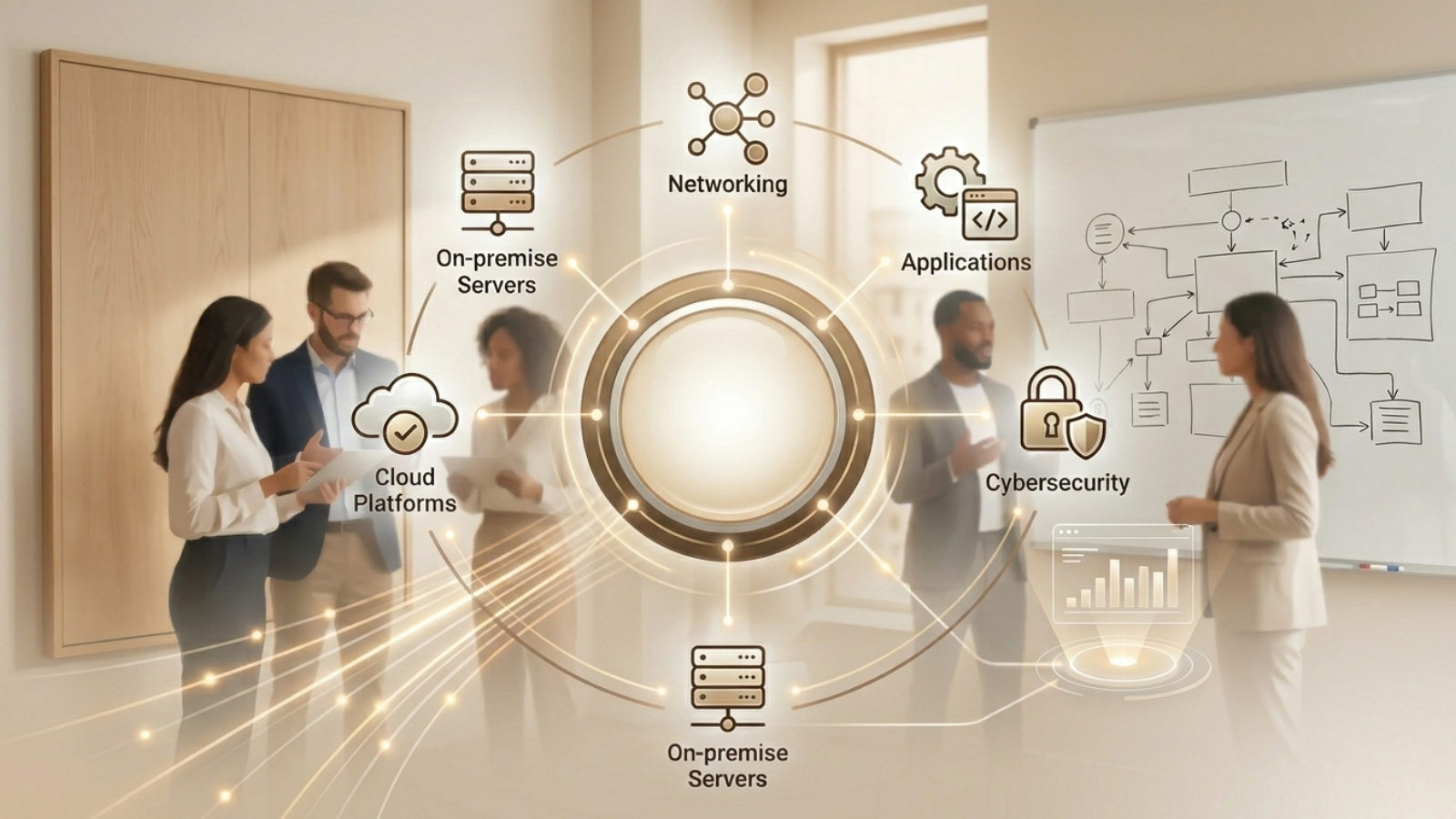
As a result, organizations frequently struggle with fragmented data ecosystems. Information may exist across on-premise servers, cloud platforms, SaaS applications, and departmental databases. Without proper connectivity between these systems, data becomes difficult to access, analyze, and trust.

Fragmented environments create several operational challenges. Leadership teams may rely on multiple reports from different departments that present inconsistent figures. IT teams spend significant time manually extracting and reconciling data across systems. Decision-making slows down because executives lack real-time insights into enterprise performance.

These challenges highlight why enterprises increasingly prioritize systems integration for enterprise data visibility. Integration connects data sources across the organization and ensures information flows seamlessly between platforms.

How Systems Integration Connects Enterprise Data

Systems integration creates a unified technology environment where applications, infrastructure, and data platforms communicate effectively. Instead of maintaining isolated systems, integration enables organizations to synchronize data across platforms and centralize visibility.

At its core, systems integration establishes structured connections between technologies through APIs, middleware platforms, and data orchestration frameworks. These connections allow systems to exchange information automatically and in real time.

For example, customer data captured in a CRM platform can automatically update financial systems, marketing automation tools, and analytics dashboards. Operational data from infrastructure monitoring systems can feed directly into centralized reporting platforms used by leadership teams.

This connectivity eliminates manual data transfers and reduces the risk of inconsistencies across systems. IT teams gain a single view of enterprise technology operations, while business leaders gain access to reliable insights that support faster decision-making.

Also Read: How Systems Integration Accelerates Enterprise Scalability

Key Benefits of Improved Enterprise Data Visibility

When organizations implement structured integration strategies, the impact extends beyond IT operations. Data visibility improves collaboration, operational transparency, and strategic planning across the enterprise.

One major advantage is improved decision-making. With integrated systems, executives can access real-time dashboards that combine financial, operational, and customer data from multiple platforms. This consolidated view enables leaders to identify trends and respond to opportunities more quickly.

Operational efficiency also improves significantly. Teams no longer need to manually collect and reconcile information from different systems. Automated data flows ensure that all departments work with consistent and up-to-date information.

Integration also enhances reporting accuracy. When data originates from a centralized ecosystem rather than multiple disconnected platforms, organizations reduce discrepancies and improve compliance with governance standards.

Over time, this visibility becomes a foundation for advanced capabilities such as predictive analytics, artificial intelligence, and automation.

Building a Unified Data Ecosystem Through Integration

Achieving enterprise-wide data visibility requires more than simply connecting a few applications. Organizations must adopt a structured integration architecture that aligns infrastructure, data platforms, and business applications within a cohesive ecosystem.

A well-designed integration framework typically includes centralized data pipelines, unified monitoring tools, and governance policies that maintain data consistency across systems. These frameworks ensure that information flows securely between platforms while maintaining compliance with enterprise security standards.

Organizations also benefit from integrating both legacy infrastructure and modern cloud platforms within the same architecture. Hybrid integration approaches allow enterprises to modernize technology environments while preserving operational continuity.

When implemented correctly, this integrated ecosystem becomes the foundation for enterprise intelligence. Data flows continuously across systems, enabling teams to access insights without delays or manual intervention.

How Team Computers Enables Enterprise Data Visibility

Enterprises often require specialized expertise to design and implement large-scale integration frameworks. Connecting infrastructure, cloud platforms, enterprise applications, and data systems requires deep understanding of both architecture and operational requirements.

Team Computers helps organizations implement systems integration strategies that improve enterprise data visibility across complex IT environments. By aligning infrastructure, applications, and analytics platforms, enterprises gain a unified view of operations and performance.

The approach focuses on creating integrated ecosystems where data flows seamlessly between systems. This includes connecting enterprise applications, aligning hybrid cloud environments, implementing centralized monitoring frameworks, and enabling real-time data exchange across platforms.

Through structured integration strategies, organizations can eliminate data silos, strengthen operational transparency, and empower leadership teams with reliable insights.

Conclusion

Modern enterprises generate enormous volumes of data across applications, cloud environments, and operational systems. Without structured integration, this data often remains fragmented, limiting its value to the organization.

By implementing systems integration for enterprise data visibility, organizations can transform disconnected information into actionable insights that support smarter business decisions.

Key takeaways include:

  • Fragmented systems reduce enterprise data visibility and operational efficiency
  • Systems integration connects applications, infrastructure, and data platforms
  • Integrated environments enable real-time reporting and improved decision-making
  • Unified data ecosystems support advanced analytics and innovation

As enterprises continue expanding their digital ecosystems, integration will remain a critical capability for unlocking the full value of enterprise data.

If your organization struggles with fragmented data across multiple systems, a structured integration strategy can help unlock real-time visibility and operational intelligence.

Discover how Team Computers can design and implement systems integration solutions that connect your enterprise technologies and transform data into actionable insights for business growth.

Why Multi-Cloud Systems Integration is Critical for Enterprises

Enterprises are increasingly adopting multi-cloud strategies to improve flexibility, scalability, and resilience. Instead of relying on a single cloud provider, organizations now distribute workloads across multiple cloud platforms such as private clouds, public clouds, and hybrid infrastructure environments. While this approach offers significant operational advantages, it also introduces a new layer of complexity.

Without proper coordination between cloud platforms, organizations often struggle with fragmented infrastructure, inconsistent security policies, and limited visibility across environments. Applications deployed across different cloud providers may operate independently rather than as part of a unified technology ecosystem.

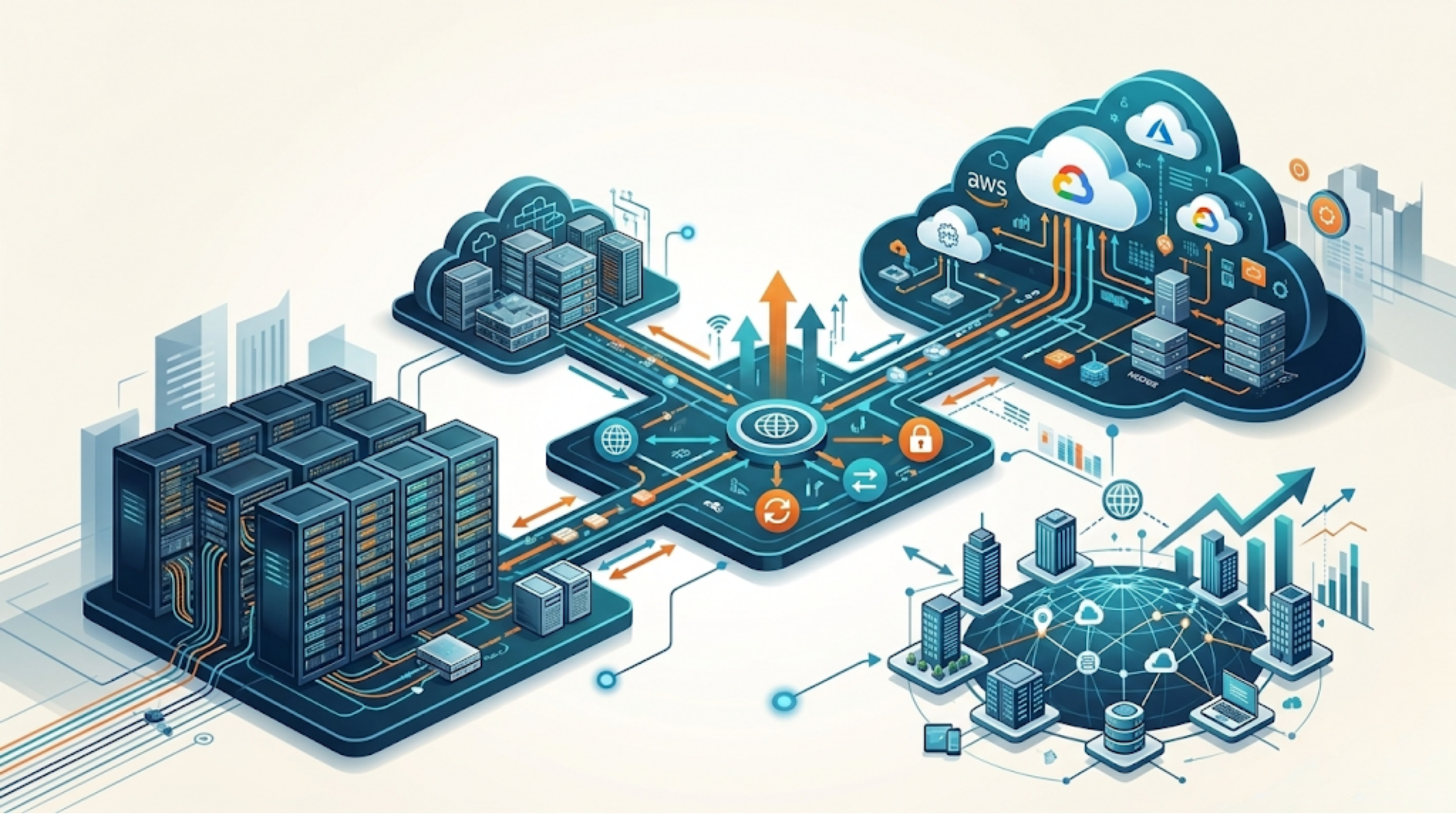
This is where multi-cloud systems integration becomes essential. By connecting cloud platforms, enterprise applications, networking frameworks, and security systems into a cohesive architecture, organizations can ensure that their multi-cloud environments operate seamlessly.

As a trusted enterprise IT partner, Team Computers helps organizations design integrated multi-cloud architectures that eliminate operational silos while maintaining security, performance, and scalability.

The Growing Complexity of Multi-Cloud Environments

Multi-cloud adoption has accelerated as enterprises seek to avoid vendor lock-in and take advantage of specialized services offered by different cloud providers. For example, an organization may use one cloud platform for data analytics, another for application hosting, and a third for disaster recovery.

While this distributed approach improves flexibility, it also creates complex IT ecosystems where infrastructure, applications, and data operate across multiple environments simultaneously. Each platform introduces its own management tools, networking configurations, and security frameworks.

When these environments are not properly integrated, IT teams often struggle to maintain consistent governance across platforms. Monitoring tools may only provide partial visibility, making it difficult to identify performance issues or security risks.

Multi-cloud systems integration addresses this complexity by creating a unified framework that connects different cloud environments. Instead of managing separate platforms independently, organizations gain centralized visibility and coordinated operations across the entire infrastructure.

Also Read: Future-Ready IT Infrastructure with Enterprise Systems Integration

The Operational Risks of Unintegrated Multi-Cloud Infrastructure

Enterprises that adopt multi-cloud environments without a structured integration strategy often encounter operational inefficiencies that impact performance and security. Disconnected systems can create communication gaps between applications and data sources, leading to delays in processing and decision-making.

Security is another critical concern. When cloud platforms operate independently, enforcing consistent security policies across environments becomes difficult. Identity management systems, endpoint protection tools, and monitoring frameworks may not share information effectively, creating potential security blind spots.

Data management also becomes increasingly challenging. Enterprises frequently store information across multiple cloud platforms, but without integration, synchronizing this data becomes complicated. This fragmentation can lead to inconsistent reporting and limited analytical insights.

Over time, these challenges increase operational overhead for IT teams. Instead of focusing on innovation and digital transformation initiatives, teams spend significant time managing connectivity issues between platforms.

Multi-cloud systems integration resolves these issues by enabling cloud platforms to communicate seamlessly, ensuring consistent operations across environments.

How Multi-Cloud Systems Integration Enables Unified Operations

A well-designed multi-cloud systems integration strategy ensures that different cloud environments operate within a coordinated infrastructure framework. Instead of isolated cloud platforms, enterprises create connected ecosystems where applications, networks, and data flows are synchronized.

Integration frameworks typically include several key architectural components that support unified operations.

One of the most important elements is application integration, which allows enterprise applications deployed across different cloud providers to communicate through APIs or middleware layers. This ensures that business applications can exchange information without disruption.

Another critical component is data integration. Enterprises must ensure that data stored across different cloud environments remains consistent and accessible. Integration platforms enable real-time data synchronization and centralized analytics capabilities.

Network integration also plays a crucial role. By establishing secure connectivity between cloud environments, organizations can maintain consistent performance and reliable communication across platforms.

When these components operate together, enterprises gain a unified technology environment where cloud platforms function as part of a cohesive system rather than isolated infrastructures.

Building a Scalable Multi-Cloud Architecture

Scalability is one of the primary motivations behind multi-cloud adoption. Enterprises want the flexibility to expand workloads, deploy new applications, and support global operations without being constrained by a single cloud provider.

However, scalability is only possible when the underlying infrastructure is properly integrated. Without integration, expanding cloud environments often introduces additional complexity instead of improving operational agility.

Multi-cloud systems integration enables scalability by establishing standardized architecture frameworks across platforms. These frameworks define how applications are deployed, how data flows between environments, and how security policies are enforced.

Integrated environments also support automation, allowing IT teams to manage infrastructure more efficiently. Automated workflows can handle tasks such as workload distribution, resource allocation, and performance monitoring across multiple platforms.

As organizations continue to expand their digital capabilities, this integrated architecture becomes essential for supporting long-term business growth.

How Team Computers Supports Multi-Cloud Systems Integration

Implementing multi-cloud systems integration requires deep expertise across cloud platforms, enterprise networking, and cybersecurity frameworks. Many organizations lack the internal resources required to design and manage these complex environments.

Team Computers brings extensive experience in building enterprise IT architectures that connect hybrid and multi-cloud environments into unified operational ecosystems. Rather than deploying cloud technologies in isolation, the focus is on creating structured integration frameworks that align infrastructure, applications, and security systems.

This approach enables organizations to gain greater visibility across cloud platforms while maintaining consistent governance and operational efficiency.

Through its enterprise systems integration services, Team Computers supports organizations with multi-cloud architecture design, secure connectivity between cloud platforms, integration of enterprise applications, and centralized monitoring solutions.

“Multi-cloud environments deliver flexibility, but without integration they can quickly become difficult to manage. Successful enterprises treat integration as the foundation that allows multiple cloud platforms to operate as a single coordinated ecosystem.”

Conclusion

Multi-cloud strategies offer significant advantages for enterprises seeking scalability, resilience, and flexibility. However, without proper integration, these environments can introduce operational complexity and security risks.

Multi-cloud systems integration ensures that cloud platforms operate within a unified architecture that supports seamless communication, centralized governance, and efficient data flow.

Key takeaways include:

  • Multi-cloud adoption increases infrastructure complexity without integration
  • Disconnected cloud platforms create operational inefficiencies and security risks
  • Multi-cloud systems integration enables unified visibility across environments
  • Integrated architectures support scalability and digital transformation initiatives
  • Enterprises benefit from improved governance, automation, and operational efficiency

As enterprises continue expanding their cloud ecosystems, integration will remain a critical foundation for managing complex IT environments.

Discover how Team Computers can help your organization build a fully integrated multi-cloud environment that supports scalability, security, and operational efficiency.

Connect with our experts to explore how multi-cloud systems integration can transform your enterprise IT infrastructure into a unified and future-ready technology ecosystem.

Future-Ready IT Infrastructure with Enterprise Systems Integration

Enterprise technology environments are becoming more complex every year. Organizations now operate across hybrid cloud environments, distributed workforces, multi-vendor applications, and rapidly evolving cybersecurity requirements. Yet many enterprises still rely on disconnected systems that struggle to support modern digital demands.

A recent industry study found that over [STAT: 70%] of enterprises operate with fragmented IT systems, which creates operational inefficiencies, security gaps, and difficulty scaling infrastructure as the business grows.

This is where enterprise systems integration becomes critical. Rather than adding more tools to already complex environments, integration connects infrastructure, applications, cloud platforms, and security frameworks into a unified ecosystem. The result is a technology environment that works cohesively, scales efficiently, and supports long-term digital transformation initiatives.

For organizations looking to build future-ready IT infrastructure, integration is no longer optional, it is foundational.

In this article, we explore how enterprise systems integration enables scalable infrastructure, why fragmented environments hold organizations back, and how structured integration strategies help enterprises prepare their IT environments for future growth.


The Growing Complexity of Enterprise IT Environments

Enterprise IT ecosystems rarely remain simple for long. As organizations expand operations, adopt new technologies, and integrate digital platforms, infrastructure naturally becomes more complex. Many enterprises now operate across hybrid cloud and on-premise environments, multiple enterprise applications and SaaS platforms, distributed branch networks with remote users, and advanced cybersecurity tools aligned with compliance frameworks. 

While each of these technologies plays an important role in supporting business operations, the absence of enterprise systems integration often leads to fragmentation between systems, making it harder for organizations to maintain visibility, efficiency, and consistent control across their IT environments.

The Hidden Impact of Fragmented Infrastructure

Disconnected systems can quietly undermine enterprise performance in several ways. Operational inefficiencies often arise when teams rely on manual data transfers between applications, slowing workflows and increasing the likelihood of errors. Security blind spots may emerge because monitoring tools operate in isolation, preventing security teams from gaining a complete view of potential threats across the environment.

Organizations also experience delayed decision-making when data visibility remains inconsistent across platforms, making it difficult for leadership to rely on unified insights. At the same time, IT teams face growing management complexity as they attempt to maintain multiple disconnected systems. Over time, these inefficiencies slow innovation and increase operational risk. Without proper integration, enterprises may continue investing in new technologies while the underlying infrastructure remains misaligned.

Also Read:  The Role of Systems Integration in Digital Transformation

Why Enterprise Systems Integration Is Critical for Future-Ready IT

Future-ready infrastructure requires more than modern hardware or cloud platforms. It requires systems that communicate, share data, and operate within a unified architecture. This is the primary goal of enterprise systems integration—aligning infrastructure, applications, and security technologies into a cohesive operational framework.

When organizations implement structured integration, data begins to move seamlessly across enterprise applications, improving operational visibility and reducing the need for manual processes. IT teams gain centralized monitoring capabilities, enabling them to identify performance issues faster and maintain greater control over the technology environment. At the same time, leadership teams benefit from clearer insights because information from different platforms becomes accessible through unified dashboards and reporting systems.

Integrated environments also improve infrastructure scalability. As enterprises adopt new technologies – such as advanced analytics platforms, automation tools, or additional cloud services – these systems can connect easily to the existing ecosystem. Security also becomes more consistent because policies and controls can be applied across infrastructure, applications, and networks rather than being managed separately.

When infrastructure components operate together rather than independently, organizations gain the flexibility needed to introduce new capabilities without disrupting ongoing operations. For enterprises undergoing digital transformation, enterprise systems integration ultimately becomes the foundation that supports long-term innovation and sustainable growth.

Key Pillars of a Future-Ready Integrated IT Infrastructure

Building future-ready IT environments requires a structured integration approach that considers infrastructure, networking, security, and application architecture together.

Several core pillars guide successful enterprise systems integration strategies.

Infrastructure Modernization

Enterprises must ensure that physical and virtual infrastructure can support modern workloads.

Integration enables:

  • Consolidated infrastructure management
  • Efficient resource utilization across environments
  • Seamless interaction between legacy and modern systems

Hybrid and Multi-Cloud Connectivity

Most enterprises now operate across multiple cloud platforms.

Integration ensures:

  • Secure connectivity between cloud providers and on-premise systems
  • Consistent governance policies
  • Unified workload management

Security-First Architecture

Future-ready infrastructure must embed security directly into the architecture.

Integrated environments support:

  • Centralized threat monitoring
  • Identity-driven access controls
  • Automated security policy enforcement

How Enterprise Systems Integration Supports Business Scalability

Technology infrastructure must evolve in step with business growth. As enterprises expand into new markets, support higher transaction volumes, and launch digital services, the pressure on IT systems increases significantly. Without a structured approach to enterprise systems integration, scaling infrastructure can quickly become complex, inefficient, and costly. Disconnected systems often require manual configuration, duplicate resources, and constant troubleshooting, all of which slow down operational growth.

A well-planned enterprise systems integration strategy enables organizations to scale their IT environments in a controlled and efficient way. By aligning infrastructure, applications, and cloud platforms within a unified architecture, enterprises can standardize their technology frameworks and simplify expansion. Integration also supports automation across IT operations, reducing the burden of repetitive manual tasks while improving consistency across systems. At the same time, unified monitoring platforms provide greater visibility into performance, allowing IT teams to identify issues early and maintain stable operations.

Another major advantage of enterprise systems integration is architectural flexibility. Integrated environments allow organizations to introduce new applications, platforms, or digital capabilities without disrupting existing infrastructure. This adaptability is critical for enterprises undergoing rapid digital transformation, where technology ecosystems must continuously evolve to support innovation, operational efficiency, and long-term scalability.


What Enterprises Should Look for in a Systems Integration Partner

Not all integration initiatives deliver the expected results. The success of enterprise systems integration often depends on the experience and strategic capabilities of the integration partner involved. Because enterprise IT environments include infrastructure, networking, cloud platforms, applications, and security frameworks, integration requires deep technical expertise combined with a strong architectural vision.

Organizations should evaluate integration partners carefully, particularly their ability to manage complex infrastructure environments, hybrid and multi-cloud ecosystems, and enterprise cybersecurity frameworks. A capable partner must also demonstrate proven methodologies for large-scale IT transformation, ensuring that integration initiatives align with long-term business goals rather than just short-term connectivity.

More importantly, enterprise systems integration is not simply a technical implementation. It involves architectural planning, operational alignment, and continuous lifecycle management of integrated systems. When integration strategies are designed with scalability and governance in mind, enterprises can ensure that their technology ecosystem remains resilient as new platforms, applications, and digital capabilities are introduced.

Enterprises benefit most from integration partners who understand how IT environments evolve over time and can design connected architectures that support innovation, security, and operational efficiency in the long run.


Team Computers’ Approach to Future-Ready Enterprise Infrastructure

At Team Computers, systems integration is approached as a strategic transformation initiative, not just a technical deployment.

With decades of enterprise IT expertise, the organization helps businesses align infrastructure, networking, security, and cloud platforms into cohesive environments designed for long-term performance.

The integration approach focuses on:

  • Comprehensive infrastructure assessment to identify integration opportunities=
  • Architecture design aligned with enterprise growth strategies
  • Secure connectivity across hybrid IT environments
  • Continuous optimization and lifecycle management 

This structured methodology allows enterprises to transform fragmented IT landscapes into scalable, secure, and future-ready infrastructure ecosystems.

CONCLUSION

Enterprises today operate in technology environments that are constantly evolving. New platforms, expanding operations, and increasing cybersecurity threats all place additional demands on IT infrastructure.

Without structured alignment, these environments become fragmented and difficult to manage.

Enterprise systems integration provides the foundation needed to create cohesive, scalable, and secure infrastructure ecosystems.

Key takeaways include:

  • Integrated IT environments improve operational efficiency and visibility
  • Future-ready infrastructure depends on seamless connectivity between systems
  • Structured integration strategies support long-term scalability
  • Security frameworks become stronger when integrated across the ecosystem
  • Experienced integration partners help enterprises navigate complex transformations 

As organizations continue investing in digital transformation, enterprise systems integration will remain a critical enabler of innovation, resilience, and sustainable growth.

Building future-ready IT infrastructure starts with the right integration strategy.

Discover how Team Computers’ enterprise systems integration services can help you unify infrastructure, strengthen security, and prepare your IT environment for the future. Engage with our experts to explore how a structured integration approach can support your organization’s next phase of digital growth.

Eliminating IT Silos with Enterprise Systems Integration

Many enterprises unknowingly operate with fragmented IT environments. Departments often deploy applications independently, infrastructure grows in isolated pockets, and systems evolve without a unified strategy. While each solution may function effectively on its own, the lack of connectivity between them creates operational bottlenecks, inefficient workflows, and limited enterprise-wide visibility.

This is where enterprise systems integration becomes essential. Rather than letting systems function in isolation, integration connects applications, platforms, and infrastructure into a unified, high-performance IT ecosystem. By eliminating IT silos, organizations can achieve improved collaboration, better decision-making, enhanced security, and streamlined operations.

At Team Computers, we help enterprises break down these silos, creating scalable, connected IT environments that support growth, innovation, and digital transformation. In this article, we will explore why IT silos form, their impact on business performance, and how structured enterprise systems integration builds resilient, scalable IT ecosystems.


Understanding Why IT Silos Exist in Enterprises

IT silos emerge gradually as businesses grow. Departments often adopt specialized applications to solve immediate problems, while legacy systems remain in use due to operational dependencies. Over time, these systems stop communicating effectively, creating fragmented IT environments where critical information is scattered across platforms.

Several factors contribute to the creation of IT silos. Department-specific technology adoption without centralized oversight, legacy systems that cannot integrate with modern platforms, rapid cloud deployments without planning, and multiple data repositories all contribute to isolated workflows.

These silos limit operational efficiency. IT teams spend significant time manually reconciling data, and decision-makers struggle to gain a clear, unified view of enterprise operations. Without proper integration, enterprises risk inefficiencies, missed insights, and slower response to business needs.


The Business Impact of IT Silos

IT silos are more than a technical inconvenience, they directly affect productivity, customer experience, and strategic decision-making. When systems operate in isolation, teams cannot access consistent data, workflows slow down, and reporting becomes unreliable.

For example, customer information scattered across CRM, finance, and support platforms prevents teams from gaining a full view of the customer journey, which can hinder service quality and slow down response times. Similarly, fragmented operational systems make it difficult for leadership to monitor performance and make timely decisions.

Research shows that organizations lose significant productivity every year due to poor interoperability between IT systems [STAT]. By addressing these silos, enterprises can streamline operations, improve visibility, and make informed, data-driven decisions.


How Enterprise Systems Integration Breaks Down Silos

Enterprise systems integration connects applications, infrastructure, and data platforms into a cohesive ecosystem. Instead of operating independently, systems share information seamlessly, reducing manual processes and improving visibility.

Modern integration strategies often involve connecting ERP, CRM, HR, and analytics platforms using APIs or middleware to enable real-time data sharing. Infrastructure components such as servers, storage systems, and cloud environments are aligned to optimize resources. Meanwhile, data from multiple systems is consolidated to support analytics, reporting, and AI-driven insights.

Through this approach, IT systems move from isolated islands to a connected architecture where technology supports collaboration, operational efficiency, and strategic decision-making.


Key Benefits of Eliminating IT Silos

When organizations implement enterprise systems integration, they experience tangible improvements across operational and strategic dimensions:

  • Improved operational efficiency: Automated workflows reduce manual effort and increase productivity.
  • Real-time visibility: Data flows across systems, giving decision-makers a unified view of enterprise performance.
  • Enhanced collaboration: Teams across departments can work together seamlessly, using shared information and unified processes.
  • Stronger governance: Centralized system management ensures policies and security controls are consistently applied.
  • Scalable architecture: Integrated IT environments support future growth, new technology adoption, and digital initiatives. 

These benefits empower enterprises to adopt advanced technologies such as AI, automation, and predictive analytics without creating new silos or operational complexity.

Strategic Role of Integration Partners

While integration delivers substantial benefits, it requires careful planning and expertise. Enterprises need to assess existing systems, identify gaps, design scalable architectures, and implement secure connectivity between platforms.

A structured integration approach begins with evaluating the current IT infrastructure and applications to understand existing capabilities and gaps. Organizations then identify inefficiencies and opportunities where systems can be better connected. Based on these insights, a connected, future-ready architecture is designed to ensure all technologies operate cohesively. 

Secure, automated workflows are implemented to streamline operations, while continuous monitoring and optimization keep the integrated ecosystem efficient, resilient, and aligned with evolving business needs.

Team Computers specializes in enabling enterprise systems integration that eliminates silos and drives operational efficiency. By aligning infrastructure, cloud platforms, applications, and cybersecurity frameworks into a unified architecture, organizations gain better visibility, stronger security, and simplified vendor management.

“IT silos limit an organization’s ability to innovate and respond quickly to business needs. Enterprise systems integration ensures that technology ecosystems operate as connected platforms rather than isolated systems.”
— Head of IT Services, Team Computers

Conclusion

Fragmented IT environments hinder enterprise growth and efficiency. When systems operate in isolation, organizations face poor visibility, inefficient workflows, and limited data accessibility. Enterprise systems integration transforms these disconnected platforms into a cohesive ecosystem that supports collaboration, better decision-making, and scalable operations.

Key Takeaways:

  • IT silos emerge due to legacy systems and fragmented technology adoption
  • Disconnected systems reduce efficiency and limit actionable insights
  • Enterprise systems integration connects applications, infrastructure, and data platforms
  • Integrated IT environments enable operational efficiency, collaboration, and governance
  • Scalable integration frameworks support long-term growth and innovation

If your enterprise struggles with fragmented systems or lacks visibility across IT operations, it is time to explore a structured integration strategy. Discover how Team Computers can eliminate IT silos and build a connected, scalable IT ecosystem that drives performance, efficiency, and digital growth.

How Integrated IT Systems Reduce Cybersecurity Risks for Enterprises

Cyber threats have become more sophisticated, persistent, and damaging than ever before. Enterprises today operate across complex digital ecosystems that include on-premise infrastructure, cloud platforms, remote work environments, and numerous third-party applications. While these technologies drive innovation and productivity, they also expand the attack surface that cybercriminals can exploit.

Many organizations deploy multiple security solutions to protect their environments. However, when these tools operate independently without proper coordination, visibility gaps emerge. Security teams struggle to detect threats quickly, investigate incidents efficiently, and respond with confidence. This is where systems integration improves enterprise cybersecurity in a meaningful way.

Systems integration aligns infrastructure, networking, cloud environments, and cybersecurity technologies into a unified architecture. By connecting security tools and creating centralized monitoring frameworks, enterprises gain stronger visibility, faster response capabilities, and improved control over their IT ecosystems.

In this blog, we will explore why cybersecurity challenges are increasing in modern enterprises, how fragmented security architectures create risk, and how systems integration helps organizations build a resilient and proactive security posture.

The Growing Cybersecurity Challenge for Modern Enterprises

Enterprise IT environments have evolved dramatically in recent years. Businesses now rely on hybrid infrastructure, distributed networks, cloud-based applications, and remote workforces to operate efficiently. While these changes accelerate digital growth, they also introduce new cybersecurity complexities.

Traditional security models were designed for centralized infrastructure where most systems operated within a controlled network perimeter. Today, enterprise environments are far more distributed, making it harder to maintain consistent protection across all assets.

Several factors contribute to this growing challenge:

  • Rapid adoption of cloud platforms and SaaS applications
  • Increasing number of endpoints and remote users
  • Multiple vendors providing independent security tools
  • Lack of centralized monitoring and reporting
  • Difficulty correlating security events across systems

Without proper alignment, security teams often rely on fragmented monitoring tools that generate large volumes of alerts without meaningful context. According to cybersecurity research, organizations handle thousands of alerts daily, yet a significant percentage remain uninvestigated due to limited visibility and resource constraints.

Systems integration addresses these issues by connecting infrastructure, applications, and security technologies into a coordinated framework where information flows seamlessly across systems.

Why Fragmented Security Architectures Increase Risk

Many enterprises invest heavily in cybersecurity technologies but still experience security incidents. The issue is rarely the absence of tools; it is the lack of integration between them.

When cybersecurity platforms operate in isolation, organizations encounter several operational challenges. Security events generated by firewalls, endpoint protection systems, identity platforms, and cloud environments remain scattered across different dashboards. This fragmentation slows down threat detection and increases the likelihood of overlooked vulnerabilities.

Fragmented security architectures create significant vulnerabilities for enterprises. When monitoring systems are disconnected, threat detection is often delayed, leaving organizations exposed to potential attacks. Incident response becomes inefficient as security teams struggle to coordinate actions across multiple platforms.

 Policy enforcement can be inconsistent across different parts of the infrastructure, making compliance difficult to maintain. Additionally, correlating security events across diverse environments becomes a complex and time-consuming task, increasing operational overhead for IT and security teams.

For example, a suspicious login event detected by an identity management system may not automatically correlate with abnormal network activity identified by a firewall. Without integration, security teams must manually investigate these signals, wasting valuable time during a potential attack.

As enterprises scale their digital operations, this lack of coordination becomes even more problematic. Systems integration solves this challenge by creating a unified ecosystem where security technologies communicate, share insights, and support coordinated defense mechanisms.

How Systems Integration Strengthens Enterprise Cybersecurity

When organizations adopt integrated IT architectures, cybersecurity becomes more proactive and intelligent. Systems integration improves enterprise cybersecurity by aligning security frameworks with infrastructure, networking, cloud platforms, and identity systems.

Rather than relying on disconnected tools, integrated environments enable centralized visibility and automated coordination between security controls.

Centralized Threat Visibility

Systems integration enables security teams to monitor events across the entire IT environment from a unified dashboard. Logs from servers, endpoints, cloud platforms, and network devices feed into centralized security platforms, enabling faster threat detection.

Automated Threat Correlation

Integrated systems allow security tools to share intelligence and correlate alerts across different environments. This reduces false positives and helps security teams focus on genuine threats.

Consistent Security Policy Enforcement

Systems integration ensures that security policies remain consistent across infrastructure layers. Whether workloads run on-premise or in the cloud, policies governing identity access, network segmentation, and endpoint protection remain aligned.

Faster Incident Response

When systems are integrated, automated workflows can trigger containment actions immediately. For example, suspicious endpoint behavior can automatically isolate devices from the network before threats spread further.

Together, these capabilities allow enterprises to shift from reactive security to proactive threat management.

The Role of Integrated Security Architecture in Modern Enterprises

Cybersecurity is no longer limited to firewalls and antivirus software; effective protection requires coordination across multiple domains, including identity management, network security, endpoint protection, cloud security, and data protection. Systems integration enables enterprises to design security architectures where these domains operate together seamlessly.

 An integrated security approach typically includes identity and access management unified across applications, network segmentation aligned with security policies, endpoint detection connected to centralized monitoring systems, cloud security integrated with enterprise governance frameworks, and continuous monitoring with automated incident response. By embedding security directly into the IT ecosystem, organizations can detect threats earlier and respond more accurately. 

At Team Computers, enterprise systems integration focuses on creating secure, resilient IT environments where cybersecurity is an integral part of the infrastructure architecture, rather than an afterthought.

How Team Computers Enables Secure Systems Integration

Enterprises require more than technology tools to build strong cybersecurity frameworks. They need experienced integration partners who understand how infrastructure, networking, cloud platforms, and security solutions interact.

Team Computers brings nearly four decades of experience in designing enterprise IT environments where security and performance coexist seamlessly. Through structured systems integration services, organizations gain the ability to connect diverse technologies into unified operational ecosystems. The approach focuses on building integrated infrastructure and security architecture while enabling centralized monitoring and enhanced security visibility across systems. 

It also ensures that cloud security is aligned with enterprise governance policies, allowing organizations to maintain compliance and control across hybrid environments. Additionally, identity-driven security models support distributed workforces by securing access across multiple platforms, while continuous optimization and lifecycle management help maintain performance, reliability, and long-term scalability of enterprise IT systems.

By integrating security technologies into a cohesive framework, enterprises gain better control over their digital environments while maintaining the agility required for modern business operations.

Conclusion

Cybersecurity challenges will continue to evolve as enterprises adopt new technologies, expand digital operations, and operate across distributed environments. Fragmented security architectures cannot keep pace with these changes. Organizations must adopt integrated approaches that unify their security ecosystems.

When implemented strategically, systems integration improves enterprise cybersecurity by creating environments where technologies communicate, policies remain consistent, and threats are detected faster.

Key takeaways include:

  • Fragmented security systems create visibility gaps and operational risk
  • Integrated architectures improve threat detection and response speed
  • Centralized monitoring strengthens security oversight
  • Automated coordination between security tools reduces response time
  • Enterprise cybersecurity becomes proactive rather than reactive 

By aligning infrastructure, cloud platforms, networking, and security technologies, organizations can build resilient digital ecosystems capable of defending against modern cyber threats.

Discover how integrated IT environments can strengthen your organization’s cybersecurity strategy. Team Computers helps enterprises design secure, scalable infrastructures where systems integration enhances visibility, resilience, and protection.

Connect with our experts to explore how systems integration can improve your enterprise cybersecurity posture and prepare your IT environment for evolving digital threats.

How Systems Integration Services Improve Enterprise IT Performance

Enterprise IT environments are becoming increasingly complex. Infrastructure, cloud platforms, networking frameworks, cybersecurity tools, and business applications all operate simultaneously across distributed environments. Yet many organizations still manage these components in isolation. This fragmentation often leads to inconsistent performance, operational inefficiencies, and limited visibility across IT operations.

This is where Systems Integration Services play a critical role. Rather than allowing technology platforms to operate independently, systems integration connects them into a unified, coordinated architecture. When infrastructure, cloud environments, applications, and security frameworks communicate effectively, enterprises gain greater operational control and improved system performance.

At Team Computers, we help enterprises bring these disconnected systems together through structured Systems Integration Services that align infrastructure, cloud, networking, and security into a unified ecosystem. This approach enables organizations to simplify operations, strengthen governance, and build scalable IT environments.

For organizations pursuing digital growth, integrated systems are no longer optional. Without structured integration, scaling IT environments becomes unpredictable and difficult to manage.

The Hidden Complexity in Modern Enterprise IT

Many enterprises adopt new technologies to solve immediate business challenges. Over time, however, these additions create fragmented IT ecosystems where systems operate independently rather than collaboratively.

A typical enterprise environment may include on-premise infrastructure, hybrid cloud workloads, endpoint security tools, branch networks, collaboration platforms, and data analytics systems. While each technology serves a specific function, the absence of integration creates operational friction.

Without integration, IT teams face challenges such as inconsistent configurations, fragmented monitoring tools, and limited interoperability between applications. Performance troubleshooting becomes slower because data and alerts are spread across multiple platforms.

More importantly, fragmented systems limit executive visibility. Leadership teams struggle to obtain a clear understanding of IT performance when reporting and monitoring systems operate in silos.

Systems integration addresses this problem by aligning infrastructure, applications, cloud environments, and networking frameworks into a structured architecture where every component communicates effectively. The result is not simply connectivity—it is operational cohesion.

Why Systems Integration Services Matter for Enterprise Growth

As organizations expand, their IT environments must support more users, applications, locations, and data workloads. Growth multiplies complexity, and without integration, IT infrastructure can become difficult to manage.

Systems Integration Services ensure that every new technology deployment aligns with the existing IT ecosystem rather than adding another isolated layer.

When integration becomes part of the IT strategy, enterprises gain several operational advantages.

Key benefits include:

  • Unified visibility across infrastructure, cloud, and networking environments
  • Faster issue detection and incident resolution
  • Improved resource utilization across IT platforms
  • Reduced operational complexity for IT teams
  • Scalable architecture that supports business expansion

These benefits extend beyond technical performance. Integrated environments enable IT leaders to focus on strategic innovation rather than constantly troubleshooting disconnected systems.

For enterprises investing in digital transformation, integration ensures that new technologies strengthen the ecosystem instead of increasing fragmentation.

Building a Unified Enterprise Architecture Through Integration

Effective systems integration begins with architecture design. Before connecting technologies, organizations must define how infrastructure, applications, cloud services, and security frameworks will interact within the broader IT ecosystem.

This architectural approach allows enterprises to establish clear standards for deployment, monitoring, and governance. Instead of deploying technologies independently, integration frameworks ensure that every system contributes to a cohesive IT environment.

Key elements of an integration-driven architecture include network interoperability, centralized monitoring systems, identity and access synchronization, and automated workflow orchestration. When these components operate together, enterprises gain a predictable and scalable technology foundation.

Organizations that adopt integrated architectures often experience improved system reliability and reduced operational downtime. More importantly, integration simplifies future technology adoption. New platforms can be introduced without disrupting existing operations because the architectural framework already defines how systems interact.

How Team Computers Delivers Enterprise Systems Integration

As enterprise IT ecosystems grow more complex, organizations increasingly require specialized expertise to align infrastructure, networking, cloud environments, and cybersecurity frameworks. Team Computers provides Systems Integration Services designed to unify enterprise IT environments and eliminate operational silos. 

Rather than focusing on individual technologies in isolation, the approach centers on building integrated ecosystems where systems operate as part of a coordinated and scalable architecture. This integration methodology brings together critical capabilities such as infrastructure and data center integration, alignment of hybrid and multi-cloud environments, seamless network and branch connectivity, integration of identity, access, and cybersecurity frameworks, and unified monitoring with performance management. By combining these elements into a cohesive structure, organizations gain greater visibility, stronger security, and more efficient IT operations.

By integrating these domains, Team Computers helps enterprises improve operational visibility and IT performance across their entire technology landscape.

This integrated approach also simplifies vendor management. Rather than coordinating multiple service providers independently, organizations gain a single partner responsible for aligning technologies and ensuring interoperability.

The Business Impact of Effective Systems Integration

When enterprise technologies operate within an integrated architecture, organizations experience measurable improvements in performance, governance, and scalability.

Integrated systems reduce the operational burden on IT teams by centralizing monitoring and automating routine processes. Troubleshooting becomes faster because data flows across connected platforms, enabling IT teams to identify root causes quickly.

Integration also strengthens cybersecurity posture. When identity management, endpoint protection, and network security frameworks operate within a unified architecture, enterprises gain stronger visibility into potential threats and vulnerabilities.

From a business perspective, integration enables technology investments to deliver maximum value. Instead of maintaining disconnected tools, enterprises create ecosystems where every platform contributes to overall operational efficiency.

Over time, this structured approach to integration enables organizations to scale confidently, launch new digital initiatives faster, and maintain consistent IT performance across locations.

Expert Insight

“Systems integration is not simply about connecting technologies. It is about designing an architecture where every system supports business outcomes. When enterprises adopt integration as a strategy rather than a project, IT performance improves across the board.”

Head of IT Services, Team Computers

CONCLUSION

Enterprise IT environments are evolving rapidly as organizations adopt new cloud platforms, applications, and digital tools. Without a structured approach to integration, these technologies can create complexity instead of delivering value.

Systems Integration Services provide the framework needed to transform fragmented systems into unified ecosystems that support enterprise growth.

Key takeaways include:

  • Fragmented IT environments limit operational efficiency and visibility
  • Systems Integration Services unify infrastructure, cloud, networking, and applications
  • Integrated architectures enable scalability and improved IT performance
  • Organizations benefit from centralized monitoring and stronger security frameworks
  • Strategic integration ensures that technology investments support long-term business growth

For enterprises seeking to modernize IT operations while maintaining stability, integration becomes the foundation of sustainable digital transformation.

Discover how Systems Integration Services from Team Computers can transform your IT environment into a unified, high-performance ecosystem. Our experts design and implement integration strategies that improve visibility, scalability, and operational efficiency.

Connect with Team Computers to explore how integrated IT architecture can support your enterprise growth.

Hybrid IT Systems Integration for Scalable Enterprise Infrastructure

Most enterprises today operate in a hybrid IT environment. Critical applications may run on on-premise infrastructure, while new workloads are deployed in the cloud. Collaboration tools operate through SaaS platforms, while legacy systems continue to support essential business operations.

This hybrid model offers flexibility, but it also introduces complexity. When systems operate across multiple environments without proper coordination, organizations struggle with performance inconsistencies, security gaps, and limited visibility into their IT operations.

This is where Hybrid IT Systems Integration becomes essential.

By integrating on-premise infrastructure, cloud platforms, networking frameworks, and cybersecurity tools, enterprises can create a unified technology ecosystem that supports both innovation and operational stability.

Without structured integration, hybrid environments often become fragmented. IT teams are forced to manage multiple monitoring tools, security controls remain inconsistent across platforms, and workloads may not communicate efficiently across environments.

Through hybrid IT systems integration, organizations gain the ability to manage infrastructure holistically, improve system performance, and ensure that technology investments work together rather than operate in isolation.

In this blog, we explore how hybrid IT environments create challenges for enterprises and how structured integration enables organizations to build scalable, efficient, and secure technology ecosystems.

The Rise of Hybrid IT in Modern Enterprises

Hybrid IT has become the dominant operating model for enterprise technology environments. Organizations increasingly combine traditional infrastructure with cloud services to gain flexibility, scalability, and cost efficiency.

However, hybrid environments introduce operational complexity that cannot be managed through traditional IT approaches.

Enterprises typically deploy hybrid IT environments to support several business objectives:

  • Running legacy systems on on-premise infrastructure
  • Deploying modern applications in public cloud environments
  • Supporting remote and hybrid work models
  • Scaling workloads dynamically during peak demand

While this model provides flexibility, it also creates fragmented operational structures when integration is not properly implemented.

Infrastructure monitoring may be separated between data centers and cloud platforms. Security policies may vary across environments. Networking configurations may not be optimized for hybrid workloads.

Hybrid IT systems integration ensures that all these components operate within a unified architecture. Instead of managing multiple isolated environments, IT teams gain centralized visibility and operational control.

Challenges Enterprises Face Without Hybrid Systems Integration

When hybrid environments evolve without a structured integration strategy, organizations encounter a range of operational challenges.

Many enterprises experience inconsistent system performance because workloads operate across different platforms with varying configurations. Troubleshooting issues becomes difficult when monitoring tools cannot provide unified insights across infrastructure and cloud environments.

Security also becomes more complex. Identity management systems may not synchronize across platforms, and compliance monitoring becomes difficult when data flows between multiple environments.

Without hybrid IT systems integration, enterprises often face:

  • Fragmented infrastructure management
  • Inconsistent security policies across cloud and on-prem systems
  • Limited visibility into application performance
  • Complex troubleshooting and slower incident resolution

These issues not only affect operational efficiency but also increase business risk.

Enterprises that implement integration frameworks can overcome these challenges by aligning infrastructure, networking, and security into a unified architecture.

Core Components of Hybrid IT Systems Integration

Effective hybrid integration requires alignment across several technology layers. Each component must operate within a coordinated architecture that supports scalability and operational efficiency.

Infrastructure Integration

On-premise infrastructure must be aligned with cloud environments so that workloads can move between platforms without disruption. Virtualization frameworks, storage systems, and compute environments should operate under consistent configuration standards.

Cloud Platform Alignment

Public cloud platforms provide flexibility, but they must integrate with existing enterprise systems. Hybrid integration ensures that identity management, workload orchestration, and monitoring tools function consistently across environments.

Network Connectivity Optimization

Networking plays a critical role in hybrid environments. Secure connectivity between data centers, branch offices, and cloud platforms ensures reliable performance for enterprise applications.

Security and Compliance Integration

Security frameworks must extend across all environments. Hybrid integration ensures consistent identity management, threat monitoring, and compliance policies across infrastructure and cloud platforms.

When these components are properly integrated, hybrid IT environments operate as cohesive ecosystems rather than disconnected systems.

Benefits of Hybrid IT Systems Integration

Organizations that adopt structured hybrid IT systems integration strategies gain several operational advantages that significantly improve both efficiency and scalability. By integrating cloud and on-premise environments into a unified architecture, enterprises achieve comprehensive IT visibility, allowing teams to monitor systems, applications, and infrastructure from a centralized perspective. Optimized connectivity between platforms enhances application performance, ensuring faster data flow and more reliable service delivery. At the same time, centralized security governance enables consistent policy enforcement across multiple environments, strengthening the organization’s overall security posture. In addition, standardized frameworks simplify IT management by reducing complexity, enabling IT teams to manage resources more efficiently while supporting scalable and sustainable digital growth.

These benefits allow enterprises to scale their technology environments while maintaining operational stability.

Hybrid integration also supports digital transformation initiatives. Organizations can adopt new technologies without disrupting existing infrastructure, enabling gradual modernization instead of large-scale system replacements.

How Team Computers Enables Hybrid IT Integration

Implementing hybrid integration requires deep expertise across infrastructure platforms, cloud ecosystems, networking frameworks, and cybersecurity technologies. Enterprises need an experienced technology partner capable of designing and managing complex integration architectures.

Team Computers delivers comprehensive hybrid IT systems integration solutions that help enterprises unify their technology environments.

With nearly four decades of enterprise IT experience, Team Computers works with organizations to design hybrid architectures that align infrastructure, cloud platforms, and networking frameworks into cohesive ecosystems.

Our integration approach focuses on building scalable environments that improve visibility, strengthen security, and simplify IT management.

Enterprises benefit from:

Through structured integration frameworks, Team Computers enables enterprises to transform complex hybrid environments into efficient and scalable technology ecosystems.

“Hybrid IT environments offer flexibility, but without integration they quickly become difficult to manage. A structured integration strategy allows enterprises to combine the agility of cloud platforms with the stability of traditional infrastructure.”
– Head of IT Services, Team Computers

Conclusion

Hybrid IT environments are now a fundamental part of enterprise technology strategies. Organizations rely on a combination of on-premise infrastructure and cloud services to support modern applications, digital services, and remote work environments.

However, without proper coordination, hybrid systems can become fragmented and difficult to manage.

Hybrid IT systems integration ensures that infrastructure, networking, cloud platforms, and security tools operate within a unified architecture that supports business growth.

Key takeaways include:

  • Hybrid IT environments require structured integration to operate efficiently.
  • Unified monitoring improves visibility across cloud and on-prem systems.
  • Integrated security frameworks reduce operational risk.
  • Standardized architectures simplify IT management and scaling.

Enterprises that implement integration strategies gain the ability to innovate faster while maintaining operational control.

Managing hybrid IT environments without integration can slow down innovation and increase operational complexity. Team Computers’ Hybrid IT Systems Integration services help enterprises unify infrastructure and cloud environments into secure, scalable ecosystems.

Discover how a structured hybrid integration strategy can simplify your IT operations and support long-term business growth.

Why Modern Enterprises Are Standardizing on Mac

Across industries, enterprises are rethinking the devices that power their workforce. The shift toward hybrid work, cloud applications, and security-first IT strategies has forced organizations to evaluate whether their existing device ecosystem truly supports modern work environments.

Increasingly, enterprises are choosing Mac as their preferred workplace device. With powerful performance, built-in security, and seamless integration into enterprise IT environments, Mac is becoming a strategic technology choice for organizations looking to modernize their digital workplace. However, successful enterprise adoption also requires the right implementation and support partner. This is where Team Computers, one of the largest Apple business partners in India, plays a critical role in enabling enterprise-scale Apple deployments.

Enterprise Performance That Drives Productivity

Modern organizations rely on high-performance computing to support everything from data analysis and software development to creative workflows and business operations. Devices that lag behind productivity demands can slow down teams and impact operational efficiency.

Mac devices powered by Apple silicon deliver exceptional speed, smooth multitasking, and reliable performance across demanding enterprise applications. Employees benefit from faster processing, improved battery efficiency, and a device experience designed for sustained productivity throughout the workday.

With the right deployment strategy from Team Computers, enterprises can ensure that Mac devices are integrated smoothly into their existing infrastructure, helping teams unlock higher levels of performance and productivity.

Security Built for the Modern Enterprise

Cybersecurity has become a boardroom-level priority for organizations. With increasing cyber threats, distributed workforces, and growing compliance requirements, enterprises need devices that are secure by design.

Mac provides enterprise-grade security through features such as hardware-level encryption, secure boot architecture, and built-in privacy controls. These capabilities help protect corporate data while supporting secure access to enterprise applications and cloud services.

Team Computers helps enterprises implement Mac within secure IT environments by enabling device management, identity integration, and security policy enforcement across large-scale deployments.

Simplified Apple Device Management at Scale

A common misconception among enterprises is that managing Mac devices at scale can be complex. In reality, modern enterprise mobility management solutions allow IT teams to deploy and manage Apple devices efficiently across distributed teams.

With automated provisioning, remote configuration, and centralized device management capabilities, IT administrators can manage Mac devices throughout their lifecycle. This includes deploying applications, enforcing security policies, and maintaining compliance across enterprise environments.

As an experienced Apple enterprise partner, Team Computers helps organizations streamline Mac deployment and management, ensuring that IT teams can scale Apple adoption without increasing operational complexity.

Enhancing Employee Experience with the Apple Ecosystem

Employee productivity today is closely tied to the technology experience they receive at work. Enterprises are increasingly recognizing that providing intuitive, high-performance devices can significantly improve engagement and retention.

Mac offers a seamless and user-friendly experience that employees across roles—from developers and designers to business leaders—value for its reliability and ease of use. When integrated with the broader Apple ecosystem, employees can move smoothly between devices, collaborate effectively, and maintain productivity across different work environments.

Through tailored enterprise solutions, Team Computers enables organizations to implement Apple ecosystems that support both employee experience and IT governance.

Lower Total Cost of Ownership for Enterprises

While procurement decisions often begin with upfront costs, forward-thinking organizations evaluate device strategies based on long-term value. Mac devices are widely recognized for their durability, performance longevity, and strong residual value.

Combined with reduced support requirements and longer device lifecycles, enterprises often discover that Mac offers a lower total cost of ownership compared to traditional device environments.

By partnering with Team Computers, organizations gain access to lifecycle management, enterprise deployment expertise, and ongoing support services that further optimize the value of Apple investments.

Enabling the Future Workplace with Team Computers

The modern workplace is defined by mobility, collaboration, and secure access to information from anywhere. Enterprises require technology platforms that support this flexibility without compromising performance or security.

Mac, combined with the right enterprise implementation strategy, provides a powerful foundation for building future-ready digital workplaces. With deep experience in enterprise IT solutions and Apple ecosystem deployments, Team Computers helps organizations design, deploy, and scale Mac environments that support innovation and growth.

As enterprises continue to modernize their IT infrastructure, partnering with the right Apple business partner becomes just as important as choosing the right device platform.

Driving Operational Efficiency Through Enterprise Systems Integration

Efficiency is the cornerstone of modern enterprises. Without streamlined processes, even the most advanced IT environments can suffer from downtime, rising costs, and slow response to business demands. Structured Systems Integration transforms fragmented IT landscapes into cohesive, high-performing ecosystems, delivering measurable operational efficiency.

Why Operational Efficiency Matters

Enterprises often face inefficiencies due to siloed systems, disconnected Cloud and on-prem infrastructure, multiple vendors with unclear accountability, redundant processes across locations, and limited monitoring and visibility. Systems Integration addresses these challenges by creating a unified IT environment where every component operates harmoniously.

Team Computers’ Integration-Driven Efficiency Framework

Streamlined Infrastructure and Cloud

Efficiency increases when infrastructure and Cloud resources are optimized and aligned with business objectives. Team Computers enables:

  • Consolidation of servers, storage, and virtualization platforms
  • Hybrid and multi-Cloud integration with automated workload migration
  • Centralized monitoring for proactive issue resolution
  • Scalable architecture that grows with enterprise needs

Unified Networking and Collaboration

High-performance networking ensures minimal downtime, while collaboration tools work seamlessly across platforms. Through Systems Integration, Team Computers provides:

  • SD-WAN and secure remote access for optimized branch connectivity
  • Integrated collaboration tools to enhance productivity
  • Reduced delays and operational friction across teams and locations

Embedded Cybersecurity and Compliance

Security is integrated, not layered. Endpoint protection, identity governance, and network security are embedded at every layer, along with automated compliance reporting and monitoring. This ensures:

  • Risk mitigation is proactive, not reactive
  • Security frameworks align with business-critical workloads
  • Enterprises can operate efficiently without compromising safety

Single-Window Accountability

Complex multi-vendor ecosystems are managed under one accountable partner. Team Computers ensures:

  • Coordinated troubleshooting and faster incident resolution
  • Lifecycle management through structured AMCs and managed services
  • Accelerated decision-making and minimized operational bottlenecks

Business Benefits of Integration-Led Efficiency

Enterprises leveraging Systems Integration experience reduced downtime and faster issue resolution, lower operational costs and predictable IT budgets, increased end-user productivity, transparent performance metrics for leadership, and scalable, future-ready IT ecosystems. Integration turns complexity into clarity, and clarity drives efficiency.

Why Enterprises Trust Team Computers

With nearly four decades of enterprise IT expertise, Team Computers brings cross-domain integration capability across infrastructure, Cloud, cybersecurity, networking, and end-user computing. Our vendor-neutral approach, strong OEM partnerships, and nationwide implementation, support, and lifecycle management ensure IT does not just function, it performs efficiently, reliably, and strategically.

Integration as the Backbone of Operational Excellence

Operational efficiency is no longer a passive outcome, it must be designed. By unifying systems, standardizing processes, and embedding security and governance, Team Computers enables enterprises to reduce complexity, optimize costs, and respond rapidly to changing business needs. Systems Integration is not just about connectivity; it is about making every IT investment work harder and smarter. And at Team Computers, efficiency is engineered at the core of enterprise IT.

Accelerating Digital Transformation Through Enterprise Systems Integration

Digital transformation is no longer optional. It is operational survival. New platforms emerge, customer expectations rise, Cloud-native workloads expand, data volumes surge, and hybrid work becomes permanent. Yet many transformation initiatives stall, not because enterprises lack ambition, but because their foundational systems are not aligned.

Digital transformation succeeds when Systems Integration leads the architecture. As a leading Systems Integrator in India, Team Computers enables enterprises to modernize with confidence by integrating infrastructure, Cloud, networking, cybersecurity, and data ecosystems into cohesive, transformation-ready environments. Transformation accelerates when integration precedes innovation.

Why Transformation Initiatives Slow Down

Most organizations attempt to modernize on top of fragmented foundations. Legacy infrastructure struggles to support modern workloads. Cloud deployments grow without governance. Security policies lag behind application rollouts. Branch networks are unprepared for SaaS-driven traffic. Multiple vendors operate in silos without unified accountability.

The result is predictable, delays, budget overruns, operational instability, and diminished return on investment. Digital transformation requires architectural cohesion. Systems Integration provides that cohesion.

Modernization Begins with Structural Alignment

Modern applications demand optimized infrastructure, not just new hardware, but intelligent architecture. Team Computers integrates enterprise-grade platforms such as Dell Technologies into scalable modernization frameworks that support virtualization, high availability, workload migration, and resilient backup strategies. Legacy systems are not replaced recklessly, they are evolved deliberately. This is how modernization avoids disruption.

Cloud Acceleration with Governance

Digital transformation is Cloud-driven, but Cloud without integration creates complexity. By aligning environments across platforms like Microsoft Azure and Amazon Web Services, Team Computers ensures:

  • Workload portability
  • Identity synchronization
  • Cost governance
  • Unified monitoring

Cloud adoption becomes structured. Visibility improves. Sprawl reduces. Control strengthens. The Cloud becomes a performance engine, not a management burden.

Networks That Enable Innovation

Transformation initiatives often depend on SaaS platforms, collaboration tools, analytics engines, and AI-driven applications. Without optimized networking, performance suffers. Through structured Systems Integration, Team Computers aligns SD-WAN frameworks, secure branch connectivity, centralized policy enforcement, and workload segmentation into a cohesive network architecture. Connectivity becomes seamless, latency reduces, user experience improves, and networks stop being bottlenecks – they become enablers.

Security Embedded into Transformation

Every transformation initiative increases the attack surface – new endpoints, new integrations, and new data flows. Security cannot be reactive. Team Computers integrates endpoint protection, Cloud security controls, identity governance, and centralized SOC visibility into the core transformation architecture. Security becomes part of design, not an afterthought, and resilience becomes measurable.

The Business Impact of Integration-Led Transformation

When Systems Integration guides digital modernization, enterprises experience:

  • Faster deployment timelines
  • Reduced migration risk
  • Greater performance stability
  • Controlled transformation budgets
  • Improved executive visibility
  • Long-term scalability

Transformation becomes predictable instead of disruptive.

Integration Defines Sustainable Modernization

Technology adoption without integration creates fragmentation. Fragmentation increases risk. Risk delays transformation. Delay erodes competitive advantage. Structured Systems Integration ensures that every digital initiative aligns with enterprise architecture, governance, and long-term business objectives. Integration converts modernization into measurable progress.

Why Enterprises Choose Team Computers

With nearly four decades of enterprise IT experience, Team Computers combines cross-domain expertise, vendor-neutral advisory, strong OEM partnerships, and nationwide delivery capability. We do not execute isolated projects – we design integrated ecosystems where innovation can scale without compromising stability.

Integration Fuels Enterprise Evolution

Digital transformation is not a one-time milestone – it is continuous evolution. As a trusted Systems Integrator in India, Team Computers builds cohesive, future-ready IT environments that empower enterprises to innovate confidently while maintaining control, visibility, and resilience. Integration fuels modernization. Modernization fuels competitiveness. And at Team Computers, Systems Integration is engineered to accelerate enterprise evolution.