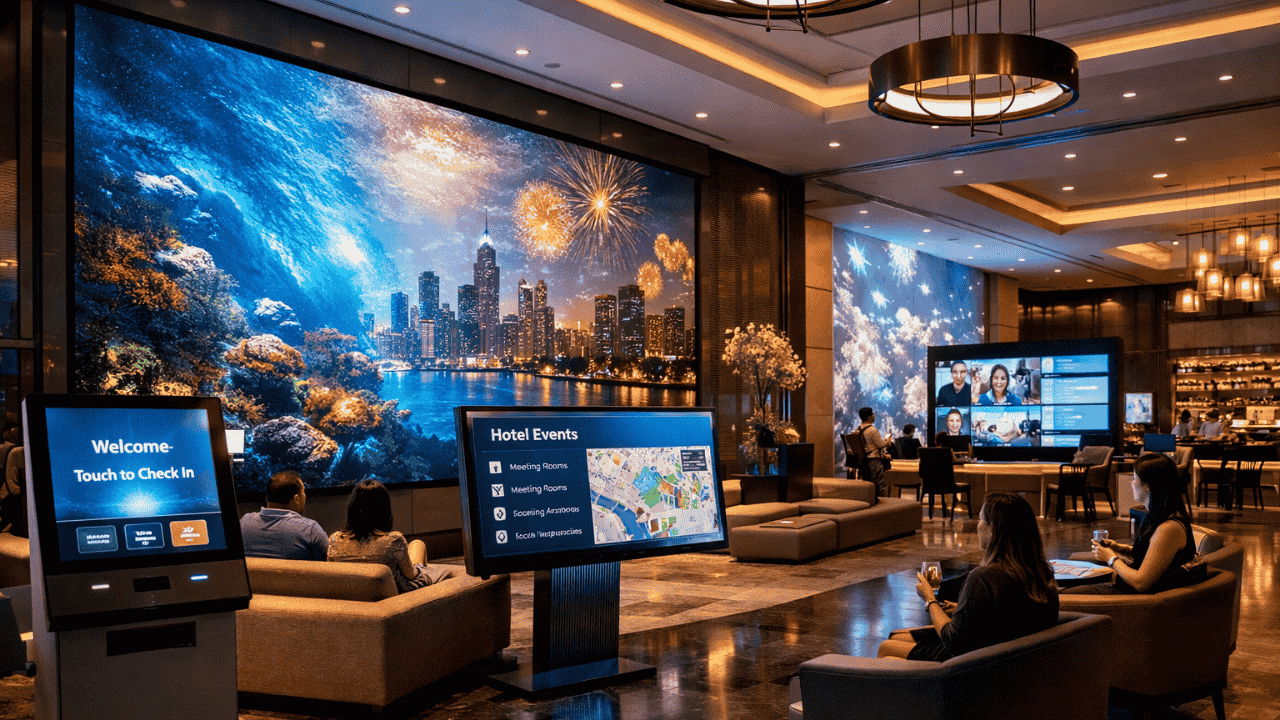
Hotels That Feel “Alive”: How AV Integration Is Redefining Guest Experiences

Today’s hotel guests expect more than comfortable rooms and good service. They expect memorable experiences.

From the moment they walk into a lobby to the time they attend a conference or relax in their room, guests interact with technology everywhere.

This is where AV integration in hospitality is making a major difference.

Hotels, resorts, and event venues are using modern audio-visual systems to transform ordinary spaces into immersive environments that enhance comfort, engagement, and convenience.

For hospitality leaders, AV is no longer just a support system for conference rooms. It has become a core part of the guest experience strategy.

What Makes a Guest Experience Truly Immersive?

An immersive hospitality experience goes beyond décor or luxury amenities. It combines technology, environment, and personalization to create memorable moments.

Examples include:

  • Digital check-in displays that simplify arrival
    • Interactive wayfinding screens across large properties
    • Smart in-room entertainment and lighting controls
    • Dynamic lobby displays and ambient soundscapes

These elements work together to create spaces that feel modern, intuitive, and engaging.

Guests notice the difference immediately.

Why AV Integration Matters in Modern Hospitality

Hotels today serve multiple functions. They are not just accommodation spaces but also:

  • Corporate meeting venues
    • Event destinations
    • Social gathering spaces
    • Entertainment environments

Each of these spaces requires a different type of experience.

AV integration in hospitality allows venues to transform environments dynamically. A conference room can host a corporate meeting in the morning and a wedding event in the evening. A restaurant can adjust lighting, visuals, and music to match the mood throughout the day.

The result is a flexible environment that adapts to guest expectations.

Key AV Technologies Transforming Hotels

Several audio-visual technologies are helping hospitality providers create richer guest experiences.

Interactive Displays and Digital Signage

Digital signage has become a central feature in modern hotels.

Large displays provide:

  • Event schedules
    • Wayfinding directions
    • Local recommendations
    • Real-time announcements

Interactive kiosks also allow guests to access information quickly without waiting at reception.

For large resorts and convention hotels, these tools significantly improve navigation and guest convenience.

Advanced Audio Systems for Ambience

Sound plays a subtle but powerful role in hospitality environments.

High-quality audio systems create the right atmosphere in different areas of the property:

  • Relaxing background music in lounges
    • Energetic sound environments in event spaces
    • Clear audio systems in conference rooms

Well-designed soundscapes help hotels create consistent brand experiences across spaces.

Projection Mapping and Immersive Visuals

Projection mapping technology is increasingly used in hospitality venues and event spaces.

It allows ordinary surfaces such as walls or ceilings to transform into dynamic visual displays.

Hotels use projection mapping to:

  • Enhance themed events
    • Create immersive dining experiences
    • Add visual storytelling during conferences or celebrations

For guests, these experiences feel unique and memorable.

How AV Technology Improves Guest Engagement

AV solutions help hotels deliver more personalized and convenient experiences.

Smart In-Room Experiences

Modern guest rooms increasingly include integrated AV systems that allow guests to control their environment.

Using a single interface, guests can manage:

  • Lighting
    • Temperature
    • Entertainment content
    • Room service communication

These features add convenience while creating a more premium experience.

Better Event and Conference Experiences

Hotels with strong AV capabilities attract more corporate events.

Conference organizers look for venues that offer:

  • Large LED displays
    • High-quality audio systems
    • Video conferencing capabilities
    • Hybrid event technology

With the rise of hybrid meetings and corporate gatherings, AV-ready venues are becoming a major competitive advantage.

Challenges Hotels Must Consider

While the benefits are significant, implementing AV systems requires careful planning.

Investment and ROI

AV infrastructure requires upfront investment. However, hotels often see long-term returns through:

  • Increased event bookings
    • Higher guest satisfaction scores
    • Premium room and venue pricing

When aligned with the guest experience strategy, AV systems can deliver strong ROI.

System Reliability

Technology failures during events or guest stays can damage reputation.

Hotels must ensure their AV infrastructure is:

  • Reliable
    • Professionally installed
    • Supported by strong maintenance systems

This ensures consistent performance during peak operations.

The Future of AV in Hospitality

The next phase of AV integration in hospitality will be driven by intelligent and immersive technologies.

Hotels are beginning to explore innovations such as:

  • Voice-controlled room environments
    • AI-powered digital concierge systems
    • Virtual tours using VR technology
    • Personalized content displays based on guest profiles

As guest expectations continue to evolve, technology will play an even bigger role in shaping hospitality experiences.

The Bottom Line

In modern hospitality, experience is everything.

Guests remember how a place felt, not just how it looked.

Through AV integration in hospitality, hotels can create dynamic spaces that engage guests, enhance events, and deliver memorable experiences.

For hospitality leaders looking to stay competitive, investing in the right AV infrastructure is no longer optional.

It is becoming a key part of delivering the next generation of guest experiences.

The Future of Hybrid Work: Leveraging Audio Visual Solutions Integration for Seamless Collaboration

Hybrid work is no longer a temporary adjustment. For most enterprises, it has become the default operating model. Teams now work across multiple offices, home environments, and client locations. Leadership meetings often include participants joining from different cities or time zones.

While hybrid work offers flexibility and scalability, it also creates a new challenge: ensuring that collaboration remains seamless regardless of location.

This is where Audio Visual Solutions integration for hybrid work becomes critical. Modern audio-visual solutions enable organizations to connect distributed teams through clear communication, reliable video meetings, and collaborative digital workspaces. When implemented correctly, Audio Visual Solutions infrastructure removes the friction between physical meeting rooms and remote participation.

For IT leaders and workplace decision-makers, the objective is straightforward—build collaboration environments that work reliably across offices, meeting rooms, and remote users.

Hybrid Work: The New Workplace Reality

Hybrid work blends traditional office environments with remote work flexibility. Employees may work from headquarters on certain days and connect virtually the rest of the week.

For large enterprises with multiple offices, this approach allows teams to remain productive without being restricted to a single location. However, it also changes how meetings are conducted.

A typical meeting today may involve:

  • Leadership teams in a boardroom
  • Regional managers joining remotely
  • External partners connecting through video conferencing
  • Teams sharing dashboards or documents in real time

Without the right technology infrastructure, these interactions can become fragmented and inefficient. Audio Visual Solutions integration for hybrid work ensures that all participants experience meetings with the same clarity and engagement.

Why Seamless Collaboration Matters

One of the biggest risks in hybrid environments is the disconnect between in-room and remote participants. If meeting rooms are not designed for hybrid collaboration, remote attendees often struggle to see discussions clearly or contribute effectively.

Seamless collaboration ensures that every participant—regardless of location—has equal visibility and voice in the conversation.

For enterprise IT teams, this means designing meeting spaces that support:

  • Clear video communication
  • Balanced audio capture across the room
  • Easy content sharing
  • Integration with collaboration platforms like Microsoft Teams or Zoom

When these elements work together, meetings become more productive and inclusive.

Audio Visual Solutions Integration: The Backbone of Hybrid Collaboration

Audio-visual technology forms the foundation of modern collaboration environments. In hybrid workplaces, Audio Visual Solutions systems ensure that communication remains consistent across physical meeting rooms and virtual meeting platforms.

A well-designed Audio Visual Solutions integration for hybrid work typically includes intelligent video systems, advanced audio solutions, and interactive collaboration tools.

These technologies help replicate the experience of being in the same room—even when participants are spread across locations.

Key Audio Visual Solutions Technologies Enabling Hybrid Work

Several Audio Visual Solutions technologies play a central role in supporting hybrid collaboration within enterprises.

Video Conferencing Systems

Video conferencing platforms such as Microsoft Teams and Zoom hAudio Visual Solutionse become essential tools for enterprise communication.

Modern meeting rooms are equipped with intelligent cameras that automatically frame participants and adjust views based on who is speaking. This creates a more natural meeting experience for remote attendees.

Advanced Audio Systems

Clear audio is essential for productive discussions. Enterprise meeting rooms now use microphone arrays and speaker systems designed specifically for conferencing environments.

Noise suppression, echo cancellation, and directional microphones ensure that conversations remain clear—even in large boardrooms or conference spaces.

Interactive Displays and Digital Whiteboards

Interactive displays allow teams to collaborate visually during meetings. Participants can annotate presentations, draw ideas, or work through concepts in real time.

These tools are particularly useful for brainstorming sessions, strategy discussions, and design reviews.

Emerging Technologies: VR and AR

While still evolving, virtual reality (VR) and augmented reality (AR) technologies are beginning to influence collaboration environments. These tools can create immersive meeting spaces where remote participants interact with digital content in more engaging ways.

Although not yet mainstream in enterprise collaboration, they signal how hybrid workspaces may evolve in the coming years.

Common Challenges in Hybrid Collaboration

Despite the benefits, hybrid collaboration comes with operational challenges that organizations must address.

Maintaining Equal Participation

Remote employees sometimes feel disconnected from in-room discussions. Without proper camera placement and audio coverage, their presence in meetings becomes limited.

Modern Audio Visual Solutions systems must ensure that remote participants are clearly visible and audible throughout the meeting.

Technical Compatibility Issues

Different devices, operating systems, and meeting platforms can create compatibility problems. Standardized Audio Visual Solutions solutions across offices help reduce these issues and simplify meeting room usage.

Engagement Imbalance

Meetings often lean toward in-room discussions, leAudio Visual Solutionsing remote participants less engaged. Integrated collaboration tools such as digital whiteboards and shared presentations help maintain active participation from all attendees.

Designing Audio Visual Solutions-Enabled Hybrid Workspaces

For organizations with multiple offices, designing effective collaboration environments requires careful planning.

Meeting rooms should be equipped with strategically placed cameras and distributed microphones to capture conversations naturally. Large displays ensure both presentations and remote participants remain visible during meetings.

Room layouts should also support hybrid participation. This includes ensuring sightlines to cameras, adequate lighting for video clarity, and minimal background noise.

Most importantly, the technology must remain simple for end users. Complicated systems reduce adoption and increase dependency on IT support.

Business Benefits of Audio Visual Solutions Integration

Investing in Audio Visual Solutions integration for hybrid work delivers measurable operational benefits for enterprises.

First, communication becomes significantly clearer. High-quality video and audio reduce misunderstandings and improve meeting outcomes.

Second, productivity improves as teams spend less time dealing with technical issues and more time focusing on discussions.

Third, organizations reduce trAudio Visual Solutionsel costs by enabling effective virtual collaboration across offices.

Finally, employees experience greater flexibility without losing the sense of connection with their teams.

For enterprises managing distributed teams, these benefits directly impact efficiency and employee satisfaction.

The Future of Audio Visual Solutions in Hybrid Work

The future of workplace collaboration will be driven by advancements in AI, cloud connectivity, and intelligent automation.

Artificial intelligence is already improving video conferencing through features such as speaker tracking, background noise reduction, and automatic meeting summaries.

Faster connectivity through technologies like 5G will further enhance the reliability of remote collaboration.

As these technologies mature, Audio Visual Solutions integration for hybrid work will become even more immersive, enabling meetings that feel almost identical to in-person interactions.

Conclusion

Hybrid work is not just a trend—it is the long-term reality for modern enterprises. Organizations must therefore rethink how meeting spaces and collaboration tools are designed.

Audio Visual Solutions integration plays a critical role in bridging the gap between physical offices and remote teams. By combining advanced video systems, professional audio solutions, and interactive collaboration tools, enterprises can create environments where communication remains clear and inclusive.

For IT leaders responsible for workplace infrastructure, investing in the right Audio Visual Solutions ecosystem ensures that teams can collaborate effectively—whether they are in the boardroom, another office, or working remotely.