Looking for Enterprise Systems Integration Services? Here’s How Team Computers Helps

Enterprise IT environments rarely remain simple. As organizations adopt new technologies, expand operations, and digitize processes, their IT ecosystems become increasingly complex. Multiple applications, cloud platforms, security tools, and infrastructure systems must work together to support business operations. Without effective enterprise systems integration services, these technologies often operate in isolation, creating inefficiencies across the organization.

Disconnected systems can slow down business processes, create data inconsistencies, and make IT management more complicated. Teams spend valuable time manually transferring information between systems, troubleshooting compatibility issues, and managing fragmented infrastructure environments. Over time, these inefficiencies can impact productivity, decision-making, and overall business agility.

This is where enterprise systems integration services become essential. By connecting infrastructure, applications, and data into a unified environment, organizations can create seamless workflows, improve operational visibility, and scale technology more efficiently. In this blog, we explore the challenges enterprises face without integration and how Team Computers helps organizations build connected, future-ready IT ecosystems through strategic systems integration.

The Challenge of Fragmented Enterprise IT Environments

Modern enterprises rely on a wide range of digital platforms to run their operations. From ERP and CRM systems to cloud infrastructure and cybersecurity tools, each technology plays a critical role in supporting business functions. However, when these systems are not properly integrated, organizations often face operational inefficiencies.

Fragmented IT environments can create several challenges for enterprises. Data becomes scattered across multiple platforms, making it difficult for leadership teams to gain a unified view of business performance. IT teams must manage multiple tools and systems independently, increasing administrative complexity. At the same time, security monitoring becomes more difficult when different systems operate in silos.

Many organizations also experience delays in decision-making because information must be manually consolidated from various systems. This not only slows operations but also increases the risk of errors and inconsistencies.

Enterprises often attempt to solve these challenges by adding more technology, but without integration, additional tools can actually increase complexity. A structured integration approach ensures that all components of the IT environment work together efficiently rather than operating as isolated systems.

Why Enterprise Systems Integration Services Matter

Effective enterprise systems integration services create a connected technology ecosystem where infrastructure, applications, and data can interact seamlessly. Instead of managing multiple disconnected systems, organizations benefit from a unified operational framework that improves collaboration and efficiency.

Integration enables automated data exchange between platforms, reducing the need for manual intervention. For example, when customer data flows automatically between CRM systems, analytics platforms, and operational tools, teams gain real-time insights that support faster decision-making.

Integrated IT environments also improve enterprise agility. As businesses introduce new applications or expand into new markets, integrated infrastructure allows new technologies to connect smoothly with existing systems. This flexibility supports innovation without disrupting operations.

Security and compliance also benefit from integrated environments. Centralized monitoring systems can detect anomalies across the entire IT ecosystem, improving threat detection and response capabilities.

Ultimately, enterprise systems integration allows organizations to move from fragmented technology environments to streamlined digital ecosystems that support long-term growth.

How Team Computers Delivers Enterprise Systems Integration

Delivering successful integration requires more than simply connecting systems. It involves understanding how enterprise technology environments function, identifying inefficiencies, and designing architectures that support long-term business objectives.

With decades of experience in enterprise IT transformation, Team Computers helps organizations implement structured integration strategies that align infrastructure, applications, and data.

The approach typically begins with a comprehensive assessment of the organization’s existing technology environment. This includes evaluating infrastructure, applications, networking systems, and security frameworks to identify integration opportunities.

Once the current environment is understood, integration architects design a framework that enables seamless communication between systems while maintaining performance, security, and scalability. Implementation focuses on creating automated workflows, unified monitoring systems, and centralized management capabilities.

Throughout the process, the goal is not simply to connect technologies but to create a cohesive IT ecosystem that supports business operations more efficiently.

Key Benefits of Enterprise Systems Integration

Organizations that implement structured integration strategies often experience measurable improvements in operational efficiency and IT performance. Integration enables enterprises to optimize their technology environments while reducing complexity.

Some of the most significant benefits include:

  • Improved data visibility across enterprise platforms
  • Automated workflows that reduce manual tasks
  • Simplified IT management through centralized systems
  • Enhanced security monitoring across infrastructure
  • Greater scalability for future technology adoption 

These benefits allow organizations to focus less on managing technology challenges and more on driving innovation and business growth.

Integrated environments also improve collaboration across departments. When systems share data seamlessly, teams across finance, operations, marketing, and customer support can work with consistent information, improving organizational alignment.

Conclusion

As enterprise IT environments grow more complex, the need for reliable enterprise systems integration services becomes increasingly important. Organizations that operate with fragmented technology environments often face operational inefficiencies, limited data visibility, and increased IT management challenges.

By implementing structured integration strategies, businesses can transform disconnected systems into unified digital ecosystems that support productivity, scalability, and innovation.

Key takeaways include:

  • Fragmented IT environments create operational inefficiencies and complexity.
  • Enterprise systems integration connects infrastructure, applications, and data.
  • Integrated ecosystems improve visibility, security, and automation.
  • Structured integration strategies support long-term digital transformation.
  • Experienced integration partners play a crucial role in successful implementation. 

For organizations seeking to modernize their technology environments, enterprise systems integration services provide the foundation for more efficient and scalable IT operations.

If your organization is navigating complex IT environments and looking for a reliable integration partner, Team Computers can help. Discover how our enterprise systems integration services connect infrastructure, applications, and data to create seamless digital ecosystems that support business growth. Connect with our experts to explore how integration can simplify and strengthen your IT environment.

Enterprise Systems Integration: The Complete Guide for Modern Enterprises

In today’s digital economy, organizations rely on a wide range of technology platforms to manage their operations. Enterprise resource planning systems, customer relationship management platforms, cloud applications, cybersecurity frameworks, analytics tools, and collaboration platforms are now essential components of modern business environments.

However, the growing number of systems within organizations has introduced a new challenge: technology fragmentation.

When systems operate independently without proper connectivity, organizations experience inefficiencies, limited data visibility, and operational bottlenecks. Departments may rely on different platforms that do not communicate effectively with one another, resulting in manual processes, duplicated data, and inconsistent information across the organization.

This is where enterprise system integration becomes a critical capability.

System integration ensures that diverse applications, infrastructure components, and data platforms function together as a unified ecosystem. Instead of operating as isolated tools, integrated systems exchange information seamlessly, enabling organizations to streamline workflows, improve decision-making, and enhance overall operational performance.

For modern enterprises pursuing digital transformation, system integration plays a foundational role in building agile and scalable IT environments.

In this comprehensive guide, we explore the concept of enterprise system integration, the technologies that enable it, the benefits organizations gain from integrated environments, and how Team Computers helps enterprises implement reliable and scalable integration solutions.

What is System Integration?

System integration refers to the process of connecting multiple IT systems, applications, and infrastructure components so that they operate as a coordinated and unified environment.

Instead of functioning as isolated systems, integrated technologies communicate with each other, exchange data, and support automated workflows across business functions.

The goal of system integration is to ensure that information flows seamlessly across an organization’s technology landscape, enabling different systems to support shared processes and business objectives.

How System Integration Works?

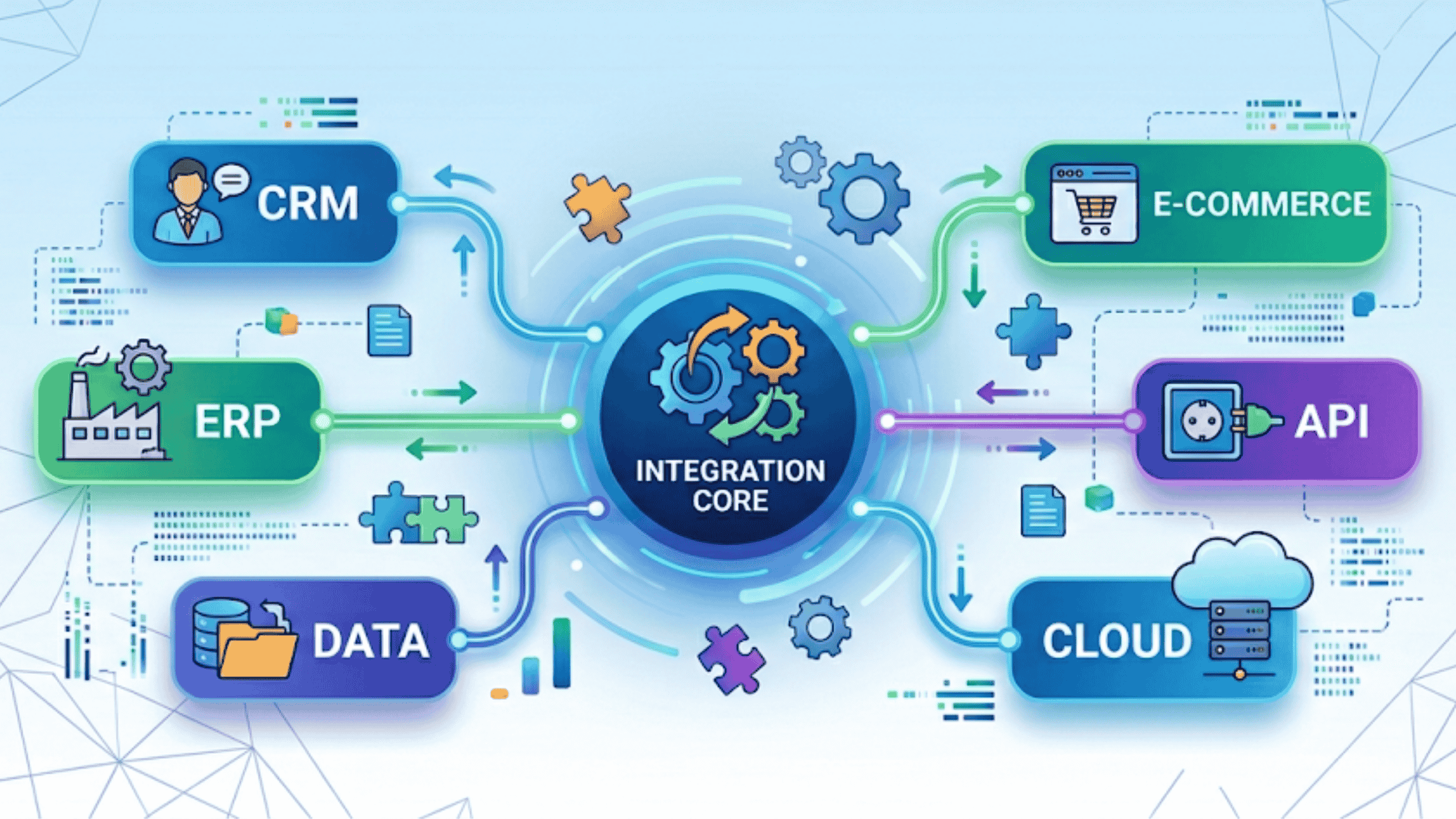
In a typical enterprise environment, multiple platforms handle different aspects of business operations. These platforms may include ERP systems, CRM tools, financial software, supply chain management platforms, analytics systems, and customer engagement tools.

System integration connects these platforms through integration frameworks such as APIs, middleware platforms, and data pipelines. These technologies enable systems to exchange information automatically, ensuring that data remains synchronized across the organization.

As a result, business processes that once required manual intervention become automated and efficient.

Why System Integration is Critical for Enterprises?

As enterprise IT environments become increasingly complex, the importance of integration continues to grow. Organizations must ensure that their systems can communicate effectively to maintain operational efficiency and competitiveness.

Eliminating Data Silos

Disconnected systems often result in data silos, where information remains trapped within individual platforms. When departments rely on separate datasets, it becomes difficult to obtain a complete view of business performance.

System integration eliminates these silos by enabling data to flow freely across systems and departments.

Improving Operational Efficiency

Manual processes such as transferring data between systems or updating information across platforms can consume valuable time and resources. Integration automates these workflows, allowing employees to focus on strategic tasks rather than repetitive administrative work.

Enhancing Customer Experiences

Customers today interact with businesses through multiple channels, including websites, mobile applications, support portals, and social platforms. Integrated systems ensure that customer data remains consistent across these channels, enabling organizations to deliver personalized and seamless experiences.

Supporting Business Scalability

As organizations expand, they often introduce new technologies to support growth. System integration allows these new platforms to connect with existing infrastructure without disrupting operations.

Key Technologies Enabling System Integration

Modern system integration relies on several technological frameworks that enable connectivity between platforms.

Application Programming Interfaces (APIs)

APIs are one of the most important technologies in modern integration strategies. They allow applications to communicate with each other by exchanging structured data through defined interfaces.

APIs enable organizations to connect cloud applications, mobile platforms, enterprise software systems, and third-party services.

Middleware Platforms

Middleware acts as an intermediary layer that facilitates communication between systems that cannot directly interact. Middleware platforms manage data exchange, workflow orchestration, and message routing across enterprise applications.

Integration Platforms (iPaaS)

Integration Platform as a Service solutions provide cloud-based environments that simplify application and data integration across distributed systems. These platforms allow organizations to manage integrations efficiently without building complex infrastructure.

Event-Driven Architectures

Event-driven systems allow applications to respond to real-time events and triggers. This architecture enables rapid data exchange and supports modern digital workflows.

Types of System Integration

Enterprise environments typically require multiple types of integration to connect applications, infrastructure, and data systems.

Application Integration

Application integration focuses on connecting enterprise software systems so they can share information and support coordinated workflows.

Examples include integrating ERP platforms with CRM systems, linking marketing automation tools with analytics platforms, and connecting human resource systems with payroll solutions.

Data Integration

Data integration consolidates information from multiple systems into centralized data platforms or warehouses. This integration enables organizations to generate comprehensive reports, perform analytics, and support business intelligence initiatives.

Infrastructure Integration

Infrastructure integration involves connecting servers, storage systems, networking components, and virtualization platforms to create a reliable IT foundation that supports enterprise workloads.

Cloud Integration

Cloud integration ensures that on-premise infrastructure can communicate with cloud platforms and SaaS applications. This type of integration is essential for organizations operating hybrid or multi-cloud environments.

Security Integration

Security integration connects cybersecurity tools across infrastructure, applications, and networks to provide comprehensive protection against threats and vulnerabilities.

Benefits of Enterprise System Integration

Organizations that successfully implement system integration strategies gain significant operational and strategic advantages.

Integrated systems improve efficiency by automating workflows and reducing manual tasks. They also enhance data visibility by ensuring that information remains synchronized across platforms.

Another important benefit is improved decision-making. When organizations have access to real-time data across departments, leaders can make informed decisions more quickly.

System integration also improves customer experiences by enabling organizations to provide consistent interactions across digital channels. Finally, integrated environments support scalability, allowing businesses to introduce new technologies without disrupting existing processes.

Challenges in Implementing System Integration

Although system integration offers substantial benefits, implementing integration strategies can be complex.

Legacy systems often present compatibility challenges because they were not designed to support modern integration frameworks. Organizations must also address issues related to data governance, security, and regulatory compliance.

Another challenge is managing integration across multiple vendors and platforms. Each system may have unique requirements, making integration projects technically demanding.

For these reasons, enterprises often collaborate with experienced IT partners who specialize in designing and implementing integration architectures.

System Integration Solutions by Team Computers

With decades of experience in enterprise technology services, Team Computers delivers system integration solutions that enable organizations to build connected, scalable, and high-performing IT environments.

As enterprises adopt a growing mix of applications, cloud platforms, infrastructure technologies, and data systems, ensuring seamless connectivity between these components becomes critical for operational success. Team Computers helps organizations design and implement integration strategies that bring together diverse technologies into a unified digital ecosystem.

By combining deep expertise across infrastructure, cloud platforms, enterprise applications, and data management, Team Computers enables businesses to eliminate technology silos, automate workflows, and create IT environments that support long-term digital transformation.

Through a structured integration approach that includes architecture design, technology implementation, and ongoing optimization, Team Computers ensures that enterprise systems work together reliably and efficiently.

Infrastructure Integration Solutions

Infrastructure forms the foundation of every enterprise IT environment. However, as organizations scale their operations, their infrastructure environments often become complex, consisting of multiple servers, storage systems, networking components, and virtualization platforms.

Team Computers helps organizations design and implement integrated infrastructure environments that support high performance, reliability, and scalability. By connecting infrastructure components into a cohesive architecture, businesses can ensure seamless communication between systems and maintain consistent operational performance.

Infrastructure integration services typically include:

  • Data center infrastructure design and modernization
  • Server and storage integration
  • Virtualization and hyperconverged infrastructure implementation
  • Enterprise networking and connectivity solutions
  • Infrastructure monitoring and performance optimization

Through these solutions, Team Computers enables enterprises to build resilient IT foundations capable of supporting modern workloads and digital business operations.

Application Integration Services

Modern enterprises rely on a wide range of software applications to manage business processes, customer relationships, finance operations, supply chains, and employee management.

However, when these applications operate independently, organizations face challenges such as duplicated data, manual processes, and fragmented workflows.

Team Computers enables seamless application integration by connecting enterprise software platforms so they can exchange information and operate as part of a unified system. By integrating applications across departments, businesses can automate processes, improve data accuracy, and enhance overall operational efficiency.

Application integration services may include connecting:

  • ERP systems with CRM platforms
  • Customer support platforms with service management tools
  • HR systems with payroll and workforce management applications
  • Marketing automation platforms with analytics and reporting tools

Through robust integration frameworks, Team Computers helps enterprises ensure that critical business applications work together efficiently.

Cloud Integration Solutions

As organizations adopt cloud technologies, many operate in hybrid or multi-cloud environments where on-premise infrastructure must interact with cloud platforms and SaaS applications.

Without proper integration, these environments can create data inconsistencies, operational complexity, and security challenges.

Team Computers provides cloud integration solutions that enable seamless connectivity between on-premise systems, public cloud platforms, and third-party applications. These solutions allow organizations to leverage the flexibility of cloud technologies while maintaining operational continuity across their IT environments.

Cloud integration capabilities include:

  • Hybrid cloud architecture design
  • Integration of SaaS applications with enterprise systems
  • Multi-cloud connectivity and orchestration
  • Secure data exchange between cloud and on-premise platforms

By integrating cloud environments with existing systems, Team Computers helps enterprises accelerate digital transformation while maintaining control and reliability.

Data Integration and Analytics

In modern enterprises, data is generated across multiple systems, including operational applications, customer platforms, financial systems, and digital channels.

When this data remains fragmented across platforms, organizations struggle to gain meaningful insights and make informed decisions.

Team Computers helps enterprises implement data integration frameworks that consolidate information from multiple systems into unified data platforms. These integrated environments enable organizations to perform advanced analytics, generate real-time reports, and support strategic decision-making.

Data integration solutions focus on building centralized data ecosystems that support:

  • Data consolidation from multiple enterprise applications
  • Data warehouses and analytics platforms
  • Business intelligence and reporting environments
  • Real-time data synchronization across systems

By enabling a unified view of enterprise data, Team Computers helps organizations transform information into actionable insights.

Security Integration

As enterprise IT environments become more interconnected, ensuring security across systems, applications, and networks becomes increasingly critical.

Security tools often operate across multiple layers of infrastructure and applications. Without proper integration, organizations may face gaps in visibility and protection.

Team Computers provides security integration solutions that connect cybersecurity platforms across the enterprise technology stack. By integrating security systems, organizations can establish a unified security framework that improves threat detection, response capabilities, and compliance management.

Security integration initiatives may involve connecting:

  • Identity and access management platforms
  • Network security systems
  • Endpoint protection solutions
  • Security monitoring and threat detection platforms

Through integrated security environments, Team Computers helps organizations protect their digital infrastructure while supporting safe and scalable business operations.

The Future of System Integration

The future of enterprise IT will be defined by deeper connectivity between technologies. Emerging innovations such as artificial intelligence, automation platforms, and advanced analytics require integrated systems that can exchange information in real time.

Organizations are increasingly adopting API-first architectures, event-driven systems, and cloud-native integration platforms to support modern digital operations.

As enterprises continue to expand their technology ecosystems, system integration will remain a critical capability for maintaining agility, efficiency, and competitiveness.

Conclusion

Enterprise technology environments are becoming more sophisticated as organizations adopt new platforms to support digital transformation. Without proper connectivity between these systems, businesses risk operational inefficiencies and fragmented data.

Disconnected systems can slow down operations, limit visibility, and create inefficiencies across the organization. With the right integration strategy, enterprises can unlock the full potential of their technology investments and build a truly connected digital ecosystem.

Team Computers helps organizations design and implement scalable system integration solutions that connect applications, infrastructure, and data platforms for improved performance and operational agility.

If your organization is looking to streamline operations, modernize IT infrastructure, or enable seamless connectivity across enterprise systems, our experts are here to help.

Connect with Team Computers today to explore how our system integration solutions can support your digital transformation journey.

Integration as a Service: The Next Phase of Enterprise IT

Enterprise IT environments have become significantly more complex over the past decade. Organizations now operate across hybrid cloud infrastructures, SaaS platforms, on-premise applications, and distributed data environments. While these technologies support innovation and digital transformation, they also introduce a major challenge – ensuring that all systems communicate effectively with one another.

Traditional integration models were often designed for smaller, centralized environments. As enterprises adopt cloud services and digital platforms at scale, these conventional approaches struggle to keep up with the speed and flexibility modern businesses require.

This shift has led to the rise of Integration as a Service (iPaaS) – a cloud-based approach that allows organizations to connect applications, data sources, and infrastructure through centralized integration platforms.

Integration as a Service represents the next phase of enterprise IT because it enables organizations to build scalable, flexible, and connected technology ecosystems. Instead of managing complex point-to-point integrations, enterprises can streamline connectivity across systems while supporting rapid innovation and business growth.

Understanding Integration as a Service in Modern IT Environments

Integration as a Service is a cloud-based model that provides tools and frameworks for connecting applications, data sources, and IT systems across distributed environments. Rather than building and maintaining custom integrations for every application, organizations can use a centralized integration platform to manage data flows and system connectivity.

In traditional enterprise environments, integration often relied on custom code or tightly coupled middleware solutions. While these approaches worked in relatively stable IT environments, they became difficult to manage as organizations adopted multiple cloud platforms and SaaS applications.

Integration as a Service addresses this challenge by providing scalable integration capabilities delivered through the cloud. These platforms allow IT teams to design, deploy, and monitor integrations using standardized connectors, APIs, and automation workflows.

Key capabilities of Integration as a Service typically include:

  • Prebuilt connectors for enterprise applications and cloud platforms
  • Centralized integration management and monitoring
  • Automated data synchronization between systems
  • API-based communication across applications

By simplifying how systems connect and exchange data, iPaaS platforms enable enterprises to manage complex IT ecosystems more efficiently.

Why Enterprises Are Adopting Integration as a Service

The growing adoption of cloud technologies has transformed the way enterprises build and operate their IT environments. Organizations no longer rely on a single centralized infrastructure. Instead, they operate across multiple platforms, applications, and data environments.

This distributed architecture creates new integration challenges. Connecting systems across cloud platforms, on-premise environments, and third-party applications requires a flexible and scalable integration approach.

Integration as a Service addresses these challenges by enabling organizations to manage connectivity through a unified platform. Rather than developing custom integrations for every system, enterprises can establish standardized integration frameworks that simplify IT operations.

Several factors are driving enterprise adoption of iPaaS solutions. These include:

  • Rapid expansion of SaaS and cloud applications
  • Increasing need for real-time data synchronization
  • Growing demand for automation across business workflows
  • The need to reduce IT complexity and integration costs

By adopting Integration as a Service, organizations can accelerate digital transformation initiatives while maintaining a connected and manageable IT ecosystem.

How Integration as a Service Improves Enterprise Agility

One of the most significant benefits of Integration as a Service is its ability to improve enterprise agility. Modern businesses must adapt quickly to changing market conditions, evolving customer expectations, and new digital opportunities.

Traditional integration models often slow innovation because new systems require lengthy development cycles to establish connectivity with existing platforms. In contrast, iPaaS platforms enable organizations to deploy integrations more quickly using standardized connectors and reusable workflows.

This flexibility allows enterprises to introduce new applications or digital services without disrupting existing operations.

Integrated cloud platforms also support real-time data sharing, enabling organizations to make faster, data-driven decisions. Business leaders gain immediate visibility into operational performance, customer interactions, and financial metrics across the enterprise.

Ultimately, Integration as a Service empowers organizations to innovate faster while maintaining a stable and connected technology environment.

How Team Computers Supports Modern Integration Strategies

As enterprise IT ecosystems continue to expand, organizations need structured integration strategies that align with both current infrastructure and future digital initiatives.

Team Computers helps enterprises design and implement modern integration frameworks that connect applications, infrastructure, and data environments seamlessly.

By leveraging deep expertise in enterprise systems integration, cloud infrastructure, and digital transformation, Team Computers helps organizations adopt integration models that support scalability, security, and operational efficiency.

Through strategic consulting and implementation services, the company enables enterprises to build connected technology environments that reduce complexity while supporting innovation and long-term growth.

With the right integration strategy in place, organizations can move beyond fragmented systems and create agile IT ecosystems that support evolving business needs.

Enterprise IT environments are evolving rapidly as organizations adopt cloud technologies, digital platforms, and advanced analytics capabilities. While these innovations bring significant opportunities, they also increase the complexity of managing enterprise technology ecosystems.

Integration as a Service provides a modern solution to this challenge by enabling organizations to connect applications, data, and infrastructure through scalable cloud-based platforms.

Enterprises that adopt iPaaS frameworks gain several key advantages:

  • Faster deployment of integrations across applications
  • Improved data visibility and synchronization
  • Reduced IT complexity and operational overhead
  • Greater flexibility for adopting new technologies

As digital transformation continues to accelerate, Integration as a Service is becoming an essential component of modern enterprise IT strategies.

Looking to build a more connected and agile enterprise IT environment?

Explore how Team Computers helps organizations implement modern systems integration and cloud connectivity strategies that support scalable, future-ready IT ecosystems.

The Enterprise Connectivity Gap – And How Integration Solves It

Modern enterprises rely on a wide ecosystem of digital technologies. From enterprise applications and cloud platforms to analytics tools and security systems, organizations deploy numerous technologies to support daily operations and strategic initiatives.

However, as technology adoption grows, many organizations unknowingly create a connectivity gap within their IT environments. Systems that were implemented at different times, by different teams, or for different business purposes often fail to communicate effectively with one another. As a result, critical data becomes fragmented, workflows slow down, and IT complexity increases.

This growing disconnect between enterprise systems is commonly referred to as the enterprise connectivity gap. While individual technologies may function well on their own, the lack of integration between them limits their collective value.

Enterprise systems integration addresses this challenge by connecting applications, infrastructure, and data environments into a unified ecosystem. By bridging these gaps, organizations can transform fragmented technology environments into connected platforms that support efficiency, agility, and innovation.

Understanding the Enterprise Connectivity Gap

The enterprise connectivity gap emerges when different technology components within an organization operate independently rather than as part of a unified architecture. Over time, this situation becomes increasingly common as companies adopt new digital tools to improve specific functions such as finance, human resources, customer engagement, and analytics.

For example, a company may deploy an enterprise resource planning platform for financial operations, a customer relationship management system for sales teams, cloud-based collaboration tools for employees, and separate analytics platforms for data insights. While each solution performs its intended role, the absence of integration between these systems creates operational silos.

When systems fail to communicate seamlessly, information must often be transferred manually between platforms. This not only consumes time but also increases the likelihood of errors and inconsistencies. More importantly, decision-makers may struggle to gain a complete view of business performance because data remains scattered across multiple systems.

The connectivity gap therefore becomes both a technical and operational challenge, affecting productivity, decision-making, and the overall efficiency of enterprise technology environments.

How the Connectivity Gap Impacts Enterprise Operations

Disconnected technology environments can quietly create inefficiencies across the organization. These issues may not always be immediately visible, but their impact grows over time as systems and data continue to expand.

One of the most common consequences is reduced operational efficiency. When employees must switch between multiple systems or manually reconcile information across platforms, routine tasks become more time-consuming.

Another major impact involves data inconsistency. Without integrated data flows, different systems may contain conflicting information, making it difficult for leadership teams to rely on reports or analytics for strategic decisions.

The connectivity gap can also introduce security and compliance risks. Isolated systems often create blind spots in monitoring and access control, increasing the complexity of maintaining strong cybersecurity policies.

Ultimately, disconnected systems prevent organizations from realizing the full value of their technology investments. Instead of enabling agility and innovation, fragmented IT environments slow progress and increase operational risk.

How Systems Integration Bridges the Connectivity Gap

Enterprise systems integration provides the framework needed to connect diverse technologies into a cohesive IT ecosystem. Rather than allowing applications and infrastructure components to function independently, integration ensures that systems communicate through standardized interfaces and data exchange mechanisms.

Through integration, enterprises can establish seamless data flows across applications, ensuring that information is automatically synchronized between platforms. This eliminates the need for manual data transfers and reduces the likelihood of inconsistencies.

Integration also improves operational visibility by consolidating information from multiple systems into unified dashboards and analytics platforms. Decision-makers gain access to accurate, real-time insights that support better business strategies.

Another critical advantage is technology scalability. As organizations adopt new applications or expand digital capabilities, integrated environments make it easier to incorporate additional systems without disrupting existing workflows.

By bridging the connectivity gap, systems integration transforms fragmented IT landscapes into connected environments that support business growth and digital innovation.

The Strategic Role of Systems Integration Partners

While the benefits of integration are clear, implementing enterprise-wide integration frameworks requires careful planning and technical expertise. Organizations must design integration architectures that align with both current infrastructure and future technology requirements.

This is where experienced systems integration partners play an important role.

Team Computers works with enterprises to identify connectivity gaps within their technology environments and implement structured integration frameworks that bring applications, infrastructure, and data systems together.

By leveraging deep expertise across enterprise IT environments, Team Computers helps organizations build integration architectures that are secure, scalable, and aligned with long-term digital transformation strategies. These integration frameworks enable enterprises to eliminate technology silos, improve operational efficiency, and gain greater visibility into their business operations.

With the right integration strategy in place, enterprises can move from fragmented systems to connected ecosystems that support innovation and sustained growth.

As enterprises continue adopting new digital technologies, maintaining a connected IT environment becomes increasingly challenging. Without structured integration frameworks, organizations risk creating technology silos that slow operations and limit business visibility.

Addressing the enterprise connectivity gap requires a strategic approach to systems integration that aligns applications, infrastructure, and data environments within a unified architecture.

Organizations that successfully implement integration strategies gain several long-term advantages:

  • Seamless communication between enterprise applications
  • Improved data visibility across business functions
  • Greater operational efficiency and automation
  • Scalable IT environments that support future growth

In an increasingly digital business landscape, connected systems are no longer optional—they are essential for enterprise success.

Is your organization experiencing the challenges of disconnected systems?

Discover how Team Computers helps enterprises close the enterprise connectivity gap through strategic systems integration services that connect applications, infrastructure, and data environments.

Start building a fully connected enterprise IT ecosystem today.

The Integration Debt You Didn’t Know You Were Accumulating

Most enterprises are aware of technical debt. Very few realize they are accumulating something equally dangerous, integration debt.

It doesn’t show up in budget discussions. It rarely gets flagged in architecture reviews. Yet over time, it quietly becomes one of the biggest barriers to scalability, agility, and operational efficiency.

Integration debt builds when systems are connected quickly to meet immediate needs, without a long-term architectural approach. A new application is added, a point-to-point connection is created, a workaround is implemented to meet a deadline, and the system continues to function. On the surface, everything works.

But beneath that surface, complexity begins to grow. Dependencies become harder to track. Changes take longer to implement. Failures become more difficult to diagnose.

This is the cost of ignoring integration debt. In this blog, we break down what integration debt really is, how it builds up in enterprise environments, and what you can do to control it before it starts slowing your business down.

What Is Integration Debt, And Why It’s Different from Technical Debt

Integration debt is often misunderstood because it doesn’t behave like traditional technical debt. It does not reside within a single application or codebase. Instead, it exists between systems, in the connections, dependencies, and data flows that tie your IT landscape together.

While technical debt affects how a system performs internally, integration debt affects how systems interact externally. This makes it significantly harder to identify and even harder to manage.

In most enterprises, integration layers evolve organically. New systems are added over time, each requiring connectivity with existing applications. In the absence of a unified strategy, these connections are built incrementally, often using different methods, tools, and standards.

Over time, this results in:

  • A growing number of tightly coupled integrations
  • Inconsistent communication patterns across systems
  • Limited visibility into how systems depend on each other

Unlike technical debt, which can often be isolated and addressed within a system, integration debt spreads across the entire ecosystem. This makes its impact broader, and its resolution more complex.

How Integration Debt Builds Up in Enterprise Environments

Integration debt is rarely the result of poor decision-making. In fact, it often builds from decisions that make perfect sense in the moment.

A new business requirement emerges, and speed becomes the priority. A direct integration is implemented to meet a deadline. Another system is added, and a similar approach is taken. Over time, these decisions accumulate, creating a web of connections that were never designed to scale.

This buildup is typically driven by:

  • Short-term delivery pressures overriding long-term design
  • Lack of standardized integration frameworks
  • Independent teams building integrations in silos
  • Limited governance over integration practices

Each individual decision feels justified. The problem is cumulative.

As the number of integrations increases, so does the complexity of managing them. What started as a fast and efficient approach gradually becomes a constraint, making every new integration slower, riskier, and more expensive.

The Hidden Cost of Integration Debt

The most dangerous aspect of integration debt is that its impact is not immediate. Systems continue to function, which creates the illusion that everything is under control.

The real cost becomes visible over time, and it manifests in ways that directly affect business performance.

One of the first signs is reduced agility. Simple changes begin to take longer because teams need to assess multiple dependencies before making updates. What should be a straightforward modification turns into a complex coordination effort.

Operational instability is another consequence. Failures in one system start to cascade into others, and diagnosing the root cause becomes increasingly difficult due to the lack of visibility across integrations.

There is also a direct financial impact. Maintenance efforts increase, rework becomes more frequent, and the cost of implementing new integrations rises significantly.

Most importantly, integration debt limits scalability. As the business grows and new systems are introduced, the existing integration landscape struggles to keep up. Instead of enabling growth, it begins to slow it down.

Why Integration Debt Becomes a Barrier to Transformation

Digital transformation initiatives rely heavily on the ability to connect systems, enable real-time data flow, and support dynamic business processes. Integration debt directly undermines these capabilities.

When integration layers are fragmented and tightly coupled, introducing new technologies becomes difficult. Cloud adoption slows down because legacy integrations cannot adapt easily. Real-time capabilities are limited because existing architectures are not designed for them.

This creates a disconnect between business ambition and IT capability. While the organization aims to move faster and become more agile, the underlying integration landscape resists change.

In many cases, transformation initiatives fail not because the vision is flawed, but because the integration foundation is not ready to support it.

Also read: Enterprise Systems Integration Readiness Framework

Addressing integration debt is therefore not just a technical necessity – it is a strategic requirement for enabling transformation.

Identifying Integration Debt Before It Becomes Critical

Integration debt often goes unnoticed until it reaches a critical point. However, there are clear indicators that can help identify it early.

A common sign is the increasing time required to implement new integrations. If every new connection feels more complex than the last, it is likely that underlying dependencies are becoming harder to manage.

Frequent integration failures or performance issues are another indicator. These often point to tightly coupled systems where changes in one area have unintended consequences elsewhere.

Limited visibility into system interactions is also a red flag. If teams cannot clearly map how systems are connected or how data flows between them, managing integration effectively becomes nearly impossible.

Recognizing these signs early allows organizations to take corrective action before integration debt begins to significantly impact operations.

How Team Computers Helps Reduce Integration Debt

Reducing integration debt requires more than incremental fixes. It requires a structured approach that addresses the root causes of complexity.

Team Computers works with enterprises to analyze their existing integration landscape, identify areas of hidden complexity, and define a path toward a more scalable architecture. This includes evaluating current integration patterns, mapping dependencies, and assessing how these factors impact performance and agility.

The focus is on simplification and standardization. By moving away from fragmented, point-to-point integrations and toward more structured integration models, organizations can reduce complexity and improve control.

This approach not only addresses existing integration debt but also prevents new debt from accumulating. Integration becomes more predictable, scalable, and aligned with long-term business objectives.

“Integration debt is not created by bad decisions, it’s created by necessary decisions made without a long-term view. The key is not to avoid it completely, but to manage it before it starts limiting your ability to scale.”
– Head of IT Services, Team Computers

Conclusion

Integration debt is one of the most overlooked challenges in enterprise IT, yet its impact is significant and far-reaching. It builds quietly, driven by short-term decisions, and only becomes visible when it starts slowing down execution and increasing complexity.

Organizations that recognize and address integration debt early are better positioned to maintain agility, control costs, and support long-term growth. Those that ignore it often find themselves constrained by their own systems.

Key takeaways:

  • Integration debt exists in the connections between systems, not within them

  • It builds gradually through short-term integration decisions

  • Its impact includes reduced agility, higher costs, and limited scalability

  • Early identification is critical to preventing long-term disruption

  • A structured approach is required to reduce and control it

If integration is expected to support business growth, it must be managed with the same discipline as any other critical asset. Ignoring integration debt does not make it disappear—it makes it harder to fix later.

Concerned about hidden complexity in your integration landscape?

Discover how Team Computers can help you identify integration debt, simplify your architecture, and build a scalable integration foundation that supports your business—today and as it grows.

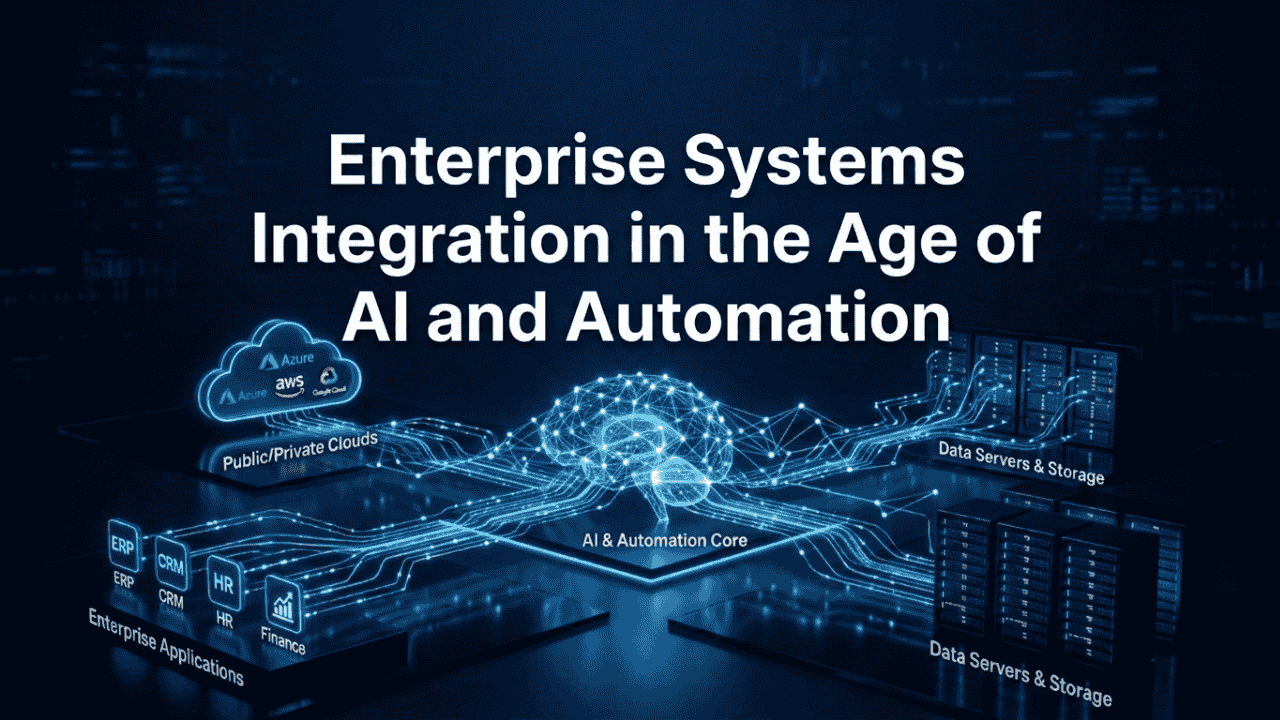
Enterprise Systems Integration in the Age of AI and Automation

Artificial intelligence and automation are rapidly transforming how enterprises operate. Organizations are adopting AI-powered analytics, intelligent automation platforms, and machine learning systems to improve efficiency, enhance decision-making, and streamline operations.

However, these advanced technologies cannot function effectively in isolation. AI models require access to large volumes of accurate and connected data, while automation tools depend on seamless communication between enterprise applications. When enterprise systems operate independently, AI and automation initiatives often struggle to deliver their full value.

This is where enterprise systems integration becomes essential. By connecting applications, infrastructure, and data environments, systems integration enables AI platforms and automation tools to access consistent information and operate across multiple business processes.

In the age of intelligent technologies, enterprises that prioritize enterprise systems integration are better positioned to unlock the full potential of AI and automation. This article explores how integration supports these technologies and why it has become a critical foundation for modern enterprise innovation.

Why AI and Automation Depend on Integrated Enterprise Systems

Artificial intelligence and automation platforms rely heavily on connected data and seamless communication between enterprise technologies. AI models analyze information from multiple sources to generate insights, predictions, and recommendations. Automation platforms execute workflows by interacting with various enterprise applications.

When enterprise systems are not integrated, these technologies face significant limitations. Data may remain isolated within individual systems, preventing AI tools from accessing the comprehensive datasets required for accurate analysis. Similarly, automation workflows may fail when applications cannot communicate with each other effectively.

For example, an AI-driven customer analytics platform may require data from CRM systems, marketing platforms, and support applications. Without integration, gathering this information becomes complex and time-consuming.

Integrated enterprise systems ensure that AI and automation technologies operate with complete and consistent information, allowing organizations to achieve more accurate insights and more reliable automated processes.

The Role of Systems Integration in Enabling Intelligent Automation

Automation has evolved far beyond simple task execution. Modern enterprises are implementing intelligent automation platforms that combine robotic process automation (RPA), machine learning, and advanced analytics.

These automation initiatives require seamless communication between enterprise platforms. Systems integration enables this connectivity by linking applications, databases, and infrastructure environments into a unified technology ecosystem.

With integrated systems, automation platforms can trigger workflows across multiple departments and systems. For example, an automated procurement process may involve ERP systems, supplier platforms, and financial systems. Integration ensures that information flows smoothly across these platforms without manual intervention.

Organizations that implement integrated environments can scale automation initiatives more effectively, reducing operational workloads while improving process accuracy.

How Integrated Data Environments Strengthen AI Capabilities

Data is the foundation of any successful AI initiative. Machine learning models require large datasets that are accurate, consistent, and accessible across enterprise platforms.

In many organizations, data remains scattered across multiple applications and databases. CRM systems store customer information, ERP platforms manage operational data, and analytics tools track performance metrics. When these systems operate independently, AI tools cannot easily access the full dataset required for reliable insights.

Enterprise systems integration solves this challenge by enabling seamless data exchange between systems. Integration frameworks allow enterprises to synchronize information across applications and create unified data environments.

With integrated data ecosystems, AI platforms can analyze information from multiple sources simultaneously. This improves the accuracy of predictive models, enhances analytics capabilities, and enables organizations to make more informed decisions.

Preparing Enterprise IT Environments for AI-Driven Operations

Adopting AI and automation technologies requires more than simply implementing new software tools. Organizations must ensure that their technology environments can support these advanced capabilities.

Enterprises preparing for AI-driven operations typically focus on several key areas:

  • Ensuring enterprise applications are connected through integration frameworks
  • Creating unified data environments that support advanced analytics
  • Modernizing infrastructure platforms to handle AI workloads
  • Establishing secure communication between systems

When these elements are in place, enterprises can implement AI and automation technologies more effectively. Integrated technology environments allow organizations to deploy intelligent tools across departments while maintaining operational consistency.

This approach ensures that AI and automation initiatives deliver measurable business value rather than becoming isolated technology experiments.

How Team Computers Supports Enterprise Integration for AI and Automation

Implementing AI and automation successfully requires a strong integration foundation. Enterprises must connect applications, infrastructure environments, and data systems to ensure that intelligent technologies can operate across the organization.

Team Computers helps enterprises design and implement enterprise systems integration frameworks that support modern AI and automation initiatives.

With extensive experience in enterprise IT environments, Team Computers enables organizations to integrate critical business applications, align infrastructure platforms, and create unified data ecosystems. These integration strategies allow enterprises to deploy AI-driven analytics, automate workflows, and enhance operational efficiency.

By building connected technology environments, Team Computers helps organizations unlock the full potential of intelligent technologies while maintaining scalability and security.

Conclusion

Artificial intelligence and automation are reshaping enterprise operations, but their success depends on a strong technological foundation. Organizations must ensure that applications, infrastructure, and data environments are connected so intelligent systems can access the information they need.

Enterprise systems integration provides the framework required to support these advanced technologies.

Key takeaways include:

  • AI and automation require connected enterprise systems
  • Integrated environments enable seamless data exchange
  • Systems integration supports intelligent automation workflows
  • Unified data ecosystems strengthen AI-driven insights

Enterprises that prioritize integration will be better equipped to implement intelligent technologies and drive long-term innovation.

AI and automation initiatives can only succeed when enterprise technologies operate as a connected ecosystem. Discover how Team Computers helps organizations implement enterprise systems integration strategies that support AI-driven innovation and intelligent automation.

Explore how integrated enterprise systems can power the next phase of your digital transformation.

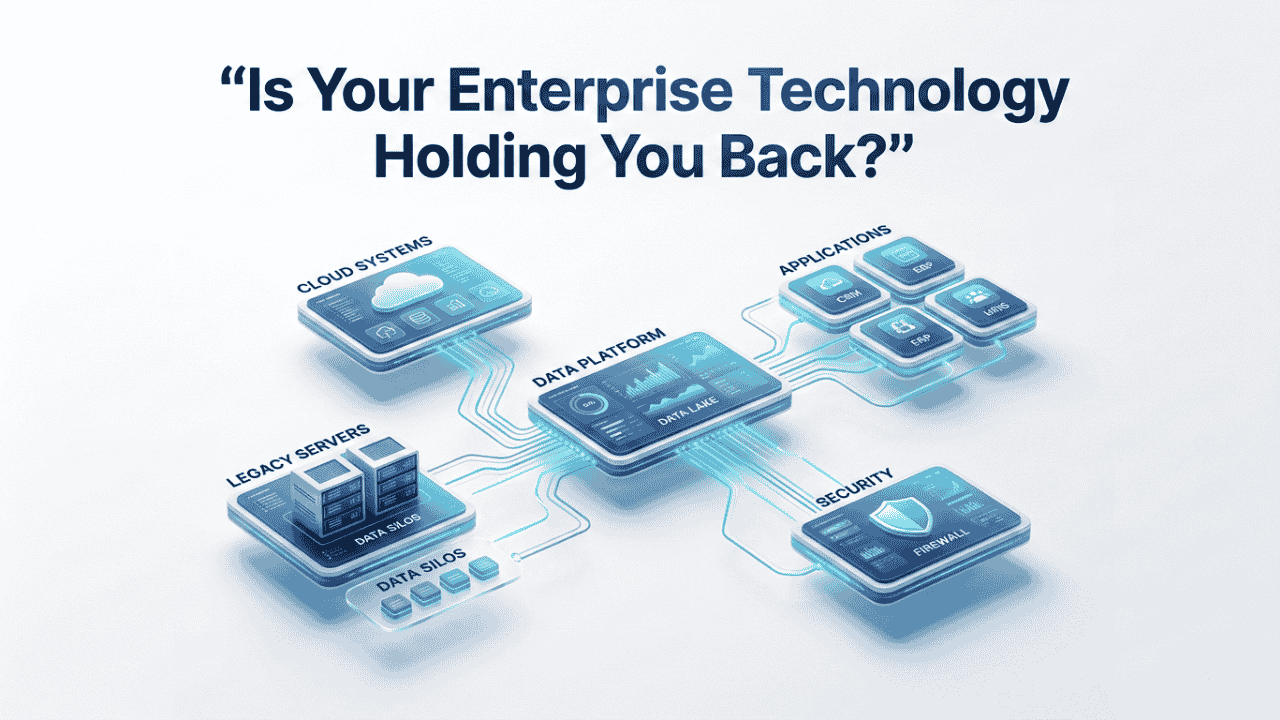
Is Your Enterprise Technology Holding You Back?

Many enterprises invest heavily in modern technologies to improve efficiency, enable digital transformation, and support long-term growth. Cloud platforms, enterprise applications, analytics tools, and cybersecurity systems promise to make organizations faster, smarter, and more competitive.

Yet despite these investments, many businesses still struggle with operational inefficiencies and slow decision-making. Teams spend time switching between disconnected systems, data remains scattered across multiple platforms, and IT teams face growing complexity as new technologies are added.

If this scenario sounds familiar, the problem may not be the technology itself. The real issue is often the lack of alignment between infrastructure, applications, and data systems.

This is where systems integration plays a crucial role. By connecting enterprise technologies into a unified ecosystem, organizations can eliminate silos, improve data visibility, and ensure that every technology investment contributes to real business outcomes.

In this article, we explore the warning signs that enterprise technology may be slowing your organization down, and how integrated technology environments can unlock greater efficiency, agility, and innovation.

Warning Signs Your Enterprise Technology Is Creating Bottlenecks

Enterprise technology environments usually evolve over time. As organizations grow, they introduce new applications, upgrade infrastructure platforms, and adopt data systems to address changing business needs. While each addition may solve a specific operational challenge, the overall environment often becomes fragmented.

Over time, teams may find themselves relying on manual processes to move information between systems because applications do not communicate directly. Data may be stored across multiple platforms without synchronization, making it difficult to gain a consistent view of business performance. Decision-making can also slow down when leadership teams must consolidate information from several systems before reaching conclusions.

These inefficiencies gradually increase operational complexity. IT teams spend more time maintaining compatibility between systems rather than focusing on innovation or strategic improvements. As the technology environment grows, these small inefficiencies compound and begin to affect enterprise productivity and agility.

Research from industry analysts indicates that organizations with fragmented technology ecosystems experience higher operational costs and slower innovation cycles.

How Fragmented Systems Impact Business Performance

Disconnected technology environments affect more than just IT teams; they influence the overall performance of the organization. When enterprise systems do not communicate effectively, business units operate with incomplete information, which makes collaboration more difficult.

For example, sales teams may lack visibility into service issues affecting customers, while support teams may not have access to a complete record of previous customer interactions. Marketing teams may operate with limited insights into customer engagement data stored within other systems. These information gaps create inefficiencies that slow down both operational workflows and strategic decision-making.

As the organization grows, fragmented systems can also make it difficult to scale operations efficiently. New platforms may need custom integrations or manual processes to function alongside existing systems, which increases complexity for IT teams.

Ultimately, technology environments that lack integration often prevent enterprises from responding quickly to market opportunities. Instead of enabling innovation, disconnected systems can become a barrier to business agility and growth.

Why Systems Integration Is the Missing Link

The most effective way to address these challenges is through systems integration, which focuses on connecting enterprise technologies into a cohesive architecture.

Instead of operating independently, integrated systems communicate through APIs, middleware frameworks, and data integration platforms. This connectivity ensures that information flows smoothly between infrastructure environments, enterprise applications, and data systems.

Key outcomes of systems integration include:

  • Real-time data exchange across enterprise platforms
  • Automated workflows that reduce manual intervention
  • Unified monitoring across infrastructure and applications
  • Improved collaboration between business units

When enterprise technologies operate as part of a connected ecosystem, organizations gain the ability to streamline operations and improve decision-making.

Building a Connected Enterprise Technology Ecosystem

Creating a connected technology ecosystem requires a thoughtful integration strategy. Organizations must evaluate how infrastructure platforms, enterprise applications, and data environments interact and determine where integration gaps exist.

A structured integration strategy begins with assessing the current technology landscape to identify inefficiencies and disconnected systems. Once these gaps are understood, organizations can design scalable integration architectures that allow systems to communicate effectively.

Integration frameworks typically involve technologies such as APIs, middleware platforms, and data integration tools that enable seamless communication between applications. These technologies allow enterprise data to move efficiently across systems while maintaining security and performance standards.

When integration strategies are implemented successfully, enterprises gain the ability to introduce new technologies without disrupting existing operations. This flexibility allows organizations to scale their technology environments while maintaining operational stability.

How Team Computers Helps Enterprises Overcome Technology Fragmentation

Addressing technology fragmentation requires deep expertise across infrastructure platforms, enterprise applications, and data environments. Organizations must ensure that integration frameworks support scalability, security, and operational efficiency.

Team Computers helps enterprises design and implement systems integration strategies that transform fragmented technology environments into unified digital ecosystems.

With decades of experience in enterprise IT environments, Team Computers supports organizations in:

  • Connecting enterprise applications such as ERP, CRM, and analytics platforms
  • Integrating hybrid cloud and on-premise infrastructure environments
  • Enabling seamless data synchronization across enterprise systems
  • Designing scalable integration architectures that support digital transformation

Through structured integration frameworks, Team Computers enables businesses to eliminate technology silos and unlock the full value of their IT investments.

Conclusion

Enterprise technology should empower organizations to move faster, innovate more effectively, and make smarter decisions. However, when systems operate independently, technology can become a source of inefficiency rather than a driver of growth.

Systems integration plays a vital role in aligning infrastructure, applications, and data systems so that enterprise technologies operate as part of a connected ecosystem.

Key takeaways include:

  • Fragmented enterprise systems create operational bottlenecks
  • Disconnected data environments limit visibility and collaboration
  • Systems integration enables unified technology ecosystems
  • Integrated environments improve efficiency, scalability, and innovation

Organizations that prioritize integration gain the flexibility and insight required to thrive in an increasingly digital business landscape.

If your enterprise technology environment feels complex, fragmented, or difficult to scale, it may be time to rethink your integration strategy.

Discover how Team Computers helps organizations connect infrastructure, applications, and data through enterprise systems integration – enabling more efficient operations and stronger digital growth.

How Systems Integration Aligns Infrastructure, Applications, and Data

Enterprise technology environments are rarely simple. Most organizations operate a combination of infrastructure platforms, enterprise applications, and data systems that support daily operations. Servers, cloud platforms, ERP systems, CRM tools, analytics platforms, and security frameworks all play critical roles in enabling modern business processes.

However, when these components operate independently, organizations struggle to maintain operational efficiency. Infrastructure may function well, applications may deliver strong capabilities, and data platforms may generate insights—but without proper alignment between these elements, enterprises often face fragmented workflows and limited visibility.

This is where systems integration becomes essential. By connecting infrastructure, applications, and data environments, systems integration enables organizations to create unified technology ecosystems where information flows seamlessly and processes operate efficiently.

In this blog, we explore how systems integration aligns infrastructure, applications, and data, why this alignment matters for enterprise operations, and how organizations can build integrated technology environments that support scalability, innovation, and long-term digital transformation.

The Challenge of Disconnected Enterprise Technology Environments

Most enterprises adopt technology in phases. Over time, organizations deploy new infrastructure platforms, enterprise applications, and data solutions to support evolving business requirements. While each of these technologies delivers value independently, the overall IT environment often becomes fragmented.

Disconnected systems create operational inefficiencies that affect both IT teams and business functions. Infrastructure platforms may operate separately from application environments, while critical business data remains stored across multiple systems without synchronization. As a result, organizations often struggle to gain a unified view of enterprise operations.

When infrastructure, applications, and data environments are not aligned, teams frequently rely on manual processes to move information between systems. This slows workflows, increases the likelihood of errors, and limits the organization’s ability to make timely decisions. Over time, the complexity of managing disconnected systems places additional pressure on IT teams while reducing overall operational efficiency.

These challenges highlight the growing importance of enterprise systems integration, which enables organizations to connect technologies and ensure that enterprise platforms operate as part of a cohesive ecosystem.

How Systems Integration Connects Infrastructure, Applications, and Data

Systems integration focuses on creating a connected technology environment where infrastructure platforms, enterprise applications, and data systems operate together within a unified architecture.

Instead of functioning as isolated components, integrated systems communicate through structured frameworks such as APIs, middleware platforms, and data integration technologies. This connectivity allows enterprise platforms to exchange information seamlessly while maintaining operational stability.

Through systems integration, organizations can enable real-time communication between applications, centralized monitoring across infrastructure environments, and automated workflows that connect multiple business systems. Data generated by enterprise applications can flow directly into analytics platforms, providing leadership teams with timely insights that support faster decision-making.

By aligning infrastructure, applications, and data environments, enterprises can ensure that technology investments contribute to a unified operational strategy rather than creating additional complexity.

The Business Value of Aligning Infrastructure, Applications, and Data

When organizations successfully align infrastructure, applications, and data through systems integration, they unlock significant operational and strategic advantages.

Integrated environments improve operational efficiency by enabling automated workflows across business systems. Instead of relying on manual data transfers, applications communicate directly with each other, allowing processes to run more smoothly and reducing the potential for human error.

Another major benefit is improved data visibility. When enterprise data flows seamlessly across systems, decision-makers gain a more comprehensive view of business performance. This real-time visibility supports faster responses to operational challenges and helps organizations identify opportunities for improvement.

Integrated technology ecosystems also enable enterprises to scale more effectively. New platforms, applications, or digital services can be introduced into an existing integrated environment without disrupting operations. This flexibility is particularly valuable for organizations undergoing digital transformation initiatives, where technology environments must continuously evolve.

Building an Enterprise Integration Architecture

Achieving alignment across infrastructure, applications, and data requires a carefully designed integration architecture. Enterprises must establish a framework that determines how systems communicate, how data flows between platforms, and how performance is monitored across the environment.

A successful enterprise integration architecture typically combines several essential elements that support connectivity and operational visibility:

  • API frameworks that enable secure communication between applications
  • Middleware platforms that manage interactions between enterprise systems
  • Data integration tools that synchronize information across databases and applications
  • Monitoring systems that provide visibility into infrastructure and application performance 

Together, these components form the integration layer that allows enterprise technologies to operate as a unified ecosystem. Organizations that invest in structured integration architectures gain the ability to expand their technology environments while maintaining stability and security.

How Team Computers Enables Integrated Enterprise Technology Environments

Implementing enterprise-wide systems integration requires expertise across infrastructure platforms, enterprise applications, and data environments. Integration initiatives must ensure seamless connectivity while maintaining security, scalability, and performance.

Team Computers helps organizations design and implement enterprise systems integration frameworks that align infrastructure, applications, and data systems.

With decades of experience in enterprise IT environments, Team Computers supports organizations in:

  • Integrating enterprise applications such as ERP, CRM, and analytics platforms
  • Connecting cloud and on-premise infrastructure environments
  • Enabling real-time data synchronization across systems
  • Building scalable integration architectures that support future growth

By aligning technology infrastructure with business objectives, Team Computers helps enterprises eliminate data silos, improve operational visibility, and create connected technology ecosystems.

Conclusion

Modern enterprises depend on complex technology ecosystems that include infrastructure platforms, enterprise applications, and data environments. When these components operate independently, organizations face inefficiencies, limited visibility, and increased operational complexity.

Systems integration addresses these challenges by aligning infrastructure, applications, and data into a connected architecture that supports enterprise operations.

Key takeaways include:

  • Disconnected technology environments create operational silos
  • Systems integration enables seamless communication between platforms
  • Integrated environments improve visibility, efficiency, and scalability
  • Structured integration architectures support long-term digital transformation

Organizations that invest in systems integration gain the flexibility and insight required to adapt to evolving technology demands.

Aligning infrastructure, applications, and data is essential for building scalable enterprise technology environments. Discover how Team Computers helps organizations implement systems integration strategies that connect platforms, streamline operations, and support long-term digital transformation.

Explore how integrated enterprise environments can strengthen your organization’s technology foundation.

Enterprise Application Integration for Unified Business Operations

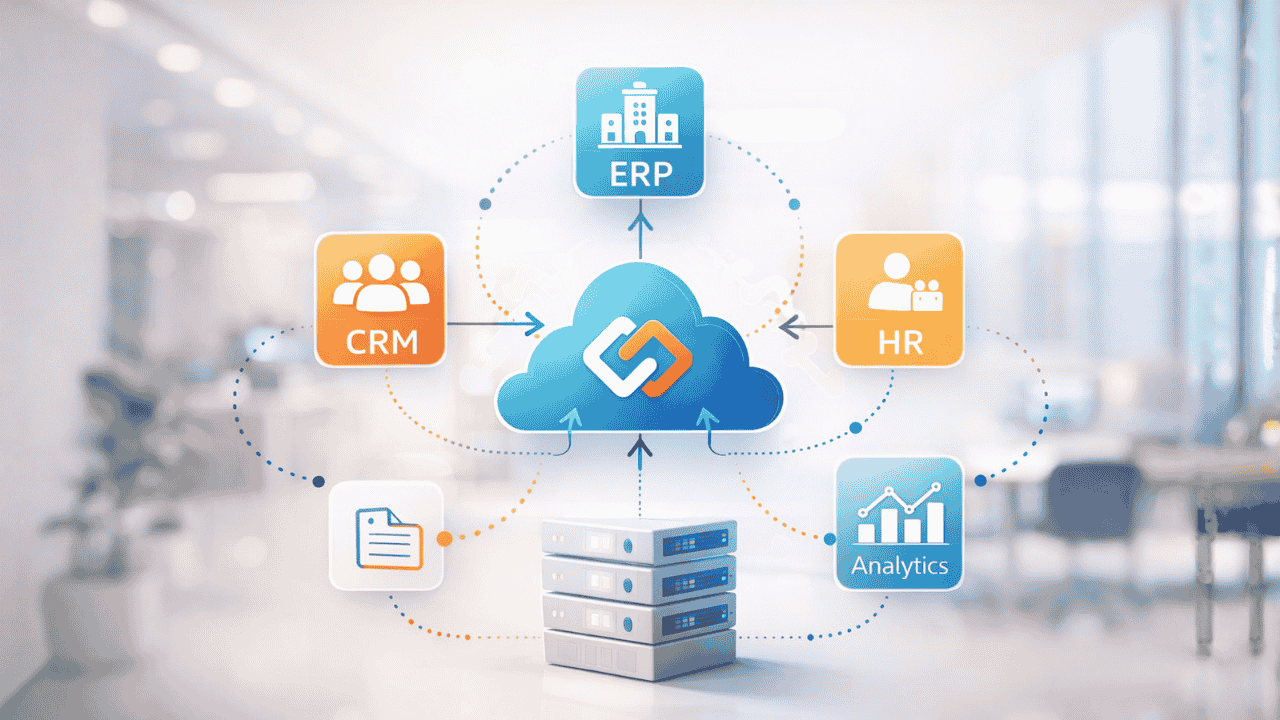
Modern enterprises depend on a wide range of business applications to manage operations, serve customers, and drive growth. Customer relationship management platforms, enterprise resource planning systems, HR management tools, and analytics platforms all play critical roles in day-to-day operations. However, when these applications operate independently, organizations face fragmented workflows, inconsistent data, and reduced operational efficiency.

This is where Enterprise Application Integration becomes essential. Instead of functioning as isolated systems, integrated applications communicate seamlessly with one another, enabling data to flow across departments and processes without disruption.

Many organizations struggle with disconnected applications that require manual updates and data transfers. These inefficiencies slow down business processes and limit an organization’s ability to respond quickly to market changes.

By implementing a strong Enterprise Application Integration strategy, enterprises can connect their core systems, automate workflows, and gain a unified view of operations. In this blog, we explore how enterprise application integration improves operational efficiency, supports digital transformation, and helps organizations build a connected technology ecosystem.

The Challenge of Disconnected Enterprise Applications

Most enterprises adopt business applications gradually as their operational needs evolve. Organizations often implement tools such as CRM systems for customer relationship management, ERP platforms for financial and operational processes, and analytics solutions to track business performance.

While each application serves a specific purpose, this incremental adoption frequently leads to a fragmented enterprise IT environment where systems operate independently rather than as a connected ecosystem. As a result, businesses face several challenges:

  • Duplicate data stored across multiple systems
  • Manual data transfers between applications
  • Delays in business processes caused by system dependencies
  • Inconsistent reporting across departments

For example, when a sales team updates customer information in a CRM platform but that data is not synchronized with finance or customer support systems, other teams may continue working with outdated information. Over time, these disconnected systems reduce operational efficiency and limit leadership’s ability to access accurate, real-time insights for informed decision-making.

Implementing enterprise application integration helps eliminate these silos by ensuring seamless data flow across business systems. For deeper insights, explore our guide on Eliminating IT Silos with Enterprise Systems Integration.

What Is Enterprise Application Integration?

Enterprise Application Integration (EAI) is a critical component of modern enterprise systems integration, enabling different business applications to communicate, share data, and operate as a unified digital ecosystem.

As organizations adopt multiple platforms such as CRM, ERP, and analytics tools, enterprise application integration ensures these systems work together seamlessly rather than functioning in isolated silos. Instead of relying on manual data transfers or complex custom scripts, EAI uses standardized interfaces and integration frameworks to enable:

  • Automatic data exchange between systems
  • Real-time synchronization across platforms
  • Cross-platform workflows without manual intervention

This integration improves operational efficiency, data accuracy, and enterprise-wide visibility, allowing departments to access consistent information across systems.

For instance, when a customer places an order online, an integrated enterprise environment can automatically update the CRM system, generate an invoice within the ERP platform, and adjust inventory levels in the supply chain management system — all without manual input.

By implementing enterprise application integration, businesses can streamline operations, reduce errors, and build a scalable digital infrastructure that supports long-term growth.

Business Benefits of Enterprise Application Integration

Organizations that implement Enterprise Application Integration experience significant improvements in efficiency, accuracy, and decision-making across all levels of the business.

Improved Operational Efficiency

Integrated applications eliminate repetitive manual tasks such as copying data between systems. Automated workflows allow processes to move smoothly between departments without delays or bottlenecks.

Better Data Accuracy

When enterprise systems share information automatically, organizations reduce the risk of data inconsistencies and human error, ensuring all teams work from a single source of truth.

Faster Decision-Making

Integrated systems provide leadership teams with access to consistent, real-time information across departments, enabling faster and more confident strategic decisions.

Enhanced Customer Experience

When customer data flows seamlessly across systems, organizations can provide more personalized, accurate, and responsive services at every touchpoint.

These benefits allow enterprises to transform fragmented operations into connected, high-performing business ecosystems.

Technologies Enabling Enterprise Application Integration

Modern Enterprise Application Integration strategies rely on advanced technologies that enable seamless communication between enterprise systems and applications.

API-Based Integration

Application Programming Interfaces (APIs) allow business applications to exchange data securely, efficiently, and in real time. API-driven architectures help organizations integrate new digital platforms without disrupting existing systems, making them highly scalable and adaptable.

Middleware

Middleware acts as a bridge between different applications by enabling data transformation, routing, and communication between systems built on different technologies. It removes the need for point-to-point connections that are difficult to maintain at scale.

Integration Platforms

Modern integration platforms provide centralized environments for managing, monitoring, and optimizing connections across enterprise applications. These platforms simplify integration processes, improve operational visibility, and ensure data consistency across departments.

By leveraging APIs, middleware, and integration platforms, businesses can build flexible and scalable enterprise integration architectures that support digital transformation, improve system interoperability, and allow technology ecosystems to evolve alongside growing business needs.

How Team Computers Supports Enterprise Application Integration

Implementing effective Enterprise Application Integration requires deep expertise in enterprise architecture, IT infrastructure, and system connectivity to ensure seamless communication between critical business applications.

Team Computers helps organizations design and implement robust enterprise integration frameworks that connect platforms such as ERP, CRM, HR, and analytics systems, enabling streamlined workflows and improved operational efficiency.

Team Computers supports enterprises with:

  • API-based integration frameworks connecting core business applications
  • Hybrid infrastructure integration across cloud and on-premise environments
  • Enterprise data synchronization for real-time, consistent information flow
  • Cloud and on-premise application integration within flexible hybrid IT environments

With more than 38 years of experience in enterprise IT services, Team Computers enables organizations to build scalable and future-ready integration architectures that support long-term digital transformation. By connecting enterprise applications into a unified ecosystem, businesses can enhance data visibility, operational agility, and innovation — creating a strong foundation for sustainable growth.

Conclusion

As enterprises continue adopting new technologies, disconnected applications can quickly create operational inefficiencies and data fragmentation. Enterprise Application Integration provides the foundation for connecting business systems into a unified digital ecosystem.

Key takeaways:

  • Integrated applications eliminate operational silos
  • Automated workflows improve productivity and efficiency
  • Real-time data sharing enhances decision-making
  • Connected systems support scalable digital transformation

Organizations that prioritize Enterprise Application Integration gain greater control over their IT environments while unlocking new opportunities for innovation and growth.

Discover how Team Computers can help your organization implement scalable Enterprise Application Integration solutions that connect critical systems, streamline operations, and enable smarter business decisions.

Stop Doing Manual Deployments: 4 Automation Hacks to Roll Out 1000 Devices Overnight

For many IT teams, device deployment still follows a familiar pattern.

A new batch of laptops arrives.
Boxes pile up in a conference room.
The IT team spends hours installing software, configuring policies, and preparing devices manually.

Before long, the entire team is working late nights—or even weekends—just to prepare systems for employees.

In today’s enterprise environment, this approach simply doesn’t scale.

Organizations deploying hundreds or thousands of devices across offices need a faster, more reliable way to onboard devices. Manual deployments slow down IT teams, increase errors, and delay employee productivity.

The good news? Modern IT teams are replacing these outdated methods with automation-driven deployment strategies.

With the right tools and planning, companies can now deploy thousands of devices almost overnight—without burning out their IT teams.

Why Manual Deployments Are Holding IT Teams Back

Traditional deployment methods create several challenges for enterprise IT teams.

1. Time-Consuming Setup

Configuring devices manually requires multiple steps:

  • Installing operating systems
  • Setting up security policies
  • Installing applications
  • Joining devices to corporate networks
  • Configuring user access

Even if each device takes only 45–60 minutes, deploying 500 devices can consume weeks of IT effort.

2. Higher Risk of Configuration Errors

Manual configuration increases the chance of mistakes.

Missing security policies, incorrect application versions, or misconfigured settings can lead to inconsistent user experiences—and in some cases, security vulnerabilities.

Automation ensures every device is configured exactly the same way every time.

3. Delayed Employee Productivity

When devices are not ready on day one, employees lose valuable time waiting for IT support.

For fast-growing organizations or large hiring cycles, slow deployments can create significant operational friction.

4. IT Teams Stuck in Repetitive Work

Manual deployments consume time that IT teams could spend on more strategic priorities like:

  • cybersecurity improvements
  • digital workplace initiatives
  • infrastructure modernization

Automation allows IT teams to move from device setup to business innovation.

4 Automation Hacks Modern IT Teams Are Using

Forward-thinking IT leaders are transforming device deployments using automation and modern endpoint management strategies.

Here are four approaches that are rapidly gaining adoption across Indian enterprises.

1. Zero-Touch Provisioning

Zero-touch provisioning allows devices to be automatically configured the moment they connect to the internet.

Instead of setting up devices manually, IT teams can predefine policies and configurations in a cloud management platform.

When employees power on their device for the first time:

  • the system automatically enrolls into device management
  • security policies are applied
  • corporate applications are installed
  • user credentials are configured

This means devices can go directly from the box to the employee’s desk without manual IT intervention.

For distributed teams and hybrid work environments, zero-touch provisioning dramatically simplifies device rollouts.

2. Cloud-Based Device Imaging

Traditional imaging required IT teams to physically connect devices to a local network and install operating systems manually.

Cloud imaging eliminates this dependency.

With cloud-based deployment tools, IT teams can maintain standardized operating system images and automatically deploy them across devices.

Benefits include:

  • faster setup times
  • consistent configurations across all devices
  • simplified OS updates and upgrades

For organizations managing thousands of endpoints, this approach significantly reduces deployment complexity.

3. Automated Application Staging

Installing applications manually across large device fleets can take days.

Automation platforms allow IT teams to predefine application bundles based on employee roles.

For example:

  • developers automatically receive development tools
  • sales teams receive CRM and collaboration tools
  • finance teams receive accounting and reporting applications

When the device is activated, the correct software stack installs automatically.

This ensures employees start working immediately without waiting for IT support.

4. Pre-Configured Device Staging

Another growing trend is pre-configured device staging before shipment.

Instead of shipping raw devices to offices, devices are prepared in advance with:

  • operating systems installed
  • security policies configured
  • device management enrollment completed
  • essential applications preloaded 

When the device reaches the employee, it is already enterprise-ready.

This approach is especially useful for large organizations rolling out devices across multiple cities or remote offices.

The Result: Faster Deployments, Happier IT Teams

When organizations adopt automated deployment strategies, the benefits are immediate.

Enterprises report improvements such as:

  • significantly faster device rollouts
  • reduced IT workload during large deployments
  • consistent device configurations across teams
  • improved employee onboarding experiences

Most importantly, IT teams can focus on strategic initiatives instead of repetitive setup tasks.

The Future of Enterprise Device Deployments

Enterprise workplaces are becoming more distributed and technology-driven.

Employees expect devices to work immediately and reliably from day one.

Manual deployment methods simply cannot keep up with modern enterprise demands.

Automation, cloud-based management, and standardized device strategies are now becoming the new normal for organizations that want to scale efficiently.

The Bottom Line

Rolling out hundreds—or even thousands—of devices no longer needs to be a painful process.

With modern deployment automation, IT teams can prepare entire device fleets faster, more securely, and with far fewer errors.

Because in today’s enterprise IT landscape, deployment shouldn’t require late nights, rushed configurations, or emergency troubleshooting.

It should just work.

Planning a large device rollout across your organization?

Modern device lifecycle management strategies can help automate deployments, reduce IT workload, and ensure every device is ready from day one.

Talk to the Team Computers experts to explore how automated device deployment can simplify large-scale rollouts and improve workplace productivity.