Eliminating IT Silos with Enterprise Systems Integration

Many enterprises unknowingly operate with fragmented IT environments. Departments often deploy applications independently, infrastructure grows in isolated pockets, and systems evolve without a unified strategy. While each solution may function effectively on its own, the lack of connectivity between them creates operational bottlenecks, inefficient workflows, and limited enterprise-wide visibility.

This is where enterprise systems integration becomes essential. Rather than letting systems function in isolation, integration connects applications, platforms, and infrastructure into a unified, high-performance IT ecosystem. By eliminating IT silos, organizations can achieve improved collaboration, better decision-making, enhanced security, and streamlined operations.

At Team Computers, we help enterprises break down these silos, creating scalable, connected IT environments that support growth, innovation, and digital transformation. In this article, we will explore why IT silos form, their impact on business performance, and how structured enterprise systems integration builds resilient, scalable IT ecosystems.


Understanding Why IT Silos Exist in Enterprises

IT silos emerge gradually as businesses grow. Departments often adopt specialized applications to solve immediate problems, while legacy systems remain in use due to operational dependencies. Over time, these systems stop communicating effectively, creating fragmented IT environments where critical information is scattered across platforms.

Several factors contribute to the creation of IT silos. Department-specific technology adoption without centralized oversight, legacy systems that cannot integrate with modern platforms, rapid cloud deployments without planning, and multiple data repositories all contribute to isolated workflows.

These silos limit operational efficiency. IT teams spend significant time manually reconciling data, and decision-makers struggle to gain a clear, unified view of enterprise operations. Without proper integration, enterprises risk inefficiencies, missed insights, and slower response to business needs.


The Business Impact of IT Silos

IT silos are more than a technical inconvenience, they directly affect productivity, customer experience, and strategic decision-making. When systems operate in isolation, teams cannot access consistent data, workflows slow down, and reporting becomes unreliable.

For example, customer information scattered across CRM, finance, and support platforms prevents teams from gaining a full view of the customer journey, which can hinder service quality and slow down response times. Similarly, fragmented operational systems make it difficult for leadership to monitor performance and make timely decisions.

Research shows that organizations lose significant productivity every year due to poor interoperability between IT systems [STAT]. By addressing these silos, enterprises can streamline operations, improve visibility, and make informed, data-driven decisions.


How Enterprise Systems Integration Breaks Down Silos

Enterprise systems integration connects applications, infrastructure, and data platforms into a cohesive ecosystem. Instead of operating independently, systems share information seamlessly, reducing manual processes and improving visibility.

Modern integration strategies often involve connecting ERP, CRM, HR, and analytics platforms using APIs or middleware to enable real-time data sharing. Infrastructure components such as servers, storage systems, and cloud environments are aligned to optimize resources. Meanwhile, data from multiple systems is consolidated to support analytics, reporting, and AI-driven insights.

Through this approach, IT systems move from isolated islands to a connected architecture where technology supports collaboration, operational efficiency, and strategic decision-making.


Key Benefits of Eliminating IT Silos

When organizations implement enterprise systems integration, they experience tangible improvements across operational and strategic dimensions:

  • Improved operational efficiency: Automated workflows reduce manual effort and increase productivity.
  • Real-time visibility: Data flows across systems, giving decision-makers a unified view of enterprise performance.
  • Enhanced collaboration: Teams across departments can work together seamlessly, using shared information and unified processes.
  • Stronger governance: Centralized system management ensures policies and security controls are consistently applied.
  • Scalable architecture: Integrated IT environments support future growth, new technology adoption, and digital initiatives. 

These benefits empower enterprises to adopt advanced technologies such as AI, automation, and predictive analytics without creating new silos or operational complexity.

Strategic Role of Integration Partners

While integration delivers substantial benefits, it requires careful planning and expertise. Enterprises need to assess existing systems, identify gaps, design scalable architectures, and implement secure connectivity between platforms.

A structured integration approach begins with evaluating the current IT infrastructure and applications to understand existing capabilities and gaps. Organizations then identify inefficiencies and opportunities where systems can be better connected. Based on these insights, a connected, future-ready architecture is designed to ensure all technologies operate cohesively. 

Secure, automated workflows are implemented to streamline operations, while continuous monitoring and optimization keep the integrated ecosystem efficient, resilient, and aligned with evolving business needs.

Team Computers specializes in enabling enterprise systems integration that eliminates silos and drives operational efficiency. By aligning infrastructure, cloud platforms, applications, and cybersecurity frameworks into a unified architecture, organizations gain better visibility, stronger security, and simplified vendor management.

“IT silos limit an organization’s ability to innovate and respond quickly to business needs. Enterprise systems integration ensures that technology ecosystems operate as connected platforms rather than isolated systems.”
— Head of IT Services, Team Computers

Conclusion

Fragmented IT environments hinder enterprise growth and efficiency. When systems operate in isolation, organizations face poor visibility, inefficient workflows, and limited data accessibility. Enterprise systems integration transforms these disconnected platforms into a cohesive ecosystem that supports collaboration, better decision-making, and scalable operations.

Key Takeaways:

  • IT silos emerge due to legacy systems and fragmented technology adoption
  • Disconnected systems reduce efficiency and limit actionable insights
  • Enterprise systems integration connects applications, infrastructure, and data platforms
  • Integrated IT environments enable operational efficiency, collaboration, and governance
  • Scalable integration frameworks support long-term growth and innovation

If your enterprise struggles with fragmented systems or lacks visibility across IT operations, it is time to explore a structured integration strategy. Discover how Team Computers can eliminate IT silos and build a connected, scalable IT ecosystem that drives performance, efficiency, and digital growth.
How Systems Integration Services Improve Enterprise IT Performance

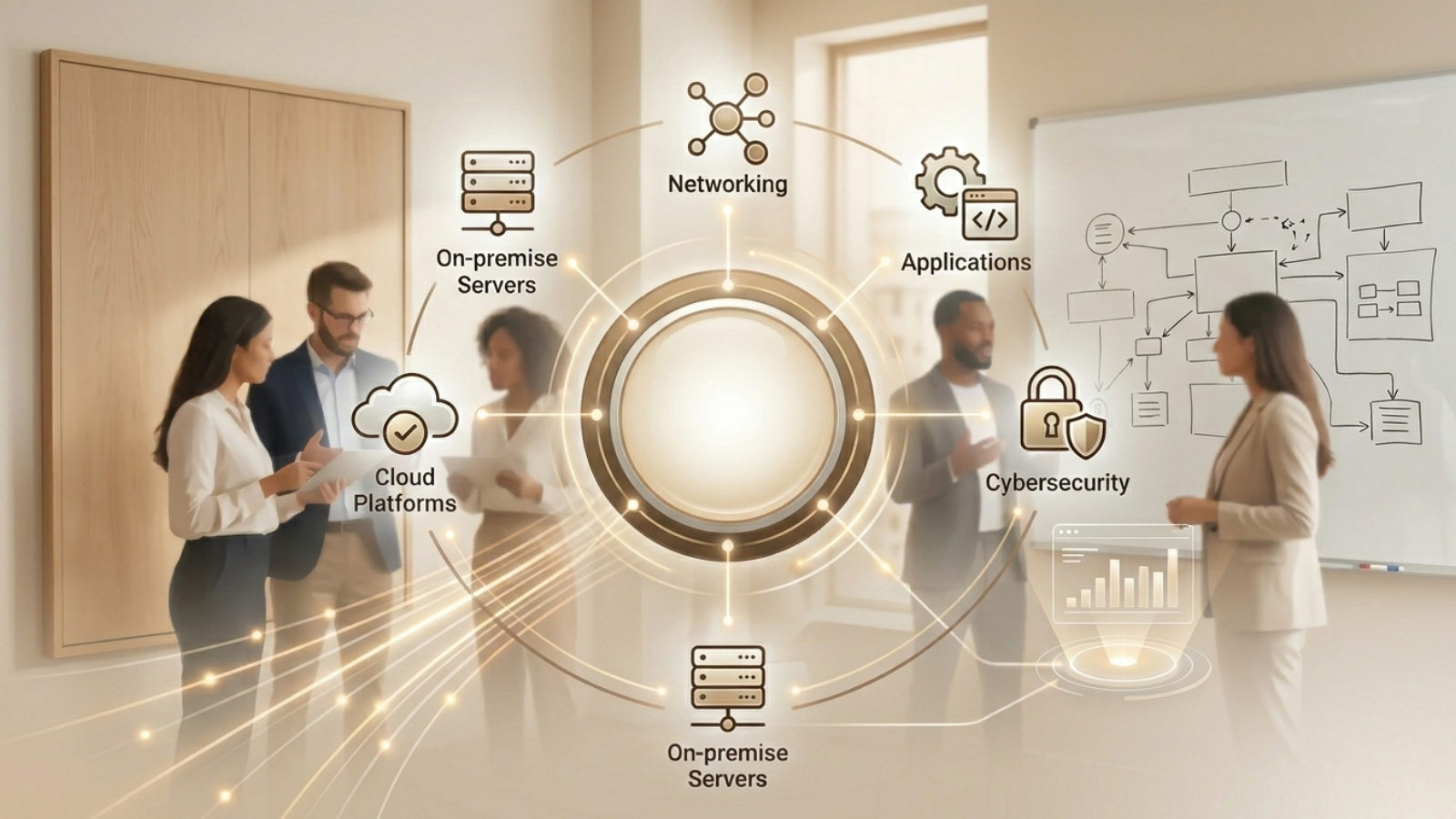
Enterprise IT environments are becoming increasingly complex. Infrastructure, cloud platforms, networking frameworks, cybersecurity tools, and business applications all operate simultaneously across distributed environments. Yet many organizations still manage these components in isolation. This fragmentation often leads to inconsistent performance, operational inefficiencies, and limited visibility across IT operations.

This is where Systems Integration Services play a critical role. Rather than allowing technology platforms to operate independently, systems integration connects them into a unified, coordinated architecture. When infrastructure, cloud environments, applications, and security frameworks communicate effectively, enterprises gain greater operational control and improved system performance.

At Team Computers, we help enterprises bring these disconnected systems together through structured Systems Integration Services that align infrastructure, cloud, networking, and security into a unified ecosystem. This approach enables organizations to simplify operations, strengthen governance, and build scalable IT environments.

For organizations pursuing digital growth, integrated systems are no longer optional. Without structured integration, scaling IT environments becomes unpredictable and difficult to manage.

The Hidden Complexity in Modern Enterprise IT

Many enterprises adopt new technologies to solve immediate business challenges. Over time, however, these additions create fragmented IT ecosystems where systems operate independently rather than collaboratively.

A typical enterprise environment may include on-premise infrastructure, hybrid cloud workloads, endpoint security tools, branch networks, collaboration platforms, and data analytics systems. While each technology serves a specific function, the absence of integration creates operational friction.

Without integration, IT teams face challenges such as inconsistent configurations, fragmented monitoring tools, and limited interoperability between applications. Performance troubleshooting becomes slower because data and alerts are spread across multiple platforms.

More importantly, fragmented systems limit executive visibility. Leadership teams struggle to obtain a clear understanding of IT performance when reporting and monitoring systems operate in silos.

Systems integration addresses this problem by aligning infrastructure, applications, cloud environments, and networking frameworks into a structured architecture where every component communicates effectively. The result is not simply connectivity—it is operational cohesion.

Why Systems Integration Services Matter for Enterprise Growth

As organizations expand, their IT environments must support more users, applications, locations, and data workloads. Growth multiplies complexity, and without integration, IT infrastructure can become difficult to manage.

Systems Integration Services ensure that every new technology deployment aligns with the existing IT ecosystem rather than adding another isolated layer.

When integration becomes part of the IT strategy, enterprises gain several operational advantages.

Key benefits include:

  • Unified visibility across infrastructure, cloud, and networking environments
  • Faster issue detection and incident resolution
  • Improved resource utilization across IT platforms
  • Reduced operational complexity for IT teams
  • Scalable architecture that supports business expansion

These benefits extend beyond technical performance. Integrated environments enable IT leaders to focus on strategic innovation rather than constantly troubleshooting disconnected systems.

For enterprises investing in digital transformation, integration ensures that new technologies strengthen the ecosystem instead of increasing fragmentation.

Building a Unified Enterprise Architecture Through Integration

Effective systems integration begins with architecture design. Before connecting technologies, organizations must define how infrastructure, applications, cloud services, and security frameworks will interact within the broader IT ecosystem.

This architectural approach allows enterprises to establish clear standards for deployment, monitoring, and governance. Instead of deploying technologies independently, integration frameworks ensure that every system contributes to a cohesive IT environment.

Key elements of an integration-driven architecture include network interoperability, centralized monitoring systems, identity and access synchronization, and automated workflow orchestration. When these components operate together, enterprises gain a predictable and scalable technology foundation.

Organizations that adopt integrated architectures often experience improved system reliability and reduced operational downtime. More importantly, integration simplifies future technology adoption. New platforms can be introduced without disrupting existing operations because the architectural framework already defines how systems interact.

How Team Computers Delivers Enterprise Systems Integration

As enterprise IT ecosystems grow more complex, organizations increasingly require specialized expertise to align infrastructure, networking, cloud environments, and cybersecurity frameworks. Team Computers provides Systems Integration Services designed to unify enterprise IT environments and eliminate operational silos. 

Rather than focusing on individual technologies in isolation, the approach centers on building integrated ecosystems where systems operate as part of a coordinated and scalable architecture. This integration methodology brings together critical capabilities such as infrastructure and data center integration, alignment of hybrid and multi-cloud environments, seamless network and branch connectivity, integration of identity, access, and cybersecurity frameworks, and unified monitoring with performance management. By combining these elements into a cohesive structure, organizations gain greater visibility, stronger security, and more efficient IT operations.

By integrating these domains, Team Computers helps enterprises improve operational visibility and IT performance across their entire technology landscape.

This integrated approach also simplifies vendor management. Rather than coordinating multiple service providers independently, organizations gain a single partner responsible for aligning technologies and ensuring interoperability.

The Business Impact of Effective Systems Integration

When enterprise technologies operate within an integrated architecture, organizations experience measurable improvements in performance, governance, and scalability.

Integrated systems reduce the operational burden on IT teams by centralizing monitoring and automating routine processes. Troubleshooting becomes faster because data flows across connected platforms, enabling IT teams to identify root causes quickly.

Integration also strengthens cybersecurity posture. When identity management, endpoint protection, and network security frameworks operate within a unified architecture, enterprises gain stronger visibility into potential threats and vulnerabilities.

From a business perspective, integration enables technology investments to deliver maximum value. Instead of maintaining disconnected tools, enterprises create ecosystems where every platform contributes to overall operational efficiency.

Over time, this structured approach to integration enables organizations to scale confidently, launch new digital initiatives faster, and maintain consistent IT performance across locations.

Expert Insight

“Systems integration is not simply about connecting technologies. It is about designing an architecture where every system supports business outcomes. When enterprises adopt integration as a strategy rather than a project, IT performance improves across the board.”

Head of IT Services, Team Computers

CONCLUSION

Enterprise IT environments are evolving rapidly as organizations adopt new cloud platforms, applications, and digital tools. Without a structured approach to integration, these technologies can create complexity instead of delivering value.

Systems Integration Services provide the framework needed to transform fragmented systems into unified ecosystems that support enterprise growth.

Key takeaways include:

  • Fragmented IT environments limit operational efficiency and visibility
  • Systems Integration Services unify infrastructure, cloud, networking, and applications
  • Integrated architectures enable scalability and improved IT performance
  • Organizations benefit from centralized monitoring and stronger security frameworks
  • Strategic integration ensures that technology investments support long-term business growth

For enterprises seeking to modernize IT operations while maintaining stability, integration becomes the foundation of sustainable digital transformation.

Discover how Systems Integration Services from Team Computers can transform your IT environment into a unified, high-performance ecosystem. Our experts design and implement integration strategies that improve visibility, scalability, and operational efficiency.

Connect with Team Computers to explore how integrated IT architecture can support your enterprise growth.

Hybrid IT Systems Integration for Scalable Enterprise Infrastructure

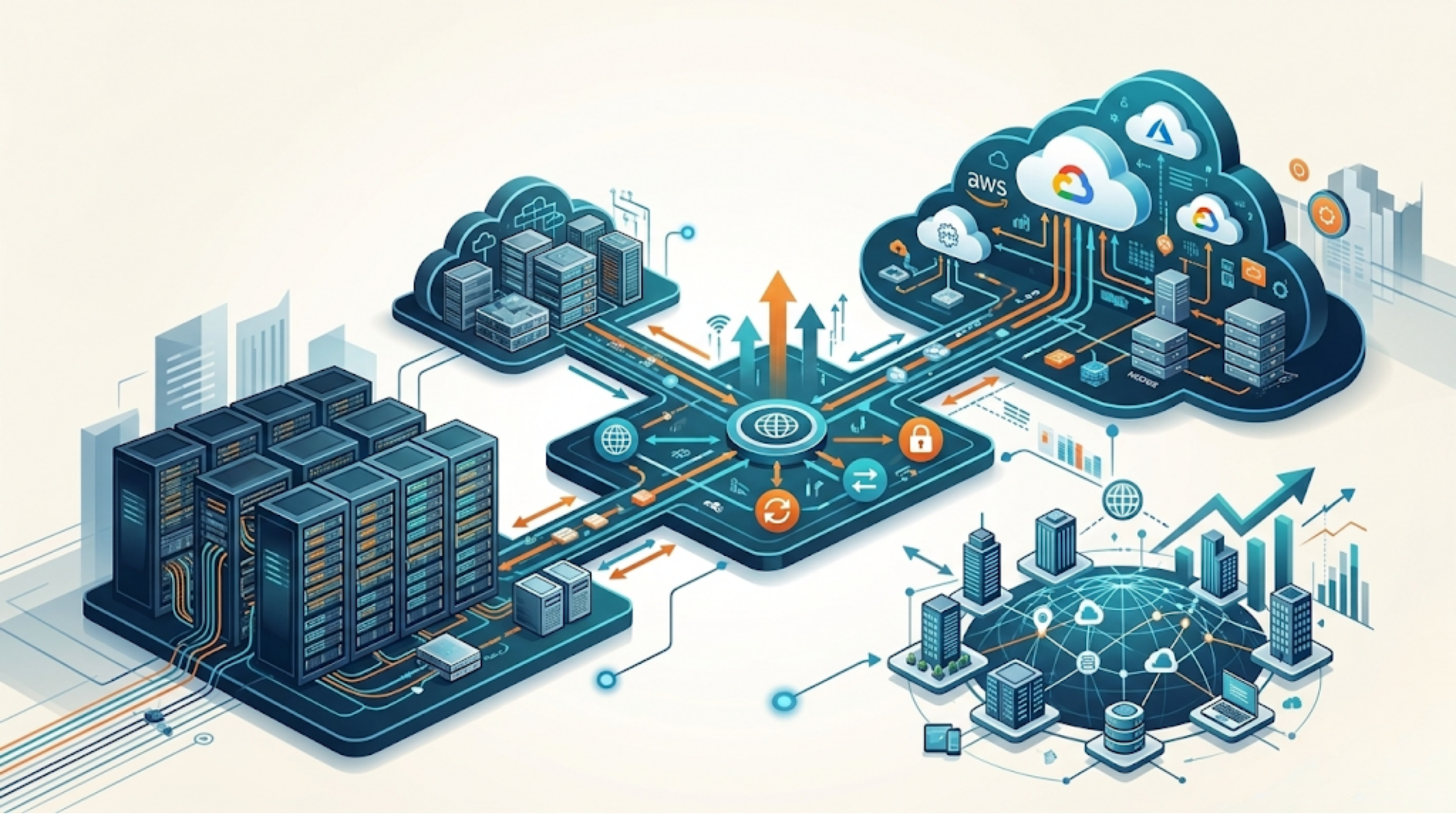
Most enterprises today operate in a hybrid IT environment. Critical applications may run on on-premise infrastructure, while new workloads are deployed in the cloud. Collaboration tools operate through SaaS platforms, while legacy systems continue to support essential business operations.

This hybrid model offers flexibility, but it also introduces complexity. When systems operate across multiple environments without proper coordination, organizations struggle with performance inconsistencies, security gaps, and limited visibility into their IT operations.

This is where Hybrid IT Systems Integration becomes essential.

By integrating on-premise infrastructure, cloud platforms, networking frameworks, and cybersecurity tools, enterprises can create a unified technology ecosystem that supports both innovation and operational stability.

Without structured integration, hybrid environments often become fragmented. IT teams are forced to manage multiple monitoring tools, security controls remain inconsistent across platforms, and workloads may not communicate efficiently across environments.

Through hybrid IT systems integration, organizations gain the ability to manage infrastructure holistically, improve system performance, and ensure that technology investments work together rather than operate in isolation.

In this blog, we explore how hybrid IT environments create challenges for enterprises and how structured integration enables organizations to build scalable, efficient, and secure technology ecosystems.

The Rise of Hybrid IT in Modern Enterprises

Hybrid IT has become the dominant operating model for enterprise technology environments. Organizations increasingly combine traditional infrastructure with cloud services to gain flexibility, scalability, and cost efficiency.

However, hybrid environments introduce operational complexity that cannot be managed through traditional IT approaches.

Enterprises typically deploy hybrid IT environments to support several business objectives:

  • Running legacy systems on on-premise infrastructure
  • Deploying modern applications in public cloud environments
  • Supporting remote and hybrid work models
  • Scaling workloads dynamically during peak demand

While this model provides flexibility, it also creates fragmented operational structures when integration is not properly implemented.

Infrastructure monitoring may be separated between data centers and cloud platforms. Security policies may vary across environments. Networking configurations may not be optimized for hybrid workloads.

Hybrid IT systems integration ensures that all these components operate within a unified architecture. Instead of managing multiple isolated environments, IT teams gain centralized visibility and operational control.

Challenges Enterprises Face Without Hybrid Systems Integration

When hybrid environments evolve without a structured integration strategy, organizations encounter a range of operational challenges.

Many enterprises experience inconsistent system performance because workloads operate across different platforms with varying configurations. Troubleshooting issues becomes difficult when monitoring tools cannot provide unified insights across infrastructure and cloud environments.

Security also becomes more complex. Identity management systems may not synchronize across platforms, and compliance monitoring becomes difficult when data flows between multiple environments.

Without hybrid IT systems integration, enterprises often face:

  • Fragmented infrastructure management
  • Inconsistent security policies across cloud and on-prem systems
  • Limited visibility into application performance
  • Complex troubleshooting and slower incident resolution

These issues not only affect operational efficiency but also increase business risk.

Enterprises that implement integration frameworks can overcome these challenges by aligning infrastructure, networking, and security into a unified architecture.

Core Components of Hybrid IT Systems Integration

Effective hybrid integration requires alignment across several technology layers. Each component must operate within a coordinated architecture that supports scalability and operational efficiency.

Infrastructure Integration

On-premise infrastructure must be aligned with cloud environments so that workloads can move between platforms without disruption. Virtualization frameworks, storage systems, and compute environments should operate under consistent configuration standards.

Cloud Platform Alignment

Public cloud platforms provide flexibility, but they must integrate with existing enterprise systems. Hybrid integration ensures that identity management, workload orchestration, and monitoring tools function consistently across environments.

Network Connectivity Optimization

Networking plays a critical role in hybrid environments. Secure connectivity between data centers, branch offices, and cloud platforms ensures reliable performance for enterprise applications.

Security and Compliance Integration

Security frameworks must extend across all environments. Hybrid integration ensures consistent identity management, threat monitoring, and compliance policies across infrastructure and cloud platforms.

When these components are properly integrated, hybrid IT environments operate as cohesive ecosystems rather than disconnected systems.

Benefits of Hybrid IT Systems Integration

Organizations that adopt structured hybrid IT systems integration strategies gain several operational advantages that significantly improve both efficiency and scalability. By integrating cloud and on-premise environments into a unified architecture, enterprises achieve comprehensive IT visibility, allowing teams to monitor systems, applications, and infrastructure from a centralized perspective. Optimized connectivity between platforms enhances application performance, ensuring faster data flow and more reliable service delivery. At the same time, centralized security governance enables consistent policy enforcement across multiple environments, strengthening the organization’s overall security posture. In addition, standardized frameworks simplify IT management by reducing complexity, enabling IT teams to manage resources more efficiently while supporting scalable and sustainable digital growth.

These benefits allow enterprises to scale their technology environments while maintaining operational stability.

Hybrid integration also supports digital transformation initiatives. Organizations can adopt new technologies without disrupting existing infrastructure, enabling gradual modernization instead of large-scale system replacements.

How Team Computers Enables Hybrid IT Integration

Implementing hybrid integration requires deep expertise across infrastructure platforms, cloud ecosystems, networking frameworks, and cybersecurity technologies. Enterprises need an experienced technology partner capable of designing and managing complex integration architectures.

Team Computers delivers comprehensive hybrid IT systems integration solutions that help enterprises unify their technology environments.

With nearly four decades of enterprise IT experience, Team Computers works with organizations to design hybrid architectures that align infrastructure, cloud platforms, and networking frameworks into cohesive ecosystems.

Our integration approach focuses on building scalable environments that improve visibility, strengthen security, and simplify IT management.

Enterprises benefit from:

Through structured integration frameworks, Team Computers enables enterprises to transform complex hybrid environments into efficient and scalable technology ecosystems.

“Hybrid IT environments offer flexibility, but without integration they quickly become difficult to manage. A structured integration strategy allows enterprises to combine the agility of cloud platforms with the stability of traditional infrastructure.”
– Head of IT Services, Team Computers

Conclusion

Hybrid IT environments are now a fundamental part of enterprise technology strategies. Organizations rely on a combination of on-premise infrastructure and cloud services to support modern applications, digital services, and remote work environments.

However, without proper coordination, hybrid systems can become fragmented and difficult to manage.

Hybrid IT systems integration ensures that infrastructure, networking, cloud platforms, and security tools operate within a unified architecture that supports business growth.

Key takeaways include:

  • Hybrid IT environments require structured integration to operate efficiently.
  • Unified monitoring improves visibility across cloud and on-prem systems.
  • Integrated security frameworks reduce operational risk.
  • Standardized architectures simplify IT management and scaling.

Enterprises that implement integration strategies gain the ability to innovate faster while maintaining operational control.

Managing hybrid IT environments without integration can slow down innovation and increase operational complexity. Team Computers’ Hybrid IT Systems Integration services help enterprises unify infrastructure and cloud environments into secure, scalable ecosystems.

Discover how a structured hybrid integration strategy can simplify your IT operations and support long-term business growth.

Driving Operational Efficiency Through Enterprise Systems Integration

Efficiency is the cornerstone of modern enterprises. Without streamlined processes, even the most advanced IT environments can suffer from downtime, rising costs, and slow response to business demands. Structured Systems Integration transforms fragmented IT landscapes into cohesive, high-performing ecosystems, delivering measurable operational efficiency.

Why Operational Efficiency Matters

Enterprises often face inefficiencies due to siloed systems, disconnected Cloud and on-prem infrastructure, multiple vendors with unclear accountability, redundant processes across locations, and limited monitoring and visibility. Systems Integration addresses these challenges by creating a unified IT environment where every component operates harmoniously.

Team Computers’ Integration-Driven Efficiency Framework

Streamlined Infrastructure and Cloud

Efficiency increases when infrastructure and Cloud resources are optimized and aligned with business objectives. Team Computers enables:

  • Consolidation of servers, storage, and virtualization platforms
  • Hybrid and multi-Cloud integration with automated workload migration
  • Centralized monitoring for proactive issue resolution
  • Scalable architecture that grows with enterprise needs

Unified Networking and Collaboration

High-performance networking ensures minimal downtime, while collaboration tools work seamlessly across platforms. Through Systems Integration, Team Computers provides:

  • SD-WAN and secure remote access for optimized branch connectivity
  • Integrated collaboration tools to enhance productivity
  • Reduced delays and operational friction across teams and locations

Embedded Cybersecurity and Compliance

Security is integrated, not layered. Endpoint protection, identity governance, and network security are embedded at every layer, along with automated compliance reporting and monitoring. This ensures:

  • Risk mitigation is proactive, not reactive
  • Security frameworks align with business-critical workloads
  • Enterprises can operate efficiently without compromising safety

Single-Window Accountability

Complex multi-vendor ecosystems are managed under one accountable partner. Team Computers ensures:

  • Coordinated troubleshooting and faster incident resolution
  • Lifecycle management through structured AMCs and managed services
  • Accelerated decision-making and minimized operational bottlenecks

Business Benefits of Integration-Led Efficiency

Enterprises leveraging Systems Integration experience reduced downtime and faster issue resolution, lower operational costs and predictable IT budgets, increased end-user productivity, transparent performance metrics for leadership, and scalable, future-ready IT ecosystems. Integration turns complexity into clarity, and clarity drives efficiency.

Why Enterprises Trust Team Computers

With nearly four decades of enterprise IT expertise, Team Computers brings cross-domain integration capability across infrastructure, Cloud, cybersecurity, networking, and end-user computing. Our vendor-neutral approach, strong OEM partnerships, and nationwide implementation, support, and lifecycle management ensure IT does not just function, it performs efficiently, reliably, and strategically.

Integration as the Backbone of Operational Excellence

Operational efficiency is no longer a passive outcome, it must be designed. By unifying systems, standardizing processes, and embedding security and governance, Team Computers enables enterprises to reduce complexity, optimize costs, and respond rapidly to changing business needs. Systems Integration is not just about connectivity; it is about making every IT investment work harder and smarter. And at Team Computers, efficiency is engineered at the core of enterprise IT.

Accelerating Digital Transformation Through Enterprise Systems Integration

Digital transformation is no longer optional. It is operational survival. New platforms emerge, customer expectations rise, Cloud-native workloads expand, data volumes surge, and hybrid work becomes permanent. Yet many transformation initiatives stall, not because enterprises lack ambition, but because their foundational systems are not aligned.

Digital transformation succeeds when Systems Integration leads the architecture. As a leading Systems Integrator in India, Team Computers enables enterprises to modernize with confidence by integrating infrastructure, Cloud, networking, cybersecurity, and data ecosystems into cohesive, transformation-ready environments. Transformation accelerates when integration precedes innovation.

Why Transformation Initiatives Slow Down

Most organizations attempt to modernize on top of fragmented foundations. Legacy infrastructure struggles to support modern workloads. Cloud deployments grow without governance. Security policies lag behind application rollouts. Branch networks are unprepared for SaaS-driven traffic. Multiple vendors operate in silos without unified accountability.

The result is predictable, delays, budget overruns, operational instability, and diminished return on investment. Digital transformation requires architectural cohesion. Systems Integration provides that cohesion.

Modernization Begins with Structural Alignment

Modern applications demand optimized infrastructure, not just new hardware, but intelligent architecture. Team Computers integrates enterprise-grade platforms such as Dell Technologies into scalable modernization frameworks that support virtualization, high availability, workload migration, and resilient backup strategies. Legacy systems are not replaced recklessly, they are evolved deliberately. This is how modernization avoids disruption.

Cloud Acceleration with Governance

Digital transformation is Cloud-driven, but Cloud without integration creates complexity. By aligning environments across platforms like Microsoft Azure and Amazon Web Services, Team Computers ensures:

  • Workload portability
  • Identity synchronization
  • Cost governance
  • Unified monitoring

Cloud adoption becomes structured. Visibility improves. Sprawl reduces. Control strengthens. The Cloud becomes a performance engine, not a management burden.

Networks That Enable Innovation

Transformation initiatives often depend on SaaS platforms, collaboration tools, analytics engines, and AI-driven applications. Without optimized networking, performance suffers. Through structured Systems Integration, Team Computers aligns SD-WAN frameworks, secure branch connectivity, centralized policy enforcement, and workload segmentation into a cohesive network architecture. Connectivity becomes seamless, latency reduces, user experience improves, and networks stop being bottlenecks – they become enablers.

Security Embedded into Transformation

Every transformation initiative increases the attack surface – new endpoints, new integrations, and new data flows. Security cannot be reactive. Team Computers integrates endpoint protection, Cloud security controls, identity governance, and centralized SOC visibility into the core transformation architecture. Security becomes part of design, not an afterthought, and resilience becomes measurable.

The Business Impact of Integration-Led Transformation

When Systems Integration guides digital modernization, enterprises experience:

  • Faster deployment timelines
  • Reduced migration risk
  • Greater performance stability
  • Controlled transformation budgets
  • Improved executive visibility
  • Long-term scalability

Transformation becomes predictable instead of disruptive.

Integration Defines Sustainable Modernization

Technology adoption without integration creates fragmentation. Fragmentation increases risk. Risk delays transformation. Delay erodes competitive advantage. Structured Systems Integration ensures that every digital initiative aligns with enterprise architecture, governance, and long-term business objectives. Integration converts modernization into measurable progress.

Why Enterprises Choose Team Computers

With nearly four decades of enterprise IT experience, Team Computers combines cross-domain expertise, vendor-neutral advisory, strong OEM partnerships, and nationwide delivery capability. We do not execute isolated projects – we design integrated ecosystems where innovation can scale without compromising stability.

Integration Fuels Enterprise Evolution

Digital transformation is not a one-time milestone – it is continuous evolution. As a trusted Systems Integrator in India, Team Computers builds cohesive, future-ready IT environments that empower enterprises to innovate confidently while maintaining control, visibility, and resilience. Integration fuels modernization. Modernization fuels competitiveness. And at Team Computers, Systems Integration is engineered to accelerate enterprise evolution.

Strengthening IT Governance Through Systems Integration

Technology growth without governance creates risk. More applications, more endpoints, more Cloud workloads, and increasing data movement can overwhelm enterprises. Without centralized oversight, visibility weakens and compliance gaps widen. Structured Systems Integration restores control.

As a leading Systems Integrator in India, Team Computers enables enterprises to strengthen IT governance through unified, well-architected integration frameworks. Governance improves when systems operate under a single, structured architecture.

The Governance Gap in Expanding IT Environments

Modern enterprises often face challenges that compromise control and visibility. Configurations across branches are frequently unstandardized, Cloud deployments may operate independently without proper cost control, and security tools often function in isolation without centralized reporting. Fragmented monitoring dashboards and limited lifecycle visibility further reduce clarity. 

This fragmentation increases operational exposure and hinders executive decision-making. Systems Integration aligns infrastructure, Cloud, security, and networking under centralized governance models, restoring oversight and enabling disciplined, structured operations.

Team Computers’ Governance-Driven Approach

1. Centralized Configuration Management:

Ensures that infrastructure environments follow standardized policies. Enterprises benefit from:

  • Uniform system configurations
  • Controlled change management
  • Defined escalation workflows
  • Audit-ready documentation

IT operations become measurable, structured, and consistent, reducing risk and operational drift.

2. Unified Monitoring and Reporting:

Provides the visibility required for governance. Through integrated performance dashboards, security monitoring, Cloud cost analytics, branch-level reporting, and automated alert systems, leadership gains enterprise-wide transparency. This allows timely decisions and proactive management of potential risks.

3. Integrated Compliance Alignment:

Addresses industry regulatory mandates by enforcing consistent policies. Structured Systems Integration enables:

  • Secure data handling practices
  • Log retention management
  • Access governance controls
  • Backup validation frameworks
  • Standardized compliance reporting

Governance becomes proactive rather than reactive, mitigating compliance gaps before they escalate.

4. Lifecycle-Based Control Frameworks:

Extend governance beyond deployment. Integration includes patch and update management, capacity planning, asset lifecycle tracking, and proactive maintenance frameworks. IT ecosystems remain optimized and controlled over time, ensuring long-term operational stability.

Business Impact of Governance-Focused Integration

Enterprises experience tangible benefits from structured Systems Integration. Compliance risks are reduced, operational discipline improves, and configuration drift is minimized. Cloud cost management becomes more efficient, incidents are resolved faster, and executive oversight is strengthened. Ultimately, governance becomes embedded into IT operations rather than remaining an afterthought, ensuring consistent, proactive, and well-controlled enterprise IT management.

Why Team Computers Leads in Structured Systems Integration

With nearly four decades of enterprise IT expertise, Team Computers combines comprehensive multi-technology integration capability, a vendor-neutral advisory approach, strong OEM partnerships, and nationwide managed services presence. We do not integrate systems for connectivity alone, we establish control, visibility, and accountability.

Integration as the Backbone of Enterprise Governance

As IT environments grow in scale and complexity, governance cannot depend on manual oversight. It must be engineered. Team Computers, as a trusted Systems Integrator in India, designs integrated IT ecosystems that enable structured governance, operational transparency, and sustainable growth. At Team Computers, integration defines enterprise clarity.