The 2026 CIO Mandate: Why Leading Tech Executives Are Trading ‘Management’ for ‘Orchestration’

The role of the Chief Information Officer has reached a turning point.

In 2026, CIOs are no longer judged by uptime percentages or system availability, those are now considered baseline expectations. Instead, technology leaders are evaluated on their ability to accelerate innovation, support digital business models, and deliver measurable outcomes from IT investments.

But there is a fundamental challenge.

You cannot build the future if your best engineers are still occupied with maintaining the present.

Forward looking CIOs are recognizing this reality. Rather than managing infrastructure directly, they are evolving into orchestrators of complex digital ecosystems, combining internal teams, managed service partners, and intelligent automation platforms to drive business outcomes.

The Burden of “Keeping the Lights On”

For years, a large portion of IT resources has been spent on keeping the lights on (KLO) routine operational activities such as server patching, monitoring infrastructure, and managing NOC operations.

These tasks are essential, but they rarely create competitive advantage.

In today’s enterprise environment, the challenge has intensified:

  • Hybrid-cloud sprawl is spreading workloads across multiple environments.

  • Cybersecurity threats are evolving faster than traditional defenses.

  • Specialized talent shortages make it difficult to maintain deep expertise internally.

When highly skilled engineers spend most of their time maintaining infrastructure, innovation slows down. Operational overhead becomes the silent barrier preventing organizations from moving forward.

Why Orchestration Is Becoming the CIO’s Competitive Advantage

To overcome this challenge, many CIOs are shifting from an operations mindset to an orchestration mindset.

Instead of running every infrastructure component internally, they are partnering with managed services providers who handle continuous operations.

This shift allows CIOs to:

Redirect capital to innovation
Moving from infrastructure-heavy investments to flexible operational models that fund transformation initiatives.

Unlock proactive intelligence
Modern managed services combine monitoring with automation engines that detect and resolve issues before they escalate.

Focus on business outcomes
Instead of discussing server performance, CIOs can focus on metrics that matter to the board, customer experience, speed of innovation, and operational agility.

The Partnership Model: Beyond the Vendor Relationship

This shift is also transforming how organizations view service providers.

The traditional vendor relationship where providers simply delivered infrastructure support is evolving into strategic partnerships.

Modern managed services now provide:

  • Predictive operations, moving beyond traditional SLAs toward experience-focused XLAs.

  • AI-ready infrastructure, ensuring data environments are structured for advanced analytics and automation.

  • Global delivery capabilities, providing 24×7 expertise that many organizations struggle to build internally.

Providers like Team Computers are helping enterprises adopt this model by combining infrastructure management with intelligent monitoring platforms such as ZerofAI, enabling more proactive and resilient IT operations.

Leading the Future-Ready Enterprise

The CIOs who will lead successful enterprises in the coming years are not those who attempt to manage every system internally.

They are the leaders who understand how to orchestrate technology, partners, and automation into a unified digital ecosystem.

By delegating operational complexity to trusted managed service partners, CIOs gain the one resource they need most focus.

The future of enterprise IT will not be defined by who owns the largest infrastructure. It will be defined by who can orchestrate the most agile, intelligent, and outcome-driven technology environment.

Is your IT team spending more time managing infrastructure than driving innovation?

Discover how Managed Services from Team Computers can help your organization move from operational management to strategic IT orchestration allowing your teams to focus on what truly drives business growth.

Making iPhone Adoption Easier for Enterprises with Team Computers Smart EPP

Work today looks very different from what it did just a few years ago. Employees are no longer tied to office desks or fixed workstations. Meetings happen on the move, decisions are made while traveling, and collaboration happens across cities and time zones.

In this fast-moving work environment, professionals need tools that keep them connected and productive wherever they are. That’s where iPhone adoption becomes a strategic advantage — turning a smartphone into a powerful enterprise work companion.

With its powerful performance, intuitive interface, and seamless connectivity, iPhone allows employees to carry their office in their pocket. Whether it’s responding to emails, reviewing presentations before a meeting, joining a video call, or managing tasks on the go — work happens smoothly without needing to open a laptop every time.

Work Doesn’t Wait — And Neither Should Your Tools

In many industries today, speed matters. Teams often need to respond to clients, approve documents, or share updates instantly. The iPhone allows professionals to stay connected to their work ecosystem throughout the day.

From checking dashboards and collaborating on messaging platforms to accessing cloud documents and managing schedules, employees can handle a large part of their daily workflow directly from their device. The experience is designed to be simple and intuitive, allowing professionals to focus on getting work done rather than managing complicated tools.

This kind of flexibility helps teams remain productive whether they are commuting, traveling, or stepping out for meetings.

Seamless Collaboration on the Go

Modern teams rely heavily on collaboration tools, and the iPhone makes it easier for employees to stay connected with colleagues and clients. With high-quality video calls, instant messaging, and easy document sharing, teams can continue working together even when they are miles apart.

Professionals can join meetings, share files, review documents, and communicate with their teams effortlessly. This mobility ensures that work keeps moving forward without delays, helping organizations maintain efficiency in a fast-paced business environment.

The ability to collaborate from anywhere also supports the growing hybrid work culture that many companies are embracing today.

A Natural Fit with the Apple Ecosystem

Another reason iPhone adoption works so well in the workplace is how seamlessly it integrates with the broader Apple ecosystem. Employees who use Mac can easily move tasks between devices, making their workflow smoother and more connected.

For example, a document started on a Mac can be quickly reviewed on an iPhone before a meeting, or messages and calls can continue across devices without interruption. This continuity helps employees stay productive across different work situations, whether they are at their desks or on the move.

When organizations adopt Apple devices together, the workplace becomes more fluid and efficient.

Enterprise-Ready iPhone Adoption with Team Computers

While the iPhone is incredibly powerful on its own, organizations need the right strategy to deploy and manage devices across teams. This is where Team Computers plays a key role in enabling businesses to adopt Apple technology at scale through its Smart EPP (Employee Purchase Programme).

Team Computers supports enterprises across the full iPhone adoption journey:

  • Device procurement tailored to enterprise needs
  • Managed deployment across teams and locations
  • Smooth integration with existing IT systems and MDM platforms
  • Ongoing security and device management support

This allows businesses to provide employees with the tools they love while maintaining strong control over security and device management. With the right support in place, companies can unlock the full value of mobility and empower their teams to work from anywhere.

The Future of Work Is Mobile

As businesses continue to embrace flexible and hybrid work models, mobility will remain at the heart of modern productivity. Devices like the iPhone are no longer just communication tools — they are becoming essential work devices that enable professionals to stay connected, informed, and productive throughout the day.

By combining the power of iPhone with the enterprise expertise of Team Computers, organizations can create a workplace where employees truly have their office in their pocket — ready to work whenever and wherever opportunity arises.

Ready to simplify iPhone adoption for your organization? Discover how Team Computers Smart EPP helps enterprises deploy, manage, and maximize Apple devices at scale.

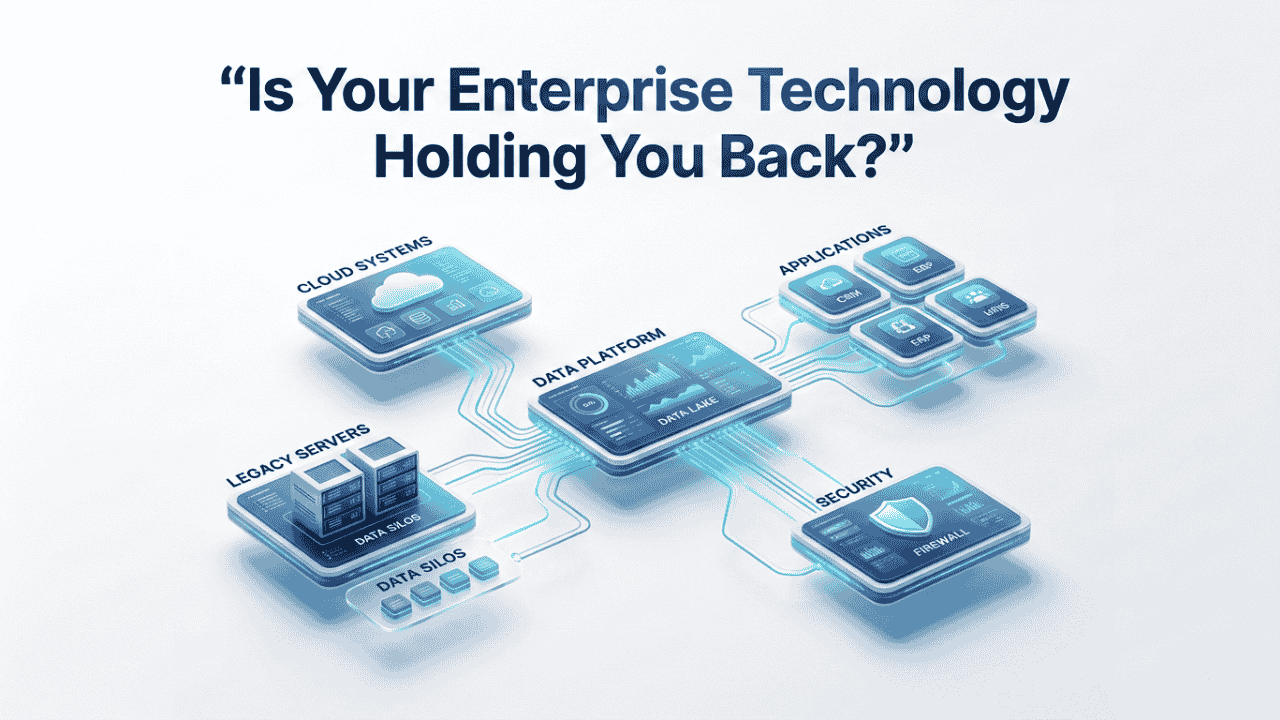
Is Your Enterprise Technology Holding You Back?

Many enterprises invest heavily in modern technologies to improve efficiency, enable digital transformation, and support long-term growth. Cloud platforms, enterprise applications, analytics tools, and cybersecurity systems promise to make organizations faster, smarter, and more competitive.

Yet despite these investments, many businesses still struggle with operational inefficiencies and slow decision-making. Teams spend time switching between disconnected systems, data remains scattered across multiple platforms, and IT teams face growing complexity as new technologies are added.

If this scenario sounds familiar, the problem may not be the technology itself. The real issue is often the lack of alignment between infrastructure, applications, and data systems.

This is where systems integration plays a crucial role. By connecting enterprise technologies into a unified ecosystem, organizations can eliminate silos, improve data visibility, and ensure that every technology investment contributes to real business outcomes.

In this article, we explore the warning signs that enterprise technology may be slowing your organization down, and how integrated technology environments can unlock greater efficiency, agility, and innovation.

Warning Signs Your Enterprise Technology Is Creating Bottlenecks

Enterprise technology environments usually evolve over time. As organizations grow, they introduce new applications, upgrade infrastructure platforms, and adopt data systems to address changing business needs. While each addition may solve a specific operational challenge, the overall environment often becomes fragmented.

Over time, teams may find themselves relying on manual processes to move information between systems because applications do not communicate directly. Data may be stored across multiple platforms without synchronization, making it difficult to gain a consistent view of business performance. Decision-making can also slow down when leadership teams must consolidate information from several systems before reaching conclusions.

These inefficiencies gradually increase operational complexity. IT teams spend more time maintaining compatibility between systems rather than focusing on innovation or strategic improvements. As the technology environment grows, these small inefficiencies compound and begin to affect enterprise productivity and agility.

Research from industry analysts indicates that organizations with fragmented technology ecosystems experience higher operational costs and slower innovation cycles.

How Fragmented Systems Impact Business Performance

Disconnected technology environments affect more than just IT teams; they influence the overall performance of the organization. When enterprise systems do not communicate effectively, business units operate with incomplete information, which makes collaboration more difficult.

For example, sales teams may lack visibility into service issues affecting customers, while support teams may not have access to a complete record of previous customer interactions. Marketing teams may operate with limited insights into customer engagement data stored within other systems. These information gaps create inefficiencies that slow down both operational workflows and strategic decision-making.

As the organization grows, fragmented systems can also make it difficult to scale operations efficiently. New platforms may need custom integrations or manual processes to function alongside existing systems, which increases complexity for IT teams.

Ultimately, technology environments that lack integration often prevent enterprises from responding quickly to market opportunities. Instead of enabling innovation, disconnected systems can become a barrier to business agility and growth.

Why Systems Integration Is the Missing Link

The most effective way to address these challenges is through systems integration, which focuses on connecting enterprise technologies into a cohesive architecture.

Instead of operating independently, integrated systems communicate through APIs, middleware frameworks, and data integration platforms. This connectivity ensures that information flows smoothly between infrastructure environments, enterprise applications, and data systems.

Key outcomes of systems integration include:

  • Real-time data exchange across enterprise platforms
  • Automated workflows that reduce manual intervention
  • Unified monitoring across infrastructure and applications
  • Improved collaboration between business units

When enterprise technologies operate as part of a connected ecosystem, organizations gain the ability to streamline operations and improve decision-making.

Building a Connected Enterprise Technology Ecosystem

Creating a connected technology ecosystem requires a thoughtful integration strategy. Organizations must evaluate how infrastructure platforms, enterprise applications, and data environments interact and determine where integration gaps exist.

A structured integration strategy begins with assessing the current technology landscape to identify inefficiencies and disconnected systems. Once these gaps are understood, organizations can design scalable integration architectures that allow systems to communicate effectively.

Integration frameworks typically involve technologies such as APIs, middleware platforms, and data integration tools that enable seamless communication between applications. These technologies allow enterprise data to move efficiently across systems while maintaining security and performance standards.

When integration strategies are implemented successfully, enterprises gain the ability to introduce new technologies without disrupting existing operations. This flexibility allows organizations to scale their technology environments while maintaining operational stability.

How Team Computers Helps Enterprises Overcome Technology Fragmentation

Addressing technology fragmentation requires deep expertise across infrastructure platforms, enterprise applications, and data environments. Organizations must ensure that integration frameworks support scalability, security, and operational efficiency.

Team Computers helps enterprises design and implement systems integration strategies that transform fragmented technology environments into unified digital ecosystems.

With decades of experience in enterprise IT environments, Team Computers supports organizations in:

  • Connecting enterprise applications such as ERP, CRM, and analytics platforms
  • Integrating hybrid cloud and on-premise infrastructure environments
  • Enabling seamless data synchronization across enterprise systems
  • Designing scalable integration architectures that support digital transformation

Through structured integration frameworks, Team Computers enables businesses to eliminate technology silos and unlock the full value of their IT investments.

Conclusion

Enterprise technology should empower organizations to move faster, innovate more effectively, and make smarter decisions. However, when systems operate independently, technology can become a source of inefficiency rather than a driver of growth.

Systems integration plays a vital role in aligning infrastructure, applications, and data systems so that enterprise technologies operate as part of a connected ecosystem.

Key takeaways include:

  • Fragmented enterprise systems create operational bottlenecks
  • Disconnected data environments limit visibility and collaboration
  • Systems integration enables unified technology ecosystems
  • Integrated environments improve efficiency, scalability, and innovation

Organizations that prioritize integration gain the flexibility and insight required to thrive in an increasingly digital business landscape.

If your enterprise technology environment feels complex, fragmented, or difficult to scale, it may be time to rethink your integration strategy.

Discover how Team Computers helps organizations connect infrastructure, applications, and data through enterprise systems integration – enabling more efficient operations and stronger digital growth.

How Systems Integration Aligns Infrastructure, Applications, and Data

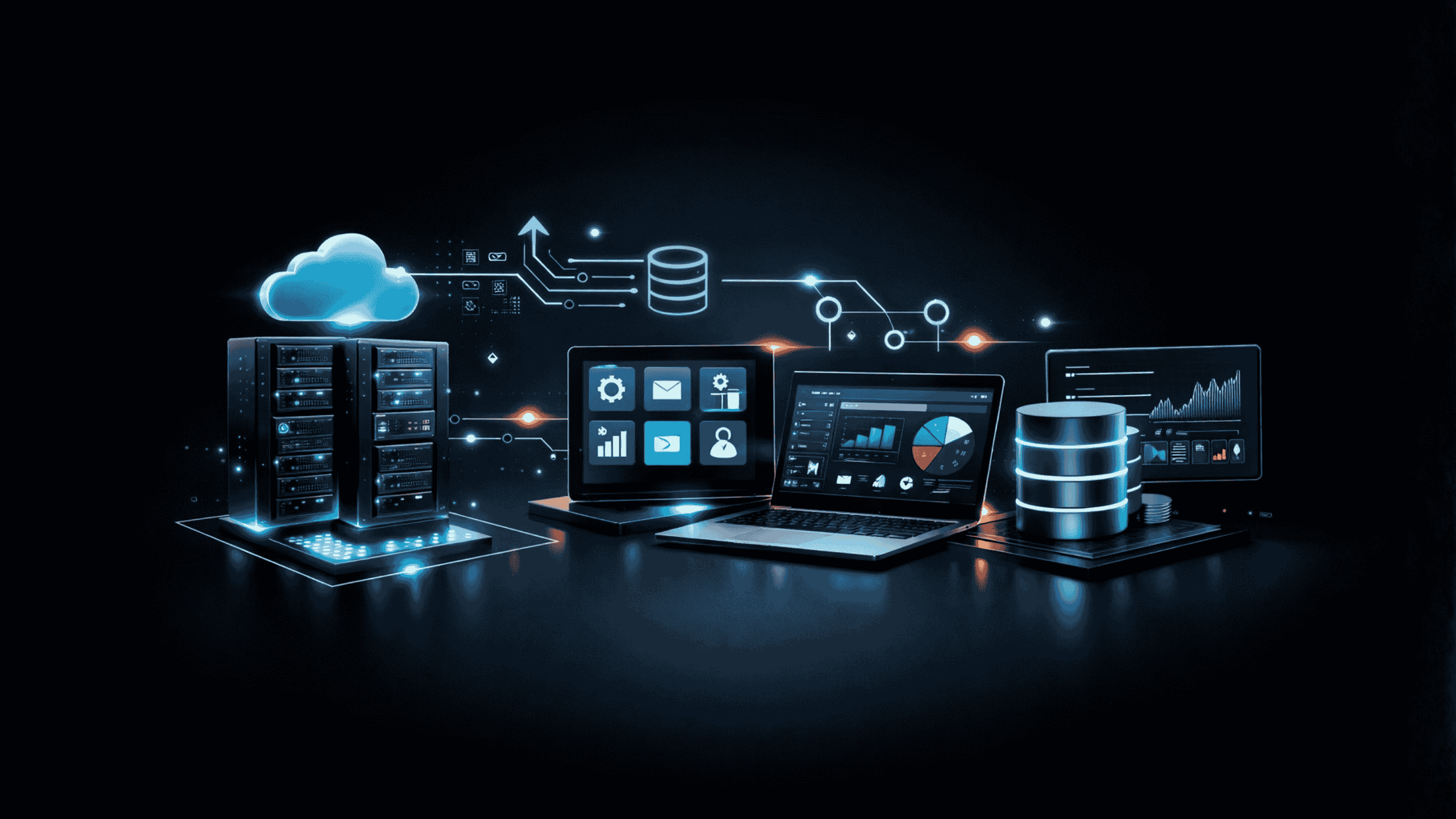
Enterprise technology environments are rarely simple. Most organizations operate a combination of infrastructure platforms, enterprise applications, and data systems that support daily operations. Servers, cloud platforms, ERP systems, CRM tools, analytics platforms, and security frameworks all play critical roles in enabling modern business processes.

However, when these components operate independently, organizations struggle to maintain operational efficiency. Infrastructure may function well, applications may deliver strong capabilities, and data platforms may generate insights—but without proper alignment between these elements, enterprises often face fragmented workflows and limited visibility.

This is where systems integration becomes essential. By connecting infrastructure, applications, and data environments, systems integration enables organizations to create unified technology ecosystems where information flows seamlessly and processes operate efficiently.

In this blog, we explore how systems integration aligns infrastructure, applications, and data, why this alignment matters for enterprise operations, and how organizations can build integrated technology environments that support scalability, innovation, and long-term digital transformation.

The Challenge of Disconnected Enterprise Technology Environments

Most enterprises adopt technology in phases. Over time, organizations deploy new infrastructure platforms, enterprise applications, and data solutions to support evolving business requirements. While each of these technologies delivers value independently, the overall IT environment often becomes fragmented.

Disconnected systems create operational inefficiencies that affect both IT teams and business functions. Infrastructure platforms may operate separately from application environments, while critical business data remains stored across multiple systems without synchronization. As a result, organizations often struggle to gain a unified view of enterprise operations.

When infrastructure, applications, and data environments are not aligned, teams frequently rely on manual processes to move information between systems. This slows workflows, increases the likelihood of errors, and limits the organization’s ability to make timely decisions. Over time, the complexity of managing disconnected systems places additional pressure on IT teams while reducing overall operational efficiency.

These challenges highlight the growing importance of enterprise systems integration, which enables organizations to connect technologies and ensure that enterprise platforms operate as part of a cohesive ecosystem.

How Systems Integration Connects Infrastructure, Applications, and Data

Systems integration focuses on creating a connected technology environment where infrastructure platforms, enterprise applications, and data systems operate together within a unified architecture.

Instead of functioning as isolated components, integrated systems communicate through structured frameworks such as APIs, middleware platforms, and data integration technologies. This connectivity allows enterprise platforms to exchange information seamlessly while maintaining operational stability.

Through systems integration, organizations can enable real-time communication between applications, centralized monitoring across infrastructure environments, and automated workflows that connect multiple business systems. Data generated by enterprise applications can flow directly into analytics platforms, providing leadership teams with timely insights that support faster decision-making.

By aligning infrastructure, applications, and data environments, enterprises can ensure that technology investments contribute to a unified operational strategy rather than creating additional complexity.

The Business Value of Aligning Infrastructure, Applications, and Data

When organizations successfully align infrastructure, applications, and data through systems integration, they unlock significant operational and strategic advantages.

Integrated environments improve operational efficiency by enabling automated workflows across business systems. Instead of relying on manual data transfers, applications communicate directly with each other, allowing processes to run more smoothly and reducing the potential for human error.

Another major benefit is improved data visibility. When enterprise data flows seamlessly across systems, decision-makers gain a more comprehensive view of business performance. This real-time visibility supports faster responses to operational challenges and helps organizations identify opportunities for improvement.

Integrated technology ecosystems also enable enterprises to scale more effectively. New platforms, applications, or digital services can be introduced into an existing integrated environment without disrupting operations. This flexibility is particularly valuable for organizations undergoing digital transformation initiatives, where technology environments must continuously evolve.

Building an Enterprise Integration Architecture

Achieving alignment across infrastructure, applications, and data requires a carefully designed integration architecture. Enterprises must establish a framework that determines how systems communicate, how data flows between platforms, and how performance is monitored across the environment.

A successful enterprise integration architecture typically combines several essential elements that support connectivity and operational visibility:

  • API frameworks that enable secure communication between applications
  • Middleware platforms that manage interactions between enterprise systems
  • Data integration tools that synchronize information across databases and applications
  • Monitoring systems that provide visibility into infrastructure and application performance 

Together, these components form the integration layer that allows enterprise technologies to operate as a unified ecosystem. Organizations that invest in structured integration architectures gain the ability to expand their technology environments while maintaining stability and security.

How Team Computers Enables Integrated Enterprise Technology Environments

Implementing enterprise-wide systems integration requires expertise across infrastructure platforms, enterprise applications, and data environments. Integration initiatives must ensure seamless connectivity while maintaining security, scalability, and performance.

Team Computers helps organizations design and implement enterprise systems integration frameworks that align infrastructure, applications, and data systems.

With decades of experience in enterprise IT environments, Team Computers supports organizations in:

  • Integrating enterprise applications such as ERP, CRM, and analytics platforms
  • Connecting cloud and on-premise infrastructure environments
  • Enabling real-time data synchronization across systems
  • Building scalable integration architectures that support future growth

By aligning technology infrastructure with business objectives, Team Computers helps enterprises eliminate data silos, improve operational visibility, and create connected technology ecosystems.

Conclusion

Modern enterprises depend on complex technology ecosystems that include infrastructure platforms, enterprise applications, and data environments. When these components operate independently, organizations face inefficiencies, limited visibility, and increased operational complexity.

Systems integration addresses these challenges by aligning infrastructure, applications, and data into a connected architecture that supports enterprise operations.

Key takeaways include:

  • Disconnected technology environments create operational silos
  • Systems integration enables seamless communication between platforms
  • Integrated environments improve visibility, efficiency, and scalability
  • Structured integration architectures support long-term digital transformation

Organizations that invest in systems integration gain the flexibility and insight required to adapt to evolving technology demands.

Aligning infrastructure, applications, and data is essential for building scalable enterprise technology environments. Discover how Team Computers helps organizations implement systems integration strategies that connect platforms, streamline operations, and support long-term digital transformation.

Explore how integrated enterprise environments can strengthen your organization’s technology foundation.

How Systems Integration Enables Seamless Customer Experience

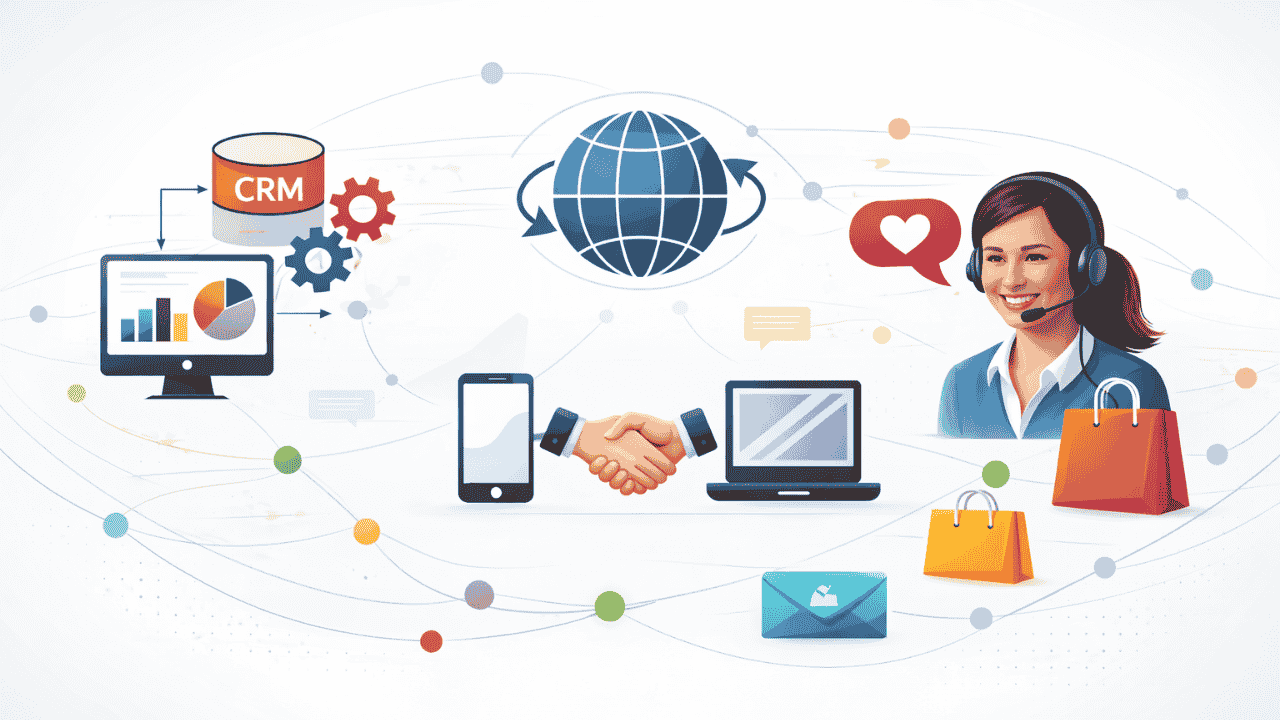
Customer expectations have evolved rapidly in the digital era. Today’s customers expect organizations to deliver fast, personalized, and consistent experiences across every interaction, whether it occurs through websites, mobile apps, support channels, or physical locations.

However, many enterprises operate multiple platforms for customer management, marketing automation, service operations, and analytics. When these systems operate independently, customer information becomes fragmented and difficult to access.

Team Computers helps organizations address this challenge through enterprise systems integration, enabling customer-facing platforms and backend systems to operate as part of a connected digital ecosystem.

Through effective systems integration, enterprises can streamline workflows, improve data visibility, and ensure that every customer interaction is supported by accurate and real-time information.

The Challenge of Disconnected Customer Systems

Most enterprises rely on a variety of applications to manage customer relationships. CRM platforms support sales teams, marketing automation tools manage campaigns, and customer service platforms handle support requests.

While each platform plays an important role, they often function independently. This lack of connectivity creates data silos, where customer information is stored in different systems without synchronization.

When systems remain disconnected, organizations struggle to maintain a consistent view of customer interactions. Sales teams may not see service history, support teams may lack visibility into previous marketing engagements, and marketing teams may operate without access to real-time customer insights.

Over time, these gaps create delays, inconsistent communication, and reduced customer satisfaction. Organizations therefore need integrated technology environments where applications share data and support seamless collaboration across teams.

Creating a Unified Customer View Through Systems Integration

One of the most important outcomes of enterprise systems integration is the creation of a unified customer view. When enterprise platforms are integrated, customer data flows seamlessly across systems, allowing organizations to build a comprehensive profile of each customer.

This integrated environment enables teams across departments to access the same accurate information. Customer service representatives can quickly review purchase history, previous support requests, and interaction records. Sales teams gain insights into customer engagement, while marketing teams can analyze behavior across channels.

With a connected technology ecosystem, organizations can respond to customer needs more effectively. A unified view of the customer enables faster problem resolution, improved personalization, and stronger customer relationships.

Systems integration therefore plays a crucial role in helping enterprises deliver consistent and reliable customer experiences.

Enhancing Customer Journeys Across Digital Channels

Customer journeys often involve multiple touchpoints across digital and physical channels. A customer may first interact with a brand through a website, continue engagement through email campaigns, and later contact support through a service portal.

Without systems integration, these interactions remain isolated within separate platforms. This makes it difficult for organizations to understand the full customer journey.

By integrating enterprise applications, organizations can connect these touchpoints and create seamless customer experiences. Automated workflows allow customer interactions to trigger responses across different systems.

For example, when a customer submits an inquiry, integrated systems can automatically generate support tickets, update CRM records, and notify relevant teams. Similarly, customer engagement data can be shared with marketing platforms to deliver personalized communication.

These capabilities ensure that customers receive consistent and efficient service throughout their journey.

Improving Customer Insights Through Integrated Data

Data plays a critical role in modern customer experience strategies. Organizations rely on customer data to understand behavior, measure satisfaction, and identify opportunities for improvement.

However, when data remains scattered across different systems, it becomes difficult to generate meaningful insights.

Through systems integration, enterprises can consolidate customer data into centralized analytics platforms. This enables organizations to analyze patterns, monitor engagement levels, and gain deeper insights into customer preferences.

Integrated data environments allow decision-makers to evaluate customer trends and refine strategies based on accurate information. These insights help organizations improve service delivery, optimize marketing initiatives, and enhance overall customer satisfaction.

As a result, integrated systems enable enterprises to build data-driven customer experience strategies that support long-term business growth.

How Team Computers Enables Integrated Customer Experience Platforms

Delivering seamless customer experiences requires more than implementing individual software platforms. Organizations need an integrated technology environment where applications, infrastructure, and data systems work together efficiently.

Team Computers supports enterprises in designing and implementing systems integration frameworks that connect customer-facing platforms with core business applications.

By integrating CRM systems, marketing platforms, analytics tools, and enterprise applications, Team Computers enables organizations to eliminate data silos and create connected digital ecosystems.

With extensive experience in enterprise IT environments, the company helps businesses build scalable integration architectures that support consistent customer engagement across channels.

Through structured integration strategies, organizations can improve operational efficiency while delivering exceptional customer experiences.

Conclusion

Delivering seamless customer experiences has become a critical priority for modern enterprises. Customers expect fast responses, personalized interactions, and consistent service across every touchpoint.

However, these expectations cannot be met when enterprise systems operate independently.

Systems integration enables organizations to connect customer platforms, unify data, and automate workflows across departments. Integrated environments improve collaboration, enhance data visibility, and support personalized customer engagement.

By partnering with experienced technology providers like Team Computers, enterprises can build connected IT ecosystems that support seamless customer experiences while driving long-term digital transformation.

Discover how Team Computers can help your organization build integrated IT environments that enable exceptional customer experiences and long-term digital growth.

Enterprise Application Integration for Unified Business Operations

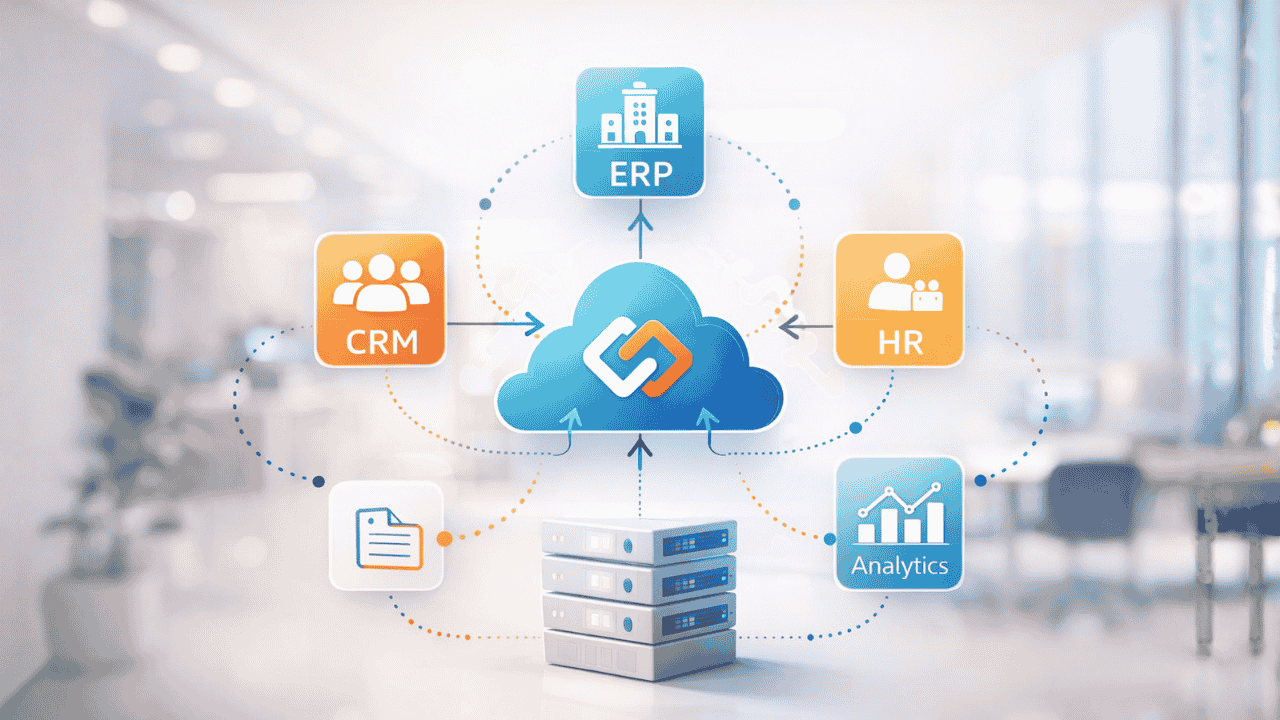
Modern enterprises depend on a wide range of business applications to manage operations, serve customers, and drive growth. Customer relationship management platforms, enterprise resource planning systems, HR management tools, and analytics platforms all play critical roles in day-to-day operations. However, when these applications operate independently, organizations face fragmented workflows, inconsistent data, and reduced operational efficiency.

This is where Enterprise Application Integration becomes essential. Instead of functioning as isolated systems, integrated applications communicate seamlessly with one another, enabling data to flow across departments and processes without disruption.

Many organizations struggle with disconnected applications that require manual updates and data transfers. These inefficiencies slow down business processes and limit an organization’s ability to respond quickly to market changes.

By implementing a strong Enterprise Application Integration strategy, enterprises can connect their core systems, automate workflows, and gain a unified view of operations. In this blog, we explore how enterprise application integration improves operational efficiency, supports digital transformation, and helps organizations build a connected technology ecosystem.

The Challenge of Disconnected Enterprise Applications

Most enterprises adopt business applications gradually as their operational needs evolve. Organizations often implement tools such as CRM systems for customer relationship management, ERP platforms for financial and operational processes, and analytics solutions to track business performance.

While each application serves a specific purpose, this incremental adoption frequently leads to a fragmented enterprise IT environment where systems operate independently rather than as a connected ecosystem. As a result, businesses face several challenges:

  • Duplicate data stored across multiple systems
  • Manual data transfers between applications
  • Delays in business processes caused by system dependencies
  • Inconsistent reporting across departments

For example, when a sales team updates customer information in a CRM platform but that data is not synchronized with finance or customer support systems, other teams may continue working with outdated information. Over time, these disconnected systems reduce operational efficiency and limit leadership’s ability to access accurate, real-time insights for informed decision-making.

Implementing enterprise application integration helps eliminate these silos by ensuring seamless data flow across business systems. For deeper insights, explore our guide on Eliminating IT Silos with Enterprise Systems Integration.

What Is Enterprise Application Integration?

Enterprise Application Integration (EAI) is a critical component of modern enterprise systems integration, enabling different business applications to communicate, share data, and operate as a unified digital ecosystem.

As organizations adopt multiple platforms such as CRM, ERP, and analytics tools, enterprise application integration ensures these systems work together seamlessly rather than functioning in isolated silos. Instead of relying on manual data transfers or complex custom scripts, EAI uses standardized interfaces and integration frameworks to enable:

  • Automatic data exchange between systems
  • Real-time synchronization across platforms
  • Cross-platform workflows without manual intervention

This integration improves operational efficiency, data accuracy, and enterprise-wide visibility, allowing departments to access consistent information across systems.

For instance, when a customer places an order online, an integrated enterprise environment can automatically update the CRM system, generate an invoice within the ERP platform, and adjust inventory levels in the supply chain management system — all without manual input.

By implementing enterprise application integration, businesses can streamline operations, reduce errors, and build a scalable digital infrastructure that supports long-term growth.

Business Benefits of Enterprise Application Integration

Organizations that implement Enterprise Application Integration experience significant improvements in efficiency, accuracy, and decision-making across all levels of the business.

Improved Operational Efficiency

Integrated applications eliminate repetitive manual tasks such as copying data between systems. Automated workflows allow processes to move smoothly between departments without delays or bottlenecks.

Better Data Accuracy

When enterprise systems share information automatically, organizations reduce the risk of data inconsistencies and human error, ensuring all teams work from a single source of truth.

Faster Decision-Making

Integrated systems provide leadership teams with access to consistent, real-time information across departments, enabling faster and more confident strategic decisions.

Enhanced Customer Experience

When customer data flows seamlessly across systems, organizations can provide more personalized, accurate, and responsive services at every touchpoint.

These benefits allow enterprises to transform fragmented operations into connected, high-performing business ecosystems.

Technologies Enabling Enterprise Application Integration

Modern Enterprise Application Integration strategies rely on advanced technologies that enable seamless communication between enterprise systems and applications.

API-Based Integration

Application Programming Interfaces (APIs) allow business applications to exchange data securely, efficiently, and in real time. API-driven architectures help organizations integrate new digital platforms without disrupting existing systems, making them highly scalable and adaptable.

Middleware

Middleware acts as a bridge between different applications by enabling data transformation, routing, and communication between systems built on different technologies. It removes the need for point-to-point connections that are difficult to maintain at scale.

Integration Platforms

Modern integration platforms provide centralized environments for managing, monitoring, and optimizing connections across enterprise applications. These platforms simplify integration processes, improve operational visibility, and ensure data consistency across departments.

By leveraging APIs, middleware, and integration platforms, businesses can build flexible and scalable enterprise integration architectures that support digital transformation, improve system interoperability, and allow technology ecosystems to evolve alongside growing business needs.

How Team Computers Supports Enterprise Application Integration

Implementing effective Enterprise Application Integration requires deep expertise in enterprise architecture, IT infrastructure, and system connectivity to ensure seamless communication between critical business applications.

Team Computers helps organizations design and implement robust enterprise integration frameworks that connect platforms such as ERP, CRM, HR, and analytics systems, enabling streamlined workflows and improved operational efficiency.

Team Computers supports enterprises with:

  • API-based integration frameworks connecting core business applications
  • Hybrid infrastructure integration across cloud and on-premise environments
  • Enterprise data synchronization for real-time, consistent information flow
  • Cloud and on-premise application integration within flexible hybrid IT environments

With more than 38 years of experience in enterprise IT services, Team Computers enables organizations to build scalable and future-ready integration architectures that support long-term digital transformation. By connecting enterprise applications into a unified ecosystem, businesses can enhance data visibility, operational agility, and innovation — creating a strong foundation for sustainable growth.

Conclusion

As enterprises continue adopting new technologies, disconnected applications can quickly create operational inefficiencies and data fragmentation. Enterprise Application Integration provides the foundation for connecting business systems into a unified digital ecosystem.

Key takeaways:

  • Integrated applications eliminate operational silos
  • Automated workflows improve productivity and efficiency
  • Real-time data sharing enhances decision-making
  • Connected systems support scalable digital transformation

Organizations that prioritize Enterprise Application Integration gain greater control over their IT environments while unlocking new opportunities for innovation and growth.

Discover how Team Computers can help your organization implement scalable Enterprise Application Integration solutions that connect critical systems, streamline operations, and enable smarter business decisions.


Cloud Integration: Simplifying Hybrid and Multi-Cloud Environments for Scalable Business Operations

Cloud computing has transformed the way enterprises build and manage their technology environments. Organizations now rely on a wide range of cloud platforms to support critical business functions, from customer relationship management and collaboration tools to advanced analytics and artificial intelligence.

However, most enterprises do not operate within a single cloud platform. Instead, they often use a combination of on-premise infrastructure, private cloud environments, and multiple public cloud services.

While this hybrid approach offers flexibility and scalability, it also introduces a new challenge: ensuring that these systems work together seamlessly.

Without effective integration, cloud applications can become isolated environments where data and processes remain disconnected from the broader enterprise IT ecosystem.

This is where cloud integration plays a critical role.

Cloud integration enables organizations to connect applications, data, and infrastructure across hybrid and multi-cloud environments, allowing systems to communicate and operate as a unified platform.

Why Cloud Integration Matters for Enterprises

Modern enterprises depend on a growing number of cloud services to support their operations. Sales teams may rely on cloud-based CRM platforms, finance departments may use cloud ERP systems, and data teams may process analytics through cloud-hosted platforms.

While each of these solutions delivers value individually, their true potential is realized when they are integrated with the broader enterprise technology environment.

Without integration, organizations may encounter challenges such as:

  • Fragmented data across cloud and on-premise systems
  • Disconnected workflows between applications
  • Limited visibility into enterprise operations

Cloud integration addresses these challenges by enabling secure and efficient communication between cloud platforms and enterprise systems, ensuring that data and processes can move seamlessly across the organization.

The Rise of Hybrid and Multi-Cloud Environments

Many enterprises now operate within hybrid and multi-cloud architectures.

A hybrid cloud environment combines on-premise infrastructure with cloud platforms, allowing organizations to maintain control over critical systems while benefiting from the scalability of cloud services.

A multi-cloud strategy involves using multiple public cloud providers to support different business functions.

These architectures offer several advantages:

  • Improved scalability across workloads
  • Greater flexibility in selecting technology platforms
  • Enhanced resilience and reliability

However, managing these environments without a strong integration strategy can quickly become complex. Cloud integration enables organizations to connect these diverse environments and create a unified technology ecosystem.

Common Cloud Integration Challenges

While cloud adoption offers numerous benefits, enterprises often encounter integration challenges as their technology environments evolve.

Data Fragmentation

When multiple cloud platforms operate independently, data may become scattered across different environments, making it difficult to access and analyze consistently.

Workflow Disruption

Business processes that span multiple applications may become inefficient when systems cannot exchange data automatically, leading to bottlenecks and manual workarounds.

Security and Governance Concerns

Organizations often face security and governance risks, particularly when sensitive data moves between different cloud platforms and on-premise systems without structured controls.

Cloud integration frameworks address these challenges by establishing structured communication pathways between systems.

How Cloud Integration Works

Cloud integration connects enterprise systems and cloud applications through technologies that enable secure data exchange and coordinated workflows. Several integration mechanisms are commonly used in modern enterprise environments.

API-Based Integration

APIs allow applications to communicate with each other in real time, enabling seamless data exchange between cloud platforms and enterprise systems.

Middleware Platforms

Middleware acts as an intermediary layer that facilitates communication between different applications and services, reducing direct dependencies between systems.

Integration Platforms

Integration platforms provide centralized environments where organizations can manage connections between cloud services, applications, and data platforms at scale.

These technologies allow enterprises to build scalable integration architectures that support hybrid and multi-cloud environments effectively.

Benefits of Cloud Integration

Organizations that implement cloud integration strategies gain several key advantages that directly impact operational performance and long-term growth.

Unified Technology Ecosystem

Integrated cloud environments enable applications, infrastructure, and data platforms to function as part of a coordinated system, eliminating silos.

Improved Data Accessibility

Cloud integration ensures that information can move seamlessly between systems, improving data visibility and decision-making across the organization.

Enhanced Operational Efficiency

Automated data exchange reduces manual processes and streamlines workflows across departments, freeing teams to focus on higher-value work.

Greater Scalability

Integrated cloud environments allow organizations to adopt new applications and services without disrupting existing workflows or rebuilding infrastructure.

How Team Computers Helps Enterprises Integrate Cloud Environments

Successfully integrating cloud environments requires a strategic approach that aligns with an organization’s existing IT architecture and long-term business objectives.

At Team Computers, cloud integration begins with a comprehensive evaluation of the enterprise technology landscape. This includes identifying existing cloud platforms, on-premise systems, and data flows across the organization.

Based on these insights, the team designs integration frameworks that enable secure communication between applications and infrastructure across hybrid environments.

Team Computers supports enterprises with:

  • Integration of cloud applications with enterprise systems
  • Hybrid cloud integration connecting on-premise and cloud infrastructure
  • Secure data exchange across multi-cloud environments
  • Scalable integration architectures that support future growth

By building connected cloud ecosystems, Team Computers helps organizations maximize the value of their cloud investments while maintaining operational efficiency.

Conclusion

Cloud platforms have become essential components of modern enterprise IT environments. However, without effective integration, organizations may struggle with fragmented systems, disconnected data, and inefficient workflows.

Cloud integration addresses these challenges by enabling applications, infrastructure, and data platforms to communicate seamlessly across hybrid and multi-cloud environments.

Key advantages of cloud integration include:

  • Unified enterprise technology ecosystems
  • Improved data accessibility and visibility
  • Streamlined workflows and operational efficiency
  • Scalable IT environments that support innovation

Enterprises that invest in cloud integration strategies create flexible and connected IT environments capable of supporting long-term digital transformation.

If your organization is navigating the complexities of hybrid and multi-cloud environments, the right integration strategy can unlock the full value of your cloud investments.

Discover how Team Computers helps enterprises connect applications, infrastructure, and data platforms to build scalable, high-performance cloud ecosystems.

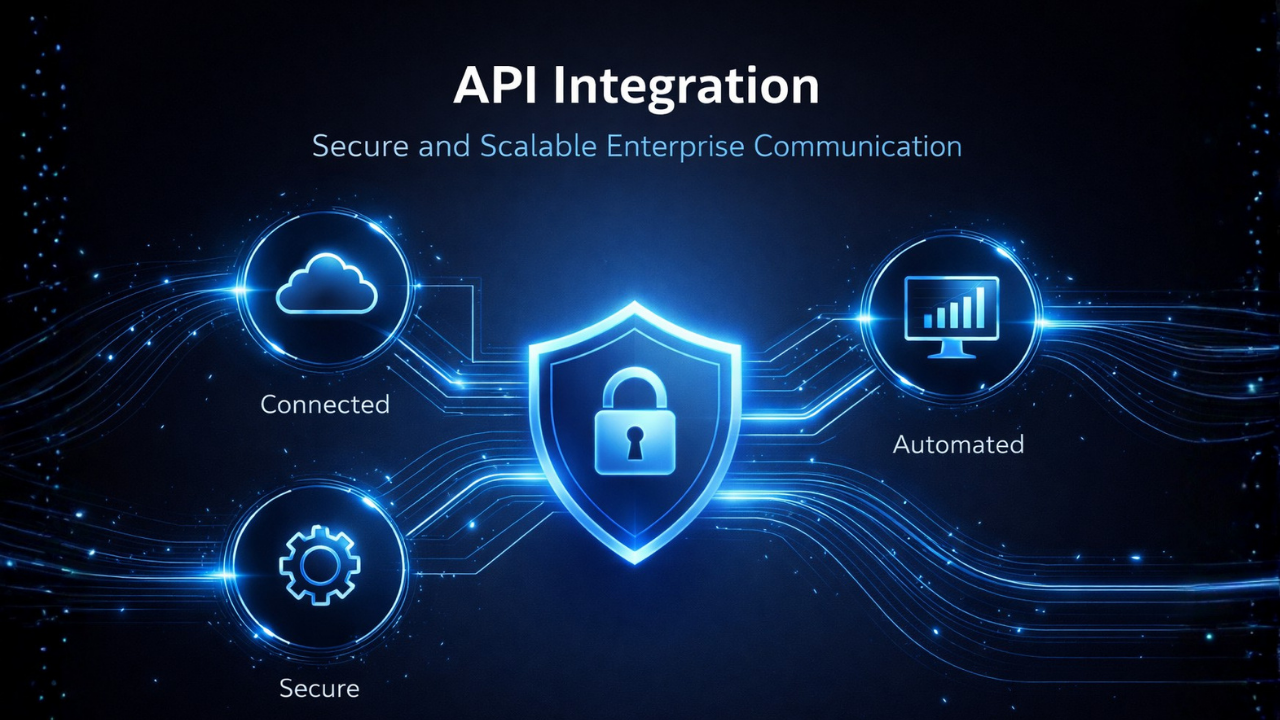
API Integration: Enabling Secure and Scalable Communication Across Enterprise Applications

Modern enterprises rely on a wide range of software platforms to support their operations. Customer data is managed through CRM systems, financial transactions are processed within ERP platforms, analytics tools generate business insights, and cloud applications enable collaboration across teams.

Each of these systems plays an important role within the enterprise technology ecosystem. However, their true value emerges only when they can communicate and exchange information seamlessly.

This is where API integration becomes essential.

Application Programming Interfaces (APIs) act as communication bridges between systems, allowing applications to exchange data securely and efficiently. Through APIs, enterprise platforms can interact with one another without requiring complex manual processes or tightly coupled connections.

API integration has become a foundational component of modern systems integration strategies, enabling organizations to connect applications, automate workflows, and build scalable digital ecosystems.

Why API Integration Matters for Enterprises

As organizations adopt more digital platforms, the number of applications within enterprise IT environments continues to grow. These systems often originate from different vendors and operate within different infrastructures, including cloud environments and on-premise data centers.

Without integration, these applications function independently, creating operational challenges such as fragmented data, manual processes, and limited visibility across systems.

API integration addresses these challenges by enabling applications to exchange information in real time. This allows organizations to create connected technology environments where systems interact seamlessly and workflows operate efficiently.

For enterprises undergoing digital transformation, API integration plays a crucial role in ensuring that new technologies can integrate with existing platforms without disrupting operations.

How APIs Enable Enterprise Connectivity

An API acts as an interface that allows one application to request data or services from another application. Instead of accessing a system’s internal architecture directly, applications interact through predefined API endpoints.

This approach provides several key advantages:

  • Architectural independence: APIs allow systems to communicate without requiring major changes to their underlying architecture. Applications can remain independent while still exchanging information.
  • Real-time communication: When a transaction occurs within one application, the relevant data can immediately be transmitted to other connected platforms.
  • Modular flexibility: APIs enable organizations to build modular and flexible IT architectures where new applications can be integrated more easily as business needs evolve.

Common Use Cases of API Integration

API integration supports a wide range of enterprise processes. Here are some of the most common examples:

  • When a new customer is registered within a CRM platform, APIs can automatically transfer that information to an ERP system for billing and order management.
  • E-commerce platforms use APIs to retrieve product information from inventory systems, ensuring customers always see accurate availability and pricing.
  • Analytics platforms are connected with operational systems via APIs, enabling real-time data analysis and reporting.

These use cases demonstrate how API integration helps organizations automate workflows and eliminate manual data transfer between systems.

Benefits of API Integration

Organizations that adopt API-driven integration strategies gain several important competitive advantages:

Real-Time Data Exchange

APIs enable applications to exchange information instantly, improving data accuracy and operational responsiveness across the enterprise.

Greater Flexibility

API-based architectures allow enterprises to integrate new applications without significantly modifying existing systems, reducing cost and disruption.

Improved Operational Efficiency

Automated data exchange reduces the need for manual processes, enabling teams to focus on higher-value activities and strategic goals.

Scalability

As organizations grow and adopt additional technologies, APIs provide a scalable method for connecting systems and expanding digital capabilities without rebuilding infrastructure.

API Integration in Modern Enterprise Architectures

Today’s enterprise technology environments are increasingly built around API-driven architectures. Organizations use APIs to connect cloud platforms, enterprise applications, mobile services, and data systems into unified digital ecosystems.

In many cases, APIs form the foundation of microservices architectures, where applications are composed of smaller, independently functioning services that communicate through APIs. This approach improves system flexibility and allows enterprises to innovate more rapidly by introducing new services without disrupting existing platforms.

As digital transformation initiatives accelerate, API integration continues to play a central role in enabling agile and scalable enterprise IT environments.

How Team Computers Helps Enterprises Implement API Integration

Successfully implementing API integration requires both technical expertise and a deep understanding of enterprise IT architectures. At Team Computers, integration specialists work closely with organizations to analyze their existing application environments and identify opportunities for API-driven connectivity.

The process typically begins with assessing current systems, data flows, and integration requirements. Based on this assessment, scalable API integration frameworks are designed to enable secure communication between enterprise platforms.

Team Computers supports organizations with:

  • API integration across enterprise applications and cloud platforms
  • Development of scalable API architectures for connected systems
  • Secure data exchange between on-premise and cloud environments
  • Optimization of workflows through automated API-driven processes

By enabling seamless communication between systems, Team Computers helps organizations build agile and scalable digital ecosystems.

Expert Insight

“APIs have become the backbone of modern enterprise connectivity. They allow organizations to integrate applications quickly and efficiently while maintaining the flexibility needed to adapt to evolving business requirements.”

— Head of IT Services, Team Computers

Conclusion

As enterprises continue to adopt new technologies, the need for seamless communication between applications becomes increasingly important. API integration provides the foundation for connecting enterprise systems, enabling secure data exchange and automated workflows across platforms.

Key advantages of API integration include:

  • Real-time communication between applications
  • Improved operational efficiency through automation
  • Flexible and scalable IT architectures
  • Enhanced connectivity across enterprise platforms

Organizations that embrace API-driven integration strategies can build connected digital ecosystems that support innovation, agility, and long-term growth.

If your organization is looking to improve application connectivity and streamline workflows, the right API integration strategy can transform fragmented systems into a coordinated enterprise platform.

Discover how Team Computers helps enterprises implement secure and scalable API integration solutions that connect applications, infrastructure, and data platforms seamlessly.

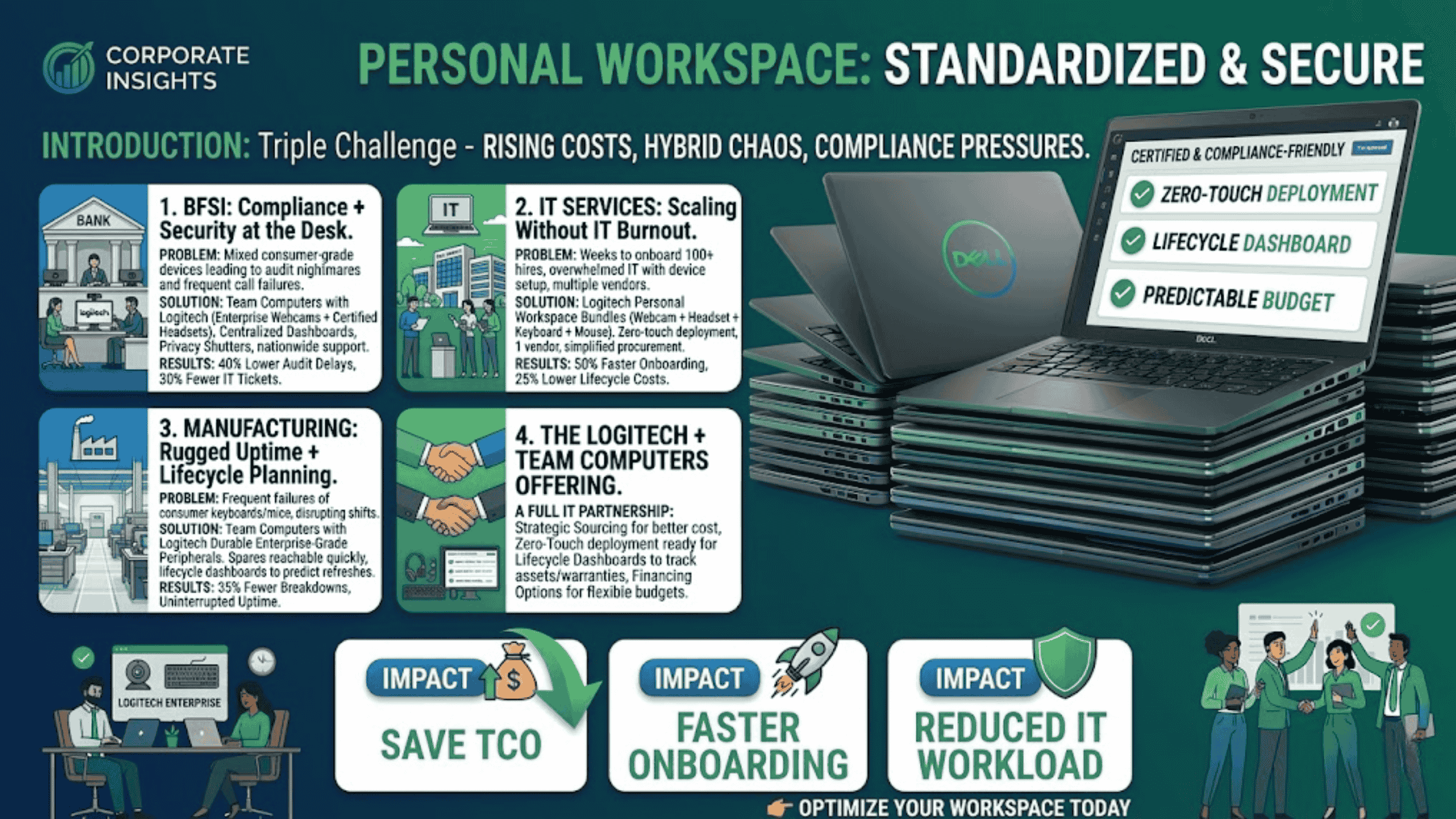
Rising Costs. Hybrid Chaos. Compliance Pressures.

Across India’s enterprises, IT leaders are facing a triple challenge: rising device costs, complex hybrid work demands, and mounting compliance pressures. Add to this the need to scale fast across multiple locations — and the result is an IT team that is overworked, overstretched, and under constant pressure to deliver.

The problem isn’t just the cloud or data centers. It starts at the desk level. Weak webcams, noisy headsets, unreliable keyboards, and fragile mice silently drain budgets, disrupt hybrid meetings, and frustrate employees.

The future of IT is not just big infrastructure. It’s personal workspace devices that are secure, standardized, and supported — at scale.

BFSI: Compliance + Security at the Desk

For banks, insurers, and capital market players, compliance is king. Every device must meet audit standards, while also enabling smooth collaboration across branches and remote offices.

Take a mid-sized NBFC that recently partnered with Team Computers for a Logitech-enabled device refresh. Before: employees used a mix of consumer-grade webcams and headsets, leading to frequent call failures, poor client experiences, and security concerns with unverified devices. Audits became nightmares due to inconsistent asset records.

After standardization with Logitech’s enterprise webcams (with privacy shutters) and certified headsets, supported nationwide by Team Computers:

  • Compliance-friendly devices rolled out in every branch.
  • Centralized dashboards for procurement and warranty tracking.
  • Audit-readiness with predictable refresh cycles.

Result: 40% lower audit delays, 30% fewer IT tickets, and stronger client trust.

IT Services: Scaling Without IT Burnout

In IT services and consulting firms, the business model depends on scaling teams fast. But onboarding 100+ new hires in weeks often overwhelms IT with device setup, warranty calls, and mismatched accessories.

Consider a fast-growing IT services company that engaged Team Computers. Before: their IT staff spent weeks configuring new laptops, chasing faulty mice and headsets, and juggling multiple vendors for replacements. Productivity was lost before Day One.

With Logitech personal workspace bundles (webcam + headset + keyboard + mouse) delivered and configured by Team Computers:

  • Zero-touch deployment → every new hire productive from Day One.
  • One vendor, one invoice → procurement simplified.
  • Next-day swap → warranty calls no longer slow projects.

Result: 50% faster onboarding, 25% lower lifecycle costs, and zero IT burnout.

Manufacturing: Rugged Uptime + Lifecycle Planning

Factories, plants, and R&D centers cannot afford downtime. Employees on shop floors and remote offices need rugged, reliable devices that withstand long hours and heavy use.

A chemicals manufacturing client faced frequent keyboard and mouse failures, disrupting shift handovers and forcing IT to manage constant replacements.

After moving to Logitech’s durable, enterprise-grade peripherals via Team Computers:

  • Devices lasted longer under heavy use.
    Lifecycle dashboards helped IT plan refreshes before failures.
  • Pan-India service ensured spares reached remote plants quickly.

Result: 35% fewer breakdowns, predictable refresh cycles, and uninterrupted uptime.

Our Offering: More Than Devices. A Full IT Partnership.

With Logitech + Team Computers, enterprises get more than hardware. They get a partnership that covers the full lifecycle:

  • Strategic sourcing → standardized enterprise-grade devices at better cost.
  • Zero-touch deployment → devices configured and ready to work out of the box.
  • Lifecycle dashboards → track assets, warranties, and refresh cycles in one place.
  • Financing options → predictable budgets with flexible refresh plans.

Outcomes: What Enterprises Achieve

Cost Savings → up to 30% lower device spend with standardization.
Faster Onboarding → new hires productive from Day One.
Reduced IT Workload → fewer vendor calls, fewer support tickets.
Happier Employees → reliable gear for hybrid work, every day.

Why Team Computers?

For over 25 years, Team Computers has been trusted by India’s leading enterprises to deliver IT that works.

  • 35,000+ customers across BFSI, IT services, manufacturing, and beyond.
  • 750+ service locations across India for true nationwide support.
  • Deep OEM partnerships with global leaders like Logitech.

With Team Computers, enterprises don’t just buy devices. They get a strategic partner who simplifies IT, reduces risk, and ensures every employee is productive.

👉 Download your customised 1-page optimization plan today.

Cut costs. Reduce risk. Empower teams.
With Logitech + Team Computers, the future of IT starts at the desk.

Hotels That Feel “Alive”: How AV Integration Is Redefining Guest Experiences

Today’s hotel guests expect more than comfortable rooms and good service. They expect memorable experiences.

From the moment they walk into a lobby to the time they attend a conference or relax in their room, guests interact with technology everywhere.

This is where AV integration in hospitality is making a major difference.

Hotels, resorts, and event venues are using modern audio-visual systems to transform ordinary spaces into immersive environments that enhance comfort, engagement, and convenience.

For hospitality leaders, AV is no longer just a support system for conference rooms. It has become a core part of the guest experience strategy.

What Makes a Guest Experience Truly Immersive?

An immersive hospitality experience goes beyond décor or luxury amenities. It combines technology, environment, and personalization to create memorable moments.

Examples include:

  • Digital check-in displays that simplify arrival
    • Interactive wayfinding screens across large properties
    • Smart in-room entertainment and lighting controls
    • Dynamic lobby displays and ambient soundscapes

These elements work together to create spaces that feel modern, intuitive, and engaging.

Guests notice the difference immediately.

Why AV Integration Matters in Modern Hospitality

Hotels today serve multiple functions. They are not just accommodation spaces but also:

  • Corporate meeting venues
    • Event destinations
    • Social gathering spaces
    • Entertainment environments

Each of these spaces requires a different type of experience.

AV integration in hospitality allows venues to transform environments dynamically. A conference room can host a corporate meeting in the morning and a wedding event in the evening. A restaurant can adjust lighting, visuals, and music to match the mood throughout the day.

The result is a flexible environment that adapts to guest expectations.

Key AV Technologies Transforming Hotels

Several audio-visual technologies are helping hospitality providers create richer guest experiences.

Interactive Displays and Digital Signage

Digital signage has become a central feature in modern hotels.

Large displays provide:

  • Event schedules
    • Wayfinding directions
    • Local recommendations
    • Real-time announcements

Interactive kiosks also allow guests to access information quickly without waiting at reception.

For large resorts and convention hotels, these tools significantly improve navigation and guest convenience.

Advanced Audio Systems for Ambience

Sound plays a subtle but powerful role in hospitality environments.

High-quality audio systems create the right atmosphere in different areas of the property:

  • Relaxing background music in lounges
    • Energetic sound environments in event spaces
    • Clear audio systems in conference rooms

Well-designed soundscapes help hotels create consistent brand experiences across spaces.

Projection Mapping and Immersive Visuals

Projection mapping technology is increasingly used in hospitality venues and event spaces.

It allows ordinary surfaces such as walls or ceilings to transform into dynamic visual displays.

Hotels use projection mapping to:

  • Enhance themed events
    • Create immersive dining experiences
    • Add visual storytelling during conferences or celebrations

For guests, these experiences feel unique and memorable.

How AV Technology Improves Guest Engagement

AV solutions help hotels deliver more personalized and convenient experiences.

Smart In-Room Experiences

Modern guest rooms increasingly include integrated AV systems that allow guests to control their environment.

Using a single interface, guests can manage:

  • Lighting
    • Temperature
    • Entertainment content
    • Room service communication

These features add convenience while creating a more premium experience.

Better Event and Conference Experiences

Hotels with strong AV capabilities attract more corporate events.

Conference organizers look for venues that offer:

  • Large LED displays
    • High-quality audio systems
    • Video conferencing capabilities
    • Hybrid event technology

With the rise of hybrid meetings and corporate gatherings, AV-ready venues are becoming a major competitive advantage.

Challenges Hotels Must Consider

While the benefits are significant, implementing AV systems requires careful planning.

Investment and ROI

AV infrastructure requires upfront investment. However, hotels often see long-term returns through:

  • Increased event bookings
    • Higher guest satisfaction scores
    • Premium room and venue pricing

When aligned with the guest experience strategy, AV systems can deliver strong ROI.

System Reliability

Technology failures during events or guest stays can damage reputation.

Hotels must ensure their AV infrastructure is:

  • Reliable
    • Professionally installed
    • Supported by strong maintenance systems

This ensures consistent performance during peak operations.

The Future of AV in Hospitality

The next phase of AV integration in hospitality will be driven by intelligent and immersive technologies.

Hotels are beginning to explore innovations such as:

  • Voice-controlled room environments
    • AI-powered digital concierge systems
    • Virtual tours using VR technology
    • Personalized content displays based on guest profiles

As guest expectations continue to evolve, technology will play an even bigger role in shaping hospitality experiences.

The Bottom Line

In modern hospitality, experience is everything.

Guests remember how a place felt, not just how it looked.

Through AV integration in hospitality, hotels can create dynamic spaces that engage guests, enhance events, and deliver memorable experiences.

For hospitality leaders looking to stay competitive, investing in the right AV infrastructure is no longer optional.

It is becoming a key part of delivering the next generation of guest experiences.