Hotels That Feel “Alive”: How AV Integration Is Redefining Guest Experiences

Today’s hotel guests expect more than comfortable rooms and good service. They expect memorable experiences.

From the moment they walk into a lobby to the time they attend a conference or relax in their room, guests interact with technology everywhere.

This is where AV integration in hospitality is making a major difference.

Hotels, resorts, and event venues are using modern audio-visual systems to transform ordinary spaces into immersive environments that enhance comfort, engagement, and convenience.

For hospitality leaders, AV is no longer just a support system for conference rooms. It has become a core part of the guest experience strategy.

What Makes a Guest Experience Truly Immersive?

An immersive hospitality experience goes beyond décor or luxury amenities. It combines technology, environment, and personalization to create memorable moments.

Examples include:

  • Digital check-in displays that simplify arrival
    • Interactive wayfinding screens across large properties
    • Smart in-room entertainment and lighting controls
    • Dynamic lobby displays and ambient soundscapes

These elements work together to create spaces that feel modern, intuitive, and engaging.

Guests notice the difference immediately.

Why AV Integration Matters in Modern Hospitality

Hotels today serve multiple functions. They are not just accommodation spaces but also:

  • Corporate meeting venues
    • Event destinations
    • Social gathering spaces
    • Entertainment environments

Each of these spaces requires a different type of experience.

AV integration in hospitality allows venues to transform environments dynamically. A conference room can host a corporate meeting in the morning and a wedding event in the evening. A restaurant can adjust lighting, visuals, and music to match the mood throughout the day.

The result is a flexible environment that adapts to guest expectations.

Key AV Technologies Transforming Hotels

Several audio-visual technologies are helping hospitality providers create richer guest experiences.

Interactive Displays and Digital Signage

Digital signage has become a central feature in modern hotels.

Large displays provide:

  • Event schedules
    • Wayfinding directions
    • Local recommendations
    • Real-time announcements

Interactive kiosks also allow guests to access information quickly without waiting at reception.

For large resorts and convention hotels, these tools significantly improve navigation and guest convenience.

Advanced Audio Systems for Ambience

Sound plays a subtle but powerful role in hospitality environments.

High-quality audio systems create the right atmosphere in different areas of the property:

  • Relaxing background music in lounges
    • Energetic sound environments in event spaces
    • Clear audio systems in conference rooms

Well-designed soundscapes help hotels create consistent brand experiences across spaces.

Projection Mapping and Immersive Visuals

Projection mapping technology is increasingly used in hospitality venues and event spaces.

It allows ordinary surfaces such as walls or ceilings to transform into dynamic visual displays.

Hotels use projection mapping to:

  • Enhance themed events
    • Create immersive dining experiences
    • Add visual storytelling during conferences or celebrations

For guests, these experiences feel unique and memorable.

How AV Technology Improves Guest Engagement

AV solutions help hotels deliver more personalized and convenient experiences.

Smart In-Room Experiences

Modern guest rooms increasingly include integrated AV systems that allow guests to control their environment.

Using a single interface, guests can manage:

  • Lighting
    • Temperature
    • Entertainment content
    • Room service communication

These features add convenience while creating a more premium experience.

Better Event and Conference Experiences

Hotels with strong AV capabilities attract more corporate events.

Conference organizers look for venues that offer:

  • Large LED displays
    • High-quality audio systems
    • Video conferencing capabilities
    • Hybrid event technology

With the rise of hybrid meetings and corporate gatherings, AV-ready venues are becoming a major competitive advantage.

Challenges Hotels Must Consider

While the benefits are significant, implementing AV systems requires careful planning.

Investment and ROI

AV infrastructure requires upfront investment. However, hotels often see long-term returns through:

  • Increased event bookings
    • Higher guest satisfaction scores
    • Premium room and venue pricing

When aligned with the guest experience strategy, AV systems can deliver strong ROI.

System Reliability

Technology failures during events or guest stays can damage reputation.

Hotels must ensure their AV infrastructure is:

  • Reliable
    • Professionally installed
    • Supported by strong maintenance systems

This ensures consistent performance during peak operations.

The Future of AV in Hospitality

The next phase of AV integration in hospitality will be driven by intelligent and immersive technologies.

Hotels are beginning to explore innovations such as:

  • Voice-controlled room environments
    • AI-powered digital concierge systems
    • Virtual tours using VR technology
    • Personalized content displays based on guest profiles

As guest expectations continue to evolve, technology will play an even bigger role in shaping hospitality experiences.

The Bottom Line

In modern hospitality, experience is everything.

Guests remember how a place felt, not just how it looked.

Through AV integration in hospitality, hotels can create dynamic spaces that engage guests, enhance events, and deliver memorable experiences.

For hospitality leaders looking to stay competitive, investing in the right AV infrastructure is no longer optional.

It is becoming a key part of delivering the next generation of guest experiences.
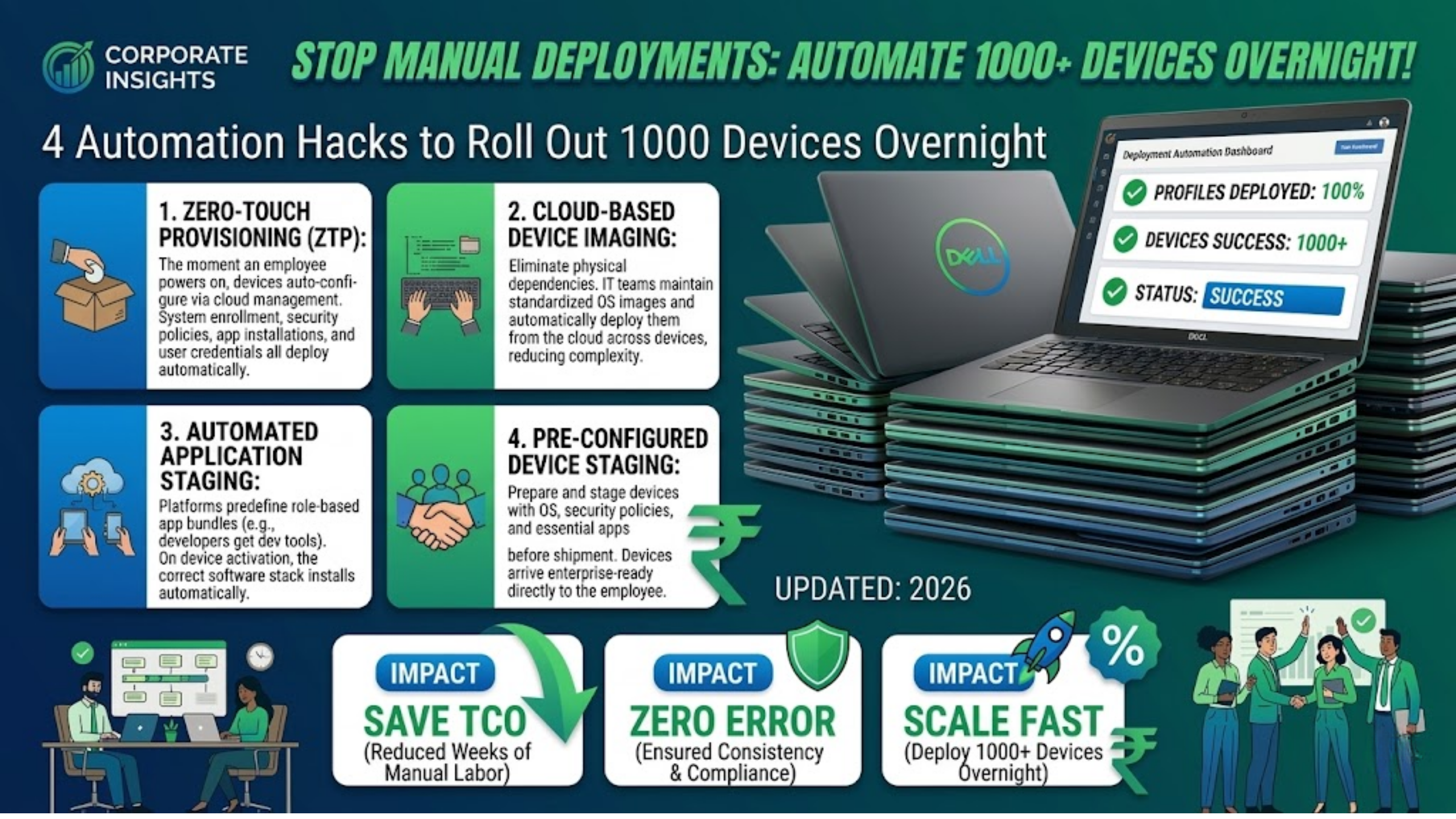
Stop Doing Manual Deployments: 4 Automation Hacks to Roll Out 1000 Devices Overnight

For many IT teams, device deployment still follows a familiar pattern.

A new batch of laptops arrives.
Boxes pile up in a conference room.
The IT team spends hours installing software, configuring policies, and preparing devices manually.

Before long, the entire team is working late nights—or even weekends—just to prepare systems for employees.

In today’s enterprise environment, this approach simply doesn’t scale.

Organizations deploying hundreds or thousands of devices across offices need a faster, more reliable way to onboard devices. Manual deployments slow down IT teams, increase errors, and delay employee productivity.

The good news? Modern IT teams are replacing these outdated methods with automation-driven deployment strategies.

With the right tools and planning, companies can now deploy thousands of devices almost overnight—without burning out their IT teams.

Why Manual Deployments Are Holding IT Teams Back

Traditional deployment methods create several challenges for enterprise IT teams.

1. Time-Consuming Setup

Configuring devices manually requires multiple steps:

  • Installing operating systems
  • Setting up security policies
  • Installing applications
  • Joining devices to corporate networks
  • Configuring user access

Even if each device takes only 45–60 minutes, deploying 500 devices can consume weeks of IT effort.

2. Higher Risk of Configuration Errors

Manual configuration increases the chance of mistakes.

Missing security policies, incorrect application versions, or misconfigured settings can lead to inconsistent user experiences—and in some cases, security vulnerabilities.

Automation ensures every device is configured exactly the same way every time.

3. Delayed Employee Productivity

When devices are not ready on day one, employees lose valuable time waiting for IT support.

For fast-growing organizations or large hiring cycles, slow deployments can create significant operational friction.

4. IT Teams Stuck in Repetitive Work

Manual deployments consume time that IT teams could spend on more strategic priorities like:

  • cybersecurity improvements
  • digital workplace initiatives
  • infrastructure modernization

Automation allows IT teams to move from device setup to business innovation.

4 Automation Hacks Modern IT Teams Are Using

Forward-thinking IT leaders are transforming device deployments using automation and modern endpoint management strategies.

Here are four approaches that are rapidly gaining adoption across Indian enterprises.

1. Zero-Touch Provisioning

Zero-touch provisioning allows devices to be automatically configured the moment they connect to the internet.

Instead of setting up devices manually, IT teams can predefine policies and configurations in a cloud management platform.

When employees power on their device for the first time:

  • the system automatically enrolls into device management
  • security policies are applied
  • corporate applications are installed
  • user credentials are configured

This means devices can go directly from the box to the employee’s desk without manual IT intervention.

For distributed teams and hybrid work environments, zero-touch provisioning dramatically simplifies device rollouts.

2. Cloud-Based Device Imaging

Traditional imaging required IT teams to physically connect devices to a local network and install operating systems manually.

Cloud imaging eliminates this dependency.

With cloud-based deployment tools, IT teams can maintain standardized operating system images and automatically deploy them across devices.

Benefits include:

  • faster setup times
  • consistent configurations across all devices
  • simplified OS updates and upgrades

For organizations managing thousands of endpoints, this approach significantly reduces deployment complexity.

3. Automated Application Staging

Installing applications manually across large device fleets can take days.

Automation platforms allow IT teams to predefine application bundles based on employee roles.

For example:

  • developers automatically receive development tools
  • sales teams receive CRM and collaboration tools
  • finance teams receive accounting and reporting applications

When the device is activated, the correct software stack installs automatically.

This ensures employees start working immediately without waiting for IT support.

4. Pre-Configured Device Staging

Another growing trend is pre-configured device staging before shipment.

Instead of shipping raw devices to offices, devices are prepared in advance with:

  • operating systems installed
  • security policies configured
  • device management enrollment completed
  • essential applications preloaded 

When the device reaches the employee, it is already enterprise-ready.

This approach is especially useful for large organizations rolling out devices across multiple cities or remote offices.

The Result: Faster Deployments, Happier IT Teams

When organizations adopt automated deployment strategies, the benefits are immediate.

Enterprises report improvements such as:

  • significantly faster device rollouts
  • reduced IT workload during large deployments
  • consistent device configurations across teams
  • improved employee onboarding experiences

Most importantly, IT teams can focus on strategic initiatives instead of repetitive setup tasks.

The Future of Enterprise Device Deployments

Enterprise workplaces are becoming more distributed and technology-driven.

Employees expect devices to work immediately and reliably from day one.

Manual deployment methods simply cannot keep up with modern enterprise demands.

Automation, cloud-based management, and standardized device strategies are now becoming the new normal for organizations that want to scale efficiently.

The Bottom Line

Rolling out hundreds—or even thousands—of devices no longer needs to be a painful process.

With modern deployment automation, IT teams can prepare entire device fleets faster, more securely, and with far fewer errors.

Because in today’s enterprise IT landscape, deployment shouldn’t require late nights, rushed configurations, or emergency troubleshooting.

It should just work.

Planning a large device rollout across your organization?

Modern device lifecycle management strategies can help automate deployments, reduce IT workload, and ensure every device is ready from day one.

Talk to the Team Computers experts to explore how automated device deployment can simplify large-scale rollouts and improve workplace productivity.

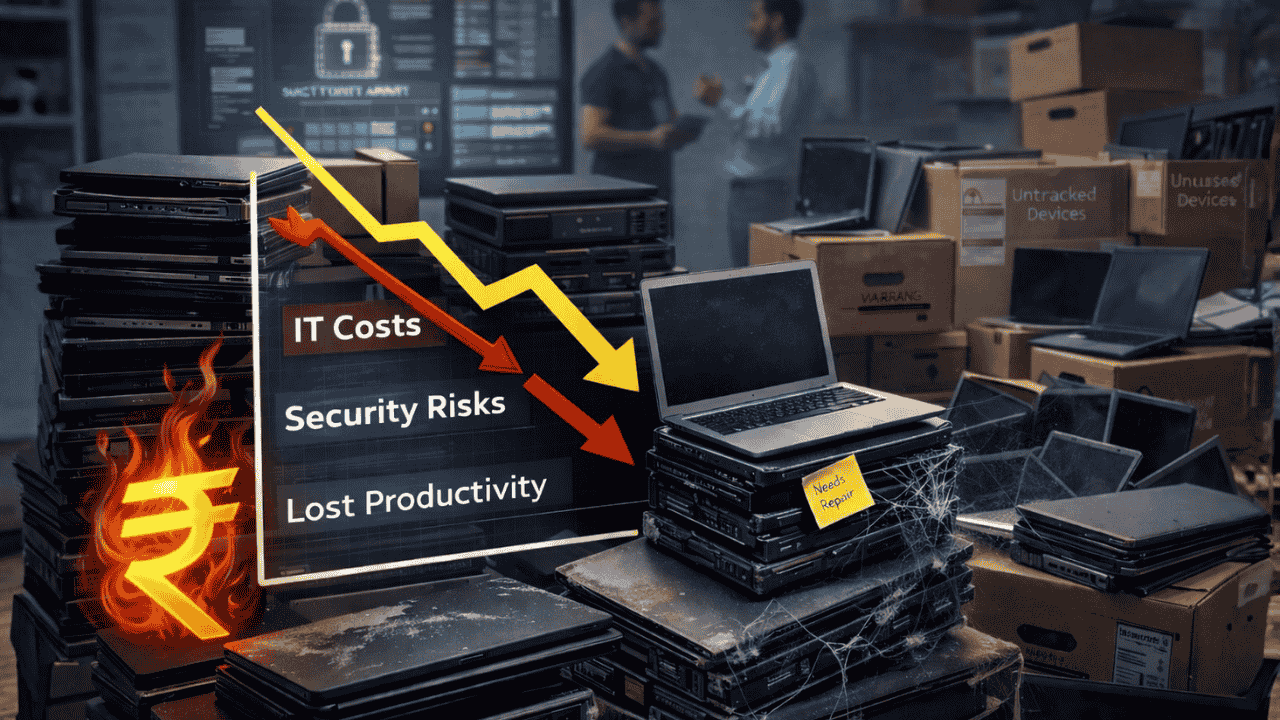
Old Devices May Be Quietly Draining Lakhs from Your IT Budget

Most IT leaders track procurement costs carefully.

But what if the real cost of devices isn’t the purchase price?

Across large organizations, outdated laptops, unmanaged endpoints, and poorly tracked devices quietly drain IT budgets every year. Individually, these issues appear minor—a slow laptop here, a support ticket there. But across hundreds or thousands of employees, the hidden cost can quickly escalate into lakhs lost annually.

For CIOs and IT leaders responsible for enterprise infrastructure, this isn’t just an operational issue. It’s a financial one.

The challenge is simple: most of these losses remain invisible in traditional IT budgeting.

The Hidden Cost of Aging Devices

Devices don’t usually fail overnight. They degrade slowly.

Performance drops. Boot times increase. Applications crash more frequently. Batteries deteriorate. Security vulnerabilities grow.

Each problem seems manageable in isolation.

But across an enterprise environment, aging devices often create four major hidden costs.

1. Productivity Loss Across Teams

Slow devices directly affect employee productivity.

Imagine an employee losing 10 minutes per day due to slow boot times, freezing applications, or system crashes.

Across a workforce of 500 employees, that equals:

  • 5,000 minutes lost daily
  • Over 1,600 hours lost every month

Multiply that by average employee cost, and the impact becomes clear. What looks like a small inconvenience quickly becomes a major operational expense.

2. Rising IT Support Costs

Older devices generate more support tickets.

Common issues include:

  • System crashes
  • Storage failures
  • Battery problems
  • OS compatibility issues
  • Application instability

IT teams often spend a disproportionate amount of time managing devices that should have been refreshed years earlier.

Instead of focusing on strategic initiatives like digital transformation or security upgrades, IT teams become stuck in constant troubleshooting cycles.

For large organizations, this means higher support costs and slower innovation.

3. Increased Security Risk

Outdated devices also create serious security exposure.

Older systems are more vulnerable because they often:

  • Miss security updates
  • Run outdated operating systems
  • Support legacy software
  • Have weaker hardware security protections

In regulated industries like BFSI, healthcare, and manufacturing, unmanaged devices can create compliance issues.

Security breaches today are rarely caused by sophisticated attacks alone. In many cases, they exploit old devices that were never upgraded or monitored properly.

4. Unplanned Replacement Costs

One of the biggest financial surprises in IT budgets comes from reactive replacements.

When devices fail unexpectedly, organizations must replace them urgently. This leads to:

  • Emergency procurement
  • Higher purchase costs
  • Delayed employee productivity
  • Increased IT workload

Reactive replacements are always more expensive than planned refresh cycles.

Without a structured device lifecycle strategy, organizations often find themselves replacing large numbers of devices suddenly—creating unpredictable budget spikes.

Why These Costs Often Go Unnoticed

The biggest challenge is visibility.

Most organizations track procurement spending, but very few track the total cost of ownership (TCO) of their devices.

Hidden costs such as:

  • employee downtime
  • IT troubleshooting hours
  • lost productivity
  • security risk exposure

are rarely captured in traditional IT reporting.

As a result, companies may believe they are saving money by delaying device upgrades—when in reality they are spending far more in indirect costs.

How Leading IT Teams Are Solving the Problem

Forward-thinking enterprises are moving away from reactive device management and adopting structured device lifecycle strategies.

Instead of treating devices as one-time purchases, they manage them as long-term assets with measurable performance and cost impact.

Here are four approaches leading IT teams are using today.

1. Device Lifecycle Tracking Across Locations

Large enterprises often operate across multiple offices, cities, or even countries.

Without proper tracking systems, devices can easily become invisible assets.

Lifecycle tracking helps IT teams monitor:

  • device age
  • performance metrics
  • warranty status
  • user assignments
  • service history

This visibility allows organizations to identify underperforming devices before they become operational problems.

2. Performance Monitoring Before Failures Occur

Modern endpoint management tools allow IT teams to monitor device performance in real time.

Metrics such as:

  • CPU utilization
  • battery health
  • storage performance
  • system errors

can indicate when a device is approaching failure.

Instead of reacting after employees experience issues, IT teams can resolve problems proactively.

3. Planned Device Refresh Cycles

Leading organizations typically follow structured 3-4 year refresh cycles for enterprise devices.

Planned refresh programs allow companies to:

  • avoid sudden large replacement costs
  • maintain consistent performance across teams
  • negotiate better pricing through bulk procurement

Most importantly, planned refresh cycles ensure that devices never reach the point where they significantly affect productivity.

5. Standardized Device Deployment

Another major improvement comes from device standardization.

When organizations deploy too many device models, IT teams face increased complexity.

Standardized deployments provide:

  • better compatibility
  • easier maintenance
  • faster troubleshooting
  • consistent user experience

This approach significantly reduces long-term support costs.

The Real Opportunity for Enterprises

For companies managing hundreds or thousands of devices, the real opportunity isn’t just buying devices smarter.

It’s managing them smarter.

Device lifecycle management focuses on the full journey of enterprise devices:

  • planning
  • procurement
  • deployment
  • monitoring
  • refresh
  • retirement

When managed strategically, this lifecycle approach helps organizations reduce hidden costs while improving operational efficiency.

Why Lifecycle Management Matters More Than Ever

Workplaces today are more digital than ever.

Employees depend on reliable devices for:

  • collaboration
  • productivity
  • security
  • customer service

A slow or failing device is no longer just an inconvenience—it directly impacts business outcomes.

That’s why enterprises are increasingly investing in structured device lifecycle management frameworks to ensure every device performs optimally throughout its life.

The Bottom Line

Sometimes the biggest IT savings don’t come from negotiating a better device price.

They come from eliminating the hidden costs that outdated devices create.

For organizations managing large device fleets, improving lifecycle visibility can reveal where money is quietly leaking—and help stop those losses before they affect productivity or budgets.

Because the real question isn’t just: “How much did we spend on devices?”

It’s: “How much are those devices costing us every day?”


If your organization manages hundreds or thousands of devices, it may be time to evaluate the hidden costs inside your device ecosystem.

A structured device lifecycle assessment can help identify:

  • aging devices affecting productivity
  • hidden support costs
  • refresh planning opportunities
  • lifecycle management improvements

Talk to the Team Computers experts to explore how smarter device lifecycle management can reduce IT costs and improve operational efficiency.

From Uptime to Outcomes: Why Experience Level Agreements (XLAs) Are Replacing SLAs

For decades, Service Level Agreements (SLAs) have been the gold standard of IT. They measure performance through cold, hard metrics: uptime percentages, response times, and ticket resolution speeds.

However, the modern workplace has moved beyond just “keeping the lights on.” Employees now rely on a complex web of cloud apps and distributed networks. In this environment, a system might technically be “up” (meeting its SLA), but if an application is lagging or a login process takes three minutes, the employee’s productivity is effectively zero.

This gap between technical metrics and actual reality is why enterprises are shifting toward Experience Level Agreements (XLAs). Unlike SLAs, which measure system performance, XLAs focus on the quality of the human experience and the business outcomes IT delivers.

The Limitations of Traditional SLAs 

Common SLA metrics like 99.9% uptime are useful for operational monitoring, but they often tell an incomplete story. For example:

  • A help desk ticket might be “resolved” within the SLA timeframe, but if the user has to call back three times, they are left frustrated.
  • An application may meet its uptime target, yet frequent micro-stutters make it unusable for a high-speed data entry team.

This highlights the “Watermelon Effect”: the dashboard looks green, but the user experience is seeing red. As organizations prioritize employee retention and digital efficiency, SLAs alone are no longer enough.

What Are Experience Level Agreements (XLAs)?

XLAs shift the focus from “Is the server running?” to “Is the employee empowered?” Instead of just tracking technical indicators, XLAs evaluate the impact of IT on the person behind the screen.

Key XLA metrics often include:

  • Sentiment Analysis: Employee satisfaction scores with specific IT touchpoints.
  • Productivity Restoration Time: Not just how fast the ticket was closed, but how quickly the user got back to full work capacity.
  • Digital Workplace Experience Scores: A holistic view of device performance and application stability from the user’s perspective.

Why Enterprises Are Moving to XLAs 

The shift is being driven by the reality of 2026:

  • The Digital Workplace: Poor tech experiences are now the leading cause of employee burnout and attrition.
  • Hybrid & Remote Work: IT must ensure a seamless experience whether an employee is in the office or on a home network.
  • Complex Ecosystems: Measuring a single server doesn’t reflect the performance of a multi-cloud environment.

The Role of AI-Driven Insights in Enabling XLAs

Moving to an XLA model requires deeper visibility than traditional monitoring tools provide. This is where the marriage of Managed Services and AIOps becomes critical.

By leveraging intelligent automation and predictive analytics, IT teams can:

  • Predict Disruptions: Detect a failing laptop battery or a degrading cloud connection before the user notices.
  • Automated Remediation: Use background scripts to fix common issues without the user ever needing to raise a ticket.
  • Sentiment Tracking: Correlate technical data with user feedback to identify exactly where the friction is occurring.

SLA vs. XLA: A Quick Comparison

While Service Level Agreements (SLAs) and Experience Level Agreements (XLAs) both aim to measure the effectiveness of IT services, they focus on very different aspects of performance.

Traditional SLAs primarily measure system performance. They track technical metrics such as uptime, response time, and incident resolution time to ensure that infrastructure and services remain available. The primary objective of an SLA is to ensure that operational targets are met and that IT systems function within predefined service thresholds.

XLAs, on the other hand, shift the focus from infrastructure performance to user experience. Instead of evaluating only technical availability, XLAs measure how IT services impact employee productivity and satisfaction. Metrics in an XLA framework often include user feedback, digital workplace experience, and the time it takes for employees to regain productivity after an issue occurs.

In essence, SLAs focus on whether systems are running, while XLAs focus on how effectively those systems support the people using them. This shift from operational metrics to outcome-driven measurements enables organizations to align IT services more closely with business performance and employee experience.

Conclusion 

In a digital-first world, success is no longer measured by how many tickets you closed, it’s measured by how few tickets were needed in the first place. Experience Level Agreements (XLAs) represent a necessary evolution in IT Service Management, aligning technology with the people it serves.

Ready to close the gap between your IT metrics and your employee experience? Discover how Team Computers Managed Services, powered by our intelligent automation engine ZerofAI, can help your organization transition to an outcome-driven IT strategy that prioritizes user productivity and business growth.

Why Managed IT Services Are Becoming the Backbone of Enterprise IT Strategy

Enterprise IT environments have undergone a fundamental transformation over the past decade. Organizations are no longer managing isolated data centers or limited application stacks. Instead, they operate complex digital ecosystems that include hybrid cloud infrastructure, distributed workforces, cybersecurity frameworks, and real-time business applications.

Managing this complexity while ensuring uptime, performance, and security has become a major challenge for IT leaders. CIOs today are not only responsible for maintaining technology infrastructure but also for enabling innovation, supporting digital transformation, and improving operational efficiency.

This is why Managed IT Services are rapidly becoming a strategic pillar of enterprise IT strategy. By partnering with experienced managed service providers, organizations can ensure proactive monitoring, infrastructure optimization, and intelligent automation across their technology environments.

With the support of advanced platforms like ZerofAI, enterprises can move beyond reactive IT management and adopt predictive, data-driven operations that enhance reliability and performance.

The Shift from IT Management to IT Strategy

For many years, internal IT teams primarily focused on operational tasks such as maintaining servers, managing networks, and resolving technical issues.

However, as organizations adopt new technologies and digital business models, the role of IT has evolved significantly.

Today’s IT leaders must focus on:

  • Enabling digital transformation initiatives
  • Supporting hybrid and remote work environments
  • Strengthening cybersecurity frameworks
  • Managing hybrid and multi-cloud infrastructure
  • Delivering continuous technology innovation

This strategic shift requires IT teams to move away from routine infrastructure management and focus on initiatives that drive business growth.

Managed IT Services help organizations achieve this transition by handling operational complexities while enabling internal teams to focus on strategic priorities.

Why Enterprises Are Turning to Managed IT Services

Organizations across industries are increasingly adopting Managed IT Services to address the growing demands of modern IT environments.

Several factors are driving this shift.

Infrastructure Complexity

Modern enterprise infrastructure spans data centers, cloud platforms, networks, and endpoints. Managing these interconnected systems requires specialized expertise and continuous monitoring.

Demand for 24×7 Availability

Digital services must remain operational at all times. Even brief disruptions can impact productivity, revenue, and customer experience.

Skill Shortages

Finding and retaining specialized IT talent can be difficult. Managed service providers bring experienced professionals with expertise across multiple technology domains.

Cost Optimization

Managed services provide predictable operational costs while eliminating the need for large internal infrastructure management teams.

Key Capabilities of Modern Managed IT Services

Today’s managed services go far beyond traditional infrastructure support. Modern managed service providers deliver integrated solutions designed to enhance performance, security, and scalability.

Proactive Infrastructure Monitoring

Continuous monitoring ensures that infrastructure issues are detected early and resolved before they affect business operations.

Network Operations and Performance Management

Managed service providers maintain network reliability and optimize performance across distributed environments.

Cloud and Hybrid Infrastructure Management

Organizations rely on managed services to maintain visibility and control across complex cloud architectures.

Endpoint and Workplace Management

Supporting distributed workforces requires centralized monitoring and device management capabilities.

Many enterprises now combine managed services with intelligent automation platforms like ZerofAI, which use machine learning and analytics to identify anomalies and automate incident resolution.

The Role of Automation and AIOps in Managed Services

As IT environments grow more complex, automation has become a critical component of modern infrastructure management.

Artificial Intelligence for IT Operations (AIOps) enables organizations to analyze vast amounts of operational data and identify patterns that indicate potential issues.

Platforms like ZerofAI enhance managed services capabilities by:

  • Detecting anomalies in infrastructure performance
  • Predicting potential system failures
  • Automating incident detection and resolution
  • Providing real-time operational insights

These capabilities allow organizations to shift from reactive IT management to predictive and autonomous IT operations, significantly improving system reliability.

Business Outcomes CIOs Expect from Managed IT Services

When implemented effectively, Managed IT Services deliver measurable business value beyond operational efficiency.

Improved IT Resilience

Continuous monitoring and predictive analytics ensure infrastructure stability and reduce the risk of outages.

Faster Innovation

By outsourcing operational tasks, internal IT teams can focus on innovation and digital transformation initiatives.

Stronger Security Posture

Managed services providers implement continuous monitoring frameworks that detect and respond to security threats more effectively.

Scalable Technology Infrastructure

Organizations can quickly scale infrastructure capabilities to support business growth without significant internal investments.

Choosing the Right Managed Services Partner

While Managed IT Services offer clear advantages, selecting the right provider is critical to achieving long-term success.

Organizations should evaluate partners based on:

  • Infrastructure and cloud expertise
  • Proactive monitoring capabilities
  • Automation and AIOps integration
  • Security and compliance frameworks
  • Ability to scale alongside business growth

A strategic managed services partner should not only maintain infrastructure but also help organizations continuously optimize and modernize their technology environments.

As enterprise technology environments continue to evolve, organizations must adopt smarter approaches to managing infrastructure and operations.

Managed IT Services have emerged as a critical component of modern IT strategy, enabling businesses to maintain reliable infrastructure while focusing on innovation and growth.

Key takeaways include:

  • Enterprise IT environments are becoming increasingly complex
  • Managed services enable proactive infrastructure management
  • Automation and AIOps improve operational efficiency and reliability
  • Platforms like ZerofAI help organizations achieve predictive IT operations

By partnering with an experienced managed services provider, organizations can build resilient, scalable, and future-ready technology environments that support long-term digital success.

Looking to strengthen your enterprise IT strategy?

Discover how Managed IT Services from Team Computers, powered by an intelligent automation platform like ZerofAI, can help your organization maintain resilient infrastructure, improve operational efficiency, and accelerate digital transformation.

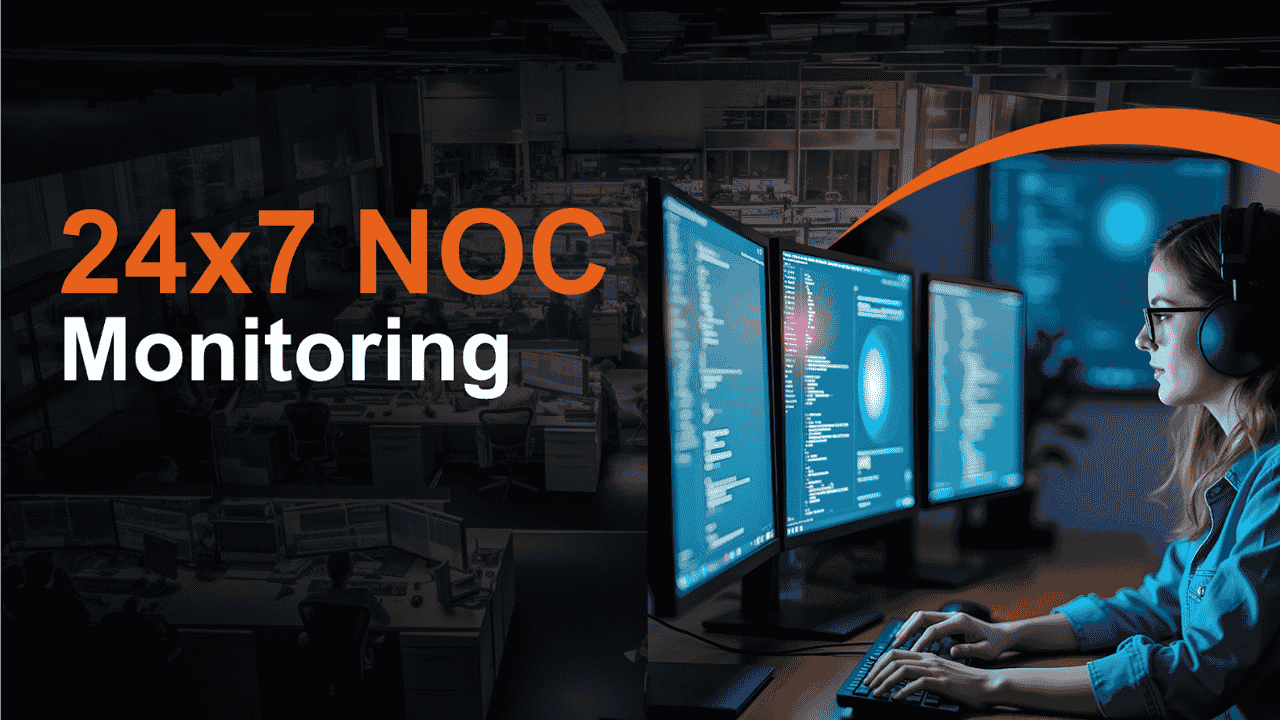
24×7 NOC Monitoring: The Foundation of Reliable IT Infrastructure

 Modern enterprises depend heavily on technology to drive customer experiences and daily operations. From cloud environments to complex on-premise networks, every component must function flawlessly. However, as IT environments scale, manual monitoring becomes an impossible task. A single system failure at 3:00 AM can lead to hours of downtime, lost revenue, and damaged reputation.

This is why 24×7 NOC Monitoring is no longer a luxury, it is a necessity. A dedicated Network Operations Center (NOC) ensures that your infrastructure is watched, managed, and optimized every second of the day, moving your IT strategy from reactive “firefighting” to proactive management.

What Is a Network Operations Center (NOC)?

A Network Operations Center is the heartbeat of IT reliability. It is a centralized hub where specialized engineers monitor and manage an organization’s entire digital ecosystem.

Key areas of focus include:

  • Network Performance: Ensuring seamless connectivity and bandwidth availability.
  • Server & Data Center Health: Monitoring physical and virtual server uptime.
  • Cloud & Application Tiers: Tracking performance across hybrid and multi-cloud environments.
  • Security Alerts: Identifying unauthorized access or unusual traffic patterns.

Why 24×7 NOC Monitoring Is Essential for Enterprises

In a global economy, “business hours” don’t exist. Your infrastructure must be as resilient as your ambitions.

  • Always-On Business: With customers and employees across time zones, a midnight crash in one region is a midday crisis in another.
  • Infrastructure Complexity: The mix of legacy systems and modern cloud apps requires sophisticated, continuous oversight.
  • Rapid Incident Mitigation: The goal of 24×7 monitoring isn’t just to see a problem—it’s to solve it before the end-user even notices.

Key Functions of Effective NOC Monitoring

A high-performing NOC does more than just watch green lights. It performs several critical roles:

  1. Continuous Infrastructure Tracking: Real-time visibility into every node of your network.
  2. Intelligent Alerting: Filtering through the “noise” to identify high-priority issues that require immediate action.
  3. Root Cause Analysis: Not just fixing the symptom, but identifying why the failure occurred to prevent it from happening again.
  4. Performance Optimization: Using historical data to suggest infrastructure upgrades or configuration changes.

Benefits of Professional 24×7 Monitoring

Partnering with a managed services provider for NOC monitoring offers distinct advantages:

  • Drastic Reduction in Downtime: Proactive detection means fewer outages.
  • Operational Cost Savings: Eliminates the need for an expensive, in-house, round-the-clock IT shift.
  • Enhanced Security: Constant vigilance over system logs helps catch threats early.
  • Scalability: As your business grows, your monitoring scales with you without adding internal overhead.

The Shift Toward Proactive IT Operations

Traditional monitoring is reactive, fixing things when they break. Modern NOC services have evolved. By utilizing advanced automation and data analytics, today’s NOC can predict potential failures. This transition to “Predictive IT” ensures that maintenance happens before a crash, not after.

Reliable IT infrastructure is the backbone of digital growth. 24×7 NOC Monitoring provides the visibility and control needed to stay competitive in an era where downtime is not an option. By integrating continuous monitoring into your operations, you ensure that your technology supports your business goals rather than hindering them.

Is your IT infrastructure ready for the demands of a 24×7 world? Discover how Team Computers Managed Services provides robust, proactive NOC monitoring to keep your business running at peak performance—day and night.

Why the Right IT Partner Matters for Large-Scale Device Deployment

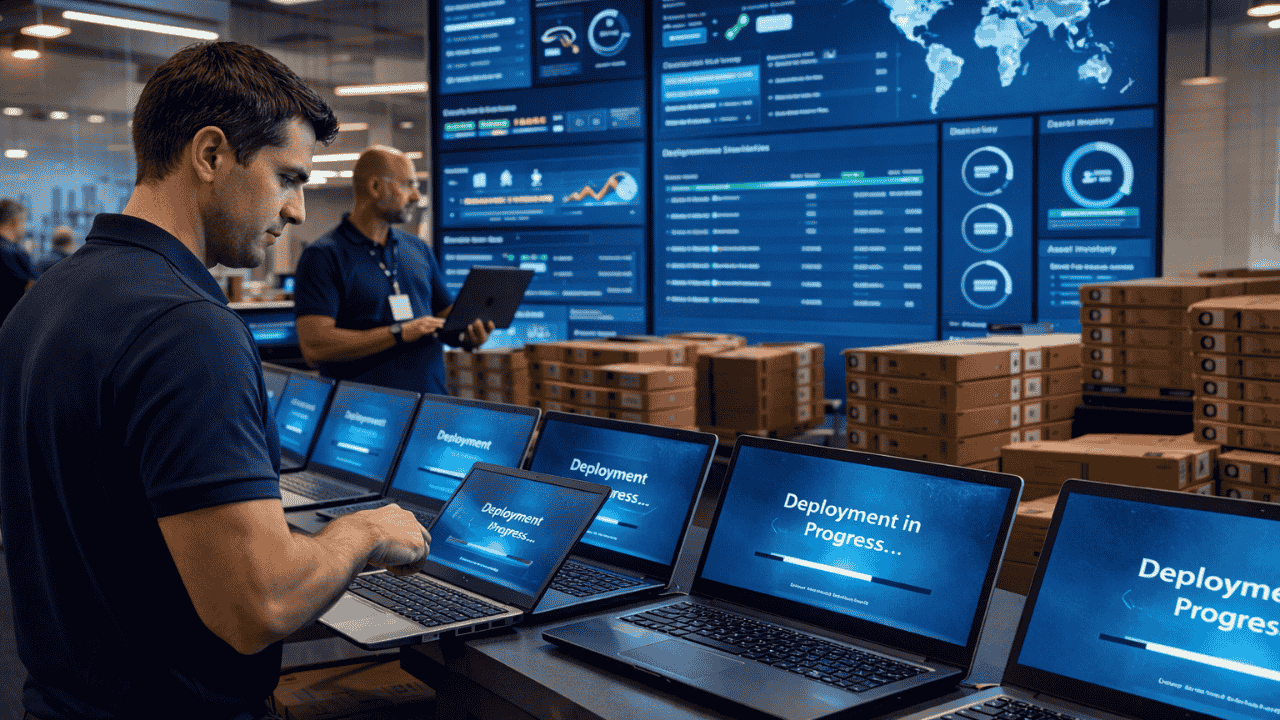
Device rollouts are rarely simple in large organizations. A company may purchase hundreds or even thousands of laptops, desktops, or tablets in a single procurement cycle. The real challenge begins after the purchase—deploying these devices efficiently across teams, offices, and locations.

For IT heads managing multiple branches, device deployment is not just about distributing hardware. It involves configuration, security policies, software installation, asset tracking, and user readiness.

This is where the role of the right IT partner for device deployment becomes critical.

Organizations that attempt large-scale deployments without experienced partners often face delays, configuration issues, and operational disruptions. In contrast, enterprises that work with the right IT deployment partner can roll out devices faster, maintain security standards, and ensure employees are productive from day one.

The Complexity of Enterprise Device Deployment

At first glance, deploying devices may appear straightforward: procure the hardware and hand it over to employees.

In reality, enterprise deployments involve multiple technical and operational layers, such as:

  • Device imaging and configuration
  • Operating system installation and updates
  • Security and compliance policies
  • Application deployment
  • Network configuration
  • Asset tagging and tracking

For organizations with multiple offices across different cities, managing these steps internally can quickly become resource-intensive.

An experienced IT partner for device deployment brings structured processes and technical expertise that simplify these tasks.

Device Deployment Without the Right IT Partner

Many organizations initially attempt device deployment using internal IT teams. While this approach may work for small deployments, it often becomes difficult to manage at scale.

Several challenges typically emerge.

Deployment Delays

Internal IT teams already manage daily operations such as helpdesk support, system maintenance, and security monitoring. Large device rollouts add significant workload, often leading to delays in provisioning and distribution.

Employees may wait days or even weeks to receive fully functional devices.

Inconsistent Device Configuration

Without standardized deployment processes, devices may be configured differently across teams or locations. Some systems may lack required applications, while others may not meet security compliance standards.

This inconsistency creates long-term management challenges for IT teams.

Limited Visibility Across Locations

Organizations with multiple offices often struggle to maintain visibility over where devices are deployed, who is using them, and whether they are configured correctly.

This lack of visibility can lead to asset mismanagement and inefficient hardware utilization.

Higher Operational Burden

Internal IT teams may spend excessive time configuring devices manually, troubleshooting setup issues, or responding to deployment-related support tickets. Over time, this diverts attention from strategic initiatives.

Device Deployment with the Right IT Partner

Working with an experienced IT partner for device deployment changes the entire process. Instead of managing deployment manually, organizations benefit from structured workflows, automation, and scalable infrastructure.

Faster Device Rollouts

Deployment partners use preconfigured imaging, automated provisioning tools, and centralized deployment frameworks. This allows devices to be prepared in bulk and delivered ready for immediate use.

Employees receive devices that are fully configured and operational from day one.

Standardized Configuration

An IT deployment partner ensures that every device follows the same configuration standards. This includes operating systems, security settings, enterprise applications, and network policies.

Standardization simplifies device management and reduces long-term support issues.

Seamless Multi-Location Deployment

For enterprises with offices across Tier 1 cities and regional locations, logistics and coordination become critical.

The right partner manages device distribution, staging, and deployment across locations. Devices arrive pre-configured and ready to be used without requiring extensive on-site IT intervention.

Improved Security and Compliance

Deployment partners implement security policies during the configuration stage. This ensures devices meet enterprise security requirements before they are issued to employees.

From encryption policies to endpoint protection software, devices are secured from the beginning.

Reduced IT Workload

Perhaps the biggest benefit for enterprise IT teams is operational relief. When a trusted deployment partner manages large-scale rollouts, internal IT teams can focus on strategic initiatives rather than manual device setup.

Comparing Deployment Approaches

The difference between managing deployments internally and working with the right partner is often significant.

Without an IT Partner

With the Right IT Partner

Manual device configuration Automated bulk provisioning
Deployment delays Faster rollout timelines
Inconsistent system setups Standardized device configuration
Limited asset visibility Centralized tracking and reporting
Higher IT workload Reduced operational burden


For organizations managing hundreds or thousands of devices, this difference directly impacts productivity and operational efficiency.

Beyond Deployment: Long-Term Device Management

The right IT partner for device deployment often supports organizations beyond the initial rollout.

Many enterprises extend the partnership to include services such as:

  • Device lifecycle management
  • Remote device monitoring
  • Warranty and support coordination
  • Device refresh planning
  • Endpoint security management

This long-term approach ensures devices remain optimized throughout their lifecycle, rather than becoming operational challenges after deployment.

What IT Leaders Should Look for in a Deployment Partner

Choosing the right partner is critical for successful deployments. IT leaders typically evaluate partners based on several factors.

Experience with large-scale enterprise deployments is essential. The partner should have proven capabilities in managing rollouts across multiple offices and locations.

Strong vendor partnerships also matter. Deployment partners who work closely with device manufacturers can streamline procurement, imaging, and warranty support.

Finally, logistics and service capabilities are important. The partner must be able to manage device staging, configuration, delivery, and installation efficiently.

Conclusion

Device procurement is only the first step in building a productive IT environment. The real challenge lies in deploying those devices efficiently across teams, locations, and business units.

Organizations that attempt large-scale deployments without specialized support often encounter delays, inconsistent configurations, and increased operational pressure on internal IT teams.

Working with the right IT partner for device deployment simplifies this process. Through structured workflows, standardized configurations, and scalable deployment infrastructure, enterprises can roll out devices faster and more efficiently.

For IT leaders managing distributed workplaces, the right partner ensures that technology reaches employees ready to perform—securely, consistently, and without disruption.

The Hidden Costs of Bulk Device Purchasing Without Proper Management

For most growing enterprises, bulk device procurement is a routine exercise. Whether it is laptops for new employees, tablets for frontline teams, or desktops for branch offices, IT and procurement teams frequently purchase devices in large volumes to support expansion.

At first glance, bulk purchasing seems efficient. Organizations secure better pricing, simplify vendor negotiations, and standardize hardware across teams.

However, many enterprises overlook a critical aspect after procurement: device lifecycle management.

Without a structured approach to tracking, maintaining, and securing devices across their lifecycle, organizations often face hidden operational costs. These costs rarely appear in the procurement budget but surface later through downtime, security incidents, asset loss, and support inefficiencies.

For IT heads managing multiple offices and thousands of endpoints, ignoring lifecycle management can quickly turn a cost-saving decision into a long-term operational challenge.

Bulk Procurement: Only the First Step

Bulk procurement solves one problem—hardware acquisition. But devices continue to generate operational responsibilities long after they are delivered.

Once deployed, each device requires:

  • Configuration and onboarding
  • Security policy enforcement
  • Software updates and patching
  • Asset tracking
  • Technical support
  • Replacement planning

Without proper device lifecycle management, IT teams struggle to maintain visibility over these processes.

In organizations with distributed offices, this lack of control becomes even more pronounced. Devices may move between teams, remain unused, or operate with outdated software—all of which increase risk and inefficiency.

Hidden Cost #1: Lost Asset Visibility

One of the most common issues in large enterprises is losing track of devices after deployment.

When organizations purchase hundreds or thousands of devices in bulk but lack centralized tracking systems, IT teams often face questions such as:

  • Which employee currently has the device?
  • Is the device still active?
  • Has it been reassigned or replaced?
  • Is it still under warranty?

Without proper asset visibility, organizations may unknowingly purchase new devices while existing ones remain unused.

This leads to unnecessary capital expenditure and poor asset utilization.

A structured device lifecycle management system helps maintain a real-time inventory of all endpoints, ensuring devices are used effectively across teams and locations.

Hidden Cost #2: Increased IT Support Burden

Unmanaged devices tend to create more support tickets.

Employees may operate outdated operating systems, miss critical patches, or install unauthorized software. When devices are not monitored centrally, IT teams often learn about these issues only after they disrupt productivity.

For organizations with multiple branch offices, the situation becomes even more complex. Supporting devices across locations without centralized management increases response time and operational overhead.

With proper lifecycle management, IT teams can automate updates, enforce security policies, and monitor device health remotely. This significantly reduces the support workload and ensures devices remain reliable.

Hidden Cost #3: Security and Compliance Risks

Security risks increase significantly when devices are not actively managed.

Unpatched operating systems, outdated applications, or unsecured devices can become entry points for cyber threats. In industries such as BFSI, healthcare, or manufacturing, these vulnerabilities may also lead to compliance violations.

A single compromised device can expose sensitive corporate data or disrupt business operations.

A robust device lifecycle management strategy ensures that:

  • Security patches are applied regularly
  • Devices comply with corporate security policies
  • Lost or stolen devices can be remotely locked or wiped

This proactive approach reduces security risks and protects enterprise data.

Hidden Cost #4: Device Downtime and Productivity Loss

Device failures often occur gradually. Batteries degrade, storage fills up, and system performance declines over time.

Without lifecycle monitoring, IT teams typically react only when devices fail completely. This results in unexpected downtime and lost productivity for employees.

For frontline teams or customer-facing roles, even short disruptions can affect business performance.

Lifecycle management enables IT teams to monitor device health, anticipate failures, and schedule replacements proactively. This ensures minimal disruption to day-to-day operations.

Hidden Cost #5: Inefficient Device Replacement Cycles

Most enterprises follow informal replacement cycles based on employee complaints or device failures. While this may seem practical, it often leads to inconsistent hardware performance across teams.

Some employees may use outdated devices for years, while others receive upgrades prematurely.

Without proper lifecycle data, IT teams cannot accurately determine when devices should be replaced.

A structured device lifecycle management framework provides insights into device age, performance trends, and warranty status. This allows organizations to plan upgrades strategically rather than reactively.

Hidden Cost #6: Warranty and Support Mismanagement

Bulk device purchases often include warranties and vendor support agreements. However, these benefits are frequently underutilized because organizations fail to track them properly.

Devices may remain unused during their warranty period or may require repairs after the warranty expires.

This leads to avoidable repair costs.

Lifecycle management systems track warranty coverage, enabling IT teams to take timely action when devices require service or replacement.

Building an Effective Device Lifecycle Strategy

For enterprises managing large device fleets, device lifecycle management must be integrated into IT operations from day one.

A strong lifecycle strategy typically includes:

  • Centralized device inventory tracking
  • Automated provisioning and onboarding
  • Remote monitoring and management
  • Regular patching and updates
  • Planned device refresh cycles

These processes ensure that devices remain secure, efficient, and productive throughout their lifecycle.

Why IT Leaders Are Prioritizing Lifecycle Management

For IT heads and procurement leaders, the focus is gradually shifting from device procurement to device optimization.

The goal is not just to buy devices at the best price but to ensure those devices deliver value throughout their operational life.

When implemented correctly, device lifecycle management helps organizations:

  • Improve asset utilization
  • Reduce IT support workload
  • Strengthen security posture
  • Extend device lifespan
  • Plan upgrades more efficiently

These benefits translate into lower operational costs and better overall productivity.

Conclusion

Bulk device procurement may seem like a straightforward cost-saving strategy, but without proper management, it often leads to hidden operational expenses.

From lost assets and increased support requests to security risks and unplanned downtime, unmanaged devices create challenges that affect both IT teams and business operations.

A structured device lifecycle management approach ensures that organizations maintain visibility, security, and performance across their entire device fleet.

For enterprises managing thousands of endpoints across multiple offices, this shift is no longer optional. It is essential for maintaining operational efficiency and maximizing the return on technology investments.

The Future of Hybrid Work: Leveraging Audio Visual Solutions Integration for Seamless Collaboration

Hybrid work is no longer a temporary adjustment. For most enterprises, it has become the default operating model. Teams now work across multiple offices, home environments, and client locations. Leadership meetings often include participants joining from different cities or time zones.

While hybrid work offers flexibility and scalability, it also creates a new challenge: ensuring that collaboration remains seamless regardless of location.

This is where Audio Visual Solutions integration for hybrid work becomes critical. Modern audio-visual solutions enable organizations to connect distributed teams through clear communication, reliable video meetings, and collaborative digital workspaces. When implemented correctly, Audio Visual Solutions infrastructure removes the friction between physical meeting rooms and remote participation.

For IT leaders and workplace decision-makers, the objective is straightforward—build collaboration environments that work reliably across offices, meeting rooms, and remote users.

Hybrid Work: The New Workplace Reality

Hybrid work blends traditional office environments with remote work flexibility. Employees may work from headquarters on certain days and connect virtually the rest of the week.

For large enterprises with multiple offices, this approach allows teams to remain productive without being restricted to a single location. However, it also changes how meetings are conducted.

A typical meeting today may involve:

  • Leadership teams in a boardroom
  • Regional managers joining remotely
  • External partners connecting through video conferencing
  • Teams sharing dashboards or documents in real time

Without the right technology infrastructure, these interactions can become fragmented and inefficient. Audio Visual Solutions integration for hybrid work ensures that all participants experience meetings with the same clarity and engagement.

Why Seamless Collaboration Matters

One of the biggest risks in hybrid environments is the disconnect between in-room and remote participants. If meeting rooms are not designed for hybrid collaboration, remote attendees often struggle to see discussions clearly or contribute effectively.

Seamless collaboration ensures that every participant—regardless of location—has equal visibility and voice in the conversation.

For enterprise IT teams, this means designing meeting spaces that support:

  • Clear video communication
  • Balanced audio capture across the room
  • Easy content sharing
  • Integration with collaboration platforms like Microsoft Teams or Zoom

When these elements work together, meetings become more productive and inclusive.

Audio Visual Solutions Integration: The Backbone of Hybrid Collaboration

Audio-visual technology forms the foundation of modern collaboration environments. In hybrid workplaces, Audio Visual Solutions systems ensure that communication remains consistent across physical meeting rooms and virtual meeting platforms.

A well-designed Audio Visual Solutions integration for hybrid work typically includes intelligent video systems, advanced audio solutions, and interactive collaboration tools.

These technologies help replicate the experience of being in the same room—even when participants are spread across locations.

Key Audio Visual Solutions Technologies Enabling Hybrid Work

Several Audio Visual Solutions technologies play a central role in supporting hybrid collaboration within enterprises.

Video Conferencing Systems

Video conferencing platforms such as Microsoft Teams and Zoom hAudio Visual Solutionse become essential tools for enterprise communication.

Modern meeting rooms are equipped with intelligent cameras that automatically frame participants and adjust views based on who is speaking. This creates a more natural meeting experience for remote attendees.

Advanced Audio Systems

Clear audio is essential for productive discussions. Enterprise meeting rooms now use microphone arrays and speaker systems designed specifically for conferencing environments.

Noise suppression, echo cancellation, and directional microphones ensure that conversations remain clear—even in large boardrooms or conference spaces.

Interactive Displays and Digital Whiteboards

Interactive displays allow teams to collaborate visually during meetings. Participants can annotate presentations, draw ideas, or work through concepts in real time.

These tools are particularly useful for brainstorming sessions, strategy discussions, and design reviews.

Emerging Technologies: VR and AR

While still evolving, virtual reality (VR) and augmented reality (AR) technologies are beginning to influence collaboration environments. These tools can create immersive meeting spaces where remote participants interact with digital content in more engaging ways.

Although not yet mainstream in enterprise collaboration, they signal how hybrid workspaces may evolve in the coming years.

Common Challenges in Hybrid Collaboration

Despite the benefits, hybrid collaboration comes with operational challenges that organizations must address.

Maintaining Equal Participation

Remote employees sometimes feel disconnected from in-room discussions. Without proper camera placement and audio coverage, their presence in meetings becomes limited.

Modern Audio Visual Solutions systems must ensure that remote participants are clearly visible and audible throughout the meeting.

Technical Compatibility Issues

Different devices, operating systems, and meeting platforms can create compatibility problems. Standardized Audio Visual Solutions solutions across offices help reduce these issues and simplify meeting room usage.

Engagement Imbalance

Meetings often lean toward in-room discussions, leAudio Visual Solutionsing remote participants less engaged. Integrated collaboration tools such as digital whiteboards and shared presentations help maintain active participation from all attendees.

Designing Audio Visual Solutions-Enabled Hybrid Workspaces

For organizations with multiple offices, designing effective collaboration environments requires careful planning.

Meeting rooms should be equipped with strategically placed cameras and distributed microphones to capture conversations naturally. Large displays ensure both presentations and remote participants remain visible during meetings.

Room layouts should also support hybrid participation. This includes ensuring sightlines to cameras, adequate lighting for video clarity, and minimal background noise.

Most importantly, the technology must remain simple for end users. Complicated systems reduce adoption and increase dependency on IT support.

Business Benefits of Audio Visual Solutions Integration

Investing in Audio Visual Solutions integration for hybrid work delivers measurable operational benefits for enterprises.

First, communication becomes significantly clearer. High-quality video and audio reduce misunderstandings and improve meeting outcomes.

Second, productivity improves as teams spend less time dealing with technical issues and more time focusing on discussions.

Third, organizations reduce trAudio Visual Solutionsel costs by enabling effective virtual collaboration across offices.

Finally, employees experience greater flexibility without losing the sense of connection with their teams.

For enterprises managing distributed teams, these benefits directly impact efficiency and employee satisfaction.

The Future of Audio Visual Solutions in Hybrid Work

The future of workplace collaboration will be driven by advancements in AI, cloud connectivity, and intelligent automation.

Artificial intelligence is already improving video conferencing through features such as speaker tracking, background noise reduction, and automatic meeting summaries.

Faster connectivity through technologies like 5G will further enhance the reliability of remote collaboration.

As these technologies mature, Audio Visual Solutions integration for hybrid work will become even more immersive, enabling meetings that feel almost identical to in-person interactions.

Conclusion

Hybrid work is not just a trend—it is the long-term reality for modern enterprises. Organizations must therefore rethink how meeting spaces and collaboration tools are designed.

Audio Visual Solutions integration plays a critical role in bridging the gap between physical offices and remote teams. By combining advanced video systems, professional audio solutions, and interactive collaboration tools, enterprises can create environments where communication remains clear and inclusive.

For IT leaders responsible for workplace infrastructure, investing in the right Audio Visual Solutions ecosystem ensures that teams can collaborate effectively—whether they are in the boardroom, another office, or working remotely.

Why Enterprise Workflow Automation Is the Key to Faster Business Operations

In many enterprises, critical business processes still rely on manual coordination between systems. Employees transfer data between applications, update spreadsheets, and send emails to trigger the next step in a workflow.

These manual processes slow operations and increase the risk of human error.

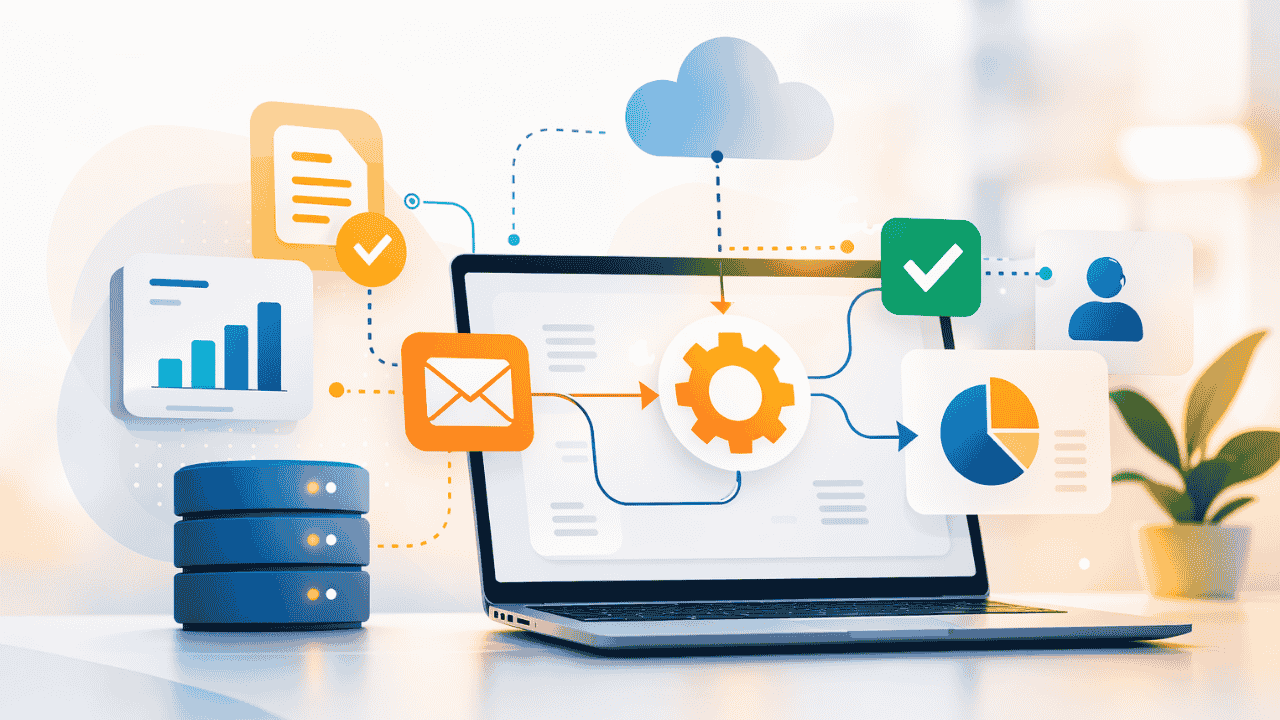
Enterprise Workflow Automation addresses this challenge by connecting systems so that processes execute automatically.

When supported by systems integration, workflows can move seamlessly between enterprise applications – triggering actions, updating data, and notifying teams without manual intervention.

Studies show that organizations implementing workflow automation can reduce operational processing times by [STAT: up to 40%].

This blog explores how Enterprise Workflow Automation powered by systems integration enables organizations to streamline operations and improve productivity.

Why Manual Workflows Limit Enterprise Productivity

Many enterprise processes involve coordination across multiple systems and departments, which can make workflows complex and time-consuming. Common examples include employee onboarding, customer order processing, invoice approvals, and supply chain coordination, all of which often require data to move between several applications. When these workflows depend heavily on manual actions, organizations face several operational challenges.

Teams may deal with repetitive administrative tasks, delayed approvals, and inconsistent data updates across systems, leading to inefficiencies and errors. As a result, employees spend a significant portion of their time performing routine activities that automation could easily handle. This lack of streamlined processes ultimately reduces productivity, slows operational efficiency, and limits business growth.

By implementing integrated automation frameworks, enterprises can significantly improve workflow performance and operational outcomes. For deeper insights, see Driving Operational Efficiency Through Enterprise Systems Integration.

How Systems Integration Enables Enterprise Workflow Automation

Enterprise workflow automation relies on integrated enterprise systems that allow applications to communicate seamlessly with one another. When systems such as CRM, ERP, HR platforms, and accounting tools are connected, organizations can automate processes end-to-end without manual intervention.

For example, in customer order processing, orders placed through digital platforms can automatically update CRM, ERP, and inventory systems in real time. In finance operations, invoices generated in accounting platforms can trigger automated approval workflows, reducing delays and administrative effort.

Similarly, during HR onboarding, employee information entered into HR systems can automatically provision access to enterprise applications and internal tools. These integrated workflows significantly improve operational speed while minimizing manual tasks.

As a result, organizations adopting Enterprise Workflow Automation experience measurable efficiency gains, including reduced operational costs, improved process accuracy, faster business operations, and enhanced employee productivity, as teams are freed from repetitive tasks and can focus on higher-value strategic work.

How Team Computers Supports Workflow Automation Initiatives

Team Computers helps enterprises implement Enterprise Workflow Automation solutions powered by robust systems integration. By connecting critical business applications and infrastructure, we enable organizations to automate complex processes and improve operational efficiency.

Our capabilities include enterprise application integration, workflow orchestration frameworks, and hybrid infrastructure integration, ensuring seamless communication between systems across cloud and on-premise environments.

By bringing enterprise systems together into cohesive, automated workflows, we help organizations streamline operations, reduce manual intervention, and scale their business processes more efficiently. For deeper insights, explore: Hybrid IT Systems Integration for Scalable Enterprise Infrastructure.

Manual workflows can significantly slow enterprise operations.

By implementing Enterprise Workflow Automation powered by systems integration, organizations can transform fragmented processes into streamlined digital workflows.

Key takeaways:

  • Automation eliminates repetitive manual tasks
  • Integrated systems enable seamless workflows
  • Operational efficiency improves across departments
  • Organizations gain faster and more reliable processes

Explore how Team Computers can help automate enterprise workflows through intelligent systems integration, enabling faster operations and greater productivity across your organization.