What to Look for in Enterprise Systems Integration Services Introduction

Modern enterprises rely on a wide range of digital technologies to manage operations, deliver customer experiences, and support business growth. From ERP systems and customer relationship management platforms to cloud infrastructure and data analytics tools, organizations deploy multiple technologies across different departments.

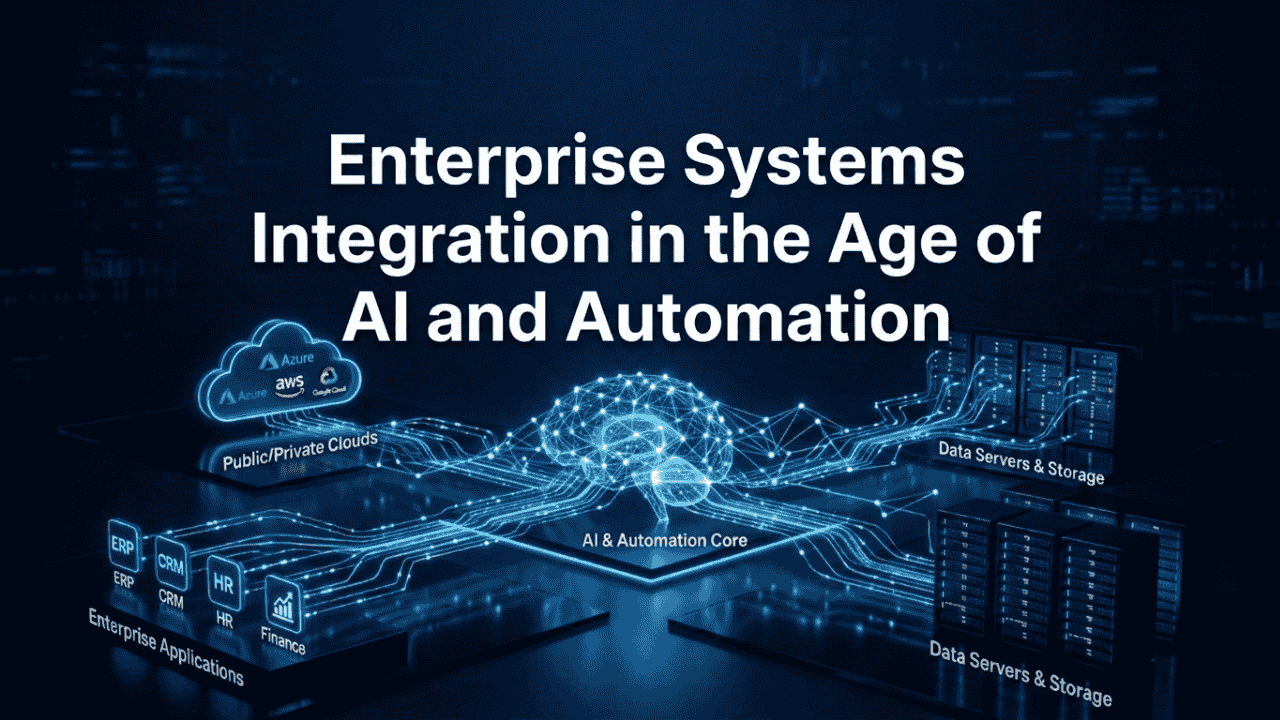
However, when these systems operate independently, enterprises often face fragmented workflows, inconsistent data environments, and operational inefficiencies. To overcome these challenges, organizations increasingly rely on enterprise systems integration services that connect applications, infrastructure, and data into a unified technology ecosystem.

Selecting the right integration services is a crucial decision for businesses undergoing digital transformation. The right integration partner helps organizations streamline operations, improve visibility across systems, and build scalable IT environments capable of supporting future growth.

Understanding what to look for in enterprise systems integration services enables organizations to choose a partner that delivers long-term strategic value rather than temporary technical fixes.

Deep Expertise Across Enterprise Technology Environments

One of the most important factors enterprises should evaluate when selecting systems integration services is the provider’s expertise across diverse enterprise technology environments.

Modern IT infrastructures are rarely simple. Most organizations operate across a combination of on-premise systems, cloud platforms, enterprise applications, and analytics environments. Successfully integrating these technologies requires deep knowledge of enterprise architecture, networking, application integration, and infrastructure management.

A capable systems integration provider understands how these technology components interact within complex enterprise ecosystems. This expertise enables them to design integration frameworks that allow systems to communicate efficiently while maintaining performance, security, and reliability.

Organizations benefit most from integration partners that combine strong technical capabilities with a strategic understanding of enterprise IT environments.

Experience with Hybrid and Multi-Cloud Integration

Cloud adoption has transformed enterprise technology environments. Many organizations now operate across hybrid infrastructures that combine on-premise systems with public and private cloud platforms.

While cloud technologies offer flexibility and scalability, they also introduce new integration challenges. Applications and data must move securely across different environments without disrupting operations.

Effective systems integration services must therefore support hybrid and multi-cloud connectivity.

Integration partners should be able to design architectures that connect applications across cloud platforms, enable secure data exchange between systems, and maintain consistent performance across distributed IT environments.

Enterprises planning cloud transformation initiatives should prioritize integration providers that have proven experience managing connectivity across hybrid and multi-cloud infrastructures.

Strong Focus on Security and Compliance

Enterprise integration initiatives involve connecting business-critical systems that manage sensitive data. Without proper security controls, integration frameworks may introduce vulnerabilities that expose organizations to cyber risks.

Security must therefore be a central component of enterprise systems integration strategies.

Integration providers should implement secure APIs, encrypted communication protocols, and robust access control mechanisms to ensure that data remains protected as it moves between systems. They must also ensure that integration architectures comply with industry regulations and internal governance policies.

By prioritizing security within integration frameworks, enterprises can maintain data integrity while protecting mission-critical operations.

Scalable Integration Architecture

Enterprise technology environments are constantly evolving. As organizations expand operations, adopt new applications, and introduce advanced digital capabilities, their IT infrastructure must adapt accordingly.

Systems integration solutions should therefore be designed with scalability in mind.

A scalable integration architecture allows organizations to introduce new technologies, connect additional applications, and expand digital services without disrupting existing systems.

Such architectures typically rely on standardized APIs, modular integration layers, and centralized monitoring platforms that simplify the management of connected technologies.

Organizations should seek systems integration services that focus not only on solving current connectivity challenges but also on building integration frameworks capable of supporting long-term growth.

How Team Computers Supports Enterprise Systems Integration

Successful enterprise integration projects require more than technical expertise. They require a strategic approach that aligns technology environments with long-term business goals.

Team Computers helps enterprises design and implement structured systems integration frameworks that connect applications, infrastructure, and data environments seamlessly.

By leveraging deep expertise in enterprise IT environments, cloud infrastructure, and digital transformation initiatives, Team Computers enables organizations to eliminate technology silos and build connected IT ecosystems.

Through its enterprise systems integration services, Team Computers helps businesses streamline operations, improve system visibility, and create scalable technology environments capable of supporting future innovation.

Expert Insight

“Successful enterprise systems integration requires more than connecting technologies. It requires designing architectures that remain scalable, secure, and adaptable as business needs evolve.”

– Enterprise Integration Specialist

Conclusion

As enterprises continue to adopt new technologies, maintaining a connected and efficient IT ecosystem becomes increasingly important. Disconnected systems can create inefficiencies, reduce visibility, and increase operational complexity across organizations.

Choosing the right enterprise systems integration services is therefore a critical step for organizations looking to build scalable and future-ready technology environments.

Enterprises should prioritize integration partners that offer deep technical expertise, strong security capabilities, and scalable architecture frameworks capable of supporting evolving business needs.

When implemented effectively, systems integration enables organizations to streamline workflows, improve data visibility, and accelerate digital transformation initiatives.

Looking to simplify enterprise technology integration?

Discover how Team Computers helps organizations implement enterprise systems integration services that connect applications, infrastructure, and data into a unified and scalable IT ecosystem.

Start building a connected enterprise technology environment today.

How a Modern IT AMC Provider Uses Technology to Improve Response Time

When a critical server goes down, how long does it take before someone even knows about it?

For many enterprises, the delay between issue occurrence and response is where the real damage begins. Not the failure itself—but the lag in detection, escalation, and resolution. This is precisely where modern IT AMC Services are redefining expectations.

Traditional AMC models relied heavily on manual intervention—tickets raised after failures, engineers dispatched after delays, and response times dependent on human coordination. The result? Downtime stretches, productivity drops, and the hidden costs of not having AMC—or having the wrong one—start to pile up.

Today, response time is no longer just an SLA metric. It is a direct reflection of how intelligently your IT ecosystem is managed.

In this blog, you’ll explore how modern AMC providers leverage technology—automation, monitoring, analytics, and centralized control—to drastically improve response time and ensure business continuity.

Why Traditional AMC Models Fail at Response Time

The biggest limitation of legacy AMC models is not capability—it’s approach.

The Problem: Reactive Support Systems

In a traditional setup:

  • Issues are detected manually
  • Tickets are raised after failure
  • Engineers are assigned sequentially
  • Root cause analysis begins late

This creates a delay loop that directly impacts response time.

The Business Impact

For CIOs and IT Heads, slow response time translates into:

  • Prolonged downtime
  • Missed SLAs
  • Escalations from business units
  • Increased operational stress

Nearly 70% of IT downtime escalations are linked to delayed detection and response rather than the issue itself.

Where It Breaks Down

  • No real-time visibility into infrastructure
  • Lack of centralized monitoring
  • Dependency on manual workflows
  • Fragmented vendor communication

These inefficiencies are often overlooked but form a major part of the hidden costs of not having AMC aligned with modern enterprise needs.

Without technology-driven IT AMC Services, response time remains unpredictable—and unpredictable systems are a risk no enterprise can afford.

How Technology Transforms IT AMC Services Response Time

Modern AMC providers are no longer just support vendors—they are technology-enabled service partners.

The Shift: From Reactive to Real-Time

Technology enables a fundamental shift:

  • From detection to prediction
  • From response to prevention
  • From manual to automated workflows

Key Technologies Driving Faster Response

1. Remote Monitoring & Management (RMM)

  • Continuous health monitoring of systems
  • Real-time alerts for anomalies
  • Early detection before failure

2. AI-Powered Incident Detection

  • Pattern recognition across infrastructure
  • Automated anomaly detection
  • Faster root cause identification

3. Automated Ticketing Systems

  • Instant ticket creation on alert
  • Auto-prioritization based on severity
  • Reduced human delay

4. Centralized Command Centers

  • 24/7 visibility across locations
  • Unified dashboards
  • Faster decision-making

The Outcome

  • Response time reduces from hours to minutes
  • Incident resolution becomes structured
  • Downtime impact is minimized

 Zero Incident IT Operations Strategy

Modern IT AMC Services use technology not just to respond faster—but to ensure fewer incidents require response in the first place.

Why Faster Response Time Directly Impacts Business Outcomes

Response time is not just an IT KPI—it’s a business metric.

The Real Cost of Delayed Response

Every delay triggers a chain reaction:

  • Systems remain unavailable longer
  • Employees lose productive hours
  • Customers experience service disruption
  • Revenue opportunities are lost

A 10-minute delay in response can increase downtime impact by up to 40% in high-dependency environments.

Hidden Costs You May Not See

The hidden costs of not having AMC with strong response capabilities include:

  • Loss of customer trust
  • Increased churn risk
  • Internal inefficiencies
  • Brand reputation damage

Faster Response Enables

  1. Business continuity
  2. SLA adherence
  3. Better user experience
  4. Reduced operational risk

Example Scenario

A network failure in a multi-location retail setup:

  • Without AMC: Detection after 30 minutes, resolution in 3 hours
  • With modern AMC: Detection in 2 minutes, resolution initiated within 10 minutes

The difference is not just time—it’s business impact.

What to Look for in a Technology-Driven AMC Provider

Not all AMC providers deliver the same level of response efficiency.

Key Evaluation Criteria

When assessing IT AMC Services, focus on:

1. Proactive Monitoring Capabilities

  • Does the provider offer 24/7 monitoring?
  • Are alerts automated and real-time?

2. Automation & AI Integration

  • Is incident detection automated?
  • Are workflows optimized through AI?

3. SLA Transparency

  • Are response times clearly defined?
  • Is performance tracked and reported?

4. Multi-Vendor Expertise

  • Can they manage diverse infrastructure?
  • Do they act as a single point of contact?

5. Command Center Presence

  • Is there centralized visibility?
  • Are operations coordinated in real time?

Red Flags to Watch

  • Heavy reliance on manual ticketing
  • Lack of real-time dashboards
  • No predictive maintenance approach
  • Limited reporting capabilities

Choosing the right partner helps eliminate the hidden costs of not having AMC that stem from inefficiency and delays.

How Team Computers Enhances Response Time Through Technology

At Team Computers, response time is engineered—not left to chance.

Our Approach to IT AMC Services

We combine process, technology, and expertise to deliver faster outcomes.

1. Digital Command Centre

  • Centralized monitoring across infrastructure
  • Real-time alerts and escalation
  • Unified visibility for faster action

2. Predictive Maintenance Models

  • Data-driven insights to anticipate failures
  • Reduced incident frequency
  • Improved system stability

3. Automation-Led Workflows

  • Instant ticket creation and routing
  • Priority-based response handling
  • Reduced manual intervention

4. Multi-Location Support Capability

  • Standardized processes across sites
  • Faster on-ground response coordination
  • Consistent SLA adherence

The Result

  • Faster detection and resolution
  • Reduced downtime impact
  • Improved operational efficiency

This is how modern IT AMC Services evolve into a strategic enabler for enterprise IT.

CONCLUSION

Response time defines the effectiveness of your IT operations. And in enterprise environments, even small delays can lead to significant business impact.

Key Takeaways

  • Traditional AMC models fail due to reactive processes
  • Technology enables real-time detection and faster resolution
  • Faster response directly improves business continuity
  • Choosing the right AMC partner eliminates operational inefficiencies
  • Modern IT AMC Services reduce both visible and hidden risks

The hidden costs of not having AMC are often rooted in delayed response—and that’s a risk no organization should carry.

Discover how technology-driven IT AMC Services from Team Computers can drastically improve your response time and minimize downtime impact. Transform your IT operations from reactive firefighting to proactive control—before the next incident tests your systems.

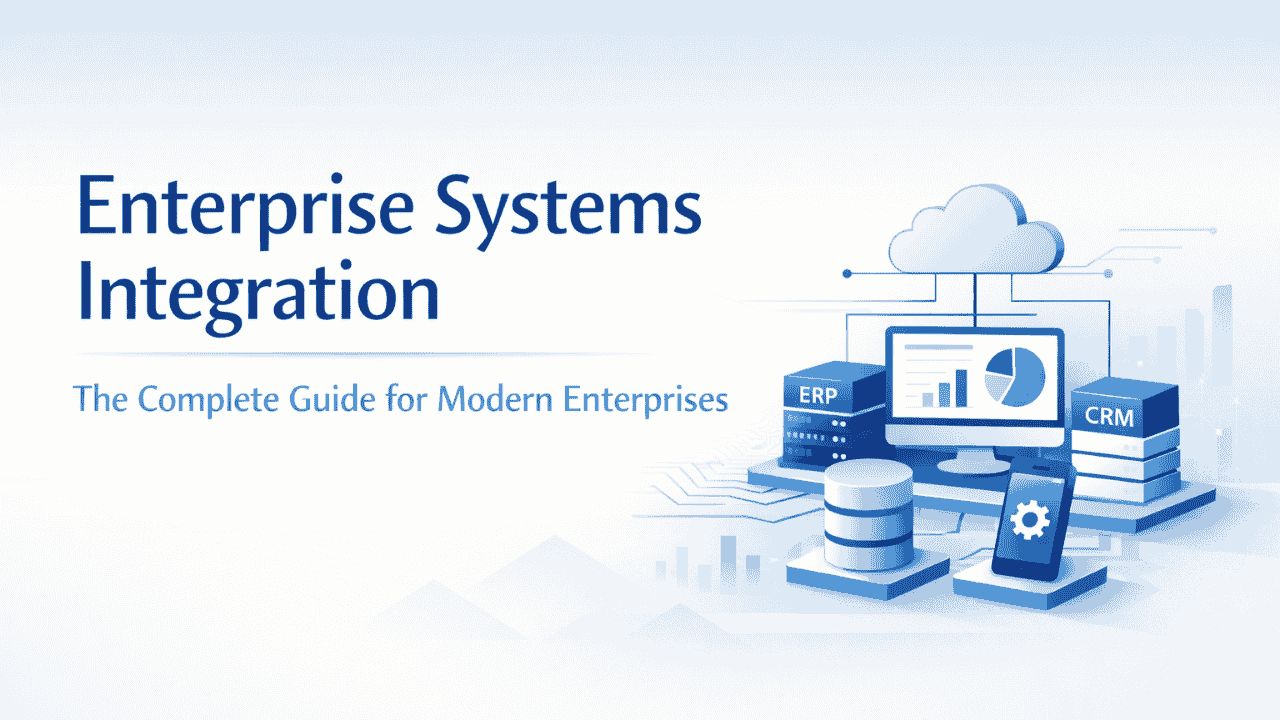
Enterprise Systems Integration: The Complete Guide for Modern Enterprises

In today’s digital economy, organizations rely on a wide range of technology platforms to manage their operations. Enterprise resource planning systems, customer relationship management platforms, cloud applications, cybersecurity frameworks, analytics tools, and collaboration platforms are now essential components of modern business environments.

However, the growing number of systems within organizations has introduced a new challenge: technology fragmentation.

When systems operate independently without proper connectivity, organizations experience inefficiencies, limited data visibility, and operational bottlenecks. Departments may rely on different platforms that do not communicate effectively with one another, resulting in manual processes, duplicated data, and inconsistent information across the organization.

This is where enterprise system integration becomes a critical capability.

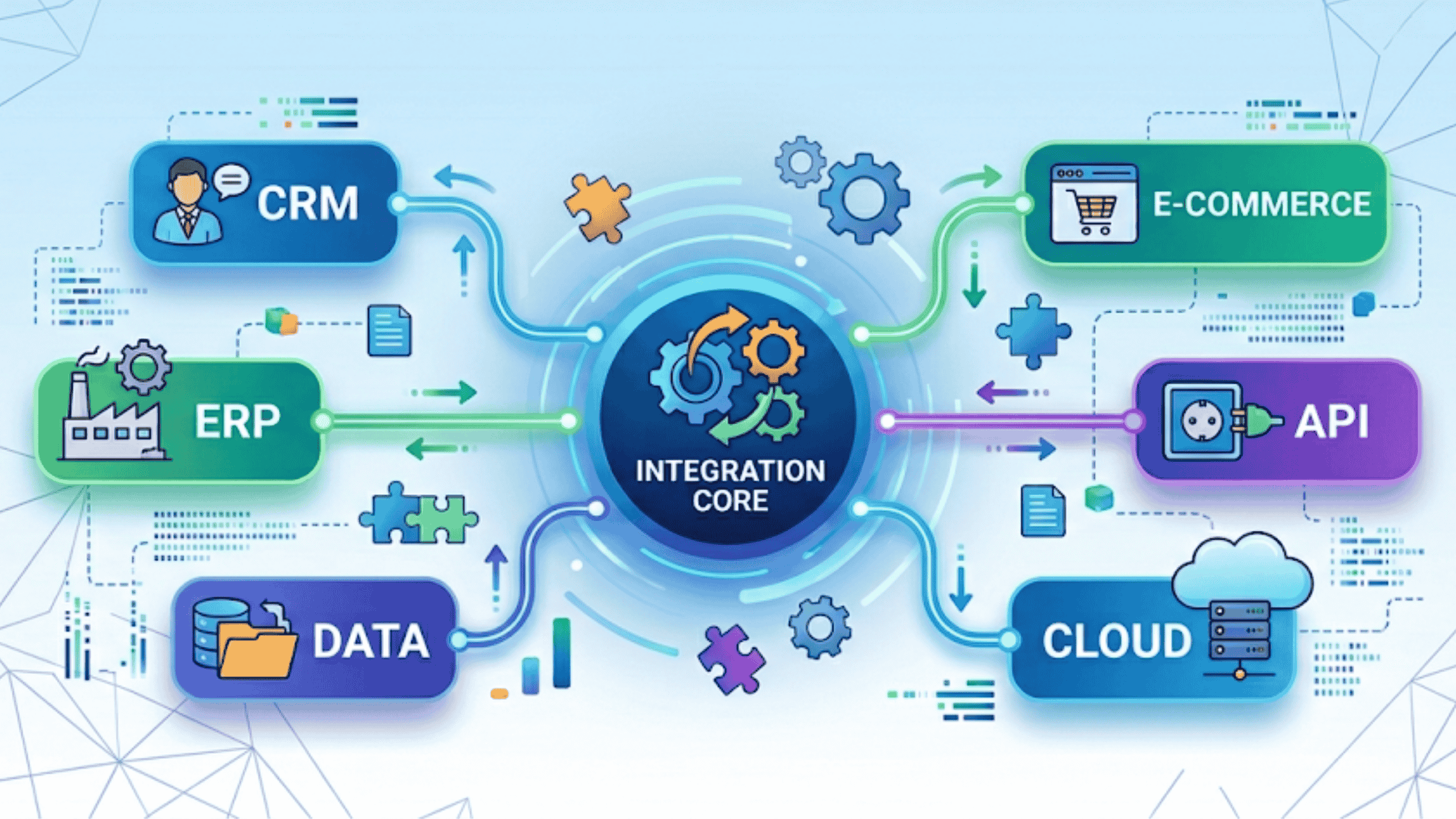
System integration ensures that diverse applications, infrastructure components, and data platforms function together as a unified ecosystem. Instead of operating as isolated tools, integrated systems exchange information seamlessly, enabling organizations to streamline workflows, improve decision-making, and enhance overall operational performance.

For modern enterprises pursuing digital transformation, system integration plays a foundational role in building agile and scalable IT environments.

In this comprehensive guide, we explore the concept of enterprise system integration, the technologies that enable it, the benefits organizations gain from integrated environments, and how Team Computers helps enterprises implement reliable and scalable integration solutions.

What is System Integration?

System integration refers to the process of connecting multiple IT systems, applications, and infrastructure components so that they operate as a coordinated and unified environment.

Instead of functioning as isolated systems, integrated technologies communicate with each other, exchange data, and support automated workflows across business functions.

The goal of system integration is to ensure that information flows seamlessly across an organization’s technology landscape, enabling different systems to support shared processes and business objectives.

How System Integration Works?

In a typical enterprise environment, multiple platforms handle different aspects of business operations. These platforms may include ERP systems, CRM tools, financial software, supply chain management platforms, analytics systems, and customer engagement tools.

System integration connects these platforms through integration frameworks such as APIs, middleware platforms, and data pipelines. These technologies enable systems to exchange information automatically, ensuring that data remains synchronized across the organization.

As a result, business processes that once required manual intervention become automated and efficient.

Why System Integration is Critical for Enterprises?

As enterprise IT environments become increasingly complex, the importance of integration continues to grow. Organizations must ensure that their systems can communicate effectively to maintain operational efficiency and competitiveness.

Eliminating Data Silos

Disconnected systems often result in data silos, where information remains trapped within individual platforms. When departments rely on separate datasets, it becomes difficult to obtain a complete view of business performance.

System integration eliminates these silos by enabling data to flow freely across systems and departments.

Improving Operational Efficiency

Manual processes such as transferring data between systems or updating information across platforms can consume valuable time and resources. Integration automates these workflows, allowing employees to focus on strategic tasks rather than repetitive administrative work.

Enhancing Customer Experiences

Customers today interact with businesses through multiple channels, including websites, mobile applications, support portals, and social platforms. Integrated systems ensure that customer data remains consistent across these channels, enabling organizations to deliver personalized and seamless experiences.

Supporting Business Scalability

As organizations expand, they often introduce new technologies to support growth. System integration allows these new platforms to connect with existing infrastructure without disrupting operations.

Key Technologies Enabling System Integration

Modern system integration relies on several technological frameworks that enable connectivity between platforms.

Application Programming Interfaces (APIs)

APIs are one of the most important technologies in modern integration strategies. They allow applications to communicate with each other by exchanging structured data through defined interfaces.

APIs enable organizations to connect cloud applications, mobile platforms, enterprise software systems, and third-party services.

Middleware Platforms

Middleware acts as an intermediary layer that facilitates communication between systems that cannot directly interact. Middleware platforms manage data exchange, workflow orchestration, and message routing across enterprise applications.

Integration Platforms (iPaaS)

Integration Platform as a Service solutions provide cloud-based environments that simplify application and data integration across distributed systems. These platforms allow organizations to manage integrations efficiently without building complex infrastructure.

Event-Driven Architectures

Event-driven systems allow applications to respond to real-time events and triggers. This architecture enables rapid data exchange and supports modern digital workflows.

Types of System Integration

Enterprise environments typically require multiple types of integration to connect applications, infrastructure, and data systems.

Application Integration

Application integration focuses on connecting enterprise software systems so they can share information and support coordinated workflows.

Examples include integrating ERP platforms with CRM systems, linking marketing automation tools with analytics platforms, and connecting human resource systems with payroll solutions.

Data Integration

Data integration consolidates information from multiple systems into centralized data platforms or warehouses. This integration enables organizations to generate comprehensive reports, perform analytics, and support business intelligence initiatives.

Infrastructure Integration

Infrastructure integration involves connecting servers, storage systems, networking components, and virtualization platforms to create a reliable IT foundation that supports enterprise workloads.

Cloud Integration

Cloud integration ensures that on-premise infrastructure can communicate with cloud platforms and SaaS applications. This type of integration is essential for organizations operating hybrid or multi-cloud environments.

Security Integration

Security integration connects cybersecurity tools across infrastructure, applications, and networks to provide comprehensive protection against threats and vulnerabilities.

Benefits of Enterprise System Integration

Organizations that successfully implement system integration strategies gain significant operational and strategic advantages.

Integrated systems improve efficiency by automating workflows and reducing manual tasks. They also enhance data visibility by ensuring that information remains synchronized across platforms.

Another important benefit is improved decision-making. When organizations have access to real-time data across departments, leaders can make informed decisions more quickly.

System integration also improves customer experiences by enabling organizations to provide consistent interactions across digital channels. Finally, integrated environments support scalability, allowing businesses to introduce new technologies without disrupting existing processes.

Challenges in Implementing System Integration

Although system integration offers substantial benefits, implementing integration strategies can be complex.

Legacy systems often present compatibility challenges because they were not designed to support modern integration frameworks. Organizations must also address issues related to data governance, security, and regulatory compliance.

Another challenge is managing integration across multiple vendors and platforms. Each system may have unique requirements, making integration projects technically demanding.

For these reasons, enterprises often collaborate with experienced IT partners who specialize in designing and implementing integration architectures.

System Integration Solutions by Team Computers

With decades of experience in enterprise technology services, Team Computers delivers system integration solutions that enable organizations to build connected, scalable, and high-performing IT environments.

As enterprises adopt a growing mix of applications, cloud platforms, infrastructure technologies, and data systems, ensuring seamless connectivity between these components becomes critical for operational success. Team Computers helps organizations design and implement integration strategies that bring together diverse technologies into a unified digital ecosystem.

By combining deep expertise across infrastructure, cloud platforms, enterprise applications, and data management, Team Computers enables businesses to eliminate technology silos, automate workflows, and create IT environments that support long-term digital transformation.

Through a structured integration approach that includes architecture design, technology implementation, and ongoing optimization, Team Computers ensures that enterprise systems work together reliably and efficiently.

Infrastructure Integration Solutions

Infrastructure forms the foundation of every enterprise IT environment. However, as organizations scale their operations, their infrastructure environments often become complex, consisting of multiple servers, storage systems, networking components, and virtualization platforms.

Team Computers helps organizations design and implement integrated infrastructure environments that support high performance, reliability, and scalability. By connecting infrastructure components into a cohesive architecture, businesses can ensure seamless communication between systems and maintain consistent operational performance.

Infrastructure integration services typically include:

  • Data center infrastructure design and modernization
  • Server and storage integration
  • Virtualization and hyperconverged infrastructure implementation
  • Enterprise networking and connectivity solutions
  • Infrastructure monitoring and performance optimization

Through these solutions, Team Computers enables enterprises to build resilient IT foundations capable of supporting modern workloads and digital business operations.

Application Integration Services

Modern enterprises rely on a wide range of software applications to manage business processes, customer relationships, finance operations, supply chains, and employee management.

However, when these applications operate independently, organizations face challenges such as duplicated data, manual processes, and fragmented workflows.

Team Computers enables seamless application integration by connecting enterprise software platforms so they can exchange information and operate as part of a unified system. By integrating applications across departments, businesses can automate processes, improve data accuracy, and enhance overall operational efficiency.

Application integration services may include connecting:

  • ERP systems with CRM platforms
  • Customer support platforms with service management tools
  • HR systems with payroll and workforce management applications
  • Marketing automation platforms with analytics and reporting tools

Through robust integration frameworks, Team Computers helps enterprises ensure that critical business applications work together efficiently.

Cloud Integration Solutions

As organizations adopt cloud technologies, many operate in hybrid or multi-cloud environments where on-premise infrastructure must interact with cloud platforms and SaaS applications.

Without proper integration, these environments can create data inconsistencies, operational complexity, and security challenges.

Team Computers provides cloud integration solutions that enable seamless connectivity between on-premise systems, public cloud platforms, and third-party applications. These solutions allow organizations to leverage the flexibility of cloud technologies while maintaining operational continuity across their IT environments.

Cloud integration capabilities include:

  • Hybrid cloud architecture design
  • Integration of SaaS applications with enterprise systems
  • Multi-cloud connectivity and orchestration
  • Secure data exchange between cloud and on-premise platforms

By integrating cloud environments with existing systems, Team Computers helps enterprises accelerate digital transformation while maintaining control and reliability.

Data Integration and Analytics

In modern enterprises, data is generated across multiple systems, including operational applications, customer platforms, financial systems, and digital channels.

When this data remains fragmented across platforms, organizations struggle to gain meaningful insights and make informed decisions.

Team Computers helps enterprises implement data integration frameworks that consolidate information from multiple systems into unified data platforms. These integrated environments enable organizations to perform advanced analytics, generate real-time reports, and support strategic decision-making.

Data integration solutions focus on building centralized data ecosystems that support:

  • Data consolidation from multiple enterprise applications
  • Data warehouses and analytics platforms
  • Business intelligence and reporting environments
  • Real-time data synchronization across systems

By enabling a unified view of enterprise data, Team Computers helps organizations transform information into actionable insights.

Security Integration

As enterprise IT environments become more interconnected, ensuring security across systems, applications, and networks becomes increasingly critical.

Security tools often operate across multiple layers of infrastructure and applications. Without proper integration, organizations may face gaps in visibility and protection.

Team Computers provides security integration solutions that connect cybersecurity platforms across the enterprise technology stack. By integrating security systems, organizations can establish a unified security framework that improves threat detection, response capabilities, and compliance management.

Security integration initiatives may involve connecting:

  • Identity and access management platforms
  • Network security systems
  • Endpoint protection solutions
  • Security monitoring and threat detection platforms

Through integrated security environments, Team Computers helps organizations protect their digital infrastructure while supporting safe and scalable business operations.

The Future of System Integration

The future of enterprise IT will be defined by deeper connectivity between technologies. Emerging innovations such as artificial intelligence, automation platforms, and advanced analytics require integrated systems that can exchange information in real time.

Organizations are increasingly adopting API-first architectures, event-driven systems, and cloud-native integration platforms to support modern digital operations.

As enterprises continue to expand their technology ecosystems, system integration will remain a critical capability for maintaining agility, efficiency, and competitiveness.

Conclusion

Enterprise technology environments are becoming more sophisticated as organizations adopt new platforms to support digital transformation. Without proper connectivity between these systems, businesses risk operational inefficiencies and fragmented data.

Disconnected systems can slow down operations, limit visibility, and create inefficiencies across the organization. With the right integration strategy, enterprises can unlock the full potential of their technology investments and build a truly connected digital ecosystem.

Team Computers helps organizations design and implement scalable system integration solutions that connect applications, infrastructure, and data platforms for improved performance and operational agility.

If your organization is looking to streamline operations, modernize IT infrastructure, or enable seamless connectivity across enterprise systems, our experts are here to help.

Connect with Team Computers today to explore how our system integration solutions can support your digital transformation journey.

Server AMC Services in India: Why Dedicated Server Maintenance Is Critical for Business Continuity

Your entire business runs on servers — but how often do you think about what happens when they fail?

A server outage is not just an IT issue. It disrupts applications, halts operations, impacts customer experience, and can bring revenue-generating systems to a standstill. Yet many enterprises still rely on fragmented or reactive maintenance approaches instead of structured server AMC services in India.

The risk is not just downtime — it’s unpredictability. Without dedicated server maintenance, failures occur without warning, response times stretch, and recovery becomes chaotic. This is where the importance of server maintenance for business continuity becomes undeniable.

Servers are the backbone of your IT ecosystem. When they are not proactively monitored and maintained, the consequences ripple across every business function.

In this blog, we explore why server AMC services are critical, the risks of neglecting maintenance, and how enterprises can ensure uptime, performance, and continuity through a structured AMC approach.

The Real Risk: Why Server Failures Disrupt Entire Businesses

Server failures rarely happen in isolation. They cascade across systems and teams.

The Problem: Single Point of Failure

In many enterprise environments, servers host business-critical applications, databases and analytics platforms, customer-facing systems, and internal collaboration tools. When a server fails, multiple systems go down simultaneously.

The Business Impact

  • Operations come to a halt
  • Customer transactions fail mid-process
  • Data access is interrupted across teams
  • Leadership loses real-time visibility into operations

Key Stat: Over 80% of unplanned downtime incidents originate from server-related issues such as hardware failure, overheating, or misconfiguration.

Why This Happens

Without structured server AMC services in India, organizations face a lack of real-time monitoring, delayed issue detection, and inconsistent maintenance practices. This highlights the importance of server maintenance for business continuity — because even a minor issue can escalate into a major outage.

Hidden Costs of Poor Server Maintenance

The cost of a server failure goes well beyond repair expenses.

The Visible Costs

  • Emergency repair services at premium rates
  • Replacement hardware and expedited procurement
  • Downtime-related revenue loss

The Hidden Costs

  • Loss of employee productivity across departments
  • Customer dissatisfaction and churn risk
  • SLA breaches and contractual penalties
  • Long-term reputational damage

A Typical Scenario

A database server slows down due to unnoticed performance degradation. Transactions become slower, customer experience declines, teams waste time troubleshooting, and the system eventually crashes. Small issues compound over time, lack of preventive maintenance increases failure probability, and downtime impact grows exponentially. These are the silent consequences that reinforce the importance of a structured server maintenance contract.

How Server AMC Services in India Ensure Business Continuity

A structured server AMC transforms maintenance from reactive to proactive across the enterprise.

1. Proactive Health Monitoring

  • Continuous tracking of server performance metrics
  • Automated alerts for anomalies and threshold breaches
  • Early issue detection before failures occur

2. Preventive Maintenance

  • Regular hardware inspections and cleaning
  • Firmware and security patch updates
  • Performance tuning and optimization

3. Incident Management

  • Faster issue identification through centralized monitoring
  • Structured escalation workflows with defined ownership
  • Clearly defined SLAs for response and resolution

4. Capacity Planning

  • Monitoring usage trends to anticipate demand
  • Preventing overload scenarios before they cause disruption
  • Ensuring scalability as business needs evolve

Key Stat: Proactive server maintenance can reduce unplanned downtime by up to 40%.

This is where server AMC services in India directly support business continuity by minimizing disruptions before they occur.

What to Look for in a Server AMC Provider

Choosing the right server support company in India is critical to ensuring long-term reliability and performance.

1. Multi-Vendor Expertise

The provider should have the ability to manage diverse server environments with experience across OEMs and platforms.

2. Response and Resolution SLAs

Look for clearly defined timelines with performance tracking and transparent reporting.

3. Remote Monitoring Capabilities

Real-time alerts, diagnostics, and centralized monitoring systems are non-negotiable for proactive coverage.

4. On-Site Support Readiness

Quick deployment of engineers and availability across multiple locations ensures fast physical intervention when required.

5. Security and Compliance Alignment

Regular patch updates and audit readiness documentation keep your infrastructure secure and compliant.

Red Flags to Watch

  • Purely reactive support model with no monitoring
  • No centralized visibility into server health
  • Limited reporting transparency or SLA accountability

Selecting the right provider strengthens the importance of server maintenance for business continuity by ensuring consistent uptime and performance.

How Team Computers Delivers Reliable Server AMC Services in India

At Team Computers, server AMC is designed as a strategic function — not just a maintenance contract.

1. Centralized Command Centre

  • Real-time monitoring of server infrastructure across environments
  • Faster detection and structured escalation
  • Unified visibility across all locations

2. Predictive Maintenance Models

  • Data-driven insights to anticipate failures before they occur
  • Reduced risk of unexpected downtime
  • Improved server lifecycle management and asset ROI

3. Automation-Led Incident Management

  • Instant alert-based ticket creation
  • Faster response and resolution cycles
  • Reduced manual dependency in escalation workflows

4. Multi-Location Support

  • Standardized service delivery across sites
  • Consistent SLA adherence regardless of location
  • Faster on-ground response coordination

This is how server AMC services in India evolve into a business-critical enabler for enterprises that depend on uninterrupted IT performance.

“Servers are the backbone of enterprise IT, but most failures are preventable. With the right AMC strategy, you don’t just respond to issues — you eliminate them before they impact the business.”

— Head of IT Services, Team Computers

Conclusion

Server downtime is not just an IT challenge. It is a business risk that requires proactive management and a structured maintenance strategy.

Key takeaways:

  • Server failures can disrupt entire business operations simultaneously
  • Hidden costs of poor maintenance often exceed visible repair expenses
  • Proactive monitoring and preventive maintenance are essential safeguards
  • Choosing the right AMC partner ensures consistent uptime and performance
  • Server AMC services in India are critical for long-term IT resilience

The importance of server maintenance for business continuity cannot be overstated. Without it, organizations operate in a constant state of preventable risk.

Discover how Team Computers’ server AMC services in India can help you eliminate downtime risks and ensure uninterrupted business operations. Build a resilient, high-performance IT environment that keeps your business running — no matter what.

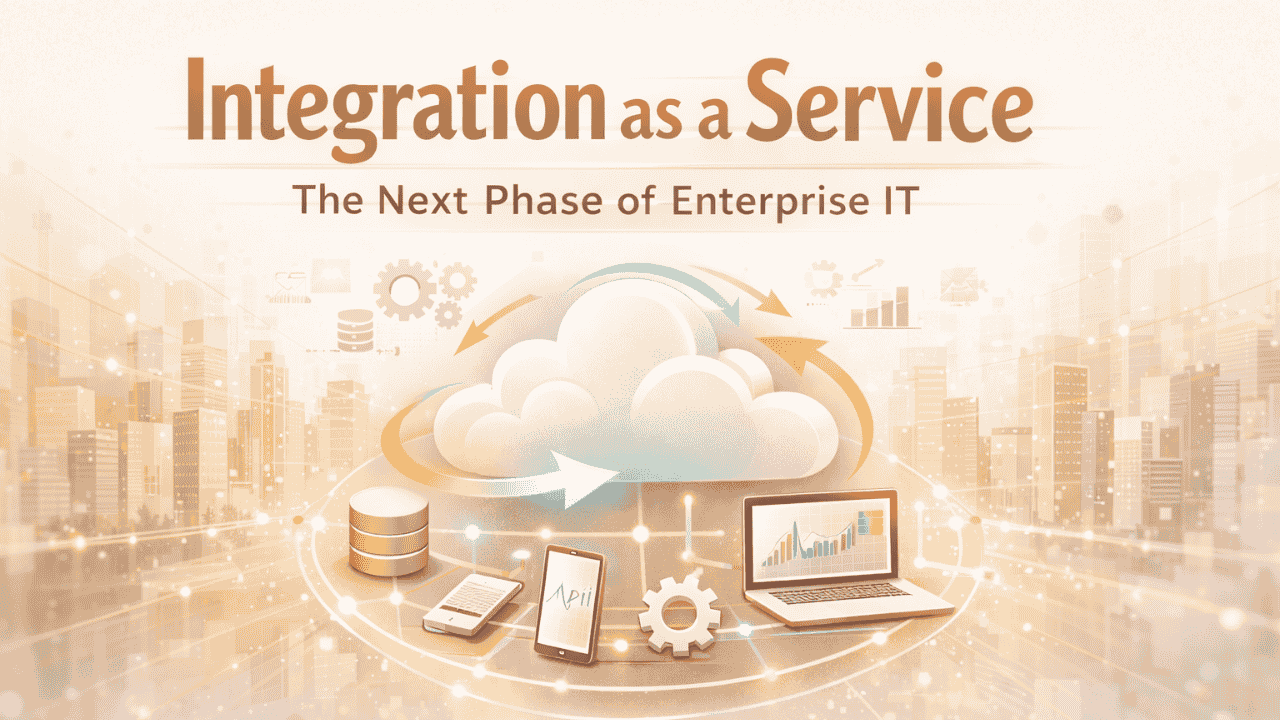
Integration as a Service: The Next Phase of Enterprise IT

Enterprise IT environments have become significantly more complex over the past decade. Organizations now operate across hybrid cloud infrastructures, SaaS platforms, on-premise applications, and distributed data environments. While these technologies support innovation and digital transformation, they also introduce a major challenge – ensuring that all systems communicate effectively with one another.

Traditional integration models were often designed for smaller, centralized environments. As enterprises adopt cloud services and digital platforms at scale, these conventional approaches struggle to keep up with the speed and flexibility modern businesses require.

This shift has led to the rise of Integration as a Service (iPaaS) – a cloud-based approach that allows organizations to connect applications, data sources, and infrastructure through centralized integration platforms.

Integration as a Service represents the next phase of enterprise IT because it enables organizations to build scalable, flexible, and connected technology ecosystems. Instead of managing complex point-to-point integrations, enterprises can streamline connectivity across systems while supporting rapid innovation and business growth.

Understanding Integration as a Service in Modern IT Environments

Integration as a Service is a cloud-based model that provides tools and frameworks for connecting applications, data sources, and IT systems across distributed environments. Rather than building and maintaining custom integrations for every application, organizations can use a centralized integration platform to manage data flows and system connectivity.

In traditional enterprise environments, integration often relied on custom code or tightly coupled middleware solutions. While these approaches worked in relatively stable IT environments, they became difficult to manage as organizations adopted multiple cloud platforms and SaaS applications.

Integration as a Service addresses this challenge by providing scalable integration capabilities delivered through the cloud. These platforms allow IT teams to design, deploy, and monitor integrations using standardized connectors, APIs, and automation workflows.

Key capabilities of Integration as a Service typically include:

  • Prebuilt connectors for enterprise applications and cloud platforms
  • Centralized integration management and monitoring
  • Automated data synchronization between systems
  • API-based communication across applications

By simplifying how systems connect and exchange data, iPaaS platforms enable enterprises to manage complex IT ecosystems more efficiently.

Why Enterprises Are Adopting Integration as a Service

The growing adoption of cloud technologies has transformed the way enterprises build and operate their IT environments. Organizations no longer rely on a single centralized infrastructure. Instead, they operate across multiple platforms, applications, and data environments.

This distributed architecture creates new integration challenges. Connecting systems across cloud platforms, on-premise environments, and third-party applications requires a flexible and scalable integration approach.

Integration as a Service addresses these challenges by enabling organizations to manage connectivity through a unified platform. Rather than developing custom integrations for every system, enterprises can establish standardized integration frameworks that simplify IT operations.

Several factors are driving enterprise adoption of iPaaS solutions. These include:

  • Rapid expansion of SaaS and cloud applications
  • Increasing need for real-time data synchronization
  • Growing demand for automation across business workflows
  • The need to reduce IT complexity and integration costs

By adopting Integration as a Service, organizations can accelerate digital transformation initiatives while maintaining a connected and manageable IT ecosystem.

How Integration as a Service Improves Enterprise Agility

One of the most significant benefits of Integration as a Service is its ability to improve enterprise agility. Modern businesses must adapt quickly to changing market conditions, evolving customer expectations, and new digital opportunities.

Traditional integration models often slow innovation because new systems require lengthy development cycles to establish connectivity with existing platforms. In contrast, iPaaS platforms enable organizations to deploy integrations more quickly using standardized connectors and reusable workflows.

This flexibility allows enterprises to introduce new applications or digital services without disrupting existing operations.

Integrated cloud platforms also support real-time data sharing, enabling organizations to make faster, data-driven decisions. Business leaders gain immediate visibility into operational performance, customer interactions, and financial metrics across the enterprise.

Ultimately, Integration as a Service empowers organizations to innovate faster while maintaining a stable and connected technology environment.

How Team Computers Supports Modern Integration Strategies

As enterprise IT ecosystems continue to expand, organizations need structured integration strategies that align with both current infrastructure and future digital initiatives.

Team Computers helps enterprises design and implement modern integration frameworks that connect applications, infrastructure, and data environments seamlessly.

By leveraging deep expertise in enterprise systems integration, cloud infrastructure, and digital transformation, Team Computers helps organizations adopt integration models that support scalability, security, and operational efficiency.

Through strategic consulting and implementation services, the company enables enterprises to build connected technology environments that reduce complexity while supporting innovation and long-term growth.

With the right integration strategy in place, organizations can move beyond fragmented systems and create agile IT ecosystems that support evolving business needs.

Enterprise IT environments are evolving rapidly as organizations adopt cloud technologies, digital platforms, and advanced analytics capabilities. While these innovations bring significant opportunities, they also increase the complexity of managing enterprise technology ecosystems.

Integration as a Service provides a modern solution to this challenge by enabling organizations to connect applications, data, and infrastructure through scalable cloud-based platforms.

Enterprises that adopt iPaaS frameworks gain several key advantages:

  • Faster deployment of integrations across applications
  • Improved data visibility and synchronization
  • Reduced IT complexity and operational overhead
  • Greater flexibility for adopting new technologies

As digital transformation continues to accelerate, Integration as a Service is becoming an essential component of modern enterprise IT strategies.

Looking to build a more connected and agile enterprise IT environment?

Explore how Team Computers helps organizations implement modern systems integration and cloud connectivity strategies that support scalable, future-ready IT ecosystems.

The Enterprise Connectivity Gap – And How Integration Solves It

Modern enterprises rely on a wide ecosystem of digital technologies. From enterprise applications and cloud platforms to analytics tools and security systems, organizations deploy numerous technologies to support daily operations and strategic initiatives.

However, as technology adoption grows, many organizations unknowingly create a connectivity gap within their IT environments. Systems that were implemented at different times, by different teams, or for different business purposes often fail to communicate effectively with one another. As a result, critical data becomes fragmented, workflows slow down, and IT complexity increases.

This growing disconnect between enterprise systems is commonly referred to as the enterprise connectivity gap. While individual technologies may function well on their own, the lack of integration between them limits their collective value.

Enterprise systems integration addresses this challenge by connecting applications, infrastructure, and data environments into a unified ecosystem. By bridging these gaps, organizations can transform fragmented technology environments into connected platforms that support efficiency, agility, and innovation.

Understanding the Enterprise Connectivity Gap

The enterprise connectivity gap emerges when different technology components within an organization operate independently rather than as part of a unified architecture. Over time, this situation becomes increasingly common as companies adopt new digital tools to improve specific functions such as finance, human resources, customer engagement, and analytics.

For example, a company may deploy an enterprise resource planning platform for financial operations, a customer relationship management system for sales teams, cloud-based collaboration tools for employees, and separate analytics platforms for data insights. While each solution performs its intended role, the absence of integration between these systems creates operational silos.

When systems fail to communicate seamlessly, information must often be transferred manually between platforms. This not only consumes time but also increases the likelihood of errors and inconsistencies. More importantly, decision-makers may struggle to gain a complete view of business performance because data remains scattered across multiple systems.

The connectivity gap therefore becomes both a technical and operational challenge, affecting productivity, decision-making, and the overall efficiency of enterprise technology environments.

How the Connectivity Gap Impacts Enterprise Operations

Disconnected technology environments can quietly create inefficiencies across the organization. These issues may not always be immediately visible, but their impact grows over time as systems and data continue to expand.

One of the most common consequences is reduced operational efficiency. When employees must switch between multiple systems or manually reconcile information across platforms, routine tasks become more time-consuming.

Another major impact involves data inconsistency. Without integrated data flows, different systems may contain conflicting information, making it difficult for leadership teams to rely on reports or analytics for strategic decisions.

The connectivity gap can also introduce security and compliance risks. Isolated systems often create blind spots in monitoring and access control, increasing the complexity of maintaining strong cybersecurity policies.

Ultimately, disconnected systems prevent organizations from realizing the full value of their technology investments. Instead of enabling agility and innovation, fragmented IT environments slow progress and increase operational risk.

How Systems Integration Bridges the Connectivity Gap

Enterprise systems integration provides the framework needed to connect diverse technologies into a cohesive IT ecosystem. Rather than allowing applications and infrastructure components to function independently, integration ensures that systems communicate through standardized interfaces and data exchange mechanisms.

Through integration, enterprises can establish seamless data flows across applications, ensuring that information is automatically synchronized between platforms. This eliminates the need for manual data transfers and reduces the likelihood of inconsistencies.

Integration also improves operational visibility by consolidating information from multiple systems into unified dashboards and analytics platforms. Decision-makers gain access to accurate, real-time insights that support better business strategies.

Another critical advantage is technology scalability. As organizations adopt new applications or expand digital capabilities, integrated environments make it easier to incorporate additional systems without disrupting existing workflows.

By bridging the connectivity gap, systems integration transforms fragmented IT landscapes into connected environments that support business growth and digital innovation.

The Strategic Role of Systems Integration Partners

While the benefits of integration are clear, implementing enterprise-wide integration frameworks requires careful planning and technical expertise. Organizations must design integration architectures that align with both current infrastructure and future technology requirements.

This is where experienced systems integration partners play an important role.

Team Computers works with enterprises to identify connectivity gaps within their technology environments and implement structured integration frameworks that bring applications, infrastructure, and data systems together.

By leveraging deep expertise across enterprise IT environments, Team Computers helps organizations build integration architectures that are secure, scalable, and aligned with long-term digital transformation strategies. These integration frameworks enable enterprises to eliminate technology silos, improve operational efficiency, and gain greater visibility into their business operations.

With the right integration strategy in place, enterprises can move from fragmented systems to connected ecosystems that support innovation and sustained growth.

As enterprises continue adopting new digital technologies, maintaining a connected IT environment becomes increasingly challenging. Without structured integration frameworks, organizations risk creating technology silos that slow operations and limit business visibility.

Addressing the enterprise connectivity gap requires a strategic approach to systems integration that aligns applications, infrastructure, and data environments within a unified architecture.

Organizations that successfully implement integration strategies gain several long-term advantages:

  • Seamless communication between enterprise applications
  • Improved data visibility across business functions
  • Greater operational efficiency and automation
  • Scalable IT environments that support future growth

In an increasingly digital business landscape, connected systems are no longer optional—they are essential for enterprise success.

Is your organization experiencing the challenges of disconnected systems?

Discover how Team Computers helps enterprises close the enterprise connectivity gap through strategic systems integration services that connect applications, infrastructure, and data environments.

Start building a fully connected enterprise IT ecosystem today.

How to Reduce IT Downtime in Enterprises: 7 Proven Strategies

A single hour of downtime can cost your business more than an entire year of IT maintenance.

Yet for many enterprises, downtime is still treated as an occasional disruption rather than a predictable and preventable risk. If you’re responsible for IT infrastructure, you already know this: the real challenge is not just fixing outages, but learning how to reduce IT downtime before it impacts the business.

The problem is that downtime rarely comes from one major failure. It builds quietly through missed patches, delayed response times, infrastructure fatigue, and fragmented systems. And the cost of IT downtime for businesses is not limited to revenue loss — it extends to productivity, compliance, and customer trust.

In this blog, we break down seven proven strategies that leading enterprises use to minimize downtime, improve system resilience, and move from reactive firefighting to proactive control.

Why Downtime Persists Despite Investments

Most organizations don’t lack tools. They lack alignment.

The Real Problem: Fragmented IT Operations

Despite investments in infrastructure, downtime continues because monitoring tools are siloed, teams operate in isolation, vendors work without coordination, and maintenance remains reactive.

The Hidden Impact

Downtime is often underestimated because its effects are distributed across the organization:

  • Lost employee productivity
  • Missed customer transactions
  • SLA breaches and contract penalties
  • Increased operational stress on IT teams

Key Stat: Enterprises lose an average of $300,000 per hour due to downtime, depending on industry and scale.

Where It Goes Wrong

Even well-funded IT environments fail to reduce IT downtime when they lack proactive maintenance strategies, real-time visibility, and clear accountability. This is where the cost of IT downtime for businesses escalates — not from lack of spending, but from lack of structure.

Strategy 1: Implement Real-Time Monitoring

You cannot fix what you cannot see.

Modern enterprises rely on 24/7 infrastructure monitoring, automated alerts for anomalies, and performance dashboards that surface issues before they escalate. Real-time monitoring is the single most effective first step to reduce IT downtime across complex environments.

Strategy 2: Adopt Predictive Maintenance

Reactive maintenance waits for failure. Predictive maintenance prevents it.

By analyzing system behavior trends and identifying early warning signs, IT teams can schedule interventions before breakdowns occur. This approach directly reduces unplanned outages and extends the life of critical infrastructure.

Key Stat: Predictive maintenance can reduce downtime by up to 30%.

Strategy 3: Standardize IT Processes

Unstructured processes slow down response time and create inconsistency across teams. Key areas to standardize include:

  • Incident management workflows
  • Escalation protocols with defined ownership
  • SLA definitions and performance benchmarks

By implementing these foundational steps, enterprises begin to systematically reduce IT downtime instead of reacting to it case by case.

Strategy 4: Build Redundancy Across Critical Systems

Single points of failure are the biggest structural risk in enterprise IT. Redundancy planning ensures that no one failure can bring down business-critical operations.

Key areas to address:

  • Servers and storage failover
  • Network connectivity redundancy
  • Power supply backup
  • Automated and validated data backups

Strategy 5: Invest in Disaster Recovery Planning

A robust disaster recovery (DR) strategy ensures business continuity when failures do occur. Key components include:

  • Defined Recovery Time Objectives (RTO)
  • Defined Recovery Point Objectives (RPO)
  • Regular DR drills and simulation exercises
  • Backup validation and restoration testing

Without resilience planning, downtime lasts longer, data loss increases, and recovery becomes chaotic. The cost of IT downtime for businesses multiplies significantly when recovery is delayed or incomplete.

Strategy 6: Leverage Automation to Reduce IT Downtime

Manual processes are one of the biggest contributors to delayed incident response. Delayed ticket creation, human error in diagnosis, and slow escalation cycles all add unnecessary time to every outage.

Automation accelerates every stage of incident management:

  • Auto-detection of system anomalies
  • Instant ticket generation on alert trigger
  • Intelligent routing to the right teams
  • Automated remediation for known recurring issues

The result is faster response times, reduced Mean Time to Resolution (MTTR), and consistent execution of processes at scale. Automation is critical if you want to sustainably reduce IT downtime across a growing enterprise environment.

Strategy 7: Partner with the Right IT AMC Provider

Technology alone cannot solve downtime. Execution matters.

A structured AMC ensures continuous monitoring, preventive maintenance, faster response times, and accountability across vendors. When evaluating an AMC partner, look for:

  • A proactive service model with 24/7 monitoring
  • A centralized command center for unified visibility
  • Multi-vendor expertise and single-point accountability
  • SLA-driven delivery with transparent reporting

How Team Computers Helps

At Team Computers, AMC is approached as a strategic function, not just a maintenance contract. The focus areas include predictive monitoring, automation-led workflows, multi-location support, and a zero-incident mindset across all engagements.

This is how enterprises successfully reduce IT downtime by combining the right technology with the right partner.

“Downtime is rarely caused by one major failure. It’s the result of small gaps in visibility, process, and response. Fix those gaps, and downtime reduces dramatically.”

— Head of IT Services, Team Computers

Conclusion

Downtime is not inevitable. It is manageable with the right strategy, tools, and partnerships.

Key takeaways:

  • Downtime persists due to fragmented and reactive IT operations
  • Proactive monitoring and predictive maintenance are foundational
  • Infrastructure resilience minimizes impact when failures occur
  • Automation accelerates detection and resolution at every stage
  • The right AMC partner ensures consistency, visibility, and accountability

To truly reduce IT downtime, enterprises must move beyond reactive fixes and build a structured, proactive IT ecosystem. The cost of IT downtime for businesses is too high to ignore — and too preventable to accept.

Discover how Team Computers can help you reduce IT downtime with a proactive, technology-driven AMC approach. Strengthen your IT resilience, improve uptime, and ensure your business never slows down when it matters most.

10 Hidden Costs of Not Having an AMC for Your IT Infrastructure

What does a single hour of IT downtime actually cost your business?

For most enterprises, it’s not just lost productivity—it’s lost revenue, damaged reputation, compliance risks, and operational chaos. Yet many organizations still treat maintenance as an afterthought instead of a strategic function. This is where IT AMC Services shift from being a “cost center” to a business-critical investment.

The reality is simple: the absence of a structured Annual Maintenance Contract doesn’t just create visible problems—it silently drains resources in ways that rarely show up in budget sheets. These are the hidden costs of not having AMC, and they compound over time.

In this blog, we’ll break down these hidden costs, explain why they matter at an enterprise level, and show how a strategic AMC approach can protect uptime, optimize costs, and strengthen IT resilience.

The Illusion of Cost Savings Without IT AMC Services

At first glance, skipping an AMC may seem financially prudent. Why pay upfront when you can fix issues as they arise?

That assumption is where the first hidden cost begins.

The Problem: Reactive Spending

Without IT AMC Services, IT operations become reactive instead of proactive. You only spend when something breaks—but those costs are unpredictable and often higher.

What You End Up Paying For

  • Emergency support charges at premium rates
  • Expedited hardware replacements
  • Increased vendor dependency
  • Internal team firefighting instead of strategic work

Organizations without proactive maintenance spend up to 3–5x more on unplanned IT incidents annually.

The Reality

What looks like savings is actually cost deferral—with interest. Over time, these reactive expenses exceed the structured investment of an AMC.

Hidden costs of not having AMC start with unpredictability—and unpredictability is the enemy of enterprise IT planning.

Downtime: The Most Expensive Invisible Cost

Downtime is rarely just a technical issue—it’s a business disruption.

The True Impact of Downtime

Every minute of downtime impacts multiple layers:

  • Customer-facing applications
  • Internal productivity
  • Revenue pipelines
  • Brand credibility

Why It Happens Without AMC

Without IT AMC Services, there’s:

  • No proactive monitoring
  • Delayed issue detection
  • Slower incident response
  • Lack of preventive maintenance

The Domino Effect

A single server failure can lead to:

  1. Application outages
  2. Missed SLAs
  3. Customer dissatisfaction
  4. Escalations at CXO level

Hidden costs of not having AMC become painfully visible during outages—but by then, the damage is already done.

Also read: Importance of Proactive IT Maintenance for Enterprises

Asset Degradation and Shortened Infrastructure Life

IT infrastructure is not static—it degrades over time.

The Problem: Neglected Maintenance

Without structured AMC support, routine checks and optimizations are often skipped.

What This Leads To

  • Faster hardware wear and tear
  • Reduced performance efficiency
  • Increased failure rates
  • Premature replacements

The Financial Impact

Instead of maximizing ROI on IT assets, organizations end up replacing infrastructure earlier than planned.

Example Scenario:
A storage system designed for 5 years may start failing in 3 due to lack of preventive maintenance—resulting in unplanned CAPEX.

AMC Advantage

With IT AMC Services:

  • Regular health checks extend asset life
  • Firmware and patches keep systems optimized
  • Predictive maintenance prevents failures

This directly addresses one of the most overlooked hidden costs of not having AMC—asset underutilization.

Compliance Risks and Security Vulnerabilities

In regulated industries, maintenance gaps can translate into compliance failures.

The Risk Landscape

Without IT AMC Services, organizations often miss:

  • Critical security patches
  • Firmware updates
  • Audit readiness checks
  • Compliance documentation

Consequences of Non-Compliance

  • Regulatory penalties
  • Failed audits
  • Legal exposure
  • Data breaches

60% of data breaches are linked to unpatched vulnerabilities.

Why AMC Matters Here

A structured AMC ensures:

  • Timely patch management
  • Regular compliance audits
  • Documentation readiness
  • Security best practices

External Validation

Hidden costs of not having AMC in this context are not just financial—they’re reputational and legal.

Productivity Loss Across Teams

When IT systems fail, it’s not just the IT team that suffers.

The Ripple Effect on Business Functions

  • Finance teams can’t access systems
  • Sales teams lose CRM access
  • Operations teams face delays
  • Leadership lacks real-time insights

The Silent Drain

Unlike downtime, productivity loss often goes unmeasured. But it accumulates daily.

Without AMC, You Get:

  • Frequent disruptions
  • Slower issue resolution
  • Employee frustration
  • Reduced efficiency

With IT AMC Services, You Enable:

  1. Stable IT environment
  2. Faster resolution times
  3. Predictable performance
  4. Higher employee productivity

This is one of the most underestimated hidden costs of not having AMC—because it doesn’t show up in IT reports, but it impacts the entire business.

Vendor Chaos and Lack of Accountability

Modern IT environments are multi-vendor by default.

The Problem Without AMC

When something breaks:

  • Vendors blame each other
  • Responsibility becomes unclear
  • Resolution gets delayed

The Cost of Confusion

  • Extended downtime
  • Increased coordination effort
  • Higher operational stress

What IT AMC Services Bring

A centralized AMC partner acts as:

  • A single point of contact
  • A coordinator across vendors
  • An accountability owner

Key Benefits

  • Faster issue resolution
  • Clear ownership
  • Reduced operational complexity
  • Better SLA management

Hidden costs of not having AMC here are operational inefficiencies that slow down your entire IT ecosystem.

What a Strategic AMC Looks Like Today

Not all AMCs are created equal.

A modern enterprise needs more than just break-fix support—it needs a strategic partner.

Key Capabilities to Look For

  • Proactive monitoring and alerts
  • Predictive maintenance
  • Multi-location support
  • Multi-vendor expertise
  • Compliance and security alignment
  • SLA-driven delivery

The Shift from Reactive to Predictive

Traditional AMC:

  • Fix after failure

Strategic AMC:

  • Prevent failure before it happens

How Team Computers Approaches AMC

We focus on:

  • Zero-incident mindset
  • Centralized command center
  • Data-driven maintenance
  • Enterprise-grade SLAs

This is how IT AMC Services evolve from a support function to a business enabler.

“The biggest mistake organizations make is treating maintenance as an operational cost instead of a risk mitigation strategy. A well-structured AMC doesn’t just fix problems—it prevents business disruption.”
— Head of IT Services

CONCLUSION

The real cost of skipping AMC isn’t visible on a balance sheet—it’s hidden in inefficiencies, risks, and lost opportunities.

Key Takeaways

  • Reactive IT leads to unpredictable and higher costs
  • Downtime directly impacts revenue and reputation
  • Poor maintenance shortens asset lifecycle
  • Compliance and security risks increase significantly
  • Productivity loss affects the entire organization

IT AMC Services are not just about maintenance—they are about ensuring continuity, predictability, and resilience in your IT operations.

Discover how a strategic AMC approach can eliminate hidden costs, improve uptime, and bring complete control to your IT infrastructure. Partner with Team Computers to transform maintenance into a competitive advantage.

The Integration Debt You Didn’t Know You Were Accumulating

Most enterprises are aware of technical debt. Very few realize they are accumulating something equally dangerous, integration debt.

It doesn’t show up in budget discussions. It rarely gets flagged in architecture reviews. Yet over time, it quietly becomes one of the biggest barriers to scalability, agility, and operational efficiency.

Integration debt builds when systems are connected quickly to meet immediate needs, without a long-term architectural approach. A new application is added, a point-to-point connection is created, a workaround is implemented to meet a deadline, and the system continues to function. On the surface, everything works.

But beneath that surface, complexity begins to grow. Dependencies become harder to track. Changes take longer to implement. Failures become more difficult to diagnose.

This is the cost of ignoring integration debt. In this blog, we break down what integration debt really is, how it builds up in enterprise environments, and what you can do to control it before it starts slowing your business down.

What Is Integration Debt, And Why It’s Different from Technical Debt

Integration debt is often misunderstood because it doesn’t behave like traditional technical debt. It does not reside within a single application or codebase. Instead, it exists between systems, in the connections, dependencies, and data flows that tie your IT landscape together.

While technical debt affects how a system performs internally, integration debt affects how systems interact externally. This makes it significantly harder to identify and even harder to manage.

In most enterprises, integration layers evolve organically. New systems are added over time, each requiring connectivity with existing applications. In the absence of a unified strategy, these connections are built incrementally, often using different methods, tools, and standards.

Over time, this results in:

  • A growing number of tightly coupled integrations
  • Inconsistent communication patterns across systems
  • Limited visibility into how systems depend on each other

Unlike technical debt, which can often be isolated and addressed within a system, integration debt spreads across the entire ecosystem. This makes its impact broader, and its resolution more complex.

How Integration Debt Builds Up in Enterprise Environments

Integration debt is rarely the result of poor decision-making. In fact, it often builds from decisions that make perfect sense in the moment.

A new business requirement emerges, and speed becomes the priority. A direct integration is implemented to meet a deadline. Another system is added, and a similar approach is taken. Over time, these decisions accumulate, creating a web of connections that were never designed to scale.

This buildup is typically driven by:

  • Short-term delivery pressures overriding long-term design
  • Lack of standardized integration frameworks
  • Independent teams building integrations in silos
  • Limited governance over integration practices

Each individual decision feels justified. The problem is cumulative.

As the number of integrations increases, so does the complexity of managing them. What started as a fast and efficient approach gradually becomes a constraint, making every new integration slower, riskier, and more expensive.

The Hidden Cost of Integration Debt

The most dangerous aspect of integration debt is that its impact is not immediate. Systems continue to function, which creates the illusion that everything is under control.

The real cost becomes visible over time, and it manifests in ways that directly affect business performance.

One of the first signs is reduced agility. Simple changes begin to take longer because teams need to assess multiple dependencies before making updates. What should be a straightforward modification turns into a complex coordination effort.

Operational instability is another consequence. Failures in one system start to cascade into others, and diagnosing the root cause becomes increasingly difficult due to the lack of visibility across integrations.

There is also a direct financial impact. Maintenance efforts increase, rework becomes more frequent, and the cost of implementing new integrations rises significantly.

Most importantly, integration debt limits scalability. As the business grows and new systems are introduced, the existing integration landscape struggles to keep up. Instead of enabling growth, it begins to slow it down.

Why Integration Debt Becomes a Barrier to Transformation

Digital transformation initiatives rely heavily on the ability to connect systems, enable real-time data flow, and support dynamic business processes. Integration debt directly undermines these capabilities.

When integration layers are fragmented and tightly coupled, introducing new technologies becomes difficult. Cloud adoption slows down because legacy integrations cannot adapt easily. Real-time capabilities are limited because existing architectures are not designed for them.

This creates a disconnect between business ambition and IT capability. While the organization aims to move faster and become more agile, the underlying integration landscape resists change.

In many cases, transformation initiatives fail not because the vision is flawed, but because the integration foundation is not ready to support it.

Also read: Enterprise Systems Integration Readiness Framework

Addressing integration debt is therefore not just a technical necessity – it is a strategic requirement for enabling transformation.

Identifying Integration Debt Before It Becomes Critical

Integration debt often goes unnoticed until it reaches a critical point. However, there are clear indicators that can help identify it early.

A common sign is the increasing time required to implement new integrations. If every new connection feels more complex than the last, it is likely that underlying dependencies are becoming harder to manage.

Frequent integration failures or performance issues are another indicator. These often point to tightly coupled systems where changes in one area have unintended consequences elsewhere.

Limited visibility into system interactions is also a red flag. If teams cannot clearly map how systems are connected or how data flows between them, managing integration effectively becomes nearly impossible.

Recognizing these signs early allows organizations to take corrective action before integration debt begins to significantly impact operations.

How Team Computers Helps Reduce Integration Debt

Reducing integration debt requires more than incremental fixes. It requires a structured approach that addresses the root causes of complexity.

Team Computers works with enterprises to analyze their existing integration landscape, identify areas of hidden complexity, and define a path toward a more scalable architecture. This includes evaluating current integration patterns, mapping dependencies, and assessing how these factors impact performance and agility.

The focus is on simplification and standardization. By moving away from fragmented, point-to-point integrations and toward more structured integration models, organizations can reduce complexity and improve control.

This approach not only addresses existing integration debt but also prevents new debt from accumulating. Integration becomes more predictable, scalable, and aligned with long-term business objectives.

“Integration debt is not created by bad decisions, it’s created by necessary decisions made without a long-term view. The key is not to avoid it completely, but to manage it before it starts limiting your ability to scale.”
– Head of IT Services, Team Computers

Conclusion

Integration debt is one of the most overlooked challenges in enterprise IT, yet its impact is significant and far-reaching. It builds quietly, driven by short-term decisions, and only becomes visible when it starts slowing down execution and increasing complexity.

Organizations that recognize and address integration debt early are better positioned to maintain agility, control costs, and support long-term growth. Those that ignore it often find themselves constrained by their own systems.

Key takeaways:

  • Integration debt exists in the connections between systems, not within them

  • It builds gradually through short-term integration decisions

  • Its impact includes reduced agility, higher costs, and limited scalability

  • Early identification is critical to preventing long-term disruption

  • A structured approach is required to reduce and control it

If integration is expected to support business growth, it must be managed with the same discipline as any other critical asset. Ignoring integration debt does not make it disappear—it makes it harder to fix later.

Concerned about hidden complexity in your integration landscape?

Discover how Team Computers can help you identify integration debt, simplify your architecture, and build a scalable integration foundation that supports your business—today and as it grows.

Enterprise Systems Integration in the Age of AI and Automation

Artificial intelligence and automation are rapidly transforming how enterprises operate. Organizations are adopting AI-powered analytics, intelligent automation platforms, and machine learning systems to improve efficiency, enhance decision-making, and streamline operations.

However, these advanced technologies cannot function effectively in isolation. AI models require access to large volumes of accurate and connected data, while automation tools depend on seamless communication between enterprise applications. When enterprise systems operate independently, AI and automation initiatives often struggle to deliver their full value.

This is where enterprise systems integration becomes essential. By connecting applications, infrastructure, and data environments, systems integration enables AI platforms and automation tools to access consistent information and operate across multiple business processes.

In the age of intelligent technologies, enterprises that prioritize enterprise systems integration are better positioned to unlock the full potential of AI and automation. This article explores how integration supports these technologies and why it has become a critical foundation for modern enterprise innovation.

Why AI and Automation Depend on Integrated Enterprise Systems

Artificial intelligence and automation platforms rely heavily on connected data and seamless communication between enterprise technologies. AI models analyze information from multiple sources to generate insights, predictions, and recommendations. Automation platforms execute workflows by interacting with various enterprise applications.

When enterprise systems are not integrated, these technologies face significant limitations. Data may remain isolated within individual systems, preventing AI tools from accessing the comprehensive datasets required for accurate analysis. Similarly, automation workflows may fail when applications cannot communicate with each other effectively.

For example, an AI-driven customer analytics platform may require data from CRM systems, marketing platforms, and support applications. Without integration, gathering this information becomes complex and time-consuming.

Integrated enterprise systems ensure that AI and automation technologies operate with complete and consistent information, allowing organizations to achieve more accurate insights and more reliable automated processes.

The Role of Systems Integration in Enabling Intelligent Automation

Automation has evolved far beyond simple task execution. Modern enterprises are implementing intelligent automation platforms that combine robotic process automation (RPA), machine learning, and advanced analytics.

These automation initiatives require seamless communication between enterprise platforms. Systems integration enables this connectivity by linking applications, databases, and infrastructure environments into a unified technology ecosystem.

With integrated systems, automation platforms can trigger workflows across multiple departments and systems. For example, an automated procurement process may involve ERP systems, supplier platforms, and financial systems. Integration ensures that information flows smoothly across these platforms without manual intervention.

Organizations that implement integrated environments can scale automation initiatives more effectively, reducing operational workloads while improving process accuracy.

How Integrated Data Environments Strengthen AI Capabilities

Data is the foundation of any successful AI initiative. Machine learning models require large datasets that are accurate, consistent, and accessible across enterprise platforms.

In many organizations, data remains scattered across multiple applications and databases. CRM systems store customer information, ERP platforms manage operational data, and analytics tools track performance metrics. When these systems operate independently, AI tools cannot easily access the full dataset required for reliable insights.

Enterprise systems integration solves this challenge by enabling seamless data exchange between systems. Integration frameworks allow enterprises to synchronize information across applications and create unified data environments.

With integrated data ecosystems, AI platforms can analyze information from multiple sources simultaneously. This improves the accuracy of predictive models, enhances analytics capabilities, and enables organizations to make more informed decisions.

Preparing Enterprise IT Environments for AI-Driven Operations

Adopting AI and automation technologies requires more than simply implementing new software tools. Organizations must ensure that their technology environments can support these advanced capabilities.

Enterprises preparing for AI-driven operations typically focus on several key areas:

  • Ensuring enterprise applications are connected through integration frameworks
  • Creating unified data environments that support advanced analytics
  • Modernizing infrastructure platforms to handle AI workloads
  • Establishing secure communication between systems

When these elements are in place, enterprises can implement AI and automation technologies more effectively. Integrated technology environments allow organizations to deploy intelligent tools across departments while maintaining operational consistency.

This approach ensures that AI and automation initiatives deliver measurable business value rather than becoming isolated technology experiments.

How Team Computers Supports Enterprise Integration for AI and Automation

Implementing AI and automation successfully requires a strong integration foundation. Enterprises must connect applications, infrastructure environments, and data systems to ensure that intelligent technologies can operate across the organization.

Team Computers helps enterprises design and implement enterprise systems integration frameworks that support modern AI and automation initiatives.

With extensive experience in enterprise IT environments, Team Computers enables organizations to integrate critical business applications, align infrastructure platforms, and create unified data ecosystems. These integration strategies allow enterprises to deploy AI-driven analytics, automate workflows, and enhance operational efficiency.

By building connected technology environments, Team Computers helps organizations unlock the full potential of intelligent technologies while maintaining scalability and security.

Conclusion

Artificial intelligence and automation are reshaping enterprise operations, but their success depends on a strong technological foundation. Organizations must ensure that applications, infrastructure, and data environments are connected so intelligent systems can access the information they need.

Enterprise systems integration provides the framework required to support these advanced technologies.

Key takeaways include:

  • AI and automation require connected enterprise systems
  • Integrated environments enable seamless data exchange
  • Systems integration supports intelligent automation workflows
  • Unified data ecosystems strengthen AI-driven insights

Enterprises that prioritize integration will be better equipped to implement intelligent technologies and drive long-term innovation.

AI and automation initiatives can only succeed when enterprise technologies operate as a connected ecosystem. Discover how Team Computers helps organizations implement enterprise systems integration strategies that support AI-driven innovation and intelligent automation.

Explore how integrated enterprise systems can power the next phase of your digital transformation.