Why Indian Enterprises Are Rethinking Device Costs in 2026 – Beyond Price

A procurement head at a large Indian BFSI enterprise recently pushed back on a device proposal. Not because the numbers didn’t add up but because one assumption hadn’t been questioned: “Apple is expensive, so why consider it?”

That single line reflects what many CFOs, CEOs, and IT leaders still believe. And yet, across large enterprises in India, that assumption is starting to crack, not because Apple got cheaper, but because the way organisations evaluate cost is changing.

If you’re currently weighing device decisions, your biggest frustration is likely this: you know price alone doesn’t tell the full story, but you don’t have a clear way to evaluate what “true cost” actually looks like.

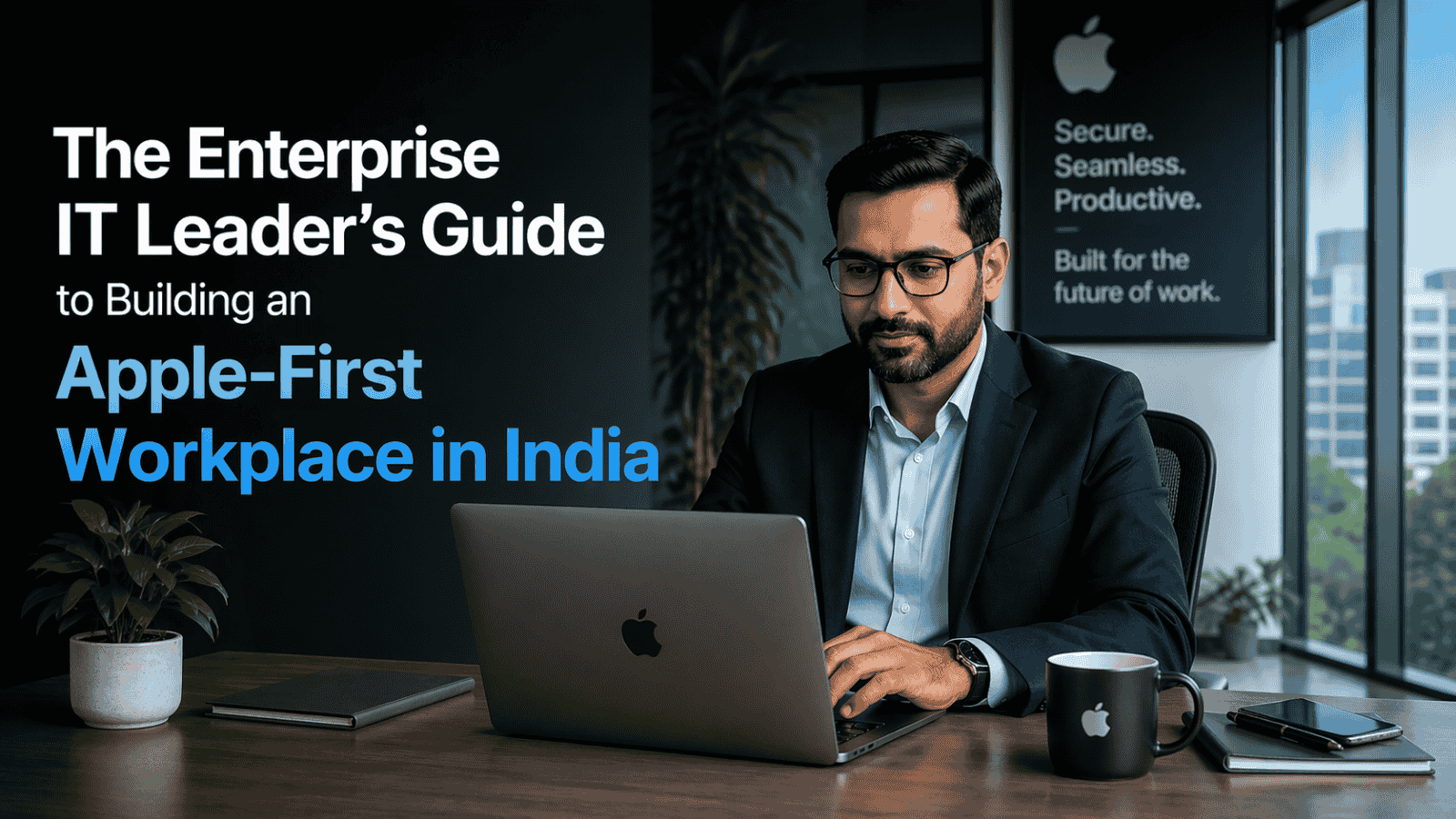
This is where Mac from Team Computers comes into the picture, not as a product choice, but as part of a broader shift toward total cost of ownership (TCO)-led decision-making. By the end of this guide, you’ll have a practical way to compare Apple and Windows devices based on real business impact, not just upfront pricing.

Why total cost of ownership is harder than it looks

Most device discussions still begin with a simple comparison sheet: unit price, bulk discount, and warranty. It’s clean, it’s quick and it’s incomplete.

What doesn’t show up immediately:

  • The ongoing effort your IT team spends managing devices
  • The frequency at which devices need replacement
  • The cost of downtime when systems slow down or fail
  • The operational impact of security incidents
  • The value you recover at the end of a device lifecycle

When you isolate purchase cost, Windows devices often appear more economical. But enterprises aren’t buying devices for Day 1, they’re investing in a working environment over several years.

Here’s where the India context matters. Distributed workforces, multi-location operations, and increasing regulatory focus under frameworks like the DPDP Act 2023 mean that device reliability, security posture, and manageability now have financial implications.

What looks cost-efficient in procurement meetings doesn’t always hold up in operational reality.

The 5 things most teams get wrong

1. Treating lifecycle as a fixed assumption

Most enterprises don’t explicitly define device lifecycle before comparing options. They rely on past patterns.

But lifecycle varies based on performance consistency, OS optimisation, and usage. If you’re comparing two ecosystems without aligning lifecycle expectations, your cost comparison is already flawed.

2. Ignoring IT support effort

Support effort rarely gets quantified, yet it’s one of the most consistent cost drivers.

Windows environments often require:

  • Regular patching cycles
  • Compatibility troubleshooting
  • Endpoint security management overhead

Mac environments, due to tighter integration between hardware and software, tend to reduce compatibility-related issues. The difference shows up in how often your IT team needs to intervene.

3. Looking at security as a tool cost, not an incident cost

Most budgets allocate for antivirus, endpoint protection, and monitoring tools. Few account for the cost of an actual incident.

What matters isn’t just what you spend on prevention, it’s what you risk in disruption, recovery, and compliance exposure.

With India’s evolving data protection landscape, including DPDP compliance expectations, device-level security posture plays a larger role than before. Mac’s architecture can reduce certain exposure areas, which influences overall risk, not eliminate it.

4. Not accounting for productivity loss

Here’s a cost that doesn’t appear in spreadsheets, but shows up in output.

System slowdowns, crashes, and compatibility issues impact how employees work. Even small inefficiencies, when experienced daily across teams, translate into measurable business impact.

Most organisations feel this — very few measure it.

5. Missing residual value completely

Devices don’t become worthless at the end of use — but many cost models treat them that way.

Mac devices typically retain stronger resale or buyback value. When structured properly through lifecycle programs, this can offset part of the initial investment.

In India, more enterprises are now incorporating buyback and lifecycle strategies into procurement — but it’s still not standard practice.

A step-by-step approach that actually works

If you want a fair Apple vs Windows comparison, you need to move from assumptions to a structured model.

Step 1: Standardise the lifecycle

Define a common evaluation period for both ecosystems. Without this, comparisons remain inconsistent.

Step 2: Identify all cost layers

Go beyond device pricing. Include:

  • Acquisition cost
  • IT support effort
  • Security and software requirements
  • Productivity impact
  • Upgrade or replacement cycles
  • Residual value

Step 3: Segment your users

Not every employee needs the same device.

  • Developers and creative teams often require performance-focused systems
  • Business users may need standard configurations
  • Leadership teams may prioritise experience and reliability

Segmentation ensures you’re aligning cost with actual usage.

Step 4: Measure outcomes over time

Track:

  • IT support requests
  • User satisfaction
  • Device performance consistency
  • Security incidents

This gives you real data — not assumptions carried forward from past decisions.

What to look for in an external partner

Device strategy today isn’t just about procurement — it’s about lifecycle management.

A capable partner should help you with:

  • End-to-end lifecycle support (deployment to buyback)
  • Flexible commercial models like leasing or DaaS
  • Multi-location rollout capability across India
  • Integration with your existing IT setup
  • Support in building a clear, defensible TCO model

Most importantly, they should adapt to your environment — not force a standard template.

Large global providers bring scale, but often operate with rigid processes. Indian mid-to-large enterprise partners typically offer more flexibility and faster turnaround — which matters when you’re managing deployments across multiple cities and teams.

How to know if it’s working

A good device strategy doesn’t just reduce friction — it creates predictability.

Look for signals like:

  • Stable or reduced IT support effort
  • Consistent device performance across lifecycle
  • Improved employee experience
  • Better alignment between IT and finance teams
  • Fewer unexpected disruptions

When your teams stop firefighting device issues and start planning proactively, you’re moving in the right direction.

Conclusion

Device decisions are no longer just procurement calls — they’re long-term financial and operational choices.

As Indian enterprises scale, expand into GCC models, and adapt to evolving compliance expectations, the way you evaluate cost needs to evolve too.

Here’s what you should do next:

  • Audit your current device lifecycle before your next refresh cycle
  • Map IT support effort per user instead of treating it as a fixed overhead
  • Run a pilot to compare real-world performance across device types
  • Include residual value in your cost evaluation model

When you shift from price comparison to lifecycle evaluation, the conversation changes. It’s no longer about which device is cheaper — it’s about which one costs you less over time.

And that’s where Mac from Team Computers becomes a strategic consideration, not just a premium option.

Delaying this shift doesn’t freeze your costs — it quietly increases inefficiencies you’re not yet measuring.

One Ecosystem, Endless Possibilities: The Real Power of Apple at Work

Work today looks very different from what it did just a few years ago. Employees no longer rely on a single device to complete their tasks. Instead, they move between laptops, smartphones, and tablets throughout the day, depending on where they are and what they need to do.

In this multi-device environment, the real challenge is not access to technology, it’s ensuring that everything works together seamlessly.

That’s where Apple stands apart.

Rather than building individual products in isolation, Apple has created an ecosystem where devices are designed to work together from the ground up. This connected experience transforms the way employees interact with technology, making workflows smoother, faster, and more intuitive.

A Seamless Flow of Work Across Devices

In many organizations, switching devices often creates friction. Employees have to send files to themselves, re-open applications, or search for the latest version of their work.

Apple eliminates these inefficiencies.

With a connected ecosystem, employees can start a task on one device and continue it on another without interruption. Documents, messages, and applications remain synchronized, allowing work to flow naturally throughout the day.

This continuity not only saves time but also helps professionals maintain momentum, ensuring that productivity is not interrupted by technical barriers.

Collaboration Without Boundaries

Modern teams rely on constant communication and collaboration. Whether it’s working on shared documents, joining meetings, or sharing updates, speed and accessibility are critical.

The Apple ecosystem enables seamless collaboration across devices.

Employees can take calls, respond to messages, share files, and join meetings without being tied to a single device. Conversations and workflows continue smoothly, regardless of where the user is or which device they are using.

This flexibility supports hybrid work environments, where teams need to stay connected across locations and time zones.

Consistency That Simplifies Work

Managing multiple devices often means dealing with different interfaces and workflows, which can slow down productivity and increase the need for support.

Apple solves this by offering a consistent experience across all its devices.

Whether employees are using a Mac, iPhone, or iPad, the interface feels familiar and intuitive. This reduces the learning curve, allowing users to become productive quickly without extensive training.

For organizations, this consistency leads to smoother onboarding, fewer support requests, and a more efficient workforce.

Enabling Ecosystem Adoption with Team Computers

While the Apple ecosystem offers significant advantages, organizations need the right partner to implement and manage it effectively at scale. This is where Team Computers plays a crucial role through its Smart EPP (Employee Purchase Program).

Team Computers helps enterprises unlock the full value of the Apple ecosystem by providing:

End-to-end device procurement across Apple products
Centralized deployment and onboarding for teams
Integration with enterprise mobility and device management solutions
Ongoing support for security, updates, and lifecycle management

This ensures that businesses can move beyond individual device adoption and build a fully connected, scalable workplace environment.

With the right support in place, organizations can maximize the benefits of Apple’s ecosystem without adding complexity.

The Future of Work Is Connected

As workplaces continue to evolve, having multiple devices is no longer enough. What truly matters is how well those devices work together to support productivity.

The Apple ecosystem transforms separate tools into a unified experience—one that enhances efficiency, simplifies workflows, and enables teams to work without interruptions.

By combining Apple’s ecosystem with the enterprise expertise of Team Computers, organizations can create a workplace where technology works seamlessly in the background, allowing employees to focus on what truly matters.

Looking to build a connected Apple-powered workplace? Explore how Team Computers Smart EPP enables seamless ecosystem adoption at scale.

Designed for Focus: How Apple Is Reducing Digital Noise at Work

Work today looks very different from what it did just a few years ago. Employees are constantly navigating between emails, meetings, chats, notifications, and multiple applications — all competing for attention at the same time. The challenge is no longer just getting work done. It’s staying focused long enough to do meaningful work.

In this environment, digital noise has become one of the biggest barriers to productivity.

That’s where Apple at work brings a different approach — one built around clarity, simplicity, and focus. Instead of overwhelming users with complexity, Apple designs its devices and software to create an experience where distractions are minimized and attention is prioritized.

With its clean interface, intuitive navigation, and seamless performance, Apple devices help professionals stay in control of their workday. Whether it’s managing tasks, working on documents, or collaborating with teams, everything feels streamlined and intentional — allowing employees to focus on what truly matters.

Work Without Constant Interruptions

In most work environments, interruptions are unavoidable. Notifications from multiple apps, background updates, and system slowdowns often break concentration and reduce efficiency.

Apple devices are designed to reduce these interruptions. With features that allow users to manage notifications and prioritize tasks, professionals can create a work environment that aligns with their needs. Instead of reacting to every alert, employees can choose when and how they engage with distractions.

This shift from reactive work to intentional work makes a significant difference. It allows individuals to stay in their flow longer, complete tasks faster, and produce higher-quality outcomes. Over time, this ability to control attention becomes a key driver of workplace productivity.

A Clean and Intuitive User Experience

Another major factor that contributes to digital noise is complexity. When systems are difficult to navigate or require constant adjustments, users spend more time managing tools than actually working.

Apple simplifies this experience. From the moment a user logs in, everything feels familiar and easy to use. Applications are organized, navigation is straightforward, and the overall interface is designed to reduce cognitive load.

This simplicity allows employees to get started quickly without extensive training or support. It also minimizes errors and reduces time spent troubleshooting everyday issues. For organizations, this means faster onboarding and a smoother work experience across teams.

Performance That Supports Deep Work

Focus is not just about reducing distractions — it’s also about ensuring that devices can keep up with the pace of work. Slow systems, lagging applications, and unexpected crashes can disrupt even the most focused workflows.

Apple devices are built to eliminate these challenges by delivering consistent and reliable performance. Whether employees are multitasking, working on complex files, or switching between applications, the experience remains smooth and responsive. This reliability ensures that professionals can stay immersed in their work without interruptions caused by technology.

Simplifying Apple Adoption with Team Computers

While Apple devices are designed to enhance focus, organizations need the right strategy to deploy and manage them effectively at scale. This is where Team Computers enables seamless Apple adoption through its Smart EPP (Employee Purchase Programme).

Team Computers supports enterprises across every stage of their Apple journey:

  • Device procurement aligned with business requirements
  • Streamlined deployment across teams and locations
  • Integration with existing IT systems and management platforms
  • Ongoing support for security, updates, and device lifecycle

This ensures that employees receive devices that are ready to use from day one, while organizations maintain full control over security and operations. With the right support, businesses can create a distraction-free digital environment that empowers teams to perform at their best.

The Future of Work Requires Focus

As work becomes more complex and fast-paced, the ability to focus will become one of the most valuable skills in the workplace. Technology should support that focus — not compete for it.

Apple is helping organizations move in that direction by creating devices that reduce digital noise and enable deeper, more meaningful work. By combining Apple’s design philosophy with the enterprise expertise of Team Computers, businesses can build a workplace where productivity is driven by clarity, not chaos.

Ready to create a more focused work environment? Discover how Team Computers Smart EPP helps enterprises deploy and manage Apple devices with ease — so your teams can do their best work, every day.

From Cost Concern to Smart Investment: Rethinking Apple at Work

What if the real cost of technology isn’t what you spend upfront — but what it slows down over time?

For years, Apple at work was viewed through a narrow lens. The conversation often focused on the initial decision, and for many organizations, that was where it paused. Despite clear advantages in performance and experience, adoption was often limited — not because of capability, but because of how value was being measured.

Today, that measurement is evolving.

A New Way to Measure Technology Value

Organizations are beginning to look beyond the immediate and evaluate technology in terms of long-term impact. It’s no longer just about what a device costs on day one, but how it performs over months and years — how it supports teams, how it reduces friction, and how it contributes to overall productivity.

This shift in thinking is redefining how Apple is viewed in the enterprise.

Performance That Doesn’t Fade Over Time

Mac is designed to deliver performance that doesn’t fade with time. It handles complex workflows with consistency, maintains stability across updates, and avoids the gradual decline that often disrupts productivity in other systems. For teams, this means fewer interruptions and a more reliable work experience that continues well beyond deployment.

Over time, this consistency becomes a measurable advantage.

Durability That Reduces Operational Disruption

There’s also the aspect of durability — often overlooked, but deeply impactful. Devices that last longer reduce the need for frequent replacements, minimizing disruption across teams. When organizations aren’t constantly cycling through hardware upgrades or dealing with performance-related inefficiencies, the operational flow becomes smoother and more predictable.

Efficiency That Compounds Across Teams

Mac simplifies everyday interactions. Its intuitive interface and seamless ecosystem reduce the time employees spend navigating systems or resolving minor issues. Instead, they can focus on their work with fewer interruptions. These small, consistent efficiencies build into meaningful productivity gains across teams.

For IT teams, the benefits are equally significant. A stable and secure ecosystem translates into fewer support requests, reduced maintenance overhead, and more time to focus on strategic priorities. Instead of reacting to issues, IT teams can proactively support growth and innovation.

From Cost Assumption to Long-Term Return

All of this leads to a broader realization: value is not always immediate, but it becomes undeniable over time. Organizations are moving from questioning the cost of Apple at work to recognizing its long-term return. It’s no longer seen as a premium choice reserved for a few, but as a strategic investment that supports performance, reliability, and employee experience at scale.

Making the Shift with Team Computers

Translating this mindset into action requires the right approach — and this is where Team Computers plays a key role. By enabling organizations to adopt Apple in a structured and scalable way, Team Computers helps businesses move forward with clarity. From simplifying procurement to ensuring seamless deployment and ongoing support, they remove the friction that often holds organizations back from making the shift.

With solutions like Smart EPP, the transition becomes even more practical — allowing companies to extend Apple across teams while staying aligned with operational goals. It creates a framework where long-term value and accessibility go hand in hand.

What This Means for Every Part of the Organization

As the hesitation that once defined Apple adoption begins to fade, a more informed and forward-looking approach takes its place — one that prioritizes outcomes over assumptions.

  • For leadership: Decisions driven by long-term value, not just upfront considerations
  • For IT teams: An ecosystem that is more efficient, secure, and easier to support day to day
  • For employees: Devices that enable them to perform at their best, consistently

The conversation has evolved. Apple at work is no longer about cost. It’s about what that investment unlocks over time.

Ready to rethink Apple at work for your organization? Discover how Team Computers helps enterprises adopt, deploy, and scale Apple — with the structure, support, and long-term strategy your business needs.

The New Workplace Standard: Why Teams Are Choosing Mac

Workplace expectations have quietly but fundamentally shifted.

Not long ago, organizations defined their technology choices based on standardization alone — what was widely used, easy to deploy, and familiar across teams. But today, that definition of “standard” is being re-evaluated. It’s no longer just about uniformity. It’s about enabling performance, supporting modern workflows, and creating an environment where teams can do their best work without friction.

In this shift, one trend is becoming increasingly clear: more organizations are choosing Mac as their new workplace standard.

How Work Has Changed the Device Conversation

This evolution isn’t accidental. It reflects how work itself has changed. Teams today operate in a fast-paced, always-connected environment. They move between tasks, collaborate across tools, and rely on systems that can keep up without slowing them down.

Whether it’s a developer compiling code, a designer working on high-resolution assets, or a marketing team managing multiple campaigns simultaneously, the demand for consistent performance is universal. Mac meets this demand with a level of efficiency that feels seamless in everyday use.

Performance That Doesn’t Interrupt Momentum

From quick startups to smooth multitasking, Mac creates a workflow that doesn’t break momentum. Applications run reliably, system updates are streamlined, and performance remains stable even under demanding conditions.

Over time, this consistency reduces the small but frequent disruptions that tend to accumulate and quietly erode overall productivity across teams.

An Experience Built for Modern Teams

But performance alone isn’t what’s driving this shift. The experience of using Mac plays an equally important role. The interface is intuitive, the ecosystem is cohesive, and the integration across devices allows employees to move effortlessly between tasks.

Features like AirDrop, Handoff, and continuity across Apple devices make collaboration feel natural rather than forced. For teams, this translates into less time spent navigating systems and more time focused on meaningful work.

The Impact on Employee Satisfaction and Retention

Organizations are also recognizing the impact Mac has on employee satisfaction. In a competitive talent landscape, the tools provided to employees matter more than ever. Devices are no longer just operational necessities — they are part of the overall work experience.

When employees are equipped with tools they enjoy using, it reflects in engagement, efficiency, and retention. Increasingly, professionals expect a workplace that mirrors the quality of technology they use in their personal lives — and Mac fits naturally into that expectation. This is one of the key reasons why businesses are beginning to standardize on Mac not as an exception, but as a default.

Making the Shift at Scale with Team Computers

Moving to a new workplace standard requires more than just intent. It requires the right approach, careful planning, and a partner who can make the transition smooth and sustainable.

This is where Team Computers plays a critical role. By enabling organizations to adopt Apple in a structured and scalable way, Team Computers helps bridge the gap between aspiration and execution. From simplifying procurement to ensuring seamless deployment and ongoing support, they make it easier for businesses to bring Mac into their ecosystem without added complexity.

Programs like Smart EPP further strengthen this shift by making access more practical for organizations looking to extend Mac across teams. Instead of limiting adoption to select roles, businesses can now think bigger — standardizing on Mac in a way that aligns with both operational needs and long-term goals.

Simpler Device Management for IT Teams

With the right support system in place, device management becomes simpler, onboarding becomes faster, and day-to-day maintenance requires less effort. Team Computers ensures that organizations are not just adopting devices, but building a streamlined ecosystem around them — one that supports growth without creating additional friction for IT teams.

A Strategic Advantage for Leadership

For leadership, this opens up a new way of thinking. It’s no longer about balancing trade-offs between quality and scale. It’s about creating a consistent, high-performance environment where every team has access to the tools they need to succeed. Standardizing on Mac becomes less of a challenge and more of a strategic advantage.

Mac Across Every Function

Mac is no longer limited to specific roles or departments. It is becoming a natural choice across functions — powering developers, enabling creatives, supporting business teams, and enhancing productivity at every level.

When people are equipped with tools that support their pace, the impact shows across the entire organization. Tasks feel smoother, collaboration becomes more fluid, and overall engagement improves.

This is what defines the new workplace standard. It’s not just about what works — it’s about what works better, for everyone.

Organizations today are not just adopting Mac. They are building a better workplace around it. And with Team Computers helping drive that transformation, the new standard is already taking shape.

Ready to make Mac your organization’s new workplace standard? Discover how Team Computers helps enterprises adopt, deploy, and scale Apple — simply, strategically, and at the right pace for your business.

Apple for Teams: Premium, Finally Within Reach

For years, Apple in the workplace has been associated with aspiration. It was the device you admired — the one often seen on leadership desks or within highly specialized teams. While its performance and experience were rarely questioned, its accessibility across entire organizations often was. For many businesses, equipping teams with Apple felt like an ideal scenario, just not always a practical one.

But the workplace has evolved — and so has the way organizations think about technology.

The New Standard for Workplace Technology

Today, work is no longer confined to desks, fixed hours, or linear processes. Teams collaborate across locations, switch between tasks rapidly, and rely heavily on tools that can keep up without interruptions. In this environment, the expectation from devices has fundamentally changed. It’s no longer just about getting the job done — it’s about how efficiently, seamlessly, and consistently it can be done.

This is where Apple for teams begins to stand out in a much more meaningful way.

Performance That Reduces Everyday Friction

Mac is designed to deliver performance that stays consistent over time. Whether it’s handling demanding workflows, running multiple applications, or supporting creative and technical tasks simultaneously, it offers a level of reliability that reduces everyday friction.

Teams don’t have to deal with frequent slowdowns, system crashes, or constant maintenance interruptions. Instead, they experience a workflow that feels uninterrupted — something that directly impacts productivity in ways that are often underestimated.

An Experience That Lets Teams Focus on Work

Beyond performance, there’s also the experience. The intuitive interface, seamless integration across devices, and the stability of macOS create an environment where employees can focus on their work instead of figuring out their tools.

For organizations, this translates into less dependency on IT support for routine issues and more time spent on strategic initiatives. Over time, this ease of use becomes a silent but powerful driver of efficiency across the business.

Value That Compounds Over Time

There’s a growing realization among businesses that value isn’t defined solely by upfront cost — it’s shaped over time. Devices that last longer, require fewer interventions, and deliver consistent performance tend to contribute more meaningfully to overall business outcomes.

When teams are equipped with tools that don’t slow them down, the cumulative impact on productivity, morale, and output becomes significant. This shift in perspective is encouraging organizations to move beyond short-term thinking and focus on what truly enables their teams to perform at their best.

Smart EPP: Making Apple Accessible at Scale

With Smart EPP by Team Computers, bringing Apple for teams is no longer a complex or restrictive decision. Organizations now have access to structured programs that make adoption simpler, more scalable, and aligned with business needs.

It removes the traditional barriers and replaces them with a more practical, well-supported approach — one that allows companies to extend Apple beyond just a select few roles. This change is not just about access. It’s about inclusion.

When more employees get to experience the same level of performance and usability, it creates a more uniform work environment. Teams collaborate better when they are on similar systems, workflows become smoother, and there is a shared sense of enablement across the organization.

From Selective Access to Broader Empowerment

For decision-makers, this opens up new possibilities. They no longer have to choose between equipping a few with premium tools or many with standard ones. They can now think at scale — bringing high-quality devices to a wider audience while still maintaining control and structure. It’s a shift from limitation to enablement.

And for employees, the impact is immediate. Working on devices that are fast, reliable, and thoughtfully designed creates a sense of ease that reflects in everyday output. Tasks feel smoother, transitions feel quicker, and overall engagement improves. When people enjoy the tools they work on, it naturally influences how they approach their work.

A Viable, Forward-Looking Choice

Apple for teams is no longer an aspiration that sits in the background of enterprise decision-making. It has become a viable, forward-looking choice — one that aligns with how modern organizations operate and grow.

And with the right partner guiding that journey, the transition becomes not just easier — but smarter.

Ready to bring Apple to your entire team? Discover how Smart EPP by Team Computers makes scaling Apple across your workforce structured, accessible, and built for the way modern businesses work.

From ‘Nice to Have’ to ‘Must Have’: The Rise of Mac in Enterprises

Not too long ago, Mac was seen as a premium addition in the workplace — something reserved for leadership teams or creative roles. It was admired, often preferred, but rarely prioritized at scale.

Today, that perception has fundamentally changed.

Mac in enterprises is no longer a “nice to have.” For many organizations, it has become a “must have” — a strategic choice driven by performance, employee demand, and long-term value.

The Shift in Workplace Expectations

The modern workforce has evolved, and so have its expectations. Employees today are used to seamless, intuitive technology in their personal lives, and they expect the same experience at work.

This shift has made user experience a critical factor in enterprise decision-making. Devices are no longer just tools — they directly influence how people work, how efficiently they perform, and how engaged they feel.

Mac naturally fits into this new expectation, offering a smooth, reliable, and user-friendly experience that employees instantly connect with.

Performance That Supports Modern Workloads

Enterprise workloads have become more demanding. Employees are constantly multitasking across applications, collaborating in real time, and handling increasingly complex tasks throughout the day.

Mac is built to handle this environment with ease. Its consistent performance ensures that employees can work without interruptions, slowdowns, or system fatigue over time. This reliability is what transforms everyday work into a more efficient and frustration-free experience.

As a result, organizations are seeing a clear link between better devices and better output.

The Power of Employee Choice

One of the biggest drivers behind the rise of Mac in enterprises is employee preference. When given a choice, many employees actively opt for Mac because of its simplicity, performance, and familiarity.

Organizations are recognizing that enabling this choice isn’t just about satisfaction — it’s about productivity and retention. When people are comfortable with the tools they use, they work better. And when they work better, businesses perform better.

Beyond Cost: A Smarter Long-Term Investment

While Mac has traditionally been viewed through the lens of upfront cost, enterprises are now looking at the bigger picture. With longer device life, fewer technical issues, and reduced support requirements, Mac often proves more cost-effective over time.

The conversation has shifted from price to value — and that’s where Mac consistently stands out. This is one of the key reasons why more businesses are moving from limited adoption to organization-wide deployment.

Enabling the Shift with Team Computers

Adopting Mac at scale requires more than just intent — it requires the right execution. Team Computers plays a critical role in making this transition seamless for enterprises.

From procurement and deployment to ongoing support and lifecycle management, everything is structured to ensure that organizations can scale Mac without operational complexity. This enables businesses to move from experimentation to full-scale adoption with confidence.

A New Enterprise Standard

What was once considered an upgrade is now becoming the standard. Enterprises are no longer asking whether they should introduce Mac — they’re planning how to expand it across teams. The focus has shifted from selective usage to strategic integration.

With Mac delivering on performance and experience, and Team Computers ensuring smooth adoption, the transition becomes not just easier — but inevitable.

Because in today’s enterprise landscape, the tools you provide define the outcomes you achieve. And increasingly, those tools look like Mac.

Ready to scale Mac across your organization? Discover how Team Computers helps enterprises adopt, deploy, and manage Apple devices — from first device to full fleet.

Work From Anywhere, Perform Everywhere: How Mac Is Powering the Hybrid Workforce

The workplace is no longer a fixed location. It’s a mindset.

From homes and offices to cafés and airports, today’s employees are working from everywhere — and they expect their devices to keep up. But while hybrid work offers flexibility, it also brings challenges: inconsistent performance, security risks, and collaboration gaps.

This is where Mac, enabled by Team Computers, is helping businesses create a truly seamless hybrid work experience.

The Rise of the Hybrid Employee

The modern employee doesn’t want to be tied to a desk. They want the freedom to move, create, and collaborate from anywhere — without compromising on performance.

But flexibility without the right technology often leads to frustration. Slow systems, poor battery life, and unreliable performance can quickly turn “work from anywhere” into “struggle from anywhere.”

Mac changes that equation.

Built for Mobility, Designed for Performance

Mac is engineered for a world where work happens on the move. With lightweight design, powerful performance, and all-day battery life, employees can transition from one workspace to another without interruptions.

Whether it’s joining meetings, working on heavy files, or multitasking across apps — Mac ensures everything runs smoothly. The result? Employees stay productive no matter where they are, making it one of the most effective devices for a hybrid workforce.

Seamless Collaboration, Anywhere

Hybrid work thrives on collaboration — but only when tools don’t get in the way. Mac’s ecosystem ensures smooth connectivity across apps, devices, and workflows. Teams can share, edit, and communicate in real time without technical friction slowing them down.

This creates a more connected workforce, even when teams are physically apart.

Security Without Compromise

One of the biggest concerns with hybrid work is security. When employees are working across networks and locations, risks increase significantly.

Mac comes with built-in security features that protect data without requiring constant intervention. And with Team Computers managing deployment and support, organizations can maintain enterprise-grade security at scale. Employees get freedom — and IT gets peace of mind.

The Team Computers Advantage

Enabling hybrid work isn’t just about giving employees laptops — it’s about creating a system that works everywhere.

Team Computers helps organizations deploy, manage, and support Mac across distributed teams. From onboarding to lifecycle management, everything is handled seamlessly so businesses can focus on outcomes, not operations.

The Future of Work Is Already Here

Hybrid work isn’t a trend — it’s the new standard. Organizations that embrace it with the right technology will see higher productivity, better employee satisfaction, and stronger business outcomes.

With Mac and Team Computers, businesses aren’t just adapting to hybrid work — they’re mastering it.

Because when your workforce can work from anywhere, they can perform everywhere.

Ready to equip your hybrid workforce with Mac? Discover how Team Computers helps enterprises deploy, manage, and scale Apple devices across distributed teams — seamlessly and securely.

Apple + AI + Mobility: The New Enterprise Technology Stack

Enterprise technology is entering a new phase. Businesses today are no longer just investing in devices or software individually — they are building complete technology ecosystems that support intelligent workflows, mobility, and seamless collaboration.

At the center of this shift is a powerful combination: Apple devices, AI-powered tools, and a mobile-first workforce. Organizations across industries are exploring how Mac, iPhone, and iPad can support modern AI-driven applications while enabling employees to work from anywhere. With the support of Team Computers, businesses are increasingly able to adopt this enterprise technology stack in a structured and scalable way.

AI Is Changing How Teams Work

Artificial intelligence is rapidly becoming part of everyday work. From content creation and data analysis to automation and decision support, AI-powered tools are helping teams complete tasks faster and more efficiently.

For organizations deploying these tools, the performance and reliability of employee devices becomes critical. Team Computers helps enterprises adopt Mac devices that can handle modern AI workloads, ensuring teams have the performance needed to run advanced applications and multitask smoothly.

By supporting enterprises with device procurement, deployment planning, and enterprise configuration, Team Computers ensures that AI-enabled workflows can be introduced without disrupting existing IT environments.

Mobility Is Now a Business Requirement

Work today happens everywhere — offices, client locations, airports, and homes. As mobility becomes a standard part of business operations, organizations need devices that allow employees to stay productive regardless of location.

This is where Apple’s device ecosystem plays a powerful role. Employees using Mac, iPhone, and iPad can move between tasks easily, access documents instantly, and collaborate with colleagues without interruptions.

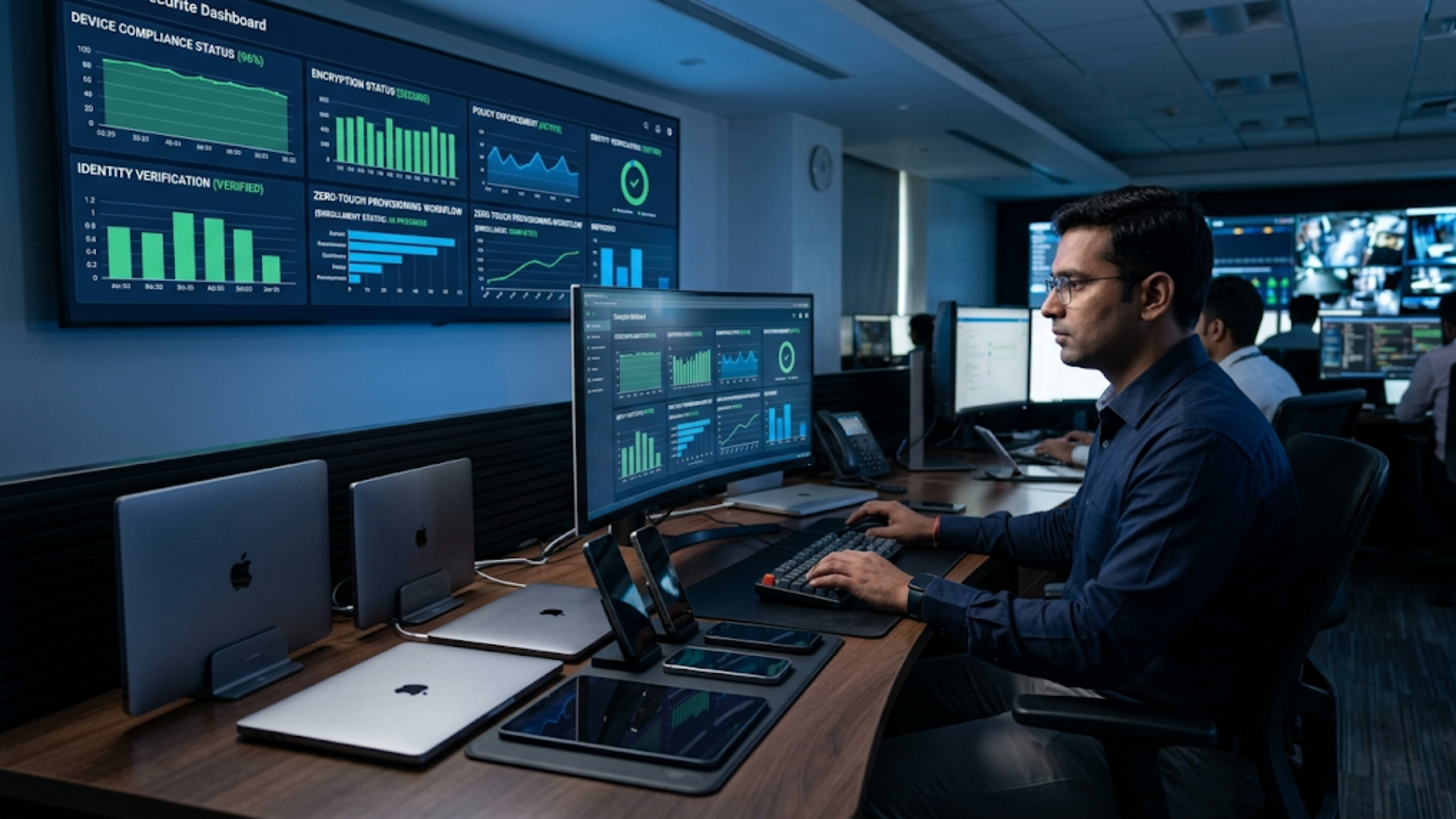
With Team Computers supporting enterprise Apple deployments, businesses can equip employees with the right devices while maintaining visibility, security, and centralized management across their technology environment. Services such as device lifecycle management and enterprise mobility integration help organizations maintain consistency while supporting flexible workstyles.

The Apple Ecosystem Enables Seamless Workflows

One of the biggest advantages of adopting Apple technology in the enterprise is how seamlessly the devices work together. An employee might begin reviewing a presentation on a Mac, respond to messages from an iPhone while traveling, and present ideas using an iPad during a client meeting.

Team Computers enables organizations to build this connected Apple ecosystem by helping businesses deploy devices in a coordinated way. Through enterprise device deployment, configuration, and IT integration services, Team Computers ensures that Apple devices function smoothly within existing corporate environments.

This connected experience helps employees remain productive across different work situations while simplifying device management for IT teams.

Simplifying Apple Adoption for Enterprises

While the Apple ecosystem offers significant advantages, deploying devices across large organizations requires careful planning. Businesses must manage procurement, onboarding, security, and long-term device support.

Team Computers supports organizations through every stage of this journey. From helping enterprises choose the right Apple devices to enabling smooth deployment and lifecycle management, the company provides a comprehensive framework for Apple adoption. This includes:

  • Smart EPP (Employee Purchase Program): Extending Apple access to employees while keeping device management aligned with enterprise policies
  • Trade-in programs: Structured retirement of legacy devices to reduce cost and environmental impact
  • Deployment and configuration services: Ensuring every device is enterprise-ready from day one
  • Ongoing lifecycle support: Maintaining fleet performance, security, and compliance over time

This end-to-end approach ensures businesses can transition to modern Apple-powered environments efficiently and without disruption.

The Future Enterprise Stack

The enterprise technology stack is evolving quickly. Businesses are moving toward environments where intelligent tools, powerful devices, and mobility work together to support modern workflows.

By combining Apple devices, AI-powered applications, and the enterprise expertise of Team Computers, organizations can build technology ecosystems that enable innovation, flexibility, and productivity.

In this new era of work, success will depend on how effectively companies integrate these elements into their everyday operations — and the right technology partners will play a critical role in making that transformation possible.

Ready to build a modern, Apple-powered enterprise technology stack? Discover how Team Computers helps organizations deploy, manage, and scale Apple devices alongside AI-driven tools for a smarter, more mobile workforce.

AI at Work: How Mac Is Powering the Next Generation of Intelligent Workflows

Artificial intelligence is rapidly transforming the way businesses operate. From automating repetitive tasks to helping teams analyze data and create content faster, AI is becoming a core part of modern workflows. As organizations embrace this shift, the devices employees use every day are becoming just as important as the tools and platforms running on them.

This is where Mac is gaining significant traction in enterprises, offering the performance, efficiency, and reliability required for modern AI-powered work. With the support of Team Computers, organizations are now able to adopt Mac more easily and create work environments where employees can take full advantage of intelligent tools and applications.

A Device Built for the AI Era

AI-powered applications require devices that can handle heavy processing while maintaining speed and efficiency. Mac devices are designed to support demanding workflows, enabling professionals to run advanced applications, manage multiple tasks, and process large datasets smoothly.

With guidance from Team Computers, organizations can deploy Mac across teams in a structured and scalable manner. From consulting on device selection to enterprise deployment planning, Team Computers ensures businesses adopt Apple technology in a way that aligns with their operational goals and AI-driven initiatives. This approach allows companies to confidently introduce modern tools without disrupting existing workflows.

Enabling Smarter Workflows for Teams

AI at work is not just for developers or data scientists anymore. Marketing teams, designers, analysts, and business leaders are all beginning to use AI-powered platforms to work more efficiently.

Mac devices provide the performance and seamless user experience needed to support these workflows. With assistance from Team Computers, organizations can equip employees with the right Apple devices while also integrating them into their enterprise IT environments. Services include:

  • Device deployment and configuration at scale
  • Integration with existing enterprise IT environments
  • Lifecycle management to ensure devices remain current and supported
  • Ongoing IT support so employees can start using devices immediately

By simplifying how devices are introduced and managed, Team Computers enables organizations to focus on innovation rather than infrastructure.

Security and Control in an AI-Driven Workplace

As AI tools become more integrated into everyday work, organizations must also maintain strong security standards. Sensitive business data, intellectual property, and operational information must remain protected while employees adopt new technologies.

Mac offers built-in security features that help safeguard enterprise environments. Working alongside these capabilities, Team Computers supports organizations with:

  • Enterprise mobility management (EMM) for centralized device oversight
  • Device configuration aligned with corporate security policies
  • Security implementation to maintain compliance across all Apple deployments

This combination of secure devices and expert enterprise support allows companies to embrace AI at work without compromising on governance or data protection.

Supporting Apple Adoption at Scale

One of the biggest challenges organizations face when adopting new devices is scaling deployment across teams. From procurement and onboarding to support and lifecycle management, the process requires careful planning.

Team Computers simplifies this journey for enterprises by offering a complete ecosystem of Apple services, including:

  • Device procurement tailored to enterprise needs
  • Enterprise deployment support and onboarding
  • Device lifecycle management services
  • Trade-in programs for legacy hardware
  • Employee-focused initiatives such as Smart EPP

This end-to-end approach ensures that organizations can transition to modern Apple-powered workplaces smoothly while maximizing the value of their technology investments.

The Future of Intelligent Workplaces

The future of work will be defined by intelligent tools, faster decision-making, and more flexible work environments. Devices that support performance, mobility, and security will play a central role in enabling this transformation.

With Mac providing the power needed for AI-driven workflows and Team Computers helping organizations deploy and manage Apple technology effectively, businesses can create work environments where innovation thrives.

As AI continues to shape how work gets done, enterprises that invest in the right technology ecosystem today will be better positioned to lead tomorrow.

Ready to bring AI-powered Mac workflows to your organization? Discover how Team Computers helps enterprises adopt, deploy, and manage Apple technology at scale — so your teams can focus on what matters most.