In the modern enterprise landscape, the mandate is clear: go digital or get left behind. We operate in an era where every business, at its core, is a technology business. Yet, true digital transformation is far more than adopting a new cloud service or launching a mobile app. It is a fundamental shift in how value is delivered, requiring a cohesive strategy, cultural change, and a resilient infrastructure.
For many organizations, this journey is daunting. The relentless pressure to innovate is constantly pitted against the daily grind of maintaining complex, legacy-driven, or siloed IT environments. Internal IT teams are often stretched thin, gasping for air as they juggle reactive issue resolution, compliance demands, and strategic planning. The resulting friction can lead to burnout, missed opportunities, and transformation initiatives that stall or, worse, fail.
This is where connected intelligence and expert support became essential for accelerating this journey. To achieve true Managed IT Services for Digital Transformation Success, enterprises are increasingly partnering with forward-thinking IT service providers. This partnership allows you to shift the burden of day-to-day operations and focus your vital resources on innovation, strategic growth, and delivering exceptional customer experiences, rather than routine maintenance.
In this blog, we will explore why this strategic shift to proactive IT management is a necessity for modern enterprises and how it can propel your organization’s transformation. We will dive into the complexity trap, the pivot from routine maintenance to velocity, the key considerations for selecting a transformational IT partner, and how our specific approach at Team Computers, powered by intelligent network services and AIOps, is uniquely positioned to accelerate your business outcomes.
The Complexity Trap: Why Digital Transformation Isn’t Self-Sustaining
Every digital transformation initiative introduces new layers of technical and operational complexity. While the ultimate goal is efficiency and growth, the pathway is often a multi-vendor landscape spanning hybrid and multi-cloud environments, modern applications, a distributed workforce, and a constantly evolving cybersecurity threat landscape.
This Expanding Ecosystem is inherently difficult to manage internally. IT teams become reactive, dedicating a disproportionate amount of time to monitoring systems, managing multiple toolsets, and responding to incidents after they have already impacted productivity. This constant noise from disparate systems leads to siloed visibility and operational gridlock. The internal team, meant to be an engine for innovation, becomes an issue management bottleneck.
The Cost of Being Reactive
Without a cohesive framework for proactive IT management, even minor technical issues can escalate into major disruptions. The business suffers from:
- Decreased Performance and Resilience: Fragmented environments hinder performance, making it difficult to maintain reliable operations and strong governance.
- Slow Deployment Cycles: Siloed systems delay the integration of new technologies, slowing down time-to-market and strategic velocity.
- Rising and Unpredictable Costs: Ad-hoc management can lead to cost overruns and difficulty controlling operational expenditure.
- Difficulty Maintaining Talent: Specialized skills required for complex technologies like modern data centers, intelligent networks, and AIOps are in high demand and hard to retain.
- Lost Customer Trust: Uptime issues and reduced operational risk must be managed, as disruptions can directly impact CSAT and NPS.
This “complexity trap” is where many transformational efforts lose their momentum. To build a truly forward-thinking IT environment that is secure, automated, and future-ready, organizations must move away from the limitations of the reactive, day-to-day issue management approach.
From “Keeping the Lights On” to Driving Velocity: The Strategic Shift
Achieving Managed IT Services for Digital Transformation Success isn’t simply about outsourcing basic maintenance to control costs, though OPEX optimization is a key benefit. It is a strategic pivot that recognizes IT as a growth accelerator rather than a cost center. It means transforming how you utilize technology across your core compute, network, applications, and digital workplace.
When you utilize this type of connected approach, your internal resources are liberated. This allows them to focus on the high-impact strategic initiatives that drive business value and competitive advantage. The managed services provider acts as a knowledgeable, consultative IT partner, providing the predictive intelligence and operational stability you need to move at speed.
Strategic Value Over Routine Maintenance
Key ways that intelligent and proactive IT management accelerates your transformation:
- Accelerated Innovation: Proactive support and modern technology services provide the stable foundation required to quickly deploy, adapt, and scale new digital solutions, supporting performance and continuity.
- Enhanced Agility and Predictability: With automated tools and proactive monitoring, you gain simplified, reliable operations, improving operational expenditure management and overall business performance.
- Access to Real Expertise and Best Practices: A forward-thinking IT partner brings deep expertise across diverse industries and technologies. You gain access to 38+ years of delivering IT services and 3000+ technical experts, reducing operational risk and ensuring stays aligned with business goals.
- Strengthened Governance and Reduced Risk: A modern managed services framework integrates governance and risk reduction across your entire IT environment, including hybrid, network, and application layers.
By focusing on predictability and scalability, an expert partner ensures that your transformational efforts are not hindered by infrastructure limitations or skills gaps.
This paradigm shift from a focus on system uptime (keeping the lights on) to operational velocity and experience is critical for ensuring true success in any modern transformation effort.
Key Considerations When Selecting a Transformational IT Partner
For your partnership to provide a cohesive strategy for success, the choice of a managed services provider is critical. It is a decision that extends far beyond technical capability; it requires a deep understanding of your business unit’s specific pain points, industry solutions, and long-term value proposition. To move from a generalist view to a subject-matter expert relationship, consider the following transformational factors:
- Deep Industry Alignment and Consultative Expertise: A reliable partner avoids generic writing and focuses on specialized, industry-specific solutions. They should act as a trusted IT partner peer, speaking like a seasoned expert, not just pitching a generic product. They should deeply understand frustrations and core pain points specific to your sector be it GCCs, Healthcare, or Manufacturing.
- Proactive and Predictive Capabilities: True success is not reactive. The provider should leverage advanced monitoring tools for proactive, predictable issue resolution through various channels like AI. Look for an intelligent network and secure edge services partner that can support performance and continuity.
- Scalable and Tailored Service Delivery: Business requirements evolve rapidly as organizations grow, manage changing workforces, and embrace digital workplace solutions. Your partner should offer tailored solutions, not a general approach, providing scalable services that align with your digital transformation goals.
A Shift from SLAs to XLAs
Beyond SLAs: A Focus on Experience
The traditional model of Managed IT Services is often built on meeting Service Level Agreements (SLAs) simple metrics of uptime and availability. For transformational success, this approach is insufficient. In a digital environment, true value is determined by user experience (XLA), performance (XPI), and CSAT scores, not just system uptime. A transformational partner uses these XLAs and XPIs to ensure measurable outcomes and improved user experience.
The right partner understands that the connected employee is your best asset. They should provide modern digital workplace managed devices, collaboration tools, and user support services that truly enable secure and productive work environments.
The Power of Connected Intelligence for Transforming IT Operations
We have established that complexity hinders speed and that true transformational success is driven by predictive, experience-based outcomes. But how do you achieve this automated and future-ready state? The key is connected intelligence and the intelligent use of data across your entire environment from your data centers to your digital workplace and intelligent network.
The most effective approach for Managed IT Services for Digital Transformation Success integrates advanced technology, specialized skills, and cohesive strategic framework. Our methodology at Team Computers is built to manage, secure, and optimize IT across these critical core areas, with several unique frameworks:
- Intelligent Network Services: Your network is the nervous system of your digital transformation. We support network and edge environments to enhance connectivity, performance, and security, ensuring smooth operations.
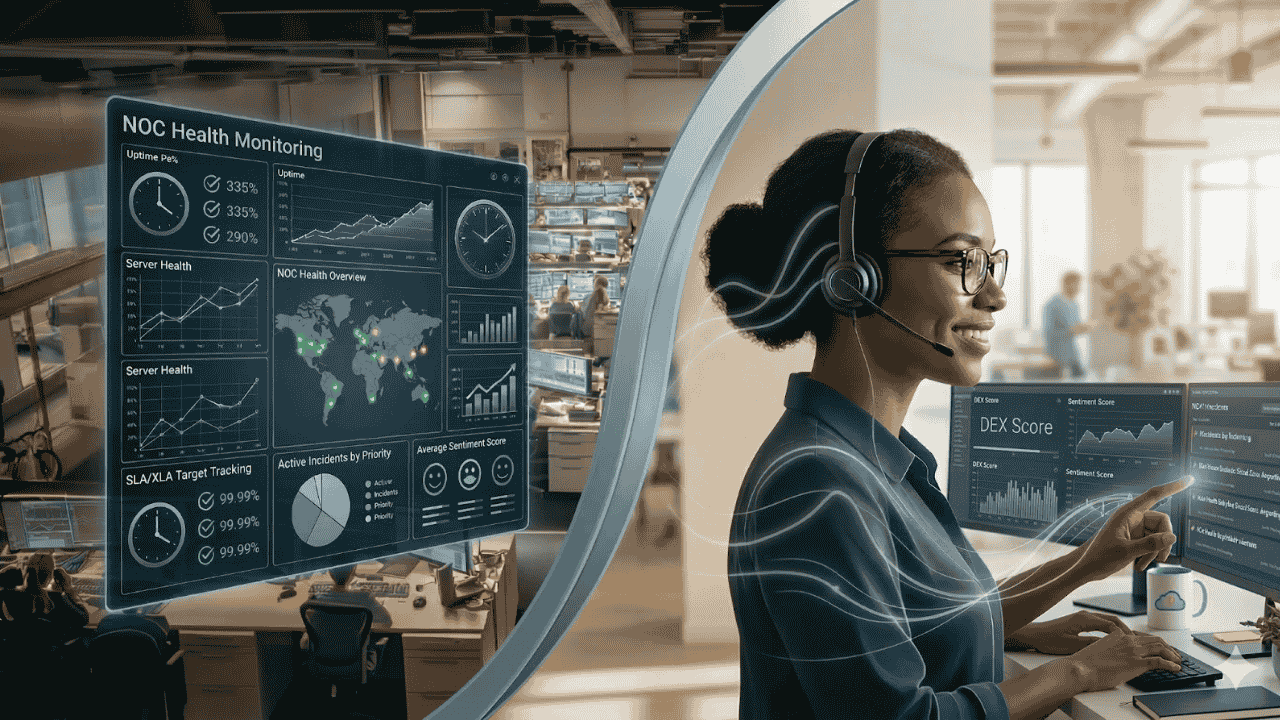
- AIOps for Digital Employee Experience (DEX): We apply AI solutions to transform traditional ways of working into smart, optimized ways of working. This involves proactive issue resolution and ensuring seamless IT operations from a Global Delivery Center round-the-clock.
Shift-Left Strategy: Proactive Issue Prevention
A defining feature of modern managed services is the ability to predict and prevent, rather than just react. We utilize a Shift-Left strategy to move from traditional reactive troubleshooting to predictive intelligence. Proactively address potential disruptions by targeting root causes, ensuring smooth and uninterrupted operations at all times. By using predictive insights, we can resolve challenges before they become a major disruption, enabling agile and reliable operations.
By leveraging this type of connected approach combining intelligent networks, cloud expertise, application maintenance, and a Shift-Left strategy, enterprises can create a stable, automated, and truly resilient foundation. Consistency and quality both matter in this initiative, and a predictive strategy is critical for improving authority, and long-term visibility into IT performance.
Unlocking Agility and OPEX Optimization: The Transformational Outcome
When connected intelligence and a predictive, Shift-Left approach are applied across your core environment, the outcomes are not just technical; they are fundamental to your business success. A forward-thinking IT environment delivers measurable value and helps Organizations achieve their long-term growth and digital strategy. Consistency and quality both matter in this endeavor.
The strategic application of Managed IT Services for Digital Transformation Success allows for:
Connected, Not Just Proactive, IT
- Optimized Resources and OPEX: Improve performance and continuity with predictable costs, efficient IT expenditure, and simplified, reliable operations across data centers, cloud, networks, and the workplace.
- Stronger Governance and Security: Proactively addresses potential disruptions and strengthens security by targeting root causes and integrating network security solutions across distributed operations.
- Reduced Operational Risk and Disruptions: Maintain 99.999% uptime with proactive support and a Zero Incident Framework.
- Accelerated Speed and Velocity: By shifting routine maintenance, internal teams can ensure IT stays aligned with business goals and support performance, adapting quickly to market changes.
- Measurable Experiences and enhanced CSAT: Drive higher CSAT and NPS scores by focusing on measurable outcomes, improved user experience, and XLA/XPI metrics.
Connected intelligence gives you data-driven insights to anticipate challenges and drive smarter, more optimized ways of working. Proactive monitoring and early detection of issues reduce the operational noise and operational expenditure, directly supporting performance, governance, and continuity for modern enterprises.
CONCLUSION
The modern enterprise must innovate rapidly to thrive. In this relentless pursuit of digital transformation, the strategic alignment between your IT environment and business goals is paramount. Navigating complexity requires connected intelligence, a specialized consultative IT partner, and a fundamental shift towards a proactive and predictive operational model. True transformational success goes beyond keeping the lights on to driving velocity, agility, and optimized experiences across data centers, networks, applications, and your digital workplace.
By utilizing this comprehensive and connected approach to Managed IT Services for Digital Transformation Success, organizations can:
- Move Beyond Routine Maintenance: Focus vital resources on high-impact strategic initiatives that drive business value.
- Pivot to Experiences (XLAs): Shift from SLAs to measuring measurable outcomes and user satisfaction.
- Embrace Predictive, Not Reactive, IT: Proactively address potential disruptions, improve uptime, and reduce operational risk with AIOps and a Shift-Left strategy.
- Optimize OPEX and Performance: Strengthen governance, control costs, and maintain a secure, automated, future-ready environment.
Ensure stays aligned with long-term business growth. Organizations that partner with a trusted IT consultant can create a truly resilient and automated ecosystem. Consistency and quality both matter. Now is the time to embrace connected intelligence and move your IT from an issue bottleneck to an innovation accelerator.
Looking to move your digital transformation initiatives from complex to connected, automated, and future-ready? Discover how Team Computers comprehensive Managed IT Services portfolio and connected intelligence methodology can help you create a truly forward-thinking IT environment focused on speed, predictability, and optimized experiences across digital workplaces, data centers, and networks.